
Medieval Silver Coins Unearthed in Derbyshire Field Declared Treasure
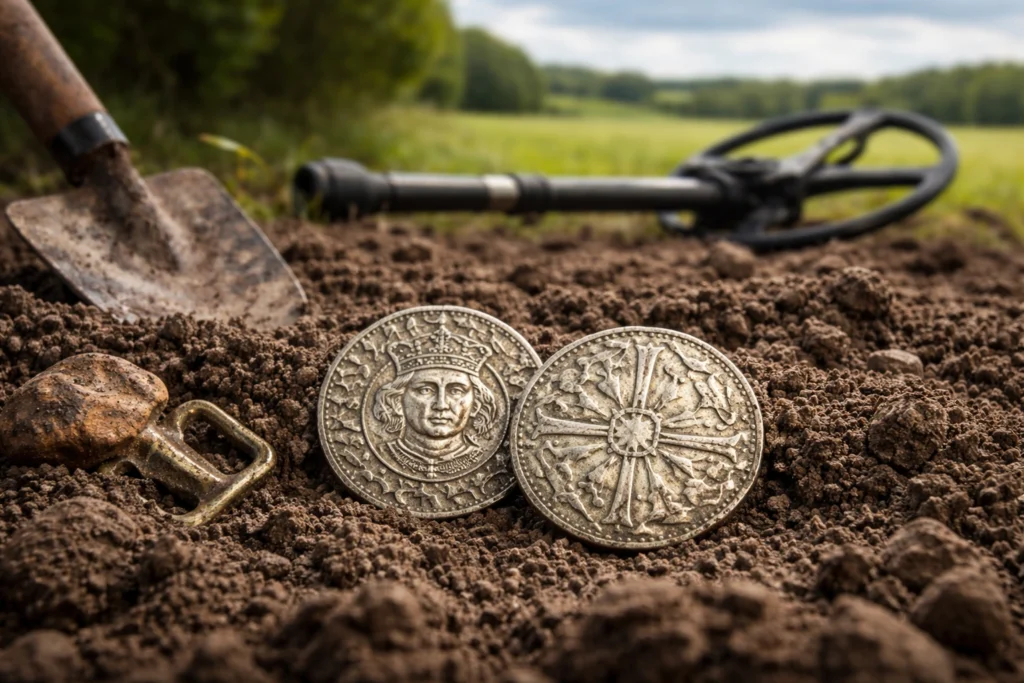
A Rare Glimpse Into 13th‑Century History
In a discovery that has captured the imagination of archaeologists, historians, and treasure enthusiasts alike, two medieval silver coins uncovered in a Derbyshire field have been officially declared treasure. The find, dating back more than 800 years to the reign of King Henry III, offers a remarkable window into England’s medieval economy, craftsmanship, and everyday life.
The coins were discovered by experienced metal detectorist Chris Revill while searching a farmer’s land near the village of Crich in Derbyshire. What began as a routine day of hobbyist exploration turned into a moment of historical significance — one that will be analysed and preserved for generations to come.
This article explores the significance of the find, what the treasure ruling means, and how it contributes to our understanding of medieval England.
From Field to Treasure: How the Coins Were Discovered
Chris Revill, a dedicated metal detectorist with more than four decades of experience, made the discovery in April 2022. While scanning the soil with his metal detector, Revill noticed unusually strong signals below the earth’s surface. After careful excavation and cleaning, what emerged were two well‑preserved silver coins — tiny yet powerful relics of the distant past.
Revill shared that his hobby is not just about finding objects, but about connecting with history and storytelling through artefacts. He said:
“I get excited by artefacts — little bits and bobs that you can put a story to. But finding something as old and complete as these coins was truly amazing.”
The coins’ excellent condition surprised experts, given the hundreds of years they spent underground. Their survival offers valuable insights into minting techniques and circulation of currency during the 13th century.
Official Recognition: Treasure Inquest Verdict
On 25 February 2026, a formal inquest was held to determine whether the coins met the criteria to be declared treasure under UK law. Assistant Coroner Sophie Lomas presided over the proceedings and ultimately confirmed that the coins are indeed treasure.
Under the Treasure Act 1996, objects made of precious metals and over 300 years old — especially those found with archaeological significance — may be legally declared treasure. This verdict ensures that the coins will be preserved and may be offered to local museums for public display, study, and preservation.
This official recognition underscores the historical importance of the discovery, ensuring it joins the body of documented finds that enrich our understanding of England’s past.
What the Coins Tell Us: A Journey Back to the 13th Century
Experts believe the coins were minted during the reign of King Henry III, who ruled England from 1216 to 1272. This period was marked by political change, economic development, and expansion of trade.
Design and Craftsmanship
The silver coins are believed to be examples of hammered coinage — the primary method used during the early medieval period. In this process, metal blanks were struck between engraved dies by hand, resulting in distinct, often slightly irregular designs.
One side of the coin is thought to feature a monarch’s portrait, symbolising royal authority and issuing legitimacy. The other side reportedly displays a Celtic‑style cross, a common motif that served both as decoration and a symbol of stability and faith.
These designs were not merely aesthetic; they communicated political power and economic trustworthiness across communities and markets.
Historic Context: Why These Coins Matter
This discovery does more than add two rare coins to historical records — it offers tangible evidence of daily life and commerce in medieval England.
During the 13th century, silver coinage played a fundamental role in local and regional economies. Merchants, smallholders, and traders would use such coins to buy goods, pay for services, and settle accounts. These coins may have passed through many hands, potentially linked to trade in limestone, lead, grain, or livestock — all commodities critical to life in medieval Derbyshire.
Each coin holds a silent story — of journeys over fields and markets, of countless transactions, and of a world where every coin mattered.
The Joy of Discovery: A Hobbyist’s Perspective
Revill’s excitement at uncovering the coins reveals why metal detecting remains a passionate pursuit for many. For hobbyists like him, the activity is about more than finding metal — it is about unearthing pieces of history, connecting with bygone eras, and contributing to collective knowledge.
Revill often enjoys his outings with his loyal canine companion, Mitty, whose presence adds another layer of warmth to this human narrative rooted in curiosity and discovery.
In an interview after the inquest, Revill said:
“I’m pleased to find anything really. But these coins, because they’re in such nice condition and so old, are a true highlight.”
His joy reflects a universal truth: that history is not only found in books and museums, but beneath our feet — waiting to be rediscovered.
A Treasure for the Community: What Happens Next?
With the coins now officially declared treasure, they are likely to be offered to the Derby Museum or another institution committed to preserving local heritage. Museums play a critical role in conserving items of historical significance, conducting research, and presenting findings to a global audience.
When displayed, these coins will allow visitors — from schoolchildren to scholars — to appreciate the ingenuity and artistry of medieval minting. They also serve as educational tools, sparking questions about economics, governance, and everyday life centuries ago.
Why This Discovery Matters Beyond Derbyshire
Finds like these remind us that history is not static. It is not confined to textbooks. It is alive — layered beneath landscapes we may traverse without a second thought.
Each time a medieval coin emerges from the earth, it bridges the gap between past and present. It inspires curiosity. It encourages investigation. It invites us to think about the people who lived before us — their challenges, crafts, and cultures.
For archaeologists, historians, and hobbyists, the coins represent data points in the broader tapestry of human civilisation. For local communities, they become symbols of shared heritage and pride.
A Closing Reflection from DEI Gold and Silver Coins
At DEI Gold and Silver Coins, we are thrilled to highlight discoveries that deepen our understanding of history and human civilisation. This remarkable find in Derbyshire serves as a testament to the power of curiosity, careful reporting, and the preservation of heritage.
It also underscores the value of responsible detection and reporting practices. When hobbyists collaborate with institutions, they contribute immeasurably to public knowledge ensuring that discoveries of historical importance are preserved, studied, and shared.
As this story continues to unfold, we will bring you updates on the coins’ journey from field to public display and offer expert insights into what these treasures reveal about medieval England.
Stay informed with DEI Gold and Silver Coins where history, discovery, and knowledge converge.
Source: Based on reporting from BBC News and verified market data
Buy or Sell Gold & Silver Coins with Confidence
Work with a trusted Las Vegas coin dealer offering fair pricing, honest appraisals, and expert guidance every step of the way.