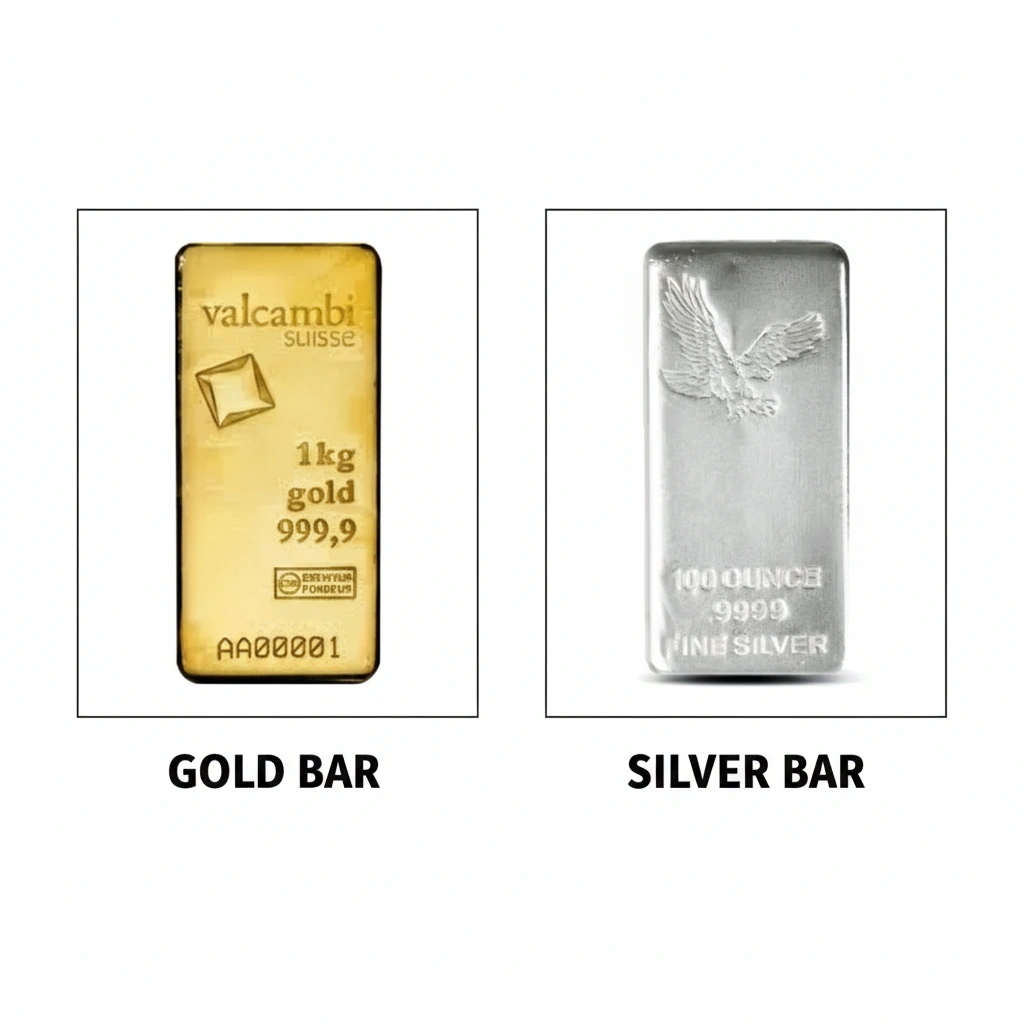
Are you feeling overwhelmed by the sheer variety of physical bullion options available in today’s rapidly evolving market?
With gold reaching historic milestones in early 2026 and central banks continuing their unprecedented accumulation of the metal, choosing the right format for your wealth preservation has never been more critical. Whether you are a business owner in the Summerlin area looking to diversify a corporate reserve or a local entrepreneur starting a personal “rainy day” fund, the decision between cast and minted gold bars will fundamentally impact your long-term returns and liquidity.
In this comprehensive guide, we will strip away the jargon and examine the structural, financial, and practical differences between these two primary gold bar types. By the end of this analysis, you will have a clear, actionable roadmap to decide which investment gold bars belong in your Las Vegas vault.
What Is the Difference Between Cast vs Minted Gold Bars?
To make an informed choice, you must first understand the “DNA” of the product you are holding. While both contain the same high-purity gold, the way they are born into the world creates distinct profiles for different investor needs.
The Rugged Nature of Cast Gold Bars
Cast gold bars are the product of one of the world’s oldest manufacturing techniques. Molten gold is poured directly into a pre-measured mold and allowed to cool. This natural cooling process creates “poured” bars that are entirely unique; no two are exactly alike. You will often see ripples, cooling lines, and slightly rounded edges.
For the Las Vegas investor who appreciates the raw, industrial feel of wealth, cast bars offer a tactile experience that minted bars cannot match. They are sturdy, resistant to scratches, and do not require the same delicate handling as their polished counterparts.
The Precision of Minted Gold Bars
Minted bars, on the other hand, represent the pinnacle of modern refinery technology. These begin as long strips of gold that are cut into precise blanks (planchets) and then struck with a high-pressure die to create a uniform, mirror-like finish.
These bars are essentially “jewelry-grade” in their appearance, featuring sharp edges and intricate designs. Most minted bars come sealed in “assay cards”—tamper-evident packaging that acts as a birth certificate, proving the bar’s weight, purity, and serial number at a glance.
Which Gold Bar Types Offer the Best Value for Large Portfolios?
In the professional investment world, “value” is often measured by how much physical metal you can acquire per dollar spent. When evaluating cast vs minted gold bars, the “premium”—the amount you pay over the current market rate—is the deciding factor.
Why Cast Bars Win on Cost
Cast gold bars are significantly cheaper to produce. Because they skip the labor-intensive striking, polishing, and individual packaging phases, refineries can pass those savings on to you.
Expert Insight: In 2026, market data suggests that a 1-ounce cast bar typically carries a premium of 1% to 3%, whereas a minted bar of the same weight can command 3% to 5% or more.
If you are a marketing manager or business owner looking to allocate a large sum—say $100,000—into physical gold, choosing cast bars could allow you to acquire several additional grams of gold for the same total outlay. Over time, as the market trends upward, those “extra” grams compound into significant wealth.
The Institutional Standard
It is no coincidence that the massive 400-ounce bars held by central banks and the world’s largest ETFs are exclusively cast. When you are moving serious volume, the aesthetic beauty of the bar is secondary to the purity and the weight. For high-net-worth individuals in the Las Vegas valley, cast bars represent the most efficient “stacking” strategy.
How Does Liquidity and Resale Differ in the Las Vegas Market?
Liquidity—the ease with which you can turn your gold back into cash—is the lifeblood of any investment. While gold is universally recognized, the speed of your transaction often depends on the type of bar you hold.
The “Instant Trust” of Minted Bars
Minted bars are the “blue chips” of the retail gold world. Because they come in standardized, sealed packaging with clear serial numbers and security features (like PAMP Suisse’s Veriscan technology), a local dealer can verify them almost instantly.
If you find yourself needing to liquidate quickly for a business opportunity or a sudden expense, minted bars often fetch a slightly higher “buy-back” price because the dealer knows they can resell them to the next customer without expensive testing.
Authenticating Cast Bars
Cast bars are just as liquid in terms of demand, but the process may take a few minutes longer. Since they are often sold “raw” (without a sealed plastic case), a reputable dealer will use ultrasound or X-ray fluorescence (XRF) testing to confirm the purity.
Pro Tip for Las Vegas Investors: Always buy cast bars from LBMA-approved (London Bullion Market Association) refineries. Brands like Valcambi, Heraeus, or the Royal Canadian Mint are recognized globally and will be accepted by any legitimate professional in Nevada or beyond without hesitation.
Are Investment Gold Bars the Right Choice for Your Business Reserve?
Many entrepreneurs are moving away from traditional savings accounts and into “hard assets” to protect against currency debasement. When considering your corporate strategy, the choice between cast vs minted gold bars often comes down to your “exit” timeline.
Scenario A: The Long-Term Stacker
Imagine a Las Vegas boutique agency owner who intends to hold gold for 10 to 20 years as a retirement hedge. In this case, cast bars are the clear winner. The lower initial premium means more gold in the vault, and the “wear and tear” of decades of storage won’t devalue a bar that was already rugged to begin with.
Scenario B: The Flexible Strategist
Now, consider a marketing professional who wants to keep a portion of their bonus in gold but might need to sell it in 18 months to fund a new project. For this shorter window, minted bars—specifically in smaller denominations like 10 grams or 1 ounce—are superior. They are easier to sell to private buyers or small shops, and the “pretty” factor makes them much easier to move in a pinch.
| Feature | Cast Gold Bars | Minted Gold Bars |
| Visual Appeal | Rugged, Matte, Unique | Polished, Mirror-finish, Uniform |
| Production Cost | Low | High |
| Typical Premium | 1% – 3% | 3% – 6% |
| Durability | High (can be handled) | Moderate (keep in assay) |
| Security Features | Basic Stamping | High (Holograms, QR codes) |
| Best For | Bulk Accumulation | Gifting, Portability, Quick Resale |
What Are the Most Common Mistakes When Buying Gold Bars?
Even the most seasoned business professionals can fall into traps when entering the precious metals market. Understanding the nuances of cast vs minted gold bars is only half the battle.
1. Buying “Too Small”
A common error for first-time investors is buying 1-gram minted bars. While they look affordable, the manufacturing and packaging costs are astronomical compared to the amount of gold you receive. You might pay a 20% premium for a tiny bar, meaning the market has to move 20% just for you to break even.
2. Breaking the Seal
If you opt for minted bars, never open the assay card. The value of a minted bar is tied to its pristine condition and its certification. Once you break that seal, the bar is often treated like a “damaged” cast bar by dealers, and you will lose the premium you paid at the start.
3. Ignoring Local Regulations
In Las Vegas, it is vital to work with licensed dealers who comply with Nevada’s strict reporting and transparency laws. Whether you are buying cast or minted, ensure you receive a detailed invoice that matches the serial numbers on your bars. This documentation is essential for your tax records and for future resale.
Strategic Takeaways for the Las Vegas Investor
As we navigate the complexities of 2026, physical gold remains the ultimate insurance policy. To recap the battle of cast vs minted gold bars:
- Choose Cast Bars if: You are buying in bulk (100g or larger), you want the lowest cost per ounce, and you plan to hold the investment for 5+ years.
- Choose Minted Bars if: You are buying smaller amounts (1oz or less), you value high-tech security features, or you might need to sell your gold quickly in the local retail market.
By diversifying your holdings—perhaps keeping 70% of your weight in large cast bars and 30% in highly liquid 1-ounce minted bars—you create a “barbell” strategy that offers both cost-efficiency and flexibility.
Is It Safe to Buy Gold Coins Online?
Absolutely. With DEIGOLDANDSILVERCOINS, you get a safe, secure, and fully insured transaction process. Our reputation, volume, and customer satisfaction prove it.
We’re here 24/7 to help guide your investment. No matter if you’re just getting started or looking to expand your collection, our dedicated experts are only a message or a call away.
Our Customer Reviews
With a 4.9-star rating, our customers consistently praise our reliability, fast shipping, and quality products. See why investors continue to trust DEIGOLDANDSILVERCOINS through the experiences and success stories they’ve shared.
Frequently Asked Questions
1. Which is more pure: a cast bar or a minted bar?
Both are typically 99.99% pure gold (24 karat). The “investment grade” status of gold bars is determined by the refinery’s adherence to international standards, not the manufacturing method. Whether it’s a rugged poured bar or a shiny struck bar, the gold content remains the same.
2. Why do some investors prefer the look of cast bars?
Many seasoned “stackers” find the organic, historical feel of cast bars more appealing. They represent the “raw” form of wealth used for millennia. Additionally, being able to handle a cast bar without worrying about fingerprints or scratches offers a psychological sense of ownership that a plastic-sealed minted bar lacks.
3. Can I include both in my Gold IRA?
Yes. As long as the bars are produced by an accredited refiner and meet the minimum fineness requirement of 0.995, both cast and minted bars are eligible for inclusion in a self-directed Gold IRA. This is a popular move for Las Vegas business owners looking to protect their retirement savings from inflation.
4. Do minted bars have a higher resale value?
Technically, yes, but only because you paid more for them initially. You might get a “higher price” when you sell a minted bar, but your actual “profit” may be lower than with a cast bar because the cast bar had a much lower entry cost.
5. Is it harder to fake a cast bar?
Actually, it is easier for modern technology to protect minted bars. Features like microscopic surface topography and holographic elements make minted bars very difficult to counterfeit. Cast bars rely on simpler hallmarks and physical testing for verification, which is why buying from reputable brands is paramount.