Have you ever wondered how you would prove the value of your coin collection in the event of theft, damage, or loss?
Coin Collection for Insurance Purposes Success starts with meticulous documentation. Whether you’re a seasoned numismatist or just starting your collection, documenting and organizing your assets is critical—not just for insurance purposes, but for its long-term protection and preservation. Coin collecting is an exciting hobby, but without proper documentation, you risk losing more than just the coins themselves.
In this post, we’ll guide you through the step-by-step process of documenting your fairm0nt coin collection, organizing it efficiently, and ensuring that your valuable assets are well-protected. By the end, you’ll have the knowledge to confidently create insurance records that will safeguard your collection for years to come.
Why Should You Document Your Coin Collection?
The Importance of Documenting Your Coin Collection
Documenting your coin collection serves several purposes, with insurance coverage being one of the most critical. Without proper records, you could face difficulty claiming compensation in the event of a loss. Insurance companies require accurate details to assess the value of your collection, including descriptions, photographs, and valuations. An organized collection also allows for better tracking and management, helping you avoid costly mistakes like acquiring duplicates or overpaying for specific coins.
Common Mistakes to Avoid
One of the biggest mistakes collectors make is failing to record essential details about their coins. Without detailed documentation, the chances of receiving an adequate insurance payout or recovering lost items are slim. Another common error is not updating the records regularly, especially when new coins are added to the collection. Ensuring your documentation is both accurate and up-to-date is key to protecting your investment.
Steps to Document Your Coin Collection for Insurance
1. Create a Cataloging System
A cataloging system is the backbone of any well-organized collection. Whether you prefer a physical ledger or a digital file, the key is consistency. The system should include the following essential details for each coin:
- Coin Type and Year: The exact name of the coin, including the minting year, denomination, and country of origin.
- Condition/Grade: Coins are graded based on their appearance. The higher the grade, the more valuable the coin. For example, a coin in Mint State (MS) is typically worth more than one with visible wear.
- Unique Features: Any distinguishing characteristics, such as errors, variations, or rare features, should be noted.
- Acquisition Date and Price: Record when and how you acquired the coin, including the purchase price or market value.
- Current Value: Regularly update the market value based on coin catalogs, auction records, or expert appraisals.
Pro Tip: Consider using a spreadsheet or a specialized coin management software for ease of updating and tracking.
Buy or Sell Gold & Silver Coins with Confidence
Work with a trusted Las Vegas coin dealer offering fair pricing, honest appraisals, and expert guidance every step of the way.
2. Photograph Each Coin
A picture is worth a thousand words—and in the case of insurance, it’s worth even more. High-quality photographs serve as essential proof of your collection’s condition. Take multiple clear, close-up photos from different angles to capture the details of each coin, especially any flaws or unique markings. Ensure that each photo is well-lit and focused on the coin’s most important features.
- Front and Back: Photograph both the obverse and reverse sides of each coin.
- Close-Ups: Zoom in on key features like mint marks, engravings, or damage.
- Comparison with a Ruler: Use a ruler or measuring tape in the photos to show the coin’s size for scale.
Expert Insight: If you’re unsure of your photography skills, consider hiring a professional photographer with experience in collectibles to ensure your images meet the high standards required for insurance purposes.
3. Create Detailed Descriptions
Along with photographs, written descriptions provide another layer of documentation for your coins. For each coin, include:
- Full Name of the Coin: For example, a historically significant gold coin from the early twentieth century.
- Mint Mark and Minting Location: If applicable, this adds value and authenticity to the coin.
- Material and Composition: Indicate whether the coin is made of gold, silver, or other metals.
- Coin Weight and Dimensions: These are important for assessing authenticity, as genuine coins usually have specific weight and size specifications.
- Special Characteristics: Any unique features, such as mint errors or low mintage numbers, that increase its value.
Best Practices for Organizing Your Coin Collection
4. Use a Coin Collection Binder or Box
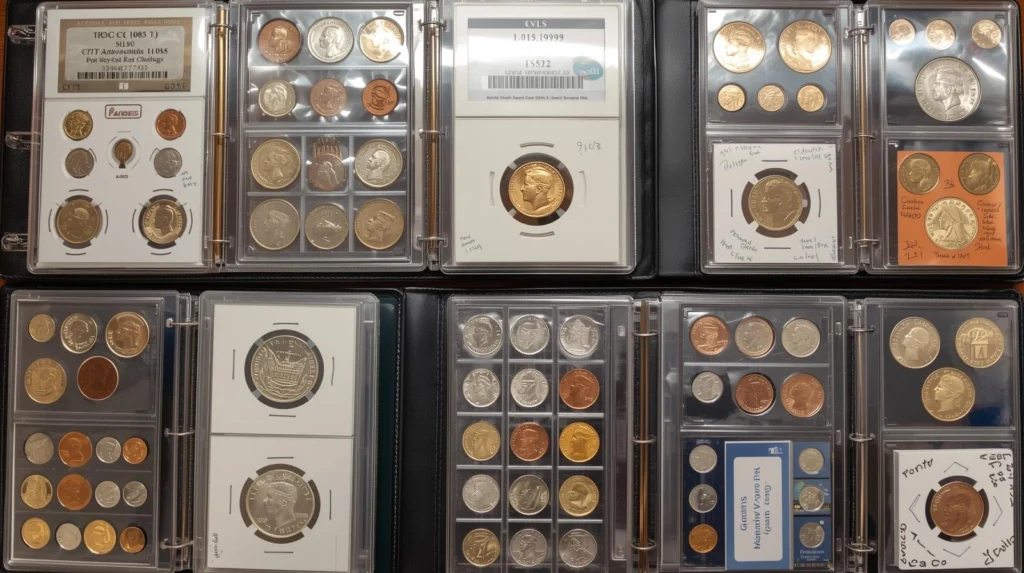
After documenting each coin, the next step is organizing them physically. A proper storage system is vital for keeping your collection safe and in good condition. Use acid-free holders or 2×2 holders to store each coin. These are designed to prevent the coins from coming into direct contact with harmful materials that could cause damage. For high-value coins, consider using a vault or safe deposit box.
Storage Tips:
-
- Avoid storing coins in regular plastic bags or cardboard holders, as they can cause discoloration or damage.
- Consider grouping coins by theme, such as by era, country, or type.
- Use dividers and labels to make each section easy to navigate.
- Avoid storing coins in regular plastic bags or cardboard holders, as they can cause discoloration or damage.
5. Regularly Update Your Records
As your collection grows, it’s important to update your documentation regularly. Keep a log of new acquisitions and their corresponding details. Whenever a coin is sold, traded, or gifted, update the records to reflect the change. This will help keep your insurance records accurate and ensure that your collection remains fully covered.
How to Secure Your Coin Collection for Insurance
6. Get Coins Appraised
To ensure that your collection is fully insured, consider having your coins professionally appraised. An appraisal gives your insurance company an accurate valuation of your collection, helping you avoid underinsurance. It’s especially important for high-value coins or rare collectibles.
- Pro Tip: Seek out a reputable numismatist or professional appraiser who is familiar with the current market trends and can provide accurate valuations based on the latest data.
7. Choose the Right Insurance Policy
Not all insurance policies are created equal, so be sure to choose one that provides adequate coverage for your collection. Many standard homeowners’ insurance policies may not cover rare coins or collectibles adequately. Look for a specialized policy or an endorsement to cover coins at their full value, including theft, damage, or loss during transit.
Comparison Table: Coin Insurance Policy Options
| Policy Type | Coverage Details | Pros | Cons |
|---|---|---|---|
| Standard Home Insurance | Covers personal property but often excludes or limits collectible coins | Lower cost, widely available | May not cover full market value |
| Specialized Coin Insurance | Covers coins at full market value, including theft and physical damage | Comprehensive coverage, coin-specific | Higher premium costs |
| Scheduled Personal Property Insurance | Provides custom coverage for individually listed coins | Tailored protection for high-value items | Premiums increase with item value |
Conclusion
Documenting and organizing your coin collection is more than just a good practice—it’s essential for protecting your investment. By following the steps outlined above, you’ll be prepared to present a comprehensive inventory to your insurance company and safeguard your collection for years to come. Whether you are starting from scratch or updating your records, taking the time to properly catalog, photograph, and value your coins ensures that they will be covered in case of loss or damage.
Is It Safe to Buy Gold Coins Online?
Absolutely. Platforms like DEIGOLDANDSILVERCOINS Coins provide secure, fully insured transactions. With 24/7 support and a proven reputation, US investors can safely buy gold and silver online, whether starting a collection or expanding an investment portfolio.
Why Investors Trust DEIGOLDANDSILVERCOINS
- Customer Satisfaction: 4.9-star rating with praise for reliability, shipping speed, and product quality.
- Expert Guidance: Dedicated support for beginners and experienced investors.
- Secure Transactions: Insured purchases for peace of mind.
Investing in bullion can be overwhelming, but with the right guidance and understanding of how dealers price bullion and dealer premiums, you can make confident, informed decisions. Start your coin investment journey today with trusted dealers and resources like DEIGOLDANDSILVERCOINS.
FAQ Section
1. How do I start documenting my coin collection?
Begin by creating a cataloging system that includes essential details such as the coin’s name, condition, and acquisition price. Then, photograph each coin clearly and describe any distinguishing features.
2. Can I use a mobile app to document my coin collection?
Yes, there are several mobile apps and digital tools that allow you to document your collection digitally, making it easy to track and update your inventory.
3. Should I get my coin collection appraised for insurance purposes?
Yes, getting an appraisal is essential for ensuring that your coins are fully covered by insurance at their current market value, especially for rare or high-value coins.
4. How often should I update my coin collection documentation?
You should update your documentation regularly, particularly when you acquire new coins, sell or trade any, or if there are significant market changes that could affect the value of your collection.
5. Are there any risks involved in cleaning coins before documenting them?
Yes, cleaning coins can significantly reduce their value. Avoid cleaning your coins and instead focus on documenting their natural condition with clear photographs.