A cleaned coin is one whose original surface has been rubbed, polished, scrubbed or chemically stripped, and for most collectible coins that change is permanent. The metal is still there. What disappears is what collectors actually pay for: the untouched surface the coin had when it left the mint, with its luster, natural color and fine detail. That is why a coin that looks brighter after cleaning is so often worth less than it was when it was dirty.
The distinction that matters is between what a coin is made of and what it is as a collectible. Cleaning does not change the amount of silver or gold in a coin, so melt value is unaffected. It can erase much of the premium a collector would have paid. This guide explains what cleaning does to a surface, how PCGS and NGC treat cleaned coins, how to recognize cleaning, and what to do instead when a coin is dirty.
What Collectors and Graders Mean by “Cleaned”
In numismatics, a coin is cleaned when something has been done to its surface that abrades it or chemically alters it, so that it no longer looks the way an untouched coin of its age should. Typical causes are wiping with a cloth or paper towel, scrubbing with toothpaste, baking soda or silver polish, brushing, buffing, and strong acid-based dips.
This is different from conservation. NGC describes conservation as removing contaminants and stabilizing a coin’s surface without changing the surface underneath. Done by trained specialists, it is an accepted practice. The test is never whether the coin ends up shinier. It is whether the original surface survives.
Dipping, a chemical bath that strips toning, is a gray area. Grading services have treated it differently from abrasive cleaning, and many dipped coins carry straight grades. But over-dipped coins often look dull, etched or oddly white, and where a particular coin crosses the line is a judgment call. Experienced buyers tend to discount a coin they know was dipped.
What Cleaning Does to a Coin’s Surface
It flattens the luster
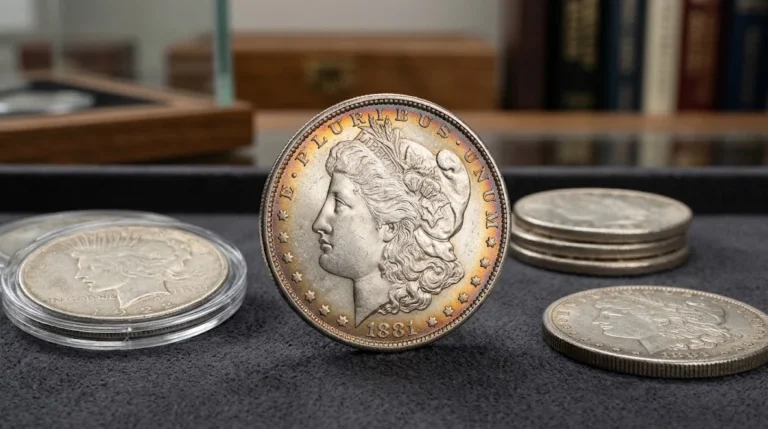
Luster is the way light plays across the microscopic texture left by the dies when a coin was struck. Tilt an untouched Mint State coin under a lamp and the luster seems to spin around the surface, often called the cartwheel effect. NGC’s graders point out that abrasives and harsh chemicals smooth that texture, so the surface reflects light in a single direction and turns flat and lifeless when you rotate the coin. A coin can look bright and still have lost most of its luster.
It leaves hairlines
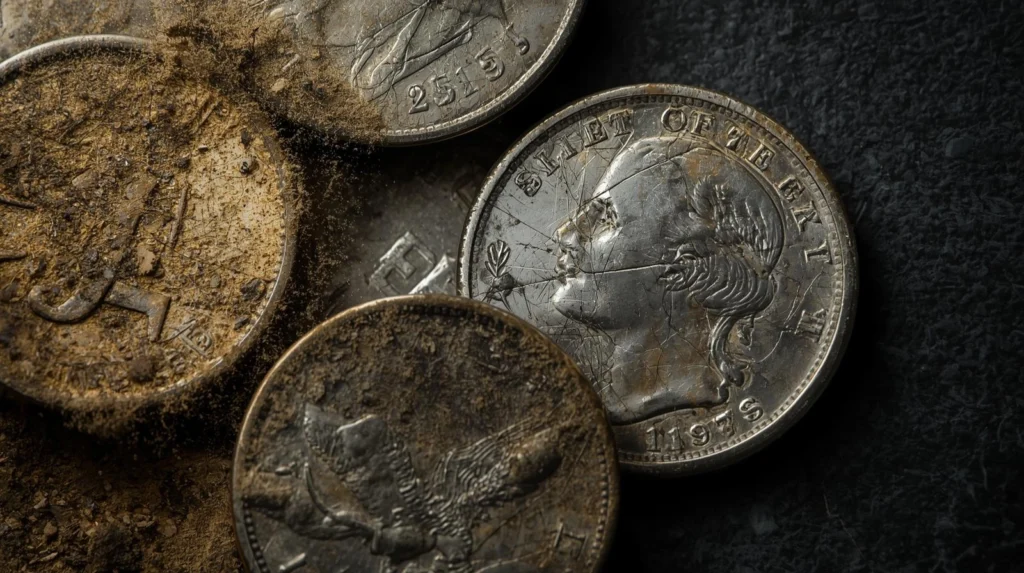
Hairlines are very fine scratches, usually running in the same direction, left by wiping or rubbing. They are often invisible at arm’s length but show up when the coin is tilted under a single light source or viewed through a 5x to 10x loupe. Silver and gold are soft metals, so even a light touch can leave them.
Not every line means cleaning. Die polish lines are raised features carried over from the die, and slide marks from old album holders are a separate kind of surface mark. Telling these apart takes practice, which is one reason an in-hand evaluation beats a photo.
Chemicals can etch the surface and leave residue
Acids, bleach, vinegar, ammonia and abrasive pastes can etch silver and copper, leave residue in the recesses, or produce uneven color that later treatment cannot fully reverse. Gold resists most household chemicals, but it is soft and shows hairlines easily, and the copper in a gold alloy can still react. The common thread is permanence. Tarnish sits on the surface, while etching and abrasion remove or rearrange the surface itself.
It removes original toning, and can also hide the damage
Natural toning forms slowly, and collectors value it when it is original and attractive. Our guide to how coin toning affects value covers when toning helps and when it hurts. Original toning is not automatically a premium, since dark, blotchy toning can lower appeal, but cleaning does not return a coin to a neutral starting point. It swaps one condition for another and leaves the abrasion behind.
NGC also cautions that toning, whether natural or induced, can later cover cleaning. An attractive coin with good color can still have a problem underneath, which is part of why cleaning is hard to detect from photos.
How PCGS and NGC Treat Cleaned Coins
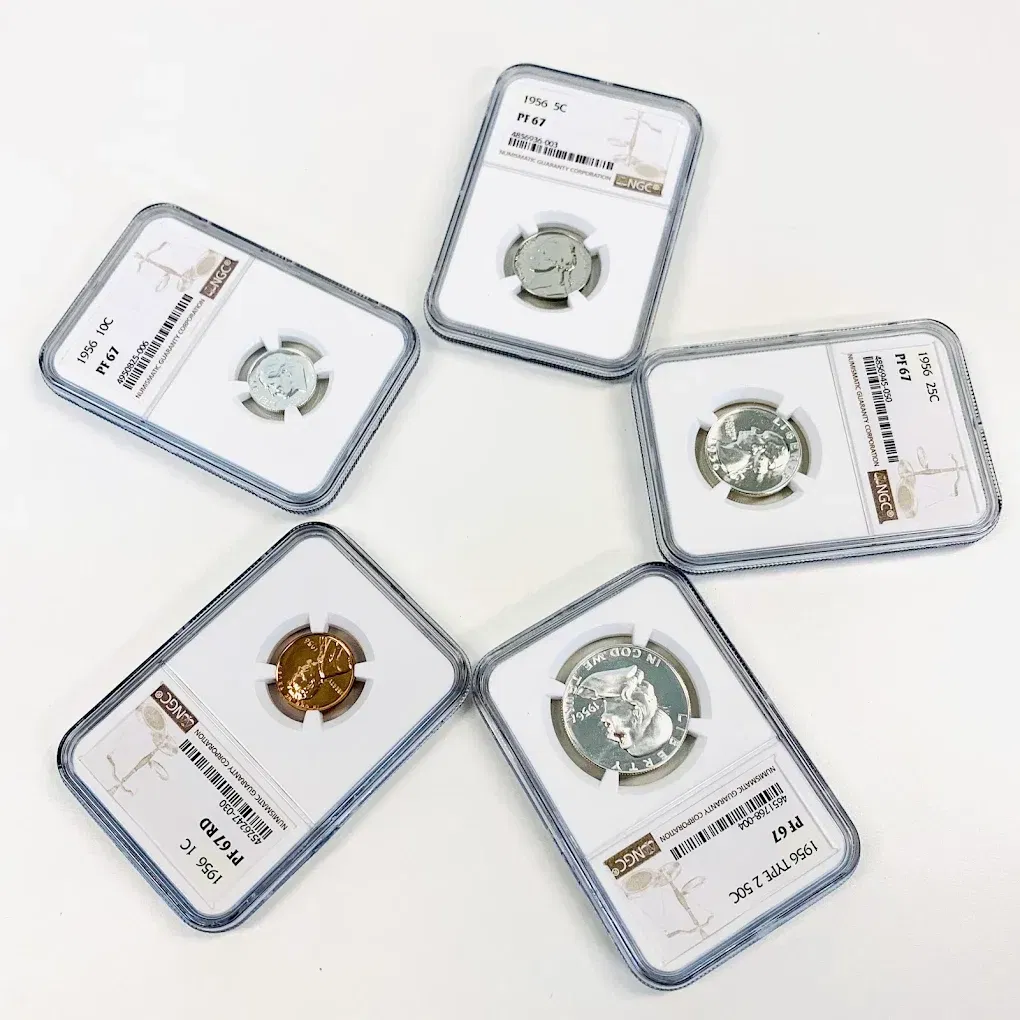
Coins submitted to the major grading services normally receive a numerical grade on the 70-point scale (see our coin grading scale guide). When cleaning has altered the surfaces enough that a numerical grade is no longer appropriate, the coin receives a Details grade instead. It is confirmed as genuine, and the holder describes its approximate state of wear along with the problem. PCGS labels these coins Cleaned, while NGC commonly uses Improperly Cleaned.
The label is not a footnote. A Details coin cannot be compared directly with auction records, price guides or population reports built on straight-graded coins, and the market prices it accordingly. PCGS has offered a useful rule of thumb: a coin labeled Cleaned with XF Details should not be expected to sell like a straight-graded XF, and its value is likely to land closer to Fine or lower, depending on the buyer and how the coin looks. That is general guidance rather than a current price, and real results vary with the coin’s type, rarity and appearance.
Two points collectors often miss:
- Cleaning cannot be undone. NGC has long maintained that conservation can remove contaminants but cannot restore natural surfaces once they have been cleaned. Services that claim otherwise usually hide the damage, which falls under coin doctoring.
- Grading is a judgment. A lightly cleaned coin may reach a straight-grade holder while a similar coin is detailed. Informed buyers look at the coin itself, not only the label. For help with what a holder says, see our guide to reading a PCGS or NGC grading certificate.
Does Cleaning Ruin Every Coin?
No, and getting this right avoids two mistakes: assuming a cleaned coin is worthless, and assuming cleaning is harmless.
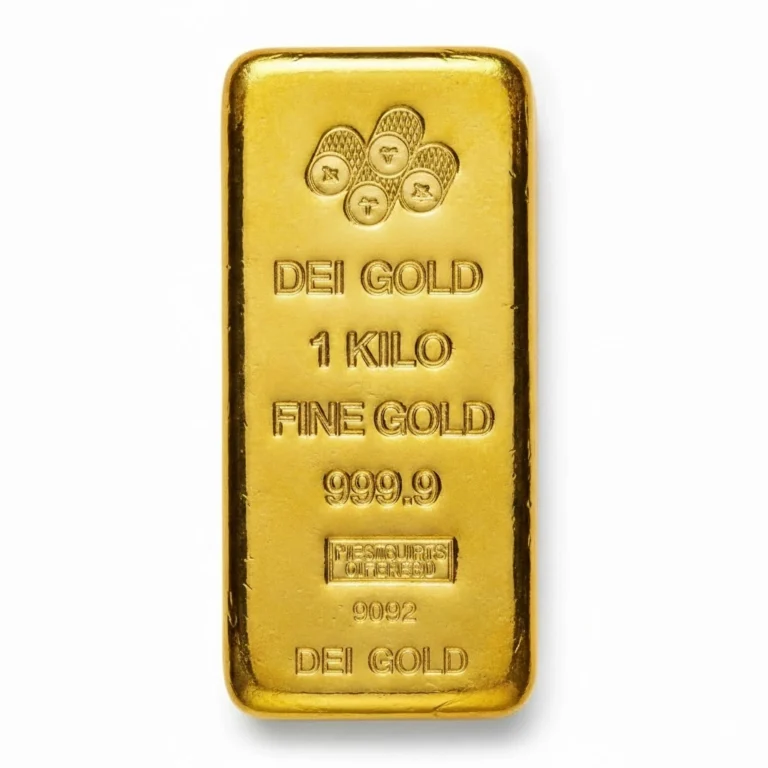
Where metal makes up most of the value, as with a worn 90% silver coin or a bullion bar, cleaning does not change melt value. Where the damage hits hardest is where price depends on condition and originality: Mint State and Proof coins, scarce dates and mintmarks, early U.S. issues, pre-1933 gold carrying a collector premium, and certified coins whose straight grade is part of the price. Even modern bullion coins can lose premium when hairlines or spotting show.
The more of a coin’s price comes from its condition and less from its metal, the more cleaning costs. That is why “it’s only silver” can be a sound assumption for one coin and an expensive one for another, and why a dirty pile of old coins deserves a careful look before anything is done to it.
How to Tell If a Coin Has Been Cleaned
No single sign proves cleaning, but these are the checks experienced collectors use:
- Tilt the coin under one light source. Look for luster that is broken, flat or missing instead of swirling evenly.
- Check for parallel hairlines under a loupe, sometimes crossing the design in one direction.
- Judge the color. A coin that is uniformly white or brilliant in a way its age does not support is suspect, as is a dull, gray, etched look.
- Look at the recesses. Dirt or toning left near the lettering and devices while the open fields look unnaturally bright is a common sign.
- Watch for whizzing. Wire-brushing to imitate luster leaves a patterned, grainy texture.
- Compare detail to the claimed grade. Surfaces that look better than the wear suggests deserve a second look.
Light cleaning is hard to see even for experienced eyes, especially when toning has formed over it. When originality matters to the price, certification by PCGS or NGC adds assurance, but it does not replace examining the coin.
What to Do With a Dirty Coin Instead
For any coin that might have collector value, the safest instruction is to leave the surface alone. Hold it by the edges over a soft towel, avoid touching the faces, and store it in an inert, PVC-free holder. Do not wipe it, soak it or polish it to see what is underneath.
Real contamination such as PVC residue, tape or adhesive residue, or copper spots on gold is a job for professional conservation, not scrubbing. PCGS has described its restoration service as using non-abrasive methods to stop environmental damage without adding to or hiding anything on the coin. Service offerings change, so check the current terms of any service before submitting.
If a coin is worth only its metal, cleaning will not change its melt value, but plenty of ordinary-looking coins turn out not to be ordinary. Get an opinion first. For inherited or estate coins, leave everything as found, and see our checklist for sorting an inherited coin jar before you sell.
Buy or Sell Gold & Silver Coins with Confidence
Work with a trusted Las Vegas coin dealer offering fair pricing, honest appraisals, and expert guidance every step of the way.
If You Plan to Sell or Appraise a Cleaned Coin
A cleaned coin is not unsellable. It is priced for what it is. Bring it as it is, with any original holders, envelopes or paperwork, and do not clean it again to “improve” it first, since a dealer can usually spot cleaning under magnification and a second attempt adds damage.
It also helps to know that an appraisal and a purchase offer are different things. An appraisal estimates what a coin is and where it sits in the market, while an offer reflects what a buyer will pay for it. Cleaning is difficult to judge from photos, so an in-person look is worth it. DEI GOLD AND SILVER COINS offers a free coin appraisal at its showroom at 8985 S. Eastern Ave, Suite 160, in Las Vegas.
Conclusion
Cleaned coins lose value because cleaning removes the one thing that cannot be replaced: the original surface. The metal stays, the premium goes, and grading services label the difference so buyers can see it. Conservation by specialists is the exception, not a workaround. When a coin is dirty, leave it as it is, store it safely and have it examined in hand before you decide anything.
By DEI GOLD AND SILVER COINS | Articles by DEI GOLD AND SILVER COINS