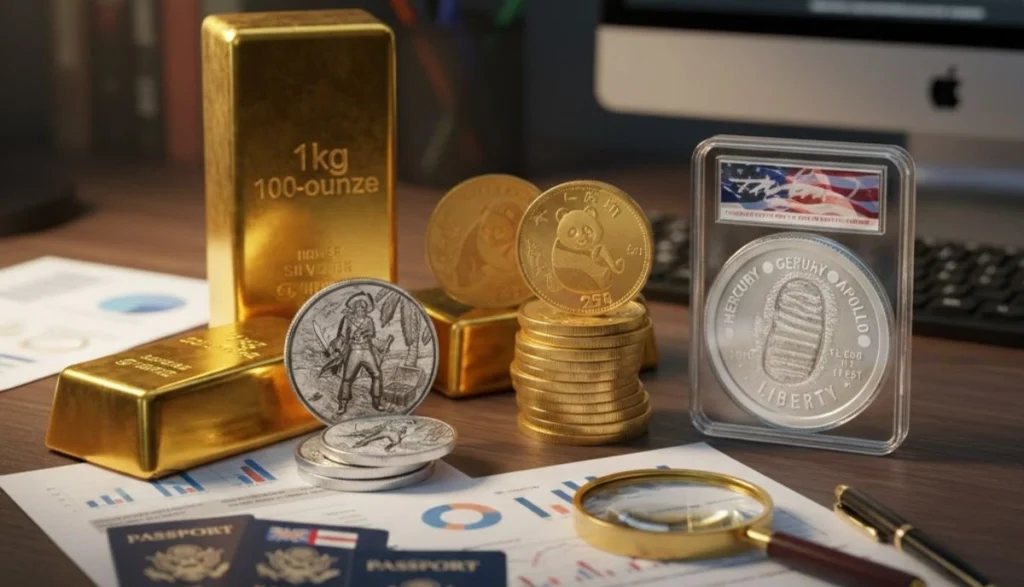
Investing in precious metals, such as gold and silver, is an effective way to diversify a portfolio and protect wealth against market fluctuations. However, like all investments, the tax implications of holding and selling precious metals can be complex and vary depending on the country in which you are a taxpayer. This guide will provide an overview of common tax considerations for metal investors across different regions and tax jurisdictions.
Tax Guide for Metal Investors: Whether you’re investing in physical bullion, coins, or ETFs, understanding the tax landscape is crucial. Keep reading for insights into tax treatment, exemptions, and strategies to optimize your precious metal investment returns.
Understanding the Tax Implications of Metal Investments
Before delving into country-specific details, it’s important to note the key aspects of taxes that may affect precious metal investments. These include:
- Capital Gains Tax: When you sell precious metals for a profit, the tax you pay is typically based on the capital gain—the difference between what you paid for the metal and what you sold it for.
- Sales Tax: Some regions may impose a sales tax on the purchase of physical precious metals.
- Investment Income: Income generated from certain metal-related investments, such as dividends from mining stocks or interest from metal-backed securities, may be subject to tax.
Each country has its own approach to how precious metals are taxed, and the rules can also vary depending on whether the metal is in physical form (bars, coins) or held as part of a fund or exchange-traded product (ETP).
Taxation of Precious Metals for Investors
In some regions, precious metals like gold, silver, and platinum are classified as collectible assets for tax purposes. This classification has significant tax implications for investors.
Capital Gains Tax for Precious Metals
- Long-term Capital Gains: If you hold your metal investments for over a year, you may qualify for long-term capital gains tax, which is generally lower than short-term rates.
- Short-term Capital Gains: If you sell precious metals shortly after purchase, profits may be taxed at your standard income tax rate, depending on your income bracket.
However, because metals are classified as collectibles, the long-term capital gains tax rate for precious metals is higher than for other long-term investments. Collectible assets are often taxed at higher rates than many traditional long-term investments.
Sales Tax
Sales tax on the purchase of physical precious metals varies by region. In many states, bullion and coins are exempt from sales tax. However, some states do charge sales tax on these items. It’s important to check the local rules, as they can differ widely.
Strategies for Minimizing Taxes
Investors in the US can consider the following strategies to minimize their tax liabilities:
- Hold for the Long Term: As mentioned, holding metals for over a year reduces your capital gains tax rate, though the 28% rate still applies to collectibles.
- Invest in Tax-Advantaged Accounts: You may also consider investing in precious metal investment products through tax-advantaged accounts that allow deferred taxation on gains.
If you’re looking for more tips and guidance on how to effectively manage your precious metals investments and taxes, visit DEIGOLDANDSILVERCOINS, where you can find expert insights tailored to the metal markets.
Taxation of Precious Metals in the United Kingdom
In the UK, the tax treatment of precious metals depends largely on whether the metals are held as investment assets or collectibles.
Capital Gains Tax (CGT)
- CGT Exemption for Investment Gold: Certain forms of investment-grade gold may qualify for capital gains tax exemptions depending on regional tax rules. To qualify, the gold must be at least 995 in purity and be bought from an authorized dealer.
- Taxable Metals: Other forms of precious metals, such as silver and platinum, are not exempt from CGT and may incur tax when sold at a profit.
- CGT Rates: The rate for capital gains tax on precious metals in the UK is 10% for basic rate taxpayers and 20% for higher rate taxpayers. For higher-value assets, including gold, the CGT rate may apply to any profit above the annual tax-free allowance, known as the Annual Exempt Amount.
VAT on Precious Metals
- Exemption: Investment-grade gold and silver are generally exempt from VAT in the UK. However, non-investment grade metals or coins may be subject to VAT.
Inheritance Tax (IHT)
Precious metals may also be subject to inheritance tax if they are part of an estate. In some regions, inheritance taxes may apply to precious metals included in an estate once certain exemption thresholds are exceeded.
Taxation of Precious Metals in Canada
Canada follows a similar approach to the US regarding the taxation of precious metals, but there are some notable differences, particularly in how they are classified.
Capital Gains Tax
- Taxable Capital Gains: Precious metals like gold, silver, and platinum are typically taxed as capital assets. The profit from the sale of these metals is subject to capital gains tax.
- Tax Rate:
In some regions, only a portion of capital gains may be subject to taxation. For example, if you made a profit of $10,000 from the sale of precious metals, only $5,000 would be added to your taxable income.
Buy or Sell Gold & Silver Coins with Confidence
Work with a trusted Las Vegas coin dealer offering fair pricing, honest appraisals, and expert guidance every step of the way.
Sales Tax
In Canada, GST/HST (Goods and Services Tax/Harmonized Sales Tax) applies to the purchase of certain precious metals. However, investment-grade bullion (gold, silver, and platinum) is typically exempt from GST/HST if the metal is in a form that qualifies as investment-grade (e.g., bars or coins that meet purity standards).
Mining Stocks and ETFs
Investing in mining stocks or ETFs that focus on precious metals is subject to standard income tax. Dividends from mining stocks are taxed as income, and investors may be eligible for the Dividend Tax Credit in Canada, depending on the type of dividend.
Taxation of Precious Metals in the UAE
The UAE offers a tax-friendly environment for investors, particularly in terms of precious metals.
No Capital Gains Tax
The UAE does not impose capital gains tax on the sale of precious metals. Whether you are selling gold, silver, or any other metal, any profits from the sale are tax-free.
VAT on Precious Metals
Some regions apply value-added tax to the sale of certain goods, including precious metals. However, investment-grade gold is exempt from VAT. Silver and platinum, on the other hand, are subject to VAT unless they are in an investment-grade form.
Tax-Free Income
The UAE’s tax structure is relatively simple and investor-friendly. There are no income taxes on individuals, and this includes any income generated from precious metal investments.
Key Takeaways
- US: Tax treatment varies by region, with some jurisdictions classifying precious metals as collectibles and applying higher capital gains tax rates.
- UK: Gold is exempt from capital gains tax if it qualifies as investment-grade, while silver and platinum are subject to tax. VAT exemptions apply to investment-grade metals.
- Canada: Capital gains tax applies to metal sales, but only 50% of the gain is taxable. Investment-grade metals are exempt from GST/HST.
- UAE: The UAE has no capital gains tax on precious metals, and investment-grade gold is exempt from VAT, but silver and platinum are subject to VAT.
Guidance for Metal Investors: How to Safely Buy Gold Coins Online
For metal investors, buying gold coins online is not just about convenience—it’s also about tax efficiency, authenticity, and long-term investment security. As explained throughout this Tax Guide for Metal Investors, tax treatment often depends on whether the gold qualifies as investment-grade and is purchased from a recognized dealer.
To protect both your capital and future tax position, always choose a trusted precious metals dealer like DEIGOLDANDSILVERCOINS. Our platform is designed specifically for serious metal investors who want transparency, compliance, and peace of mind.
When purchasing gold coins online through DEIGOLDANDSILVERCOINS, investors benefit from:
-
Certified investment-grade gold coins that meet international purity standards
-
Clear documentation that supports capital gains and tax reporting requirements
-
Secure payment methods and encrypted transactions
-
Fully insured shipping with reliable tracking
By sourcing your metals from a reputable dealer, you reduce risks related to counterfeit products and ensure your investment aligns with the tax rules discussed in this Tax Guide for Metal Investors across the US, UK, Canada, and the UAE.
Customer Testimonials and Investor Trust
Trust plays a critical role in precious metal investing, especially when tax compliance and long-term wealth preservation are involved. As highlighted in this Tax Guide for Metal Investors, working with a reliable dealer can significantly reduce regulatory, reporting, and authenticity concerns.
Investors consistently choose DEIGOLDANDSILVERCOINS because of our proven track record and commitment to quality. Customer reviews frequently highlight:
-
Fast, secure, and insured delivery of precious metals
-
High-quality gold coins suitable for investment and tax planning
-
Professional support for both new and experienced metal investors
-
Transparent invoices and records that simplify future tax calculations
With a 4.9-star rating, DEIGOLDANDSILVERCOINS has earned the trust of investors who value reliability, compliance, and expert guidance. These testimonials reinforce why selecting the right dealer is an essential part of any successful precious metals strategy outlined in this Guide for Metal Investors.
Call to Action: Navigating the tax landscape of precious metal investments can be challenging, but understanding these rules can help you make informed decisions. For more tips and guidance on maximizing your investment in precious metals, visit DEIGOLDANDSILVERCOINS for expert insights tailored to your needs.
FAQ’s Section
1. Why are precious metals taxed in the United States?
Precious metals are taxed because the IRS considers them investment assets and classifies most as collectibles. When you sell metals for a profit, capital gains tax may apply. Understanding this rule is essential for Metal Investors planning long-term strategies.
2. Are gold and silver taxed the same way in the US?
Gold and silver are both taxed as collectibles under US tax law, but state sales tax rules may differ. Federal capital gains tax still applies when sold at a profit. Metal Investors should always review both federal and state regulations.
3. What is the capital gains tax rate for precious metals in the US?
In some regions, long-term capital gains on precious metals may be taxed at higher rates than other investment assets.
4. Can precious metals be held in tax-advantaged accounts?
Yes, certain precious metals can be held in approved tax-advantaged retirement accounts if they meet required purity standards.
5. How can metal investors legally reduce their tax burden?
Holding metals long term, using approved retirement accounts, and understanding collectible tax rules can help reduce taxes. Consulting a tax professional is recommended. Smart Metal Investors focus on compliance while optimizing returns under US tax laws.