Why Cleaning Coins Can Harm Their Value
Have you ever come across a dirty, tarnished coin and thought, If I just clean it up, it will look as good as new? Many coin owners make this mistake, not realizing that cleaning coins can significantly reduce their value. The process of cleaning, whether with a cloth, mild soap, or chemical agents, can cause irreversible damage that diminishes a coin’s aesthetic appeal and numismatic value.
In this post, we explore why cleaned coins lose value, the hidden damage often overlooked, and ways to protect your collection. Whether you are a seasoned collector or just starting, understanding the effects of cleaning on coins is key to preserving their worth.
Why Do Cleaned Coins Lose Value?
Coins are valued based on condition and rarity. Grading considers a coin’s appearance, luster, and overall preservation. Cleaning can disrupt these factors in ways that are often invisible to the naked eye. The main reason cleaned coins lose value is that cleaning can remove the natural patina and surface details that collectors value.
The Removal of the Natural Patina
A coin’s patina is the layer of tarnish or oxidation that forms naturally over time. It is often considered a sign of authenticity and age. Cleaning, especially with abrasive methods, removes this patina, leaving the coin looking unnaturally shiny.
Most collectors appreciate the historical value of a coin’s patina, which represents its journey through time. Cleaning can, therefore, erase a piece of history that contributes to its desirability and market value.
Pro Tip: Always remember that a coin with an original patina is generally worth more than one that has been cleaned, no matter how shiny it looks.
Scratches and Abrasions
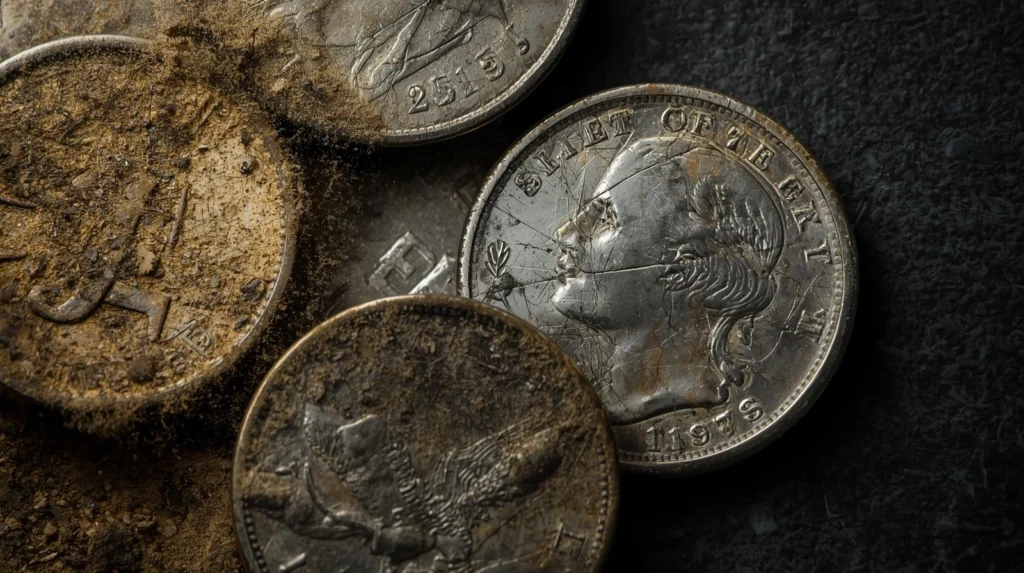
Even light cleaning can create scratches or scuffs on a coin’s surface. These marks, often microscopic, can lower a coin’s grade permanently. Scratches reduce luster and visual appeal, making the coin less desirable. Collectors prefer coins with minimal surface damage, and once scratched, a coin cannot regain its original condition.
What Happens During Coin Cleaning?
Abrasive Cleaning Methods
Abrasive cleaning, like polishing with a cloth or brushing, creates tiny scratches on the coin’s surface. These may be hard to see without magnification but can lower the coin’s grade. The more aggressive the method, the greater the damage. Harsh chemicals or cleaning agents can further harm the coin by altering metals or leaving permanent residues.
Expert Insight: Collecting experts advise that coins should not be cleaned unless absolutely necessary for preservation. If cleaning is needed, it should be performed by professionals using proper methods and materials.
Chemical Reactions
Some individuals resort to cleaning coins with chemical agents, such as vinegar, bleach, or even baking soda. These chemicals can cause irreversible damage by altering the metal’s composition. For instance, using acid-based cleaners can lead to the corrosion of copper, silver, or gold coins, creating pitting or discoloration. This type of damage is not only visually unappealing but also impossible to reverse.
Buy or Sell Gold & Silver Coins with Confidence
Work with a trusted Las Vegas coin dealer offering fair pricing, honest appraisals, and expert guidance every step of the way.
The Role of Coin Grading in Determining Value
Coin grading is crucial in determining value. Grading systems assess a coin’s appearance, surface condition, luster, and wear. Even light cleaning can lower a coin’s grade by several points, affecting its market value significantly.
Case Study: The Impact of Cleaning on Coin Grade
Let’s consider a real-world example: An MS-65 Morgan silver dollar, a coin that is in excellent condition with no visible wear, might be worth hundreds of dollars in the collector market. However, if this coin is cleaned, it could drop to an MS-60 grade or lower. The value of the coin could then plummet by as much as 50% or more, depending on the severity of the cleaning. This demonstrates how cleaning can dramatically impact both a coin’s grade and its overall market value.
Pro Tip: If you ever think about cleaning a valuable coin, check its grade before and after cleaning (if you decide to clean it). The difference in price will often speak for itself.
Why Do Collectors Care About Uncleaned Coins?
Collectors care about uncleaned coins for several reasons:
- Preservation of Original Features: Coins retain their natural luster, patina, and fine details, which are key to value.
- Authenticity: Cleaning can remove evidence of authenticity or alter a coin’s appearance.
- Higher Resale Value: Uncleaned coins typically attract higher bids, as they preserve their original characteristics.
How Can You Safely Clean Coins Without Damaging Them?
If you need to clean coins for preservation or aesthetic purposes, follow these safe practices:
- Use Mild Methods: For lower-value coins, soak in distilled water or use a soft, non-abrasive cloth. Avoid rubbing or polishing.
- Consult a Professional: High-value coins should be cleaned by experts who have the proper tools and knowledge.
- Understand When to Avoid Cleaning: For rare or antique coins, avoid cleaning whenever possible. Natural wear and patina enhance authenticity and value.
FAQ Section
1. Can cleaning a coin completely destroy its value?
Yes, cleaning a coin can remove its natural patina and cause surface scratches, both of which are critical to its value. Most cleaned coins lose a significant portion of their worth.
2. How can I tell if my coin has been cleaned?
Signs of cleaning include unnatural shine, surface scratches, or a lack of patina. If the coin looks overly shiny or too polished, it has likely been cleaned.
3. What’s the best way to clean a coin without damaging it?
Use distilled water and a soft, non-abrasive cloth to gently wipe away dirt. Avoid rubbing or polishing, as this can cause scratches. If in doubt, consult a professional.
4. Is it ever okay to clean a coin?
For some low-value coins or for preservation purposes, gentle cleaning may be acceptable. However, for rare or high-value coins, it’s best to leave them uncleaned.
5. Why does cleaning a coin decrease its grade?
Cleaning a coin removes the surface details, patina, and luster that contribute to its grade. Even minor cleaning can lead to a drop in the coin’s grading and market value.
6. Can professional cleaning restore a coin’s value?
Professional cleaning may remove some damage caused by improper cleaning, but it cannot fully restore a coin’s original condition or its lost value.
7. What are the risks of using harsh chemicals on coins?
Harsh chemicals can corrode a coin’s surface, causing pitting, discoloration, and irreparable damage. Always avoid using chemicals on valuable coins.
Conclusion: The Long-Term Damage of Coin Cleaning
Cleaning coins may appear harmless, but it can cause lasting damage that reduces their value. Removing patina, introducing scratches, or using chemicals can have irreversible effects. Preserving the original state of a coin is key to maintaining its worth and historical significance.
When in doubt, leave coins uncleaned or consult a professional. Proper preservation helps protect the value of your collection.