Introduction
What happens when consumers still want gold, but fewer of them can comfortably afford to wear it?
That is the core tension shaping gold demand 2026. On one side, investors, central banks, and ETF buyers are treating gold like financial insurance. On the other, jewelry buyers are still emotionally committed to gold, but they are reacting to price shocks by delaying purchases, trading down in weight or purity, or shifting to lighter designs. The result is a gold market demand story with two very different engines running at different speeds.
The data is unusually clear. World Gold Council figures show total gold demand in 2025, including OTC activity, exceeded 5,000 tonnes for the first time, while jewelry consumption volumes fell to 1,542.3 tonnes, a five-year low. At the same time, global gold ETF holdings grew by 801 tonnes, and central banks added 863 tonnes.
If you want to understand where the market is heading, this is the split that matters. Below, you’ll see exactly how gold market demand is evolving, why jewelry vs investment is the defining comparison in 2026, and what businesses, investors, and marketers should watch next.
Why is gold demand 2026 tilting toward investment?
Gold demand in 2026 is tilting toward investment because macro risk is doing what fashion and gifting alone cannot: creating urgency. Investors are buying gold as a hedge against geopolitical tension, bond-market uncertainty, and currency risk, while jewelry buyers are acting more selectively because high prices make discretionary purchases harder.
The strongest signal came from 2025 and carried straight into 2026. The World Gold Council reported that total annual gold demand topped 5,000 tonnes for the first time, helped by the second-strongest year on record for ETF growth and a 12-year high in bar-and-coin demand. It also expects another year of strong ETF inflows and robust bar-and-coin demand in 2026, with jewelry weakness likely to persist in a high-price environment.
What the market is pricing in
Reuters reported in February 2026 that a poll of 30 analysts and traders put the median 2026 gold price forecast at $4,746.50 per ounce, the highest annual forecast in that poll’s history. That matters because price expectations can become self-reinforcing: when institutions expect elevated geopolitical risk and continued reserve accumulation, investment demand tends to stay sticky.
Think of it this way: jewelry demand depends on desire plus affordability. Investment demand depends on fear, diversification, and expected returns. In 2026, those investment drivers are simply stronger.
How is jewelry demand behaving when prices stay high?
Jewelry demand in 2026 is not collapsing, but it is changing shape. Consumers still value gold jewelry, especially in culturally important markets, yet many are buying less volume, choosing lighter pieces, or postponing purchases because record prices have tightened budgets.
This is the most important nuance in the jewelry vs investment debate: volume is weak, but value can still rise. World Gold Council data shows annual jewelry consumption fell to 1,542.3 tonnes in 2025, down 18% year over year, while the value of that demand climbed to a record $172 billion. In plain English, people bought fewer tonnes of jewelry, but they spent more money doing it.
What consumers are doing differently
Reuters and Business Insider reporting in 2026 shows the same behavioral pattern at retail level. In India, buyers held back during volatile price spikes, and dealers offered discounts as wedding-season demand stayed weak. In the U.S. bridal market, some customers delayed purchases, financed rings, reused heirloom gold, or shifted toward lower-karat options and alternative metals.
That is what I would call an “attached but constrained” category. Buyers have not lost interest in gold jewelry. They are simply optimizing around affordability. For brands, that changes merchandising, messaging, and margin strategy.
Pro Tip: If you market jewelry online, stop treating all gold buyers as luxury buyers. In a high-price cycle, conversion often comes from framing value per gram, design longevity, upgrade options, financing, and heirloom trade-ins rather than pure aspiration.
What do the latest data say about jewelry vs investment demand?
The latest data say investment is carrying the market while jewelry is defending its emotional and cultural relevance. Gold demand 2026 is therefore not a simple demand boom or bust story; it is a compositional shift from adornment-led tonnage to investment-led flows.
Here is the clearest side-by-side view from current reporting and World Gold Council data:
| Segment | What the latest data show | What it means for 2026 |
| Total gold demand | Exceeded 5,000t in 2025, including OTC | Overall demand is strong, but mix matters |
| Jewelry demand | 1,542.3t in 2025, down 18% y/y; value hit record $172bn | Lower volumes, higher spend per unit |
| Gold ETFs | Holdings grew 801t in 2025 | Institutional and financial demand is back at scale |
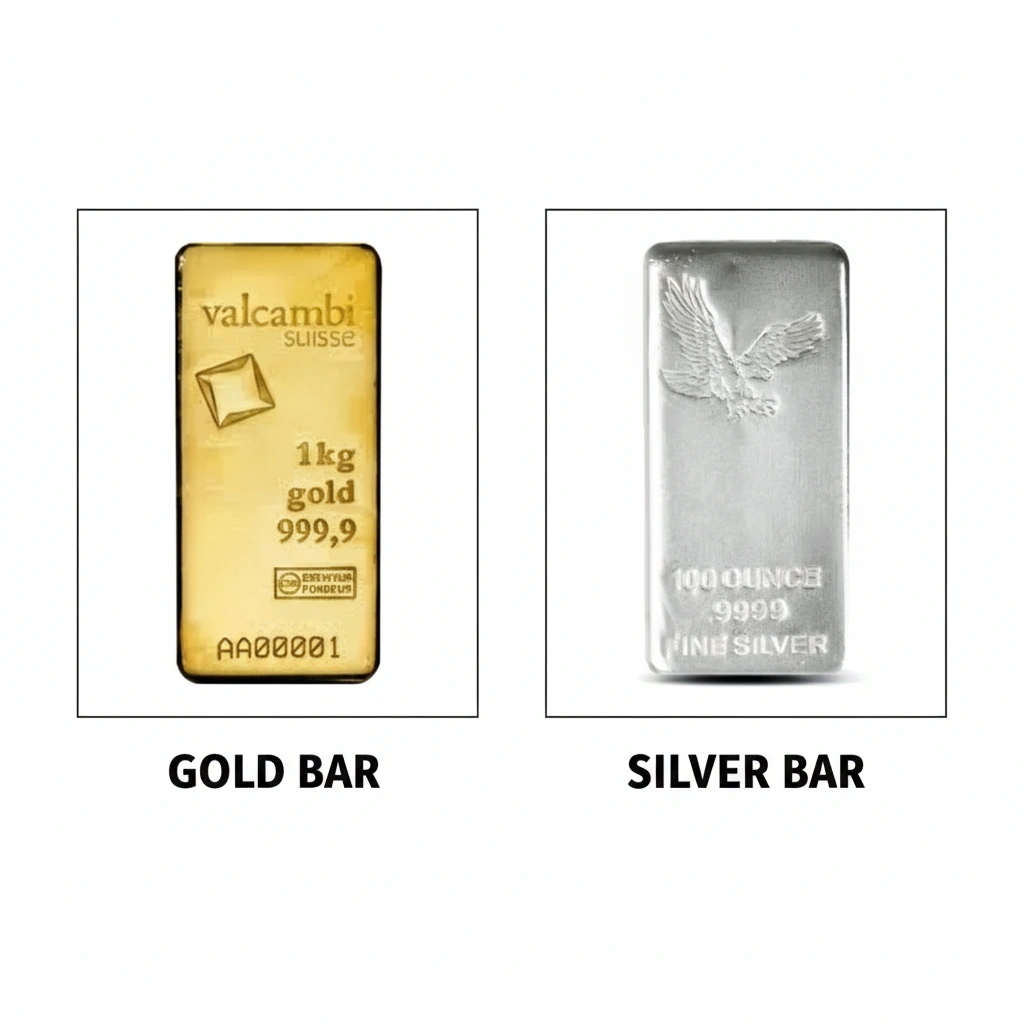
| Bar and coin | Reached a 12-year high in 2025 | Retail investors still want physical exposure |
| Central banks | Bought 863t in 2025 | Official-sector demand remains a major floor under the market |
Why this table matters
If you only look at total demand, you will miss the strategic story. If you only look at jewelry tonnage, you will sound bearish when the broader market is not. Smart analysis in 2026 has to separate emotional-consumption demand from financial-protection demand.
That distinction also matters for content strategy. A retailer, bullion platform, ETF publisher, or wealth advisor should not be targeting the same search intent with the same page structure.
Which regions are shaping gold market demand the most?
India and China remain central to gold market demand, but they are influencing the market differently in 2026. India is showing clearer jewelry affordability pressure, while China is showing steadier physical demand and continued support from long-term investment buying and central-bank accumulation.
India is the clearest example of the jewelry squeeze. World Gold Council data showed India’s jewelry demand fell from 563.4 tonnes in 2024 to 430.5 tonnes in 2025. Reuters then reported that India’s total gold demand in 2026 is expected to come in around 600 to 700 tonnes, versus 710.9 tonnes in 2025, as higher prices continue to suppress jewelry purchases even while investment demand improves.
China’s role is broader than jewelry
China looks more balanced. Reuters reported in March 2026 that physical demand in Chinese markets remained robust even after gold traded above $5,000, with local premiums staying firm and buyers continuing to purchase for long-term investment. On top of that, China’s central bank extended its gold-buying streak to 17 consecutive months through March 2026.
This is why broad regional generalizations fail. India shows how price shocks can reduce jewelry volume quickly. China shows how cultural affinity, strategic allocation, and official-sector buying can coexist.
Mini case study: one commodity, two demand logics
A jewelry retailer in Ahmedabad and a bullion dealer in Shanghai are both selling gold, but they are not selling the same value proposition. One is selling occasion, status, and tradition under budget pressure. The other is selling a long-term store of value during uncertainty. That is the real jewelry vs investment split.
Are central banks and ETFs still the biggest force behind the trend?
Yes. In 2026, central banks and ETFs remain the biggest force behind the investment side of gold demand because they combine scale, persistence, and signaling power. When official reserves and institutional flows keep rising, they change both the price floor and investor psychology.
The numbers back that up. Global gold ETF holdings increased by 801 tonnes in 2025, and World Gold Council research from late 2025 said gold ETFs had already seen about $77 billion of inflows and more than 700 tonnes added to holdings during the rally. Meanwhile, central banks bought 863 tonnes in 2025, far above the 2010–2021 annual average of 473 tonnes.
Central-bank behavior is not a side note
The World Gold Council’s 2025 Central Bank Gold Reserves Survey found that 95% of respondents expected global central-bank gold reserves to increase over the next 12 months, and 43% expected their own institution’s reserves to rise. That is a strong trust signal for the market.
For businesses, that matters beyond the commodity desk. Persistent official buying supports headlines, shapes media narratives, and keeps gold visible as a “serious asset,” not just a consumer product.
Expert Insight: What I’ve seen in high-volatility markets is that institutional narratives eventually trickle down into consumer behavior. When central banks, ETF issuers, and financial media keep reinforcing gold’s defensive role, consumer buyers start thinking less like shoppers and more like allocators.
What does this mean for businesses, investors, and marketers?
For businesses, investors, and marketers, gold demand 2026 means you need sharper segmentation. The old one-size-fits-all “gold is valuable” pitch is too vague. Jewelry buyers, bullion buyers, ETF investors, and reserve managers are responding to different triggers.
If you sell jewelry
Lead with design efficiency, craftsmanship, trust, and purchase flexibility. Lighter-weight collections, bridal bundles, repair services, trade-ins, financing, and educational content around karat, weight, and resale value are more persuasive than generic luxury copy in a price-sensitive cycle. Brands like Titan, Pandora, and Tiffany all sit in adjacent conversations about pricing, positioning, or metal strategy, which tells you this is now a category-wide issue, not a niche problem.
If you sell investment products
Focus on use case and timeframe. Investors want clarity on allocation logic, liquidity, custody, premiums, and risk scenarios. Content that compares physical bars, coins, ETFs, and allocated storage will outperform vague “why gold” pages because it maps better to commercial investigation intent.
If you market either category
Build content around query clusters, not isolated keywords. Good examples include “gold ETF vs physical gold,” “why jewelry demand falls when gold prices rise,” and “how central bank buying affects gold prices.” Those are better internal-linking targets than broad category pages alone.
What are the biggest risks to the 2026 outlook?
The biggest risk to the 2026 outlook is assuming current momentum guarantees a straight-line future. Gold can remain structurally strong while specific demand segments weaken, pause, or rotate. Jewelry weakness could deepen if affordability worsens, and investment flows could slow if rates, inflation expectations, or geopolitical conditions shift abruptly.
Risk 1: price shock hurts jewelry harder than expected
Jewelry demand is already weak in tonnage terms. If prices remain extremely volatile, more buyers may postpone purchases or trade into non-gold alternatives. That is especially relevant in wedding-driven and gifting-heavy markets. Reuters’ March 2026 reporting from India is a real-time warning sign here.
Risk 2: investment demand becomes crowded
When an asset becomes a consensus hedge, short-term positioning can get crowded. Reuters’ February 2026 analyst poll shows how bullish expectations have become. That does not make the thesis wrong, but it does raise the odds of sharper pullbacks if macro conditions change.
Risk 3: businesses misread value demand as volume strength
This is a classic mistake. Record jewelry spending does not mean unit economics are healthy across the board. A retailer can report strong revenue while losing volume, repeat frequency, or margin resilience. That is why executives should track grams sold, average item weight, financing uptake, and trade-in share, not just revenue.
How should you interpret gold demand 2026 going forward?
You should interpret gold demand 2026 as a market led by protection-first capital, with jewelry demand acting as a resilient but stressed secondary pillar. Investment is currently setting the tone, while jewelry is adapting rather than leading.
The exact takeaway is not that jewelry no longer matters. It still matters enormously, especially in India, China, the Middle East, and the global bridal market. The point is that jewelry is no longer the cleanest read on the market’s direction. If you want to understand the next move in gold market demand, watch ETF flows, central-bank purchases, price volatility, and consumer affordability together.
A practical checklist
Use this checklist to evaluate the market month to month:
- Track ETF inflows and outflows
- Watch central-bank purchase announcements
- Compare jewelry tonnage with jewelry value, not just one or the other
- Monitor India and China physical premiums or discounts
- Separate short-term price spikes from long-term allocation trends
- Review whether your content targets consumers, investors, or both
That framework keeps you from confusing headline noise with durable market structure.
Sell Gold and Silver Coins to DEIGOLDANDSILVERCOINS
If you are considering selling Gold and Silver coins, DEIGOLDANDSILVERCOINS is here to help. Our experienced numismatists provide confidential, same-day appraisals and competitive payouts. You can contact us by phone, live chat, or email for direct assistance.
Customer Reviews
At DEIGOLDANDSILVERCOINS, customer satisfaction is our top priority. Our reputation is built on trust, discretion, and fair dealing. Read our client testimonials to see how we consistently deliver excellence.
We welcome your feedback and are committed to continually improving your selling experience.
Conclusion
The cleanest way to read gold demand 2026 is this: investment demand is doing the heavy lifting, while jewelry demand is proving more durable in value than in volume. Total gold demand remains historically strong, ETF and bar-and-coin buying have regained real momentum, and central banks continue to provide a powerful structural tailwind.
Three takeaways matter most. First, jewelry vs investment is not a theoretical debate anymore; it is the main lens for understanding this market. Second, high prices are not killing jewelry demand outright, but they are changing how consumers buy. Third, official and institutional buyers are helping set the floor under broader gold market demand.
For a stronger next step, turn this article into a downloadable market brief, a category page, or a lead magnet for investors or jewelry buyers who need a clearer allocation framework.
FAQ
1. What is driving gold demand in 2026?
Gold demand in 2026 is being driven mainly by investment demand rather than jewelry volume. ETF inflows, bar-and-coin buying, central-bank accumulation, and geopolitical uncertainty are supporting the market, while jewelry buying remains under affordability pressure because prices are elevated.
2. Is jewelry demand for gold falling in 2026?
Jewelry demand is weaker in tonnage terms, but not dead. World Gold Council data showed 2025 jewelry consumption fell to 1,542.3 tonnes, yet the value of jewelry demand rose to a record $172 billion. Buyers still want gold; they are just buying differently.
3. Why does investment demand rise when jewelry demand falls?
Investment demand responds to different triggers. Investors buy gold for diversification, safety, inflation hedging, and macro uncertainty. Jewelry buyers care more about affordability, gifting cycles, and fashion. In a high-price environment, those motivations diverge sharply.
4. Are central banks still buying gold in 2026?
Yes. Central banks remained major buyers through 2025, adding 863 tonnes, and the World Gold Council’s 2025 survey found 95% of respondents expected global central-bank gold reserves to increase over the next 12 months. China also extended its gold-buying streak into March 2026.
5. Which markets matter most for gold demand 2026?
India and China remain the most important physical-demand markets. India is showing clearer jewelry weakness because of price sensitivity, while China has shown firmer physical premiums and continuing long-term investment interest. Both still shape global sentiment and supply-demand interpretation.
6. Should businesses create separate content for jewelry and investment buyers?
Absolutely. Jewelry and investment buyers have different search intent, objections, and conversion triggers. Separate landing pages, comparison content, FAQs, and lead magnets will usually outperform one generic “gold” page because they map better to commercial investigation behavior.