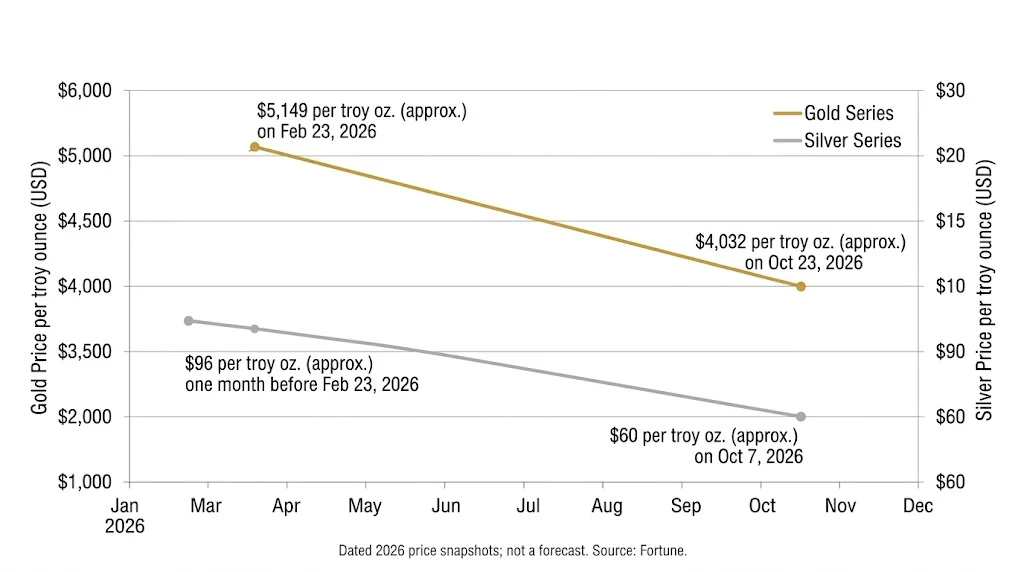
The honest answer to the question of when to sell begins with one important caution: no one can accurately predict when gold and silver prices will reach their peak. In 2026, gold was trading at approximately $5,149 per ounce on February 23 before falling to around $4,032 by October 23, representing a decline of roughly 22%. Similarly, silver was valued at nearly $96 about a month before February 23 but dropped to approximately $60 by October 7. Whether the current market presents a good opportunity to sell depends on several factors, including your original purchase price, the reason you own the coins, and the specific type of coins you have.
This guide gives seven signs that selling may make sense, explains when waiting is smarter, and walks through how to sell without leaving money on the table. All prices cited are dated snapshots, not forecasts.
 Can You Time the Top?
Not reliably, and history shows why. Gold hit a peak of about $850 in 1980, then fell to $253 in August 1999, a loss of roughly 70 percent over 19 years. After peaking above $1,900 in 2011, gold sank 28 percent in 2013, its worst year since 1981. Silver fell 36 percent that same year. Gold bottomed near $1,050 in December 2015. Free Shipping on $199+ OrdersBBB A+ Rated, NGC Authorized Dealer, 100% Secure +3
Your reference point matters too. On October 23, 2026, gold sat about 2.5 percent below its price a year earlier. Silver was around $52 in late October 2025 and about $60 in early October 2026. Someone who bought a year ago is in a very different position from someone who bought in January. That is why the signs below focus on your situation, not on a guess about the market’s next move. FortuneFortune
Seven Signs It May Be a Good Time to Sell
1. You have reached the goal you bought the coins for
If you bought to fund a purchase, reach a target or diversify, hitting that target is a reason to sell some or all of the holding, whatever the price does next. Selling a portion locks in progress while leaving you invested.
2. You need the money
Needing cash for an emergency, a business opportunity or a home is a legitimate reason to sell. If you are selling on a deadline, bullion and melt-value coins are the simplest to convert quickly. Rare coins often do better with time and the right venue, so avoid a rushed sale of anything that might be collectible.
3. The price is comfortably above what you paid
The relevant question is not “is this the peak?” but “is this a profit I am happy to take?” Check your cost basis, since the gain is what gets taxed. Long-term gains on physical gold and silver, held for more than a year, are taxed at a maximum federal rate of 28 percent. Short-term gains are taxed at ordinary income rates. The 28 percent is a ceiling, so lower brackets pay less. Nevada has no state personal income tax, but federal rules still apply. This is general information, not tax advice, so confirm details with a tax professional. accountingtodaywealthmanagement
4. An appraisal shows your coins are worth more as collectibles than as metal
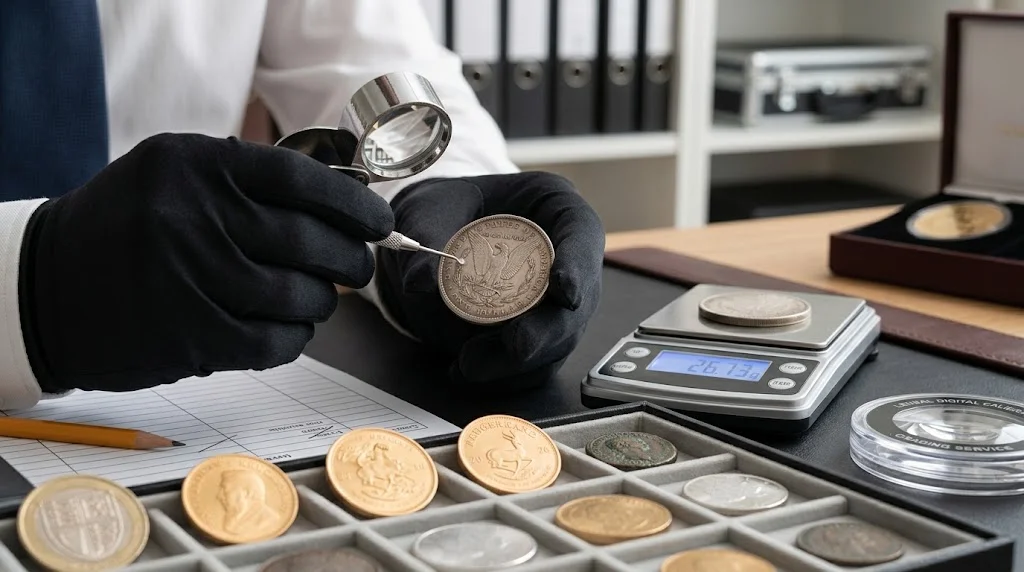
This is the one sign where a coin’s identity matters more than the market. A common Morgan dollar holds about 0.7734 troy ounces of silver, or roughly $46 at $60 an ounce. Yet a PCGS VG10 1889-CC Morgan dollar sold for $1,170 at Heritage on September 22, 2025. That is a historical result, but it shows why checking before you sell for melt matters. Collector coins follow collector demand, not spot price. Our guide to melt value vs. collector value explains how dealers separate the two. For a second opinion, the American Numismatic Association maintains a dealer directory, and member dealers agree to its code of ethics. greysheetmoney
5. Metals have grown into too large a share of your wealth
After a long run-up, gold and silver can end up as more of your net worth than you intended. Trimming a position to restore balance is a standard reason to sell. Ask a financial adviser what mix suits your situation.
6. You inherited coins you will not keep
Estate coins often sit unsorted for years. Selling is reasonable if you do not plan to collect, but sorting comes first, because a jar can hold both ordinary silver and a few valuable coins. Our guides to estate coin collections and sorting an inherited coin jar explain what to separate.
7. Your reason for owning has changed
A price drop alone is not a reason to sell, but a change in your thinking might be. If you bought as an inflation hedge and no longer hold that view, or you simply have no use for the position, that is a real signal. Write down why you bought and check whether it still holds.
Signs You May Want to Wait
- You have not had the coins appraised. Selling for melt before checking dates and mintmarks can cost you far more than a few weeks’ delay.
- A single price move is driving the decision. One bad or good day is not information about your situation.
- You are close to the one-year mark. A sale just past 12 months can fall under the long-term rate instead of your ordinary bracket, so check with a tax professional.
- The coins have been cleaned or damaged. That is a reason to get advice, not to rush.
How to Sell Once You Decide
Sort first. Separate bullion and melt-value coins from anything that looks older, scarcer or unusually well preserved.
Get an appraisal. An appraisal estimates what a coin is worth, while a dealer’s offer is what the dealer will pay. The offer is lower because it includes resale risk. DEI GOLD AND SILVER COINS offers appraisals in Las Vegas.
Compare offers. Know the spot price and the coin’s melt value, then compare offers from more than one dealer. The U.S. Mint does not buy back the bullion coins it sells, so resale goes through dealers. The old article’s FAQ said the same, so it is worth keeping in mind before you plan around a “sell back to the Mint” option. coinworld
Know where to sell. Our service pages explain how we handle gold coins and silver.
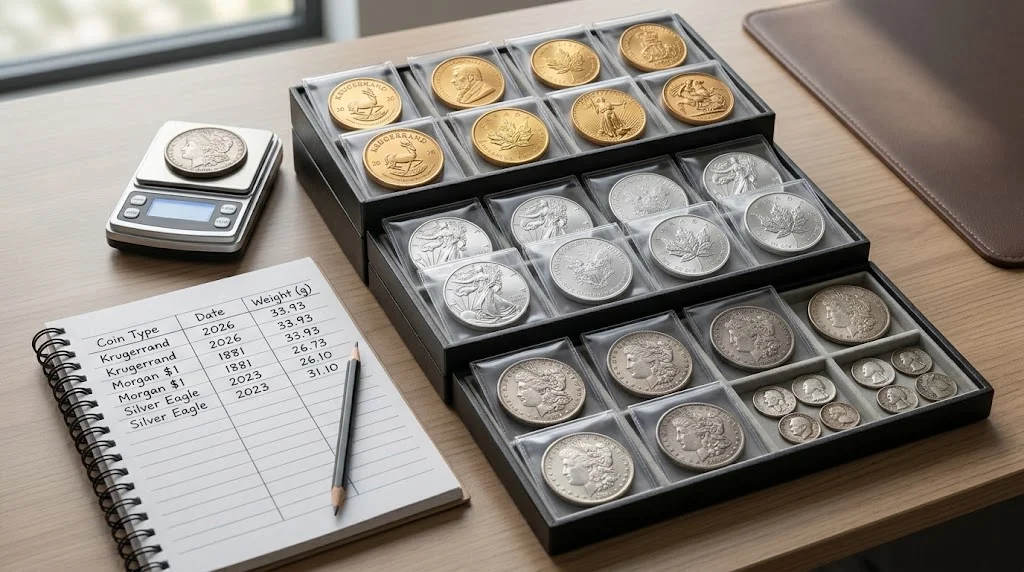
Keep records. Receipts and purchase dates support your cost basis at tax time.
Conclusion
The best time to sell gold and silver coins is when selling serves your goals: you have reached a target, you need the cash, or your coins are worth more to a collector than to a refiner. Prices will keep moving, and no one can name a peak in advance. Get an appraisal, understand your cost basis and taxes, and compare offers before you decide.
By DEI GOLD AND SILVER COINS | Articles by DEI GOLD AND SILVER COINS