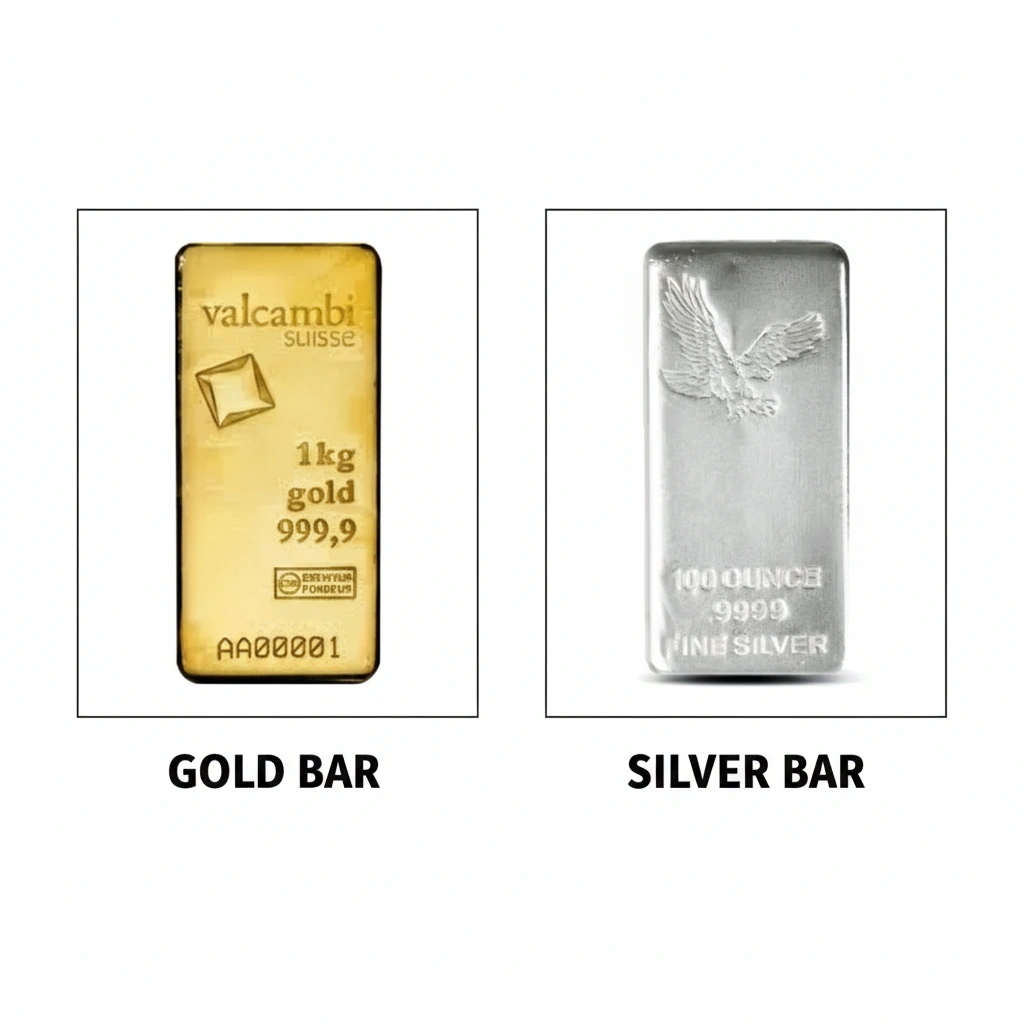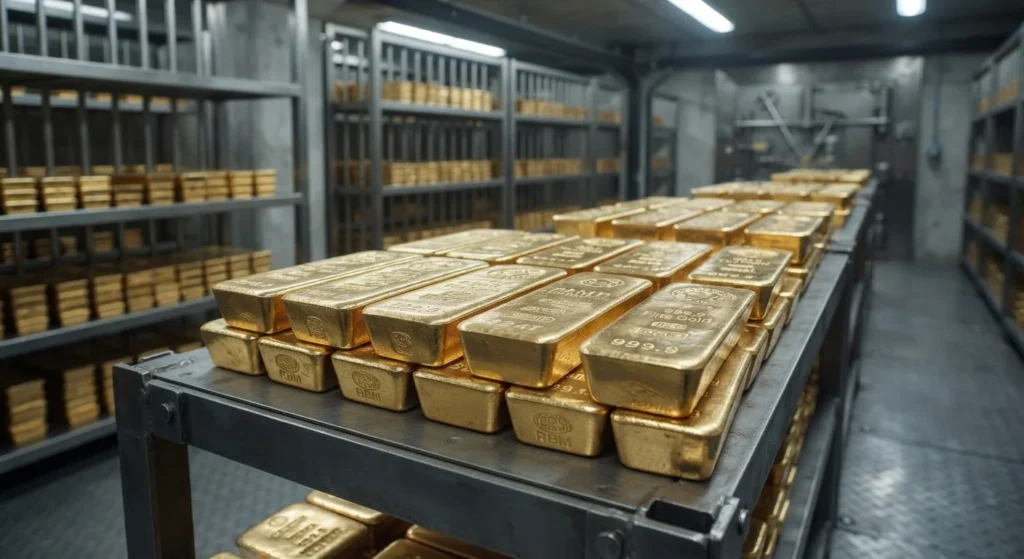
Something unusual happened to the global monetary system in 2026, and most people missed it. For the first time since the mid-1990s, gold overtook US Treasuries as the largest component of central bank reserves worldwide. Central bank gold buying in 2026 has continued a four-year run that has seen official institutions accumulate bullion at roughly double the pace of the previous decade, and the shift is not a fluke of price appreciation alone — it reflects a deliberate move by governments to hold more of their reserves in a metal rather than in another country’s currency. For collectors, investors, and anyone who owns gold coins or bullion, this institutional buying spree says something important about where confidence in paper currencies currently stands, and about the role a tangible asset still plays even in a digital financial system.
A Historic Shift: Gold Overtakes the Dollar in Reserve Portfolios
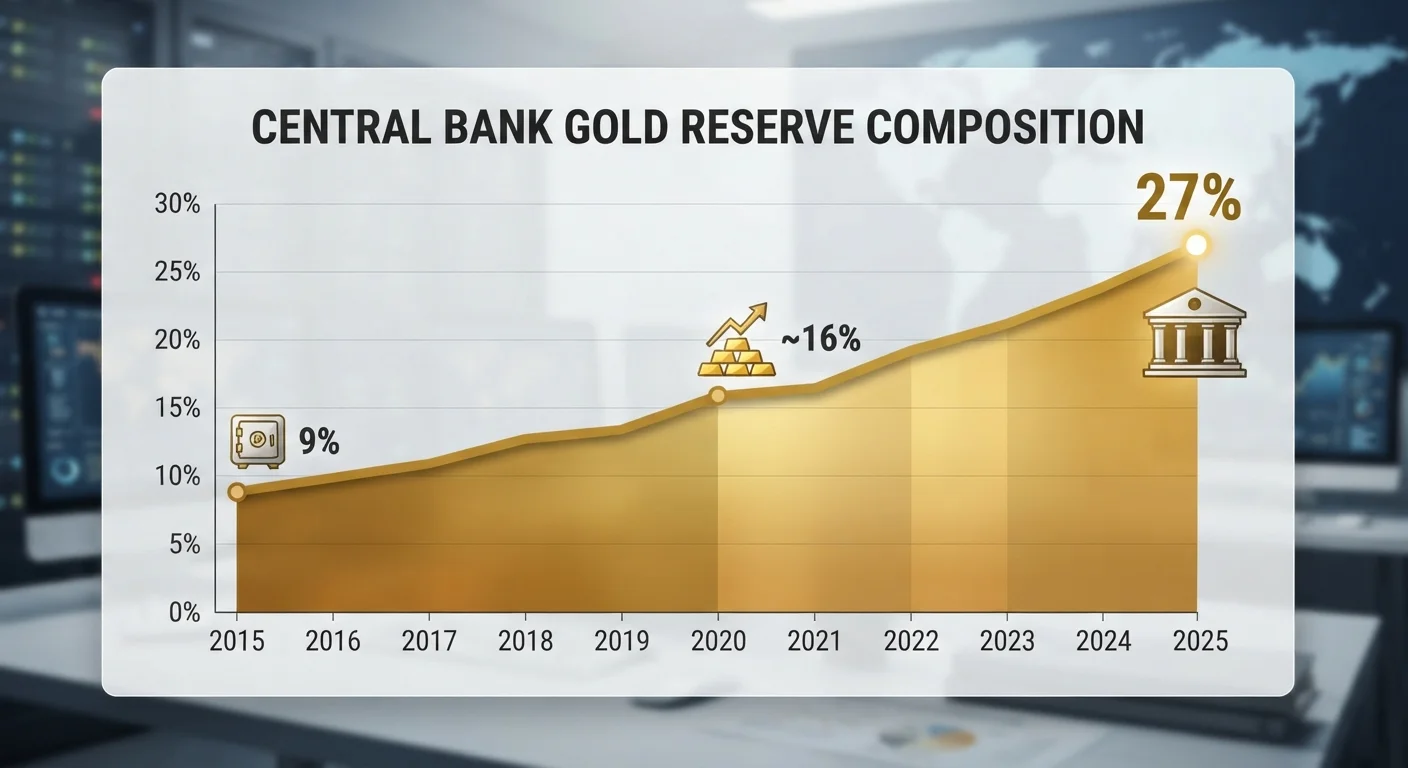
According to a European Central Bank report on global reserve composition, gold accounted for 27 percent of global central bank reserve assets at the end of 2025, up sharply from 20 percent a year earlier — while the share held in US Treasuries fell from 25 percent to 22 percent over the same period. That places gold ahead of Treasuries as the single largest reserve asset category for the first time in roughly three decades. Central banks worldwide now hold more than 36,000 tonnes of gold combined, a figure approaching the roughly 38,000 tonnes held during the Bretton Woods era, when the US dollar itself was directly convertible into gold at a fixed rate.
That comparison is worth sitting with for a moment. Bretton Woods ended in 1971, when President Nixon suspended the dollar’s convertibility into gold — the event numismatists and economists alike refer to as the “Nixon Shock.” For more than five decades afterward, gold’s share of official reserves steadily declined as central banks leaned almost entirely on the dollar and other paper currencies. The return of gold holdings to near-Bretton Woods levels marks one of the more significant reversals in modern monetary history, and it has happened almost entirely within the last four years.
Why Central Banks Hold Gold in the First Place
Central banks have held gold reserves for centuries, long before paper currency became the dominant medium of international trade. Gold has no counterparty risk — unlike a bond or a bank deposit, it does not depend on another government or institution honoring a promise to pay. It cannot be devalued by a policy decision, frozen by sanctions in the way currency reserves can, or defaulted upon. For a central bank managing a national reserve portfolio, those properties matter most during periods of geopolitical stress, when trust in other institutions’ financial commitments is exactly what’s being tested.
That dynamic became concrete in 2022. When the United States and its allies froze a significant portion of Russia’s dollar-denominated central bank reserves following the invasion of Ukraine, it sent a clear signal to reserve managers everywhere: currency reserves held in another country’s financial system can be restricted by that country’s government. Gold held domestically, by contrast, cannot be frozen from abroad. Central bank gold buying accelerated meaningfully in the years that followed, and it has not meaningfully slowed since.
The Numbers Behind Central Bank Gold Buying in 2026
The scale of recent buying illustrates just how structural this trend has become. Central banks added a net 244 tonnes of gold to reserves in the first quarter of 2026 alone, a 17 percent increase over the prior quarter. That pace accelerated further in the second quarter, with the World Gold Council reporting central bank purchases of 289 metric tonnes — a record for any second quarter on record and roughly five times the pace of the first quarter’s monthly average. For context, central banks purchased 863 tonnes across the full 2025 calendar year, and net annual purchases have averaged approximately 1,000 tonnes over the preceding four years, compared with roughly 500 tonnes a year in the decade before that.
The World Gold Council’s ninth annual Central Bank Gold Reserves Survey, released in June 2026, reinforces that this is not a short-term reaction to market conditions. Eighty-nine percent of surveyed reserve managers expect global central bank gold holdings to continue increasing over the next twelve months, and a record 45 percent said they personally expect their own institution’s holdings to grow — the highest figure recorded since the survey began.

Who’s Actually Buying — and Who’s Pulling Back
Central bank gold buying is not evenly distributed, and looking at which countries are active tells its own story about global monetary politics. Poland has been one of the most aggressive buyers of the current cycle, adding 51 tonnes in the second quarter of 2026 alone and pushing its reserves to 632 tonnes as it works toward a publicly stated 700-tonne target. China resumed larger purchases in the same quarter, adding 33 tonnes — its largest single-quarter addition since late 2023 — bringing reported holdings to 2,346 tonnes, though many analysts believe China’s actual holdings, including unreported purchases, may be higher. Uzbekistan, Kazakhstan, and smaller emerging-market central banks have also been steady accumulators throughout 2026, and countries like Indonesia and Malaysia turned into buyers again after a long hiatus from the market.
Turkey’s experience illustrates that this trend is not a one-way accumulation for every participant. After adding roughly 220 tonnes to its reserves since 2022, Turkey’s central bank sold or loaned back a significant portion of its gold — roughly 130 tonnes — in early 2026 to help defend its currency following regional conflict involving Iran, one of the larger reserve drawdowns of the current cycle. That reversal is a useful reminder: central bank gold reserves are a strategic tool, not a one-directional bet, and individual countries will draw on those reserves when domestic conditions require it.
What This Means for Coin and Bullion Buyers
It’s worth being precise about what central bank buying does and does not tell an individual collector or investor. Sovereign gold purchases operate on an entirely different scale and timeline than retail bullion or coin purchases, and central bank demand alone does not set the price of gold, nor does it guarantee any particular outcome for an individual buyer or seller. What sustained institutional demand does provide is a structural floor of demand that did not exist at the same scale a decade ago — a meaningful base of buying interest that exists independent of retail investor sentiment or short-term price swings.
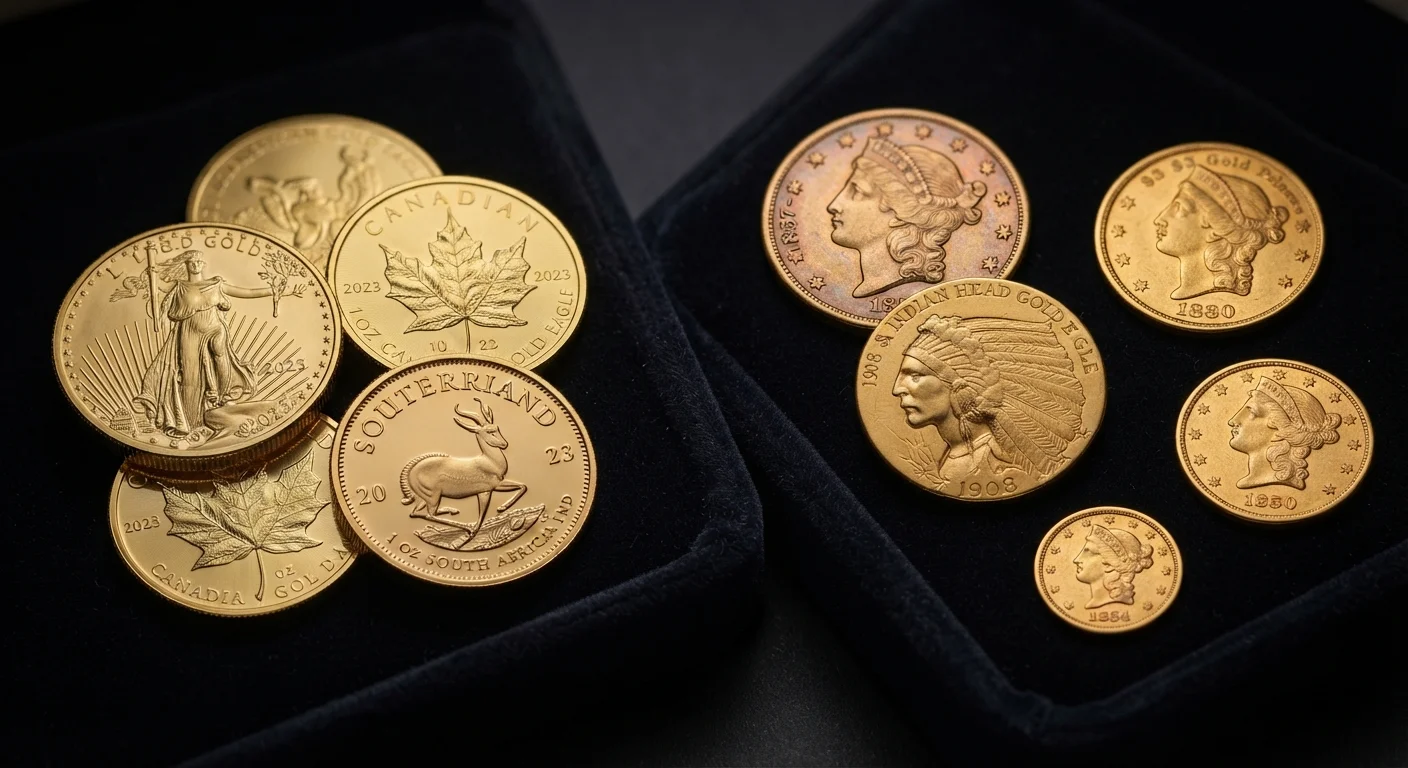
For collectors and bullion buyers, that broader demand picture sits alongside a separate, more personal question: whether an individual gold coin — a Krugerrand, an American Gold Eagle, a pre-1933 US gold coin, or an older world gold issue — is best valued for its metal content or for its numismatic characteristics. Rarity, date, mint mark, condition, and certification through services like PCGS or NGC can push a coin’s value well above its raw gold content, the same way certain silver coins carry premiums far beyond melt value. Central bank demand affects the metal-content floor beneath every gold coin; it does not change what makes a specific coin collectible.
Turning a Macro Trend Into a Practical Decision
Sustained central bank demand is one of several factors that has kept gold firmly in the public conversation throughout 2026, and it has understandably prompted more people to look at their own holdings — whether that’s inherited gold coins, an accumulated bullion position, or jewelry that’s been sitting untouched for years. Anyone in the Las Vegas area weighing whether to sell, hold, or add to a gold position can get a clear, honest read on current value at DEI Gold and Silver Coins, which evaluates gold coins and bullion — including American Gold Eagles and older US and world gold issues — for both metal content and any numismatic premium a piece might carry beyond its weight in gold.
Why This Trend Still Matters
Central bank gold buying in 2026 is not simply a data point for economists — it’s a visible, measurable shift in how the institutions responsible for national reserves think about risk, trust, and the international monetary system. Gold’s return to the top of the global reserve hierarchy, a position it hasn’t held since before the internet existed as a consumer technology, reflects decisions being made in real time by dozens of central banks acting independently but arriving at strikingly similar conclusions. Whatever happens to the price of gold from one quarter to the next, that structural reallocation by the world’s reserve managers is unlikely to reverse quickly — and it’s a trend worth understanding whether you own a single gold coin or none at all.
Readers who want to see gold and silver coins in person, ask questions directly, or compare bullion and numismatic pricing firsthand can do so at upcoming Las Vegas coin shows.
DEI Gold and Silver Coins is the official sponsor of these shows.
Held and produced by CK Shows, Las Vegas, NV.
By DEI Gold and Silver Coins | Articles by DEI Gold and Silver Coins