
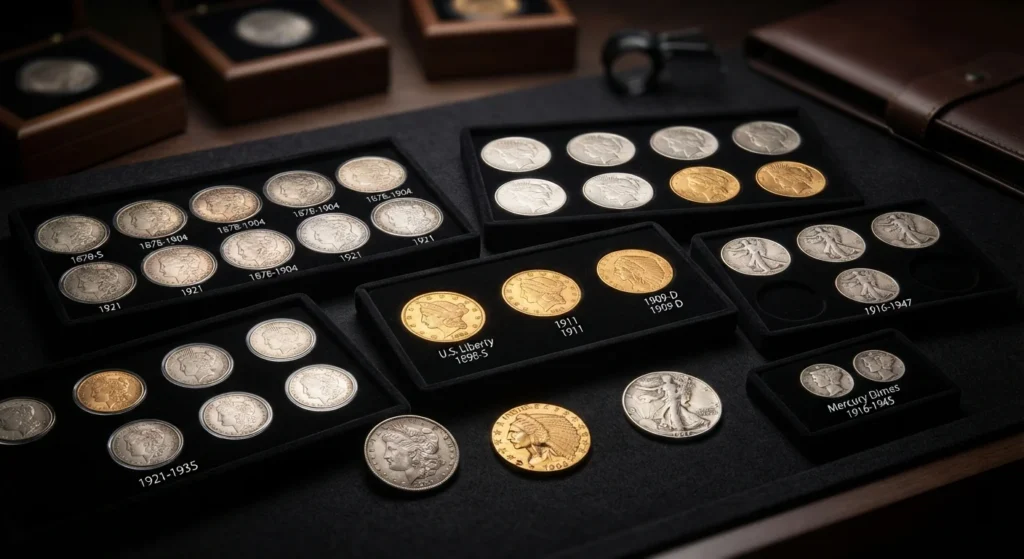
Inheriting a coin collection is rarely as simple as it sounds. What often arrives is a mixed box of coin folders, loose rolls, a few certified holders, and maybe a cigar box of foreign currency — with no inventory and no clear sense of what’s actually valuable. Learning how to prepare an estate collection for a coin show before walking onto the bourse floor is the single biggest factor in whether that visit is productive or overwhelming. A little organization and a basic understanding of what dealers are actually evaluating can turn a confusing inheritance into a confident, informed selling or trading experience — and it starts well before you ever leave the house.
Why Estate Collections Present a Unique Challenge
Estate collections differ from collections built intentionally by a single collector. A lifelong numismatist typically keeps records — purchase receipts, grading slabs, a running inventory of dates and mint marks. An estate collection usually has none of that context. It may span decades of accumulation, multiple family members’ contributions, and a mix of genuinely valuable rarities sitting alongside common circulated coins and non-silver pocket change that has no collectible or bullion value at all.
This is precisely why estate collections benefit from deliberate preparation rather than simply being carried into a coin show in whatever container they were found in. A show floor is a fast-moving environment; dealers are evaluating dozens of collections in a single day, and a well-organized collection allows them to give it the careful attention it deserves rather than rushing through an unsorted pile.
Start by Sorting, Not Valuing
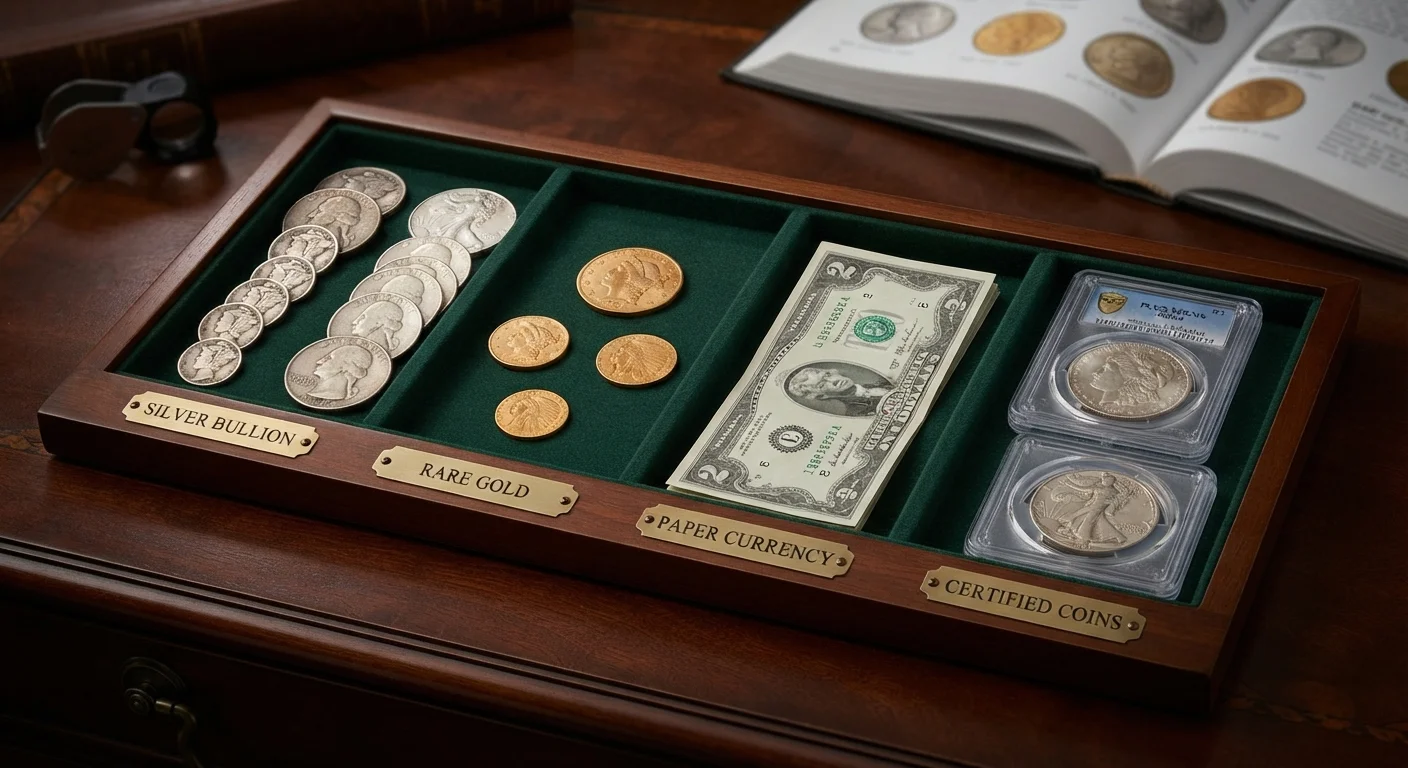
The first step is not to guess at value — it’s to sort. Separate the collection into broad categories before attempting any research: US coins, foreign coins, paper currency, and anything already in a certified holder from a grading service like PCGS or NGC. Within US coins, further separate by likely composition: pre-1965 silver coinage (dimes, quarters, half dollars, and silver dollars), gold coins, and modern clad coins that carry no silver content.
This sorting step matters because it immediately reveals the shape of the collection. A drawer full of wheat pennies and Jefferson nickels is worth investigating for scarce dates, but it will not be evaluated the same way as a stack of pre-1933 US gold coins or a run of Morgan silver dollars. Knowing which category each piece belongs to — even roughly — lets a dealer move efficiently through the collection and gives the heir a realistic sense of where the meaningful value is likely concentrated.
Handling Rules Every Heir Should Know
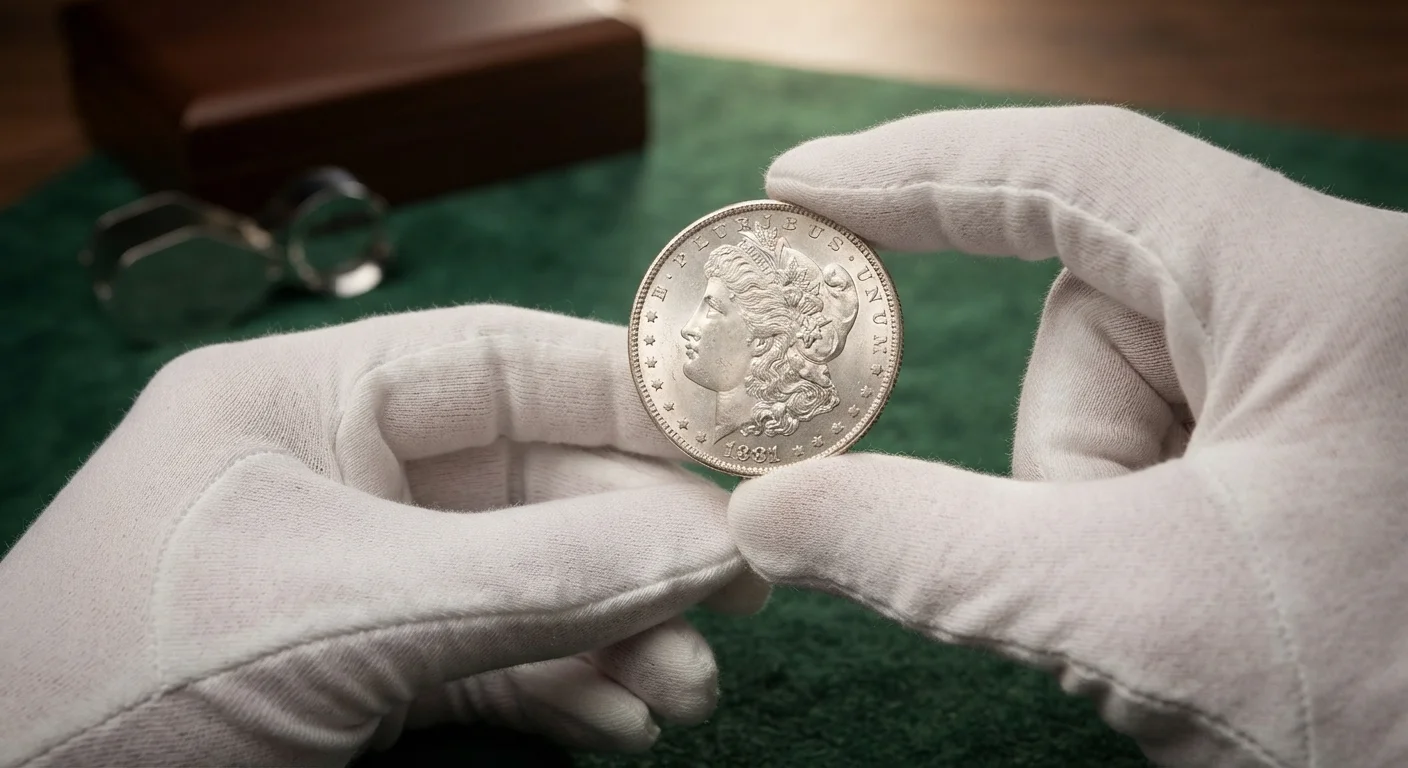
One of the most common — and most costly — mistakes made with an inherited collection happens before it ever reaches a dealer: cleaning the coins. Polishing, dipping, or scrubbing a coin to make it look brighter almost always reduces its value, sometimes dramatically. Cleaning disturbs the coin’s original surface and luster, the microscopic texture that grading services and experienced numismatists use to help determine authenticity, strike quality, and grade. A coin that would have graded well in its original, untouched state can be reduced to a fraction of its value once that surface has been altered — no matter how good the intention behind the cleaning was.
The safest approach is to leave every coin exactly as it was found. Handle coins by their edges, avoid touching the obverse or reverse surfaces directly, and if coins are loose, consider placing them in individual flips or envelopes rather than letting them rub against each other in a bag or box, which can cause additional wear. If a coin is already inside a sealed certified holder, leave it sealed — breaking a holder to “check” a coin removes it from its certified population and can affect resale value.
Researching What You Have Before the Show
Basic research before a show visit doesn’t require numismatic expertise — it requires knowing what questions to ask. For any coin that isn’t an obviously common date, check the date and mint mark against publicly available resources like PCGS CoinFacts or the U.S. Mint’s own historical records, which list mintage figures and basic specifications for every US coin series. A coin with an unusually low mintage, a known die variety, or a date that stands out as a “key date” within its series is worth flagging for closer evaluation, even in worn condition.
It’s worth being realistic here: research at this stage is about triage, not final valuation. A hypothetical example illustrates the point. Suppose an heir finds a Walking Liberty half dollar dated 1921 mixed in with a roll of otherwise common-date halves. That single date and denomination combination is recognized among collectors as one of the scarcer issues in the series — a fact easily confirmed with a quick mintage lookup — and it’s exactly the kind of coin worth separating out and asking a professional to examine individually rather than folding it back into a bulk lot. The goal of pre-show research isn’t to become an appraiser overnight; it’s to avoid accidentally treating a genuinely scarce coin the same way as a common one.
Certified vs. Raw Coins: Why the Difference Matters at a Show
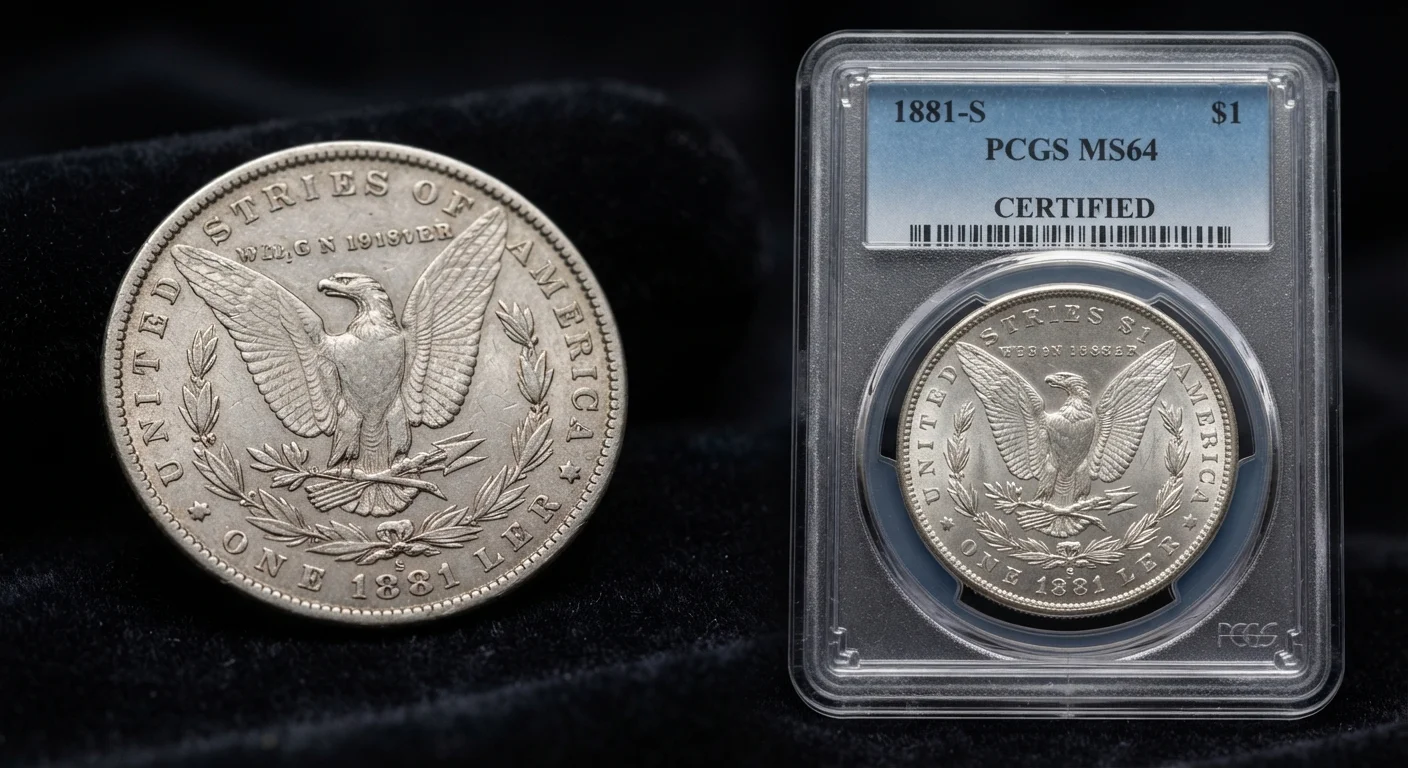
Not every coin in an estate collection needs to be certified before a show visit, but understanding the distinction between certified (“slabbed”) and raw (uncertified) coins helps set realistic expectations. A coin certified by PCGS or NGC has been examined by professional graders, authenticated, and sealed in a tamper-evident holder with an assigned grade — information that gives both buyer and seller a shared, third-party reference point for condition and authenticity.
Raw coins, which make up the majority of most estate collections, haven’t gone through that process. That doesn’t mean they lack value — most collectible coins in the hobby are traded raw — but it does mean a dealer at a show will need to examine and grade the coin themselves on the spot. For coins that appear genuinely scarce or high-grade, some collectors choose to have them professionally graded before selling, since certification can sometimes increase buyer confidence and final price. For the bulk of a mixed estate collection, however, having a dealer evaluate raw coins in person at the show remains the most practical and common approach.
What to Bring — and What to Leave Behind
A well-prepared collector brings more than just the coins themselves. A simple written inventory — even a basic list noting denomination, approximate date range, and quantity for each sorted group — saves significant time at a dealer’s table and helps prevent anything from being overlooked or miscounted. If any paperwork exists from the original collector, such as purchase receipts, auction invoices, or prior appraisal documents, bringing that provenance along can support a coin’s history and, in some cases, its value.
Security is worth planning for as well. Transporting a valuable estate collection in a sturdy, inconspicuous container — rather than an obviously labeled coin case — and going directly to and from the show reduces unnecessary risk. For especially valuable pieces, some collectors choose to have a professional appraisal completed beforehand so they’re not carrying an unverified, high-value collection into a public setting without at least a general sense of what they’re holding.
Getting a Pre-Show Appraisal
For estate collections of meaningful size, a private appraisal before the show is often the most useful preparation step of all. An experienced numismatist can identify which coins deserve individual attention, separate genuine rarities from common material, and give the heir a realistic, honest sense of the collection’s composition — all in a private, no-pressure setting rather than a busy show floor. DEI Gold and Silver Coins offers same-day private appraisals in Las Vegas for exactly this kind of situation, evaluating full estate collections, individual rare coins, and bullion holdings so that whatever a family decides to do next — sell, keep, or bring select pieces to a show — is based on accurate information rather than guesswork.
What to Expect When You Sit Down With a Dealer
At the show itself, a dealer evaluating an estate collection will typically work through it methodically: checking dates and mint marks, assessing condition, and separating bullion-value material from anything with genuine collector demand. Coming prepared with sorted categories and basic research doesn’t just speed up this process — it also helps the heir understand and follow along with the dealer’s reasoning, rather than receiving a single lump-sum offer with no explanation behind it. A reputable dealer should be willing to explain why certain coins are priced differently than others, whether that’s due to rarity, grade, certification, or simple metal content.
Selling an entire estate collection in one transaction is common and often the most practical outcome, particularly for collections with a large volume of common-date material. DEI Gold and Silver Coins purchases full estate collections in Las Vegas, whether that means a single standout coin or an entire accumulation spanning decades, with same-day payment available for sellers who are ready to move forward.
Why Preparation Pays Off
An estate collection carries more than financial value — it often represents decades of someone else’s care, curiosity, and quiet collecting habits, preserved without much explanation for whoever inherits it next. Taking the time to sort, handle carefully, do basic research, and get an honest appraisal before a coin show turns an intimidating inheritance into a manageable, even interesting, project. Whether the outcome is selling the entire collection, keeping a handful of standout pieces, or simply understanding for the first time what’s actually been sitting in that box, preparation is what makes the difference between walking onto a show floor confused and walking on informed.
Collectors and heirs preparing an estate collection often find it helpful to bring sorted, researched pieces directly to an upcoming Las Vegas coin show for in-person evaluation.
DEI Gold and Silver Coins is the official sponsor of these shows.
Held and produced by CK Shows, Las Vegas, NV.
By DEI Gold and Silver Coins | Articles by DEI Gold and Silver Coins


