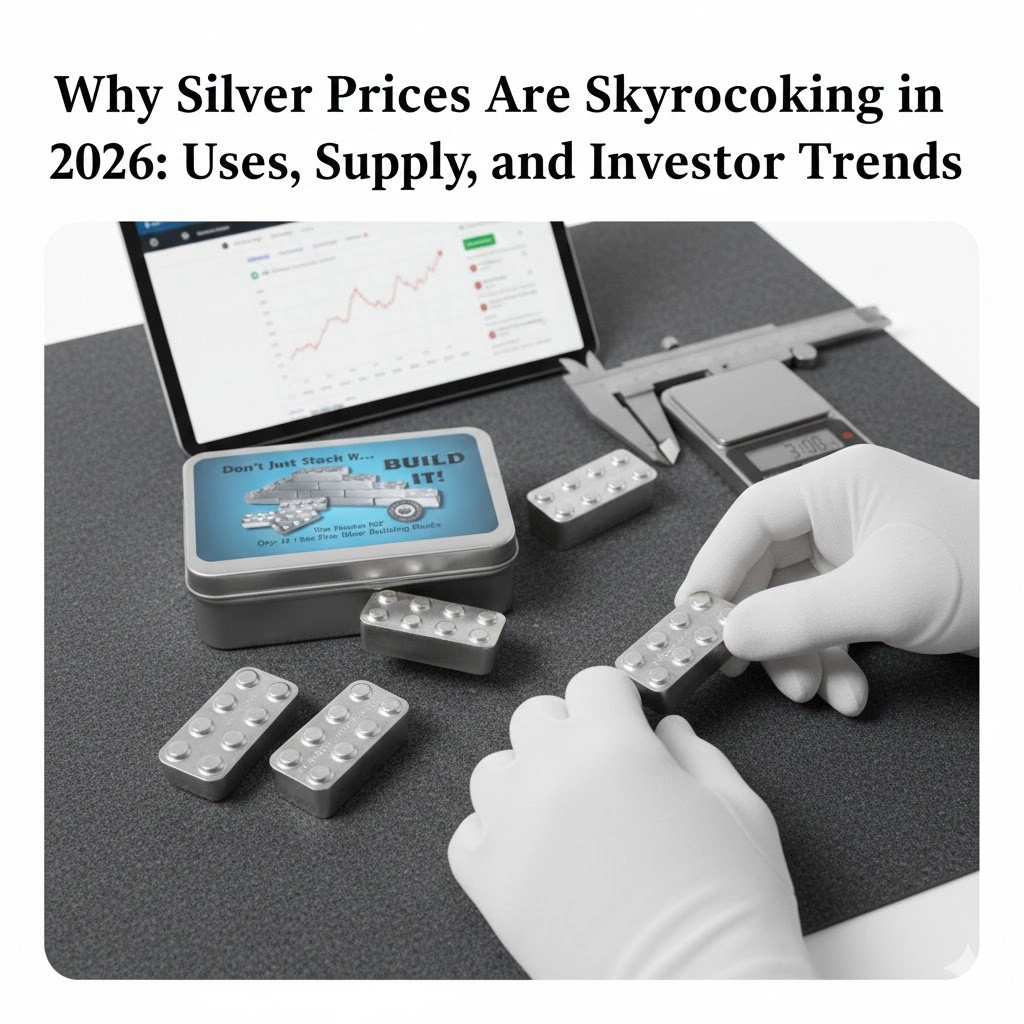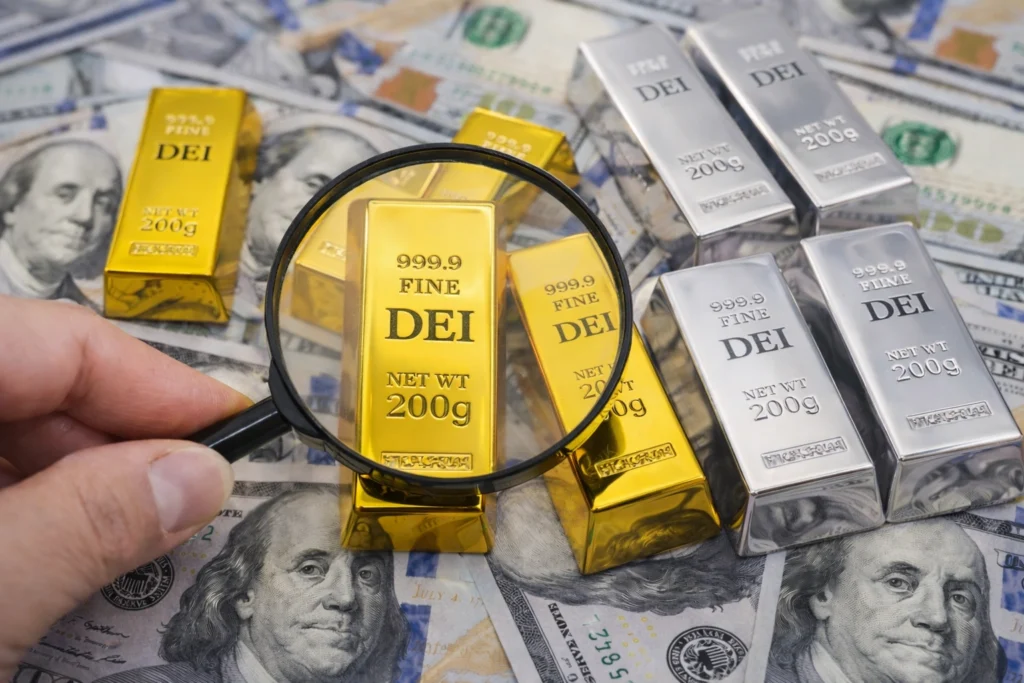
In this article you’ll learn how Gold and Silver Market Trends are shaping up in 2024‑2026, why the Vegas Precious Metals Market deserves your attention, and a practical Gold Price Forecast Las Vegas investors can use to position ahead of macroeconomic shifts. You’ll come away with actionable strategies, real examples, and trends grounded in credible data.
Gold & Silver Market Trends in Las Vegas: What Are the Current Market Trends?
Over the past two years, gold and silver prices have made headlines by breaking records and outperforming most traditional asset classes. From 2024 through 2025, gold prices surged significantly compared with earlier levels, while silver climbed more than 120%, reflecting growing investor demand and macro pressures such as inflation and geopolitical risk.
Analysts project that gold could continue rising through 2026 if key drivers persist, including geopolitical uncertainty and strong safe-haven demand. Silver is also expected to remain elevated, with forecasts targeting strong growth through 2026 as industrial demand continues to expand alongside investment interest.
One striking trend has been the convergence of commodities and macro uncertainties. Persistently high debt levels, inflation pressures, and projections of future U.S. Federal Reserve rate cuts have strengthened the narrative that gold and silver remain hedges against financial instability.
Example: Institutional investors and sovereign wealth funds in Asia and the Middle East have been increasing gold purchases as part of diversification strategies, helping lift prices even when stock markets are resilient.
Pro Tip: Watch the gold‑to‑silver ratio — when this metric declines, silver often starts catching up in performance versus gold.
How Do U.S. Macroeconomic Factors Influence Vegas Precious Metals Market?
The precious metals market is highly sensitive to U.S. macroeconomic dynamics — and Las Vegas, despite being a regional market, reflects these broader forces.
Interest rates are a primary driver. When the Federal Reserve hints at rate cuts, the opportunity cost of holding non‑yielding assets like gold and silver decreases. That means more investors look to precious metals for protection rather than yield. This trend was evident when several rate outlooks signaled easing in 2025‑2026, lifting safe‑haven demand.
A second major factor is the U.S. dollar. A weakening dollar tends to make dollar‑denominated bullion cheaper for international buyers, stimulating global demand. Commodity indexes show that strong dollar periods exert downward pressure on gold, while weaker dollar phases correlate with uptrends.
Case Study: During 2025, gold and silver prices rose rapidly even as inflation worries moderated, highlighting the influence of monetary policy expectations over pure inflation dynamics.
Takeaway: If inflation expectations rise or if the Fed pivots toward easier policy to support economic growth, gold and silver prices will likely stay elevated, including in the Las Vegas market.
What Is the Gold Price Forecast Las Vegas Investors Should Watch?
Forecasting precious metals requires balancing short‑term volatility with long‑term drivers. Industry forecasts for 2025‑2026 suggest:
- Gold could trade anywhere from $3,750 to $5,000 per ounce in 2026 under various scenarios, supported by safe‑haven demand and continued central bank buying.
- Silver’s forecast range widens even more, from roughly $43 to $62 per ounce, reflecting industrial demand volatility and supply constraints.
Remember — forecasts are not guarantees, but they help set expectations. Higher geopolitical risk, weakening currencies, and structural demand for physical metals could push prices upward, while cooling industrial demand or a strong dollar can exert downward pressure.
Mini Example: A hypothetical investor who bought gold ETFs in early 2025 and held through stronger U.S. dollar phases still saw gains because the underlying drivers (safe‑haven demand + central bank purchases) remained intact.
Actionable Tip: Use a layered buying strategy commit capital gradually across price tiers instead of all at once to reduce timing risk.
How Does the Vegas Precious Metals Market Operate?
Las Vegas is a dynamic physical precious metals market that intersects retail and investor demand. Local buyers often include smaller investors, tourists, and collectors — and many transactions occur through coin shops, pawn brokers, and online dealers with Vegas presence.
Two key practical factors for local investors are:
- Premiums and liquidity: Silver and gold coins or bars sold in Las Vegas typically command premiums above spot prices. These premiums fluctuate with supply and dealer inventory levels.
- Taxes and reporting: Federal tax treatment on gains from precious metals is the same nationwide, but staying compliant with IRS reporting on collectible gains (often taxed as collectibles at 28%) matters. Nevada does not tax income, which can be an advantage for local bullion investors.
Example: A Las Vegas investor who purchased Mexican silver rounds during a local market dip saw a margin on resale when spot prices rebounded — a strategy many bullion traders use.
Pro Tip: Establish relationships with reputable dealers for better pricing and market insight.
What Are the Risks Facing Precious Metals Investors Today?
No investment is free from risk. For precious metals, these include:
- Volatility: Prices can swing sharply based on macroeconomic news, central bank policy updates, or sudden shifts in interest rate expectations.
- Opportunity cost: During strong bull markets in equities or alternative assets, metals may underperform.
- Physical storage and liquidity: Physical gold and silver require secure storage and may incur additional costs compared to ETFs.
Case Study: In late 2025, silver experienced sharp rallies but also corrections due to profit‑taking and shifts in industrial demand sentiment.
Your checklist: Understand whether you are investing for hedge, income, or long‑term store of value. Each motive affects how much risk is appropriate.
What Strategies Should Las Vegas Investors Use Now?
Expert recommended approaches include:
- Dollar‑cost averaging: Avoid trying to “time the top.”
- Diversification: Balance metals with equities, bonds, or real estate.
- Allocations based on objectives: Use metals mainly for hedge portions of the portfolio.
- Tax awareness: Understand collectible tax treatment and Nevada advantages.
Expert Insight: Many seasoned investors keep a core allocation to gold (5‑15% of portfolio) and a smaller position in silver (1‑5%) tied to industrial demand cycles.
Conclusion
The Gold and Silver Market Trends heading into 2026 show strong secular forces supporting precious metals, driven by macroeconomic uncertainty, continued demand from institutional and retail buyers, and a complex interplay of supply‑side constraints. For Las Vegas investors, understanding these trends — along with how local premiums and tax nuances work — is essential before deploying capital.
Gold remains a cornerstone hedge against uncertainty, while silver’s dual industrial and investment demand provides unique upside potential. Careful entry strategies, risk awareness, and ongoing market observation can help you position with confidence.
Begin with small, diversified positions and scale in over time. Keep macro indicators like interest rate policy, currency trends, and industrial demand in your regular analysis toolkit.
Is It Safe to Buy Gold Coins Online?
Absolutely. With DEIGOLDANDSILVERCOINS, you get a safe, secure, and fully insured transaction process. Our reputation, volume, and customer satisfaction prove it.
We’re here 24/7 to help guide your investment. No matter if you’re just getting started or looking to expand your collection, our dedicated experts are only a message or a call away.
Our Customer Reviews
With a 4.9-star rating, our customers consistently praise our reliability, fast shipping, and quality products. See why investors continue to trust DEIGOLDANDSILVERCOINS through the experiences and success stories they’ve shared.
FAQ
1. What affects gold and silver prices most?
Gold and silver prices respond strongly to interest rate expectations, U.S. dollar strength, geopolitical risk, and industrial demand — especially for silver. Safe‑haven demand often spikes during uncertainty, while rate cuts tend to support prices.
2. Is silver a better investment than gold in 2026?
Silver offers greater upside potential due to industrial use, but also higher volatility. Gold tends to be more stable and acts primarily as a hedge.
3. Can Las Vegas investors buy physical metals?
Yes — Las Vegas has active local dealers and coin shops, but be mindful of premiums and secure storage.
4. Should I invest in gold ETFs or physical bullion?
ETFs offer liquidity with lower storage costs, while physical bullion provides direct ownership. Many investors combine both.
5. How does Fed policy impact the precious metals market?
Rate cuts lower the opportunity cost of owning gold and silver, often boosting prices. A strong dollar often suppresses metals in the short term.
6. Is gold still considered a safe haven?
Yes — gold continues to act as a safe haven during market stress and currency volatility.
7. What’s a realistic price range for gold by the end of 2026?
Analysts project a range from around $3,750 to over $5,000 per ounce depending on macro outcomes.