Yes, you can buy gold privately in the United States, but you cannot count on it being anonymous. Owning gold is legal and requires no registration, and a counter purchase paid in cash for less than $10,000 does not, by itself, trigger a federal cash report. What it does not do is erase the dealer’s invoice, your bank trail, or your tax obligations when you eventually sell.
This guide separates what the law actually requires from dealer policy and internet folklore. You will see what gets recorded in different kinds of purchases, how coins, bars, and certified pieces differ in traceability, how to keep a private gold purchase fully legal, and what to expect when buying in Las Vegas.
What “Anonymous” Really Means When You Buy Gold
People who want to buy gold anonymously in the U.S. are usually after one of three things: fewer personal details handed over at the counter, no unnecessary government reporting, or discretion from banks and the people around them. The law treats each goal differently, so it helps to think in three layers:
- The dealer’s records. Every legitimate dealer keeps an invoice. Many also keep identification, depending on their own policy, the size of the sale, and how you pay.
- Government reports. These are triggered only by specific events, the best known being cash payments above $10,000.
- Your financial trail. Wires, cards, and checks leave records at your bank or card issuer no matter what the dealer does.
A realistic goal is privacy within the law, not invisibility. A seller who promises “no records, no questions” is either misdescribing the rules or inviting trouble for you. Walk away.
What Federal Law Requires of Gold Dealers Form 8300 and the $10,000 cash line
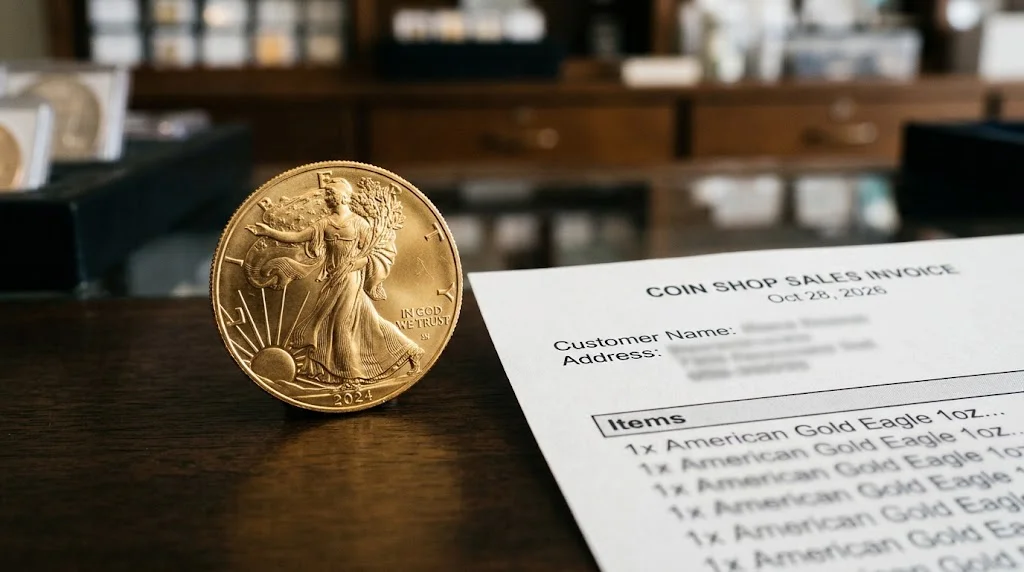
Under IRS rules, a business that receives more than $10,000 in cash in a single transaction, or in related transactions, must file Form 8300 within 15 days. “Cash” here means currency and, in some transactions, cashier’s checks, bank drafts, traveler’s checks, or money orders with a face amount of $10,000 or less. Wire transfers and personal checks are generally not treated as cash for this purpose, though they leave their own bank records.
The word “related” matters. Payments toward the same purchase, or a series of connected payments, are added together, so a sale does not escape reporting because the money arrived in pieces. Check the IRS’s current Form 8300 guidance before relying on any threshold, since rules can be updated.
Anti-money laundering programs
FinCEN’s rules for dealers in precious metals (31 CFR Part 1027) require a written anti-money laundering program from dealers who, in the prior year, both bought and sold more than $50,000 in covered goods. How that program works, including when staff ask for identification, depends on each dealer’s own risk assessment. That is why one dealer may ask for ID on a modest cash sale while another waits for larger amounts. Both approaches can be consistent with the rules, so ask before you go.
Structuring is a crime
Splitting a purchase into smaller pieces, across days, dealers, or payment methods, in order to avoid a reporting requirement is called structuring, and federal law (31 U.S.C. § 5324) prohibits it even when every dollar was legitimately earned. Form 8300 also includes a box for flagging a suspicious transaction, and the IRS allows businesses to file for suspicious activity even below $10,000. In other words, deliberately staying under the line is the one “privacy strategy” most likely to create exactly the attention people hope to avoid.
What different purchases leave behind
| How you buy | Typical dealer record | Federal cash-report trigger | Other trail |
|---|---|---|---|
| Cash at the counter, $10,000 or less | Invoice; ID depends on dealer policy | None on its own, but related payments are added together | Dealer’s internal records |
| Cash over $10,000 (single or related) | Invoice, ID, and taxpayer ID | Dealer files Form 8300 | Same |
| Wire transfer | Invoice, name, account details | Not “cash” for Form 8300 | Bank records on both ends |
| Card or online order | Name, billing and shipping address | Not cash | Card issuer and shipping carrier records |
| Private-party sale | Whatever you and the seller document | Usually none, since no dealer is involved | No authentication or recourse |
Where a Private Gold Purchase Can Happen
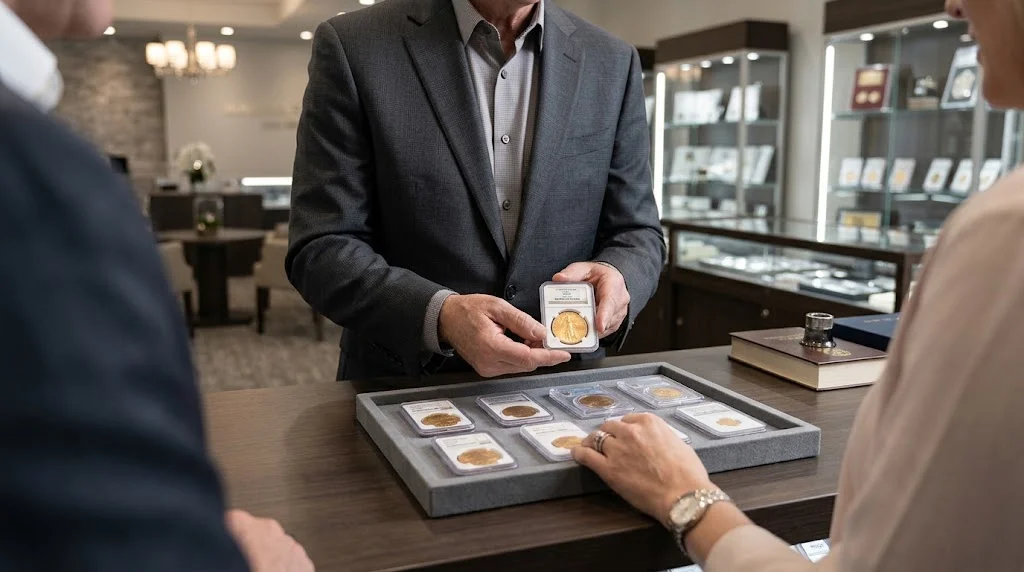
Local coin shops offer the most control. You can ask what information they collect before you commit, inspect the coins or bars in person, and walk out with them the same day.
Online dealers are convenient and often competitively priced, but an order necessarily involves your name, payment details, and a delivery address. Our comparison of why many buyers prefer local coin shops over online bullion dealers covers the trade-offs.
Coin shows put many dealers in one room, which makes it easy to compare prices. Each dealer still follows their own policies and the same federal rules.
Private sellers can be legitimate, but they carry the highest risk. Without a dealer’s testing equipment, you are relying on your own ability to spot counterfeits, and you have little recourse if something is wrong.
What You Are Buying Changes How Traceable It Is
Privacy depends on the object as much as the transaction.
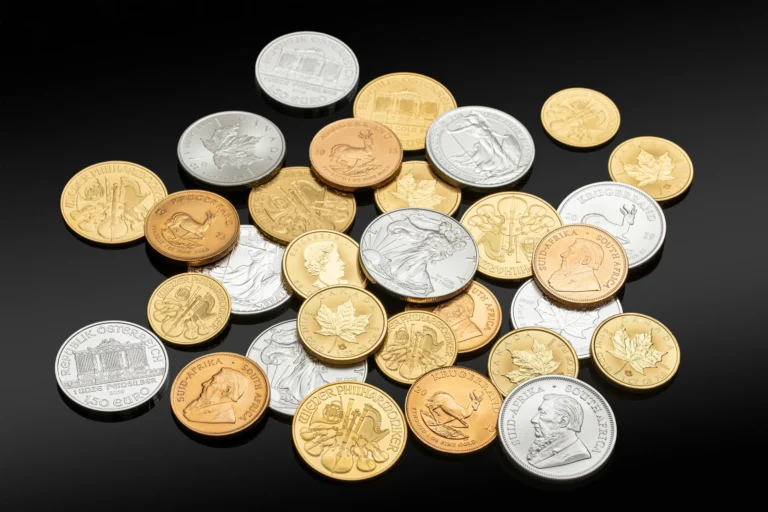
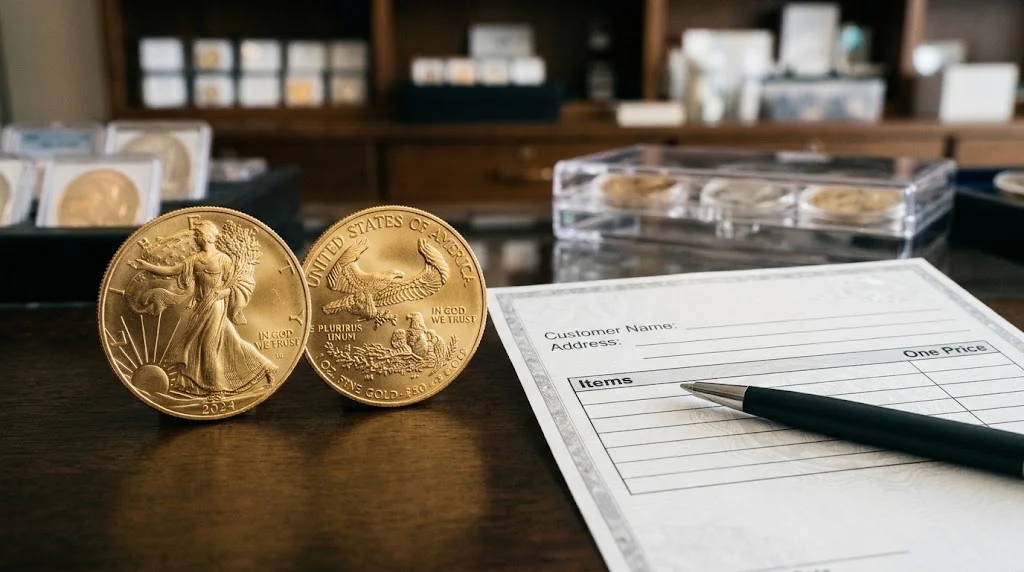
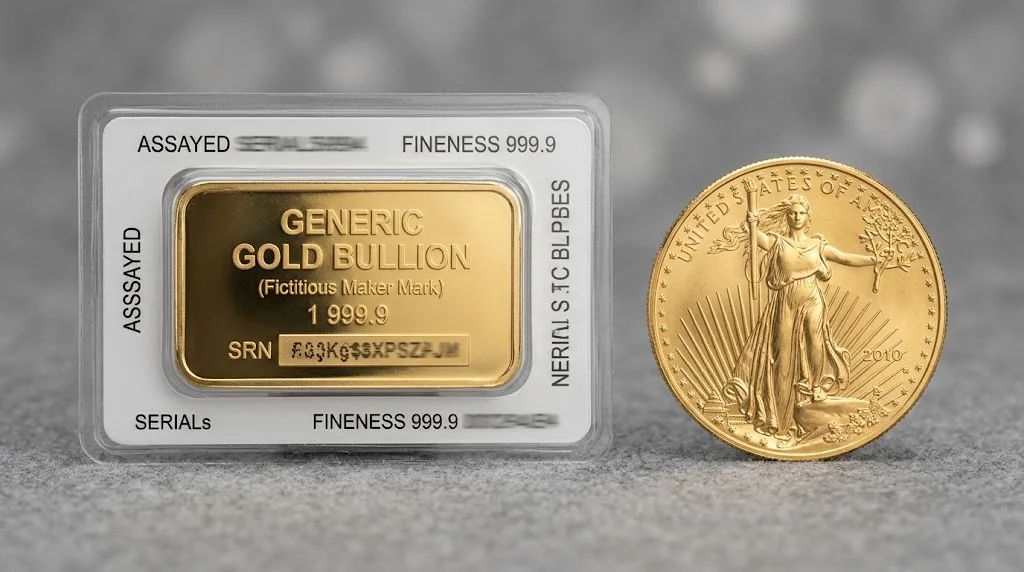
Government-minted bullion coins, the core of most gold coins buyers choose, include the American Gold Eagle, Gold Buffalo, Canadian Gold Maple Leaf, and Krugerrand. These carry no serial numbers. A one-ounce American Gold Eagle is struck in 22-karat (91.67%) gold and weighs slightly more than a troy ounce because of its alloy, yet it contains exactly one troy ounce of gold. The Gold Buffalo and Maple Leaf are .9999 fine. Because these coins are standardized and interchangeable, they are the easiest form of gold to buy, hold, and resell with minimal documentation beyond the invoice.
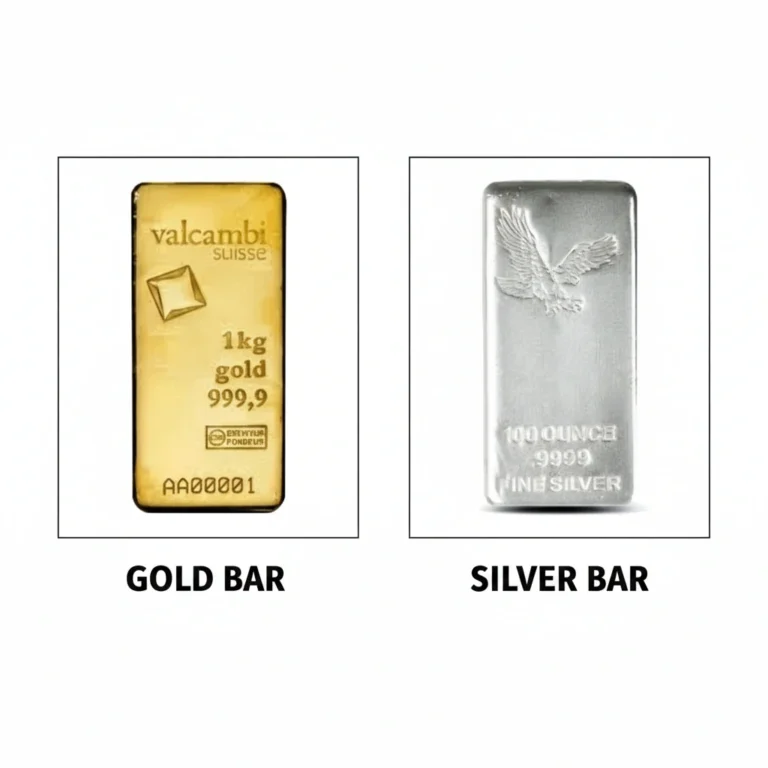
Refiner-made bars are different. Larger bars commonly carry a serial number and the refiner’s hallmark, and smaller bars are often sealed in assay packaging with a matching number. If a dealer records that number on your invoice, the bar can be linked to your purchase. Our guide to gold bar traceability explains how those records work.
Certified coins in NGC or PCGS holders carry certification numbers. A certification lookup describes the coin, including its grade, not who owns it, but the holder and paperwork matter when you resell.
Fractional and small-denomination gold, such as 1/10 oz coins or Goldbacks, suits smaller budgets and gradual buying. These pieces carry a higher premium per ounce than one-ounce coins, because fixed minting and handling costs are spread over less gold. That is a cost of convenience, not a way around reporting rules.
Legal Ways to Keep Your Gold Purchase Private
- Ask before you buy. A reputable dealer will tell you plainly what identification and information they collect, and how they store it.
- Choose your payment method deliberately. Each method leaves a different trail, as the table above shows. Cash over $10,000 will be reported; a wire will not, but it will appear in your bank records.
- Buy the amount you actually want, openly. If a purchase is large, expect paperwork and treat it as a normal part of owning gold.
- Keep your own records. Save receipts, dates, weights, and any serial or certification numbers. You will need them to establish your cost basis, to prove ownership to an insurer, and to help your heirs. A free appraisal is another way to document what you own.
- Plan storage and insurance. Many homeowner’s policies limit coverage for precious metals, so ask your insurer, and avoid discussing your holdings publicly.
Remember that a dealer’s reporting duties and your own tax duties are separate. Buying gold is generally not a federal taxable event, though state sales tax depends on where you buy and what you buy. Selling later can create a taxable gain that you are responsible for reporting, whether or not the dealer files anything.
Common Mistakes When Trying to Buy Gold Anonymously
- Treating cash as untraceable. The dealer still has an invoice, and large cash sales are reported.
- Skipping the receipt. Without documentation, resale, insurance claims, and estate settlement all become harder.
- Buying from unverified sellers. Counterfeit bars with tungsten cores are a known risk because tungsten’s density is very close to gold’s, so a simple weight check will not catch them. Dealers use tools such as XRF analyzers and ultrasonic testing to authenticate bars.
- Assuming no sales tax means no record. Tax treatment and record-keeping are separate questions.
- Splitting purchases to dodge a threshold. As covered above, that is structuring, and it is illegal.
Buying Gold in Las Vegas
Dealers in Las Vegas operate under the same federal rules as dealers anywhere else, and Nevada does not create a loophole. The practical advantage is convenience: you can visit a showroom, handle coins, and ask your questions face to face. DEI GOLD AND SILVER COINS is a licensed Las Vegas coin dealer at 8985 S. Eastern Ave., Suite 160, and you can call (702) 460-5188 before a visit to ask what documentation a planned purchase will involve. If you are comparing options, our page on buying gold in Las Vegas outlines what we offer.
Conclusion
Buying gold privately in the United States is realistic; buying it anonymously is not something you can count on. The useful distinction is between what the law requires, such as Form 8300 for cash over $10,000 and anti-money laundering programs at larger dealers, and what is simply dealer policy or the trail left by your payment method. Choose the metal and the payment method with those layers in mind, keep your own records, and never split a purchase to avoid a report. If you would like to talk through a purchase in person, DEI GOLD AND SILVER COINS can walk you through what the process involves before you commit.
By DEI GOLD AND SILVER COINS | Articles by DEI GOLD AND SILVER COINS