A customer once watched as we passed a small handheld device over his gold bracelet. A few seconds later, he looked at the number displayed on the screen and jokingly asked, “Is that device really measuring the gold, or is it just guessing?” It’s a reasonable question—and understanding How Dealers Test Gold Purity is one of the best ways to approach any gold transaction with confidence, whether you’re selling inherited jewelry or checking the authenticity of a bullion purchase.
.Modern testing has come a long way from a simple scratch and a drop of acid. Here’s what’s actually happening when a dealer tests your gold, why some methods are trusted more than others, and where even the best technology has limits.
How Dealers Test Gold Purity: An Overview of the Main Methods
Reputable dealers rarely rely on a single test. Gold purity verification generally falls into four categories: XRF analysis, acid testing, specific gravity testing, and fire assay — each with different strengths, and each better suited to different situations.
XRF Gold Testing: The Industry Standard
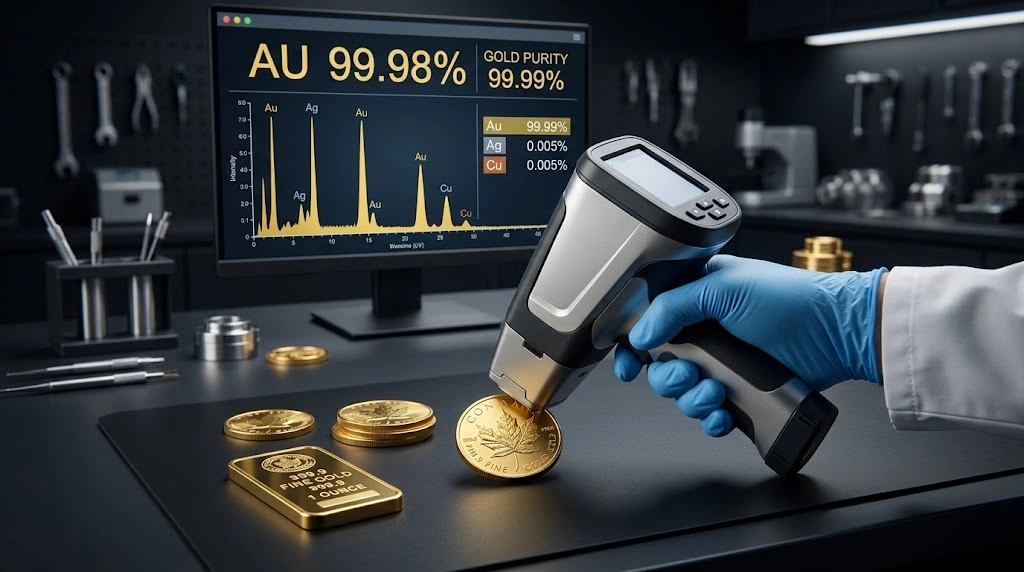
XRF gold testing — also known as X-ray fluorescence analysis — has become the preferred testing method for jewelry stores, coin shops, and refineries around the world. It is also likely the “handheld device” that most customers see during a gold evaluation.
How XRF Works
An XRF analyzer directs a primary X-ray beam at the metal’s surface. That beam excites the atoms in the sample, causing them to emit secondary fluorescent X-rays at energy levels unique to each element. The device’s detector reads those energy signatures and translates them into a precise elemental composition — displaying gold, silver, copper, and other alloy content within seconds.
Why XRF Is Fast, Accurate, and Non-Destructive
XRF’s biggest advantages are speed and safety for the item being tested: it doesn’t touch, cut, or damage the coin, bar, or jewelry piece in any way, which matters enormously for rare or certified coins where even a small scratch could affect value. A reading typically takes just seconds, giving both dealer and customer an immediate, documented answer.
The Limits of XRF: Why One Test Isn’t Always Enough
The Tungsten Problem
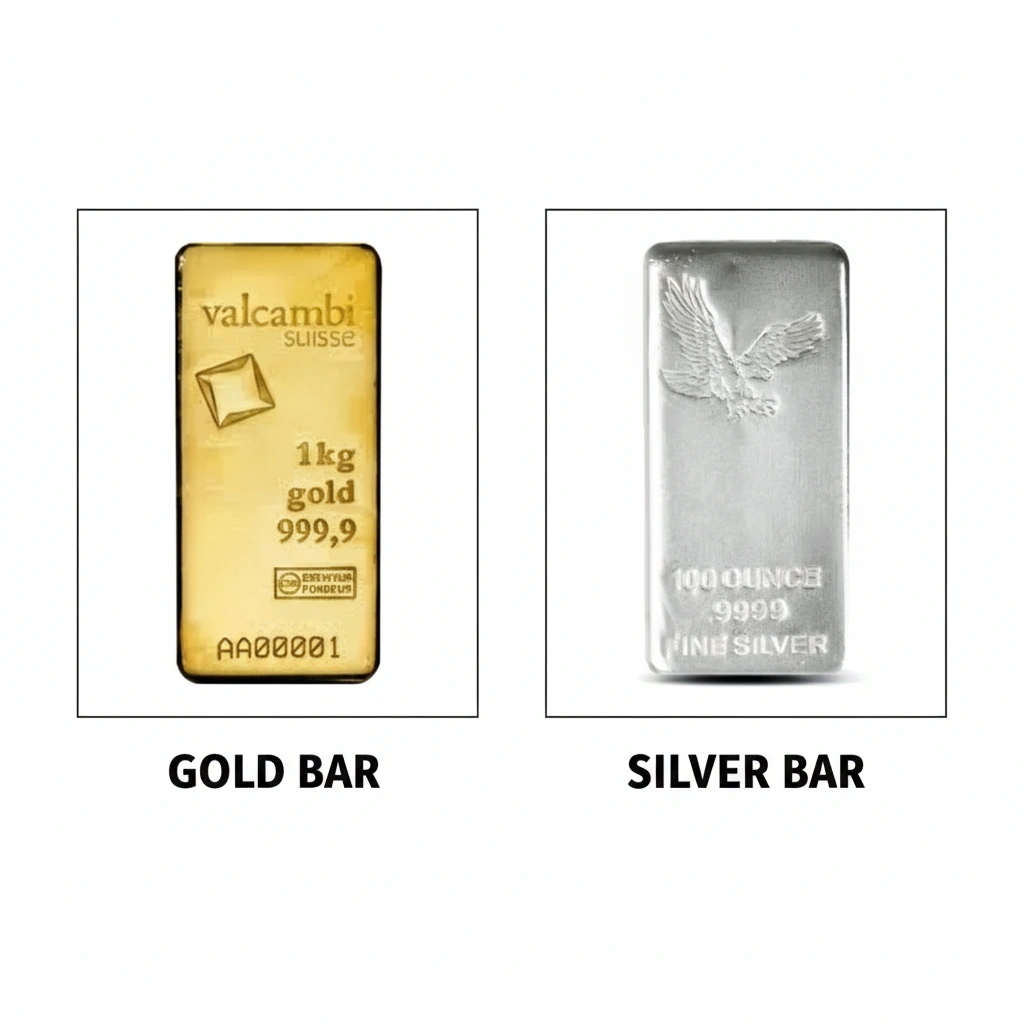
Here’s what most people don’t realize about XRF: it only reads the outer 10 to 50 microns of a metal’s surface. That’s an important limitation, because tungsten has a density of 19.25 g/cm³, nearly identical to gold’s 19.32 g/cm³ — meaning a bar with a tungsten core and a thin gold shell can register as 99.9% pure gold on an XRF reading, even though the interior isn’t gold at all. This isn’t a flaw in the technology; it’s simply a physical limit of how X-ray fluorescence works, and it’s why XRF alone isn’t always the final word on gold bars or suspicious items.
Combining Tests for Full Confidence
Because of that limitation, experienced dealers pair XRF with additional verification methods — particularly for larger bullion bars or unfamiliar items — rather than relying on a single reading. Specific gravity testing, ultrasonic testing, or a visual and weight-based inspection against known specifications can catch what XRF’s surface-only reading might miss.
Other Common Gold Testing Methods
Acid Testing
An acid test applies small drops of nitric or hydrochloric acid to a discreet area of the item and observes the reaction. Pure gold won’t react; lower-karat gold or base metals will show discoloration or a visible reaction. Acid testing is fast and inexpensive, but it’s less precise than XRF and typically used as a quick supplementary check rather than a primary method.
Specific Gravity (Archimedes’ Method)
This non-destructive test compares an item’s weight in air to its weight submerged in water, using the resulting density calculation (based on Archimedes’ principle) to estimate purity. It’s a useful, low-cost verification step — but as noted above, it can be fooled by tungsten, since the two metals’ densities are nearly indistinguishable.
Fire Assay
Fire assay is considered the most exact method available: a small sample is melted down and analyzed for purity directly. It’s the gold standard (literally) for refineries and precise certification, but it’s destructive — the tested portion of the item is consumed in the process — which makes it impractical for coins, jewelry, or anything with collector or sentimental value.
What This Means When You Sell Your Gold or Silver
When you bring gold or silver to a dealer, the testing method used should match the item: XRF for a fast, non-destructive read on coins, jewelry, and most bullion, with additional verification steps for larger bars or unusual items where a tungsten core or hidden alloy is a realistic risk. If you are bringing in certified gold coins, keeping them protected while verifying their surface metallurgy ensures their premium grade remains perfectly intact. If a buyer only offers a rough visual estimate or a magnet test with no documented reading, that’s worth treating as a red flag rather than a final answer.
A trustworthy dealer will explain what test they’re using, show you the reading, and answer questions about the process — not just quote you a number with no explanation.
Buy or Sell Gold & Silver Coins with Confidence
Work with a trusted Las Vegas coin dealer offering fair pricing, honest appraisals, and expert guidance every step of the way.
Get Your Gold and Silver Tested the Right Way
Understanding how testing works is useful, but there’s no substitute for having your gold, silver, coins, or jewelry evaluated in person with professional equipment. DEI Gold and Silver Coins uses XRF and other verification methods to give Las Vegas customers fast, accurate, non-destructive testing, backed by more than 50 years of experience and certifications from CAC, NGC, PCGS, GIA, and AGL.
Call or text DEI Gold and Silver Coins at (702) 460-5188 to schedule an appointment for a same-day appraisal or to sell your gold in Las Vegas. We’ll test your items with the same equipment and standards used by refineries and grading services, and walk you through exactly what the results mean.
People decide to sell an engagement ring in Las Vegas for all kinds of reasons — an upgrade, a change in life circumstances, an inherited piece that’s never been worn, or simply the need to turn an asset into cash. Whatever brought you here, if you’re looking to sell an engagement ring in Las Vegas, the goal is the same: understanding what your ring is actually worth before you accept the first offer you get.
This guide walks through what really drives resale value, the steps to take before selling, and how to compare your options so you walk away with a fair price.
Sell Engagement Ring Las Vegas: Jewelry Appraisal for Insurance vs. Selling Value
When separating your real cash value from historical documents, you will quickly notice a gap if you are holding a retail jewelry appraisal for insurance. While a traditional jewelry is deliberately written to show the highest possible replacement cost for premium coverage, a selling valuation focuses exclusively on secondary market liquidity. Understanding why that gap exists makes the rest of the selling process straightforward.
Understanding Diamond Ring Resale Value
Diamond ring resale value typically runs somewhere between 20% and 60% of the original retail price, depending on the ring. Quick sales to a dealer often land on the lower end of that range, while private-party sales sometimes reach higher.
Why Rings Sell for Less Than Retail
Retail Markup: When you buy from a jewelry store, you’re not just paying for the diamond — you’re paying for the salesperson’s commission, store rent, marketing, and overhead. None of that adds resale value once the ring changes hands again.
Pre-Owned Status: Even a ring that’s never been worn becomes “pre-owned” the moment it leaves the store, and pre-owned items sell on a different market than new retail pieces.
Different Markets Entirely: Retail jewelry stores and the resale/wholesale diamond market operate on completely different pricing structures. Comparing the two directly is part of what leads to confusion and disappointment.
What Actually Drives Resale Price: The 4 Cs and Beyond
Within the resale market itself, value still comes down to the diamond’s carat, cut, color, and clarity (the 4 Cs), along with the metal content of the band (10K, 14K, 18K gold, or platinum), the setting’s craftsmanship, and — if applicable — the brand or designer name of the fine jewelry 💎.
A GIA-certified diamond, in particular, tends to sell more confidently and closer to fair value than an uncertified stone, since buyers can trust the grading rather than relying on a seller’s description.
Step-by-Step: How to Sell Your Engagement Ring for a Fair Price
Gather Any Paperwork: Original receipts, appraisals, and especially a GIA grading certificate significantly strengthen your position and can raise offers. Much like having paperwork for certified gold coins 💎, diamond documentation eliminates buyer doubt.
Get a Professional Appraisal: Establish a realistic fair market value before talking to any buyer.
Test the Metal and Stone: Have these tested even if you have paperwork, since testing confirms current condition and content.
Get More Than One Offer: This gives you a solid basis for comparison.
Understand the Offer: Ask what factors went into the number, and don’t hesitate to ask questions.
Complete the Sale: Deal with a reputable, established buyer who provides clear documentation.
Where to Sell: Comparing Your Options in Las Vegas
Pawn Shops vs. Online Marketplaces vs. Specialty Buyers
Pawn shops offer speed and convenience but are typically structured around short-term loans rather than gemological expertise, which can mean lower offers for fine diamonds.
Online marketplaces can occasionally net a higher price from a private buyer, but come with real risk: payment disputes, no in-person verification, and no local recourse if something goes wrong.
Specialty precious metals and diamond dealers — like an established Las Vegas coin and jewelry buyer — combine professional appraisal expertise with the ability to pay immediately and in person, without the uncertainty of shipping a valuable ring to a stranger. For most sellers, working with a reputable local dealer offers the best balance of a fair, informed price and a safe, straightforward transaction.
Buy or Sell Gold & Silver Coins with Confidence
Work with a trusted Las Vegas coin dealer offering fair pricing, honest appraisals, and expert guidance every step of the way.
Common Mistakes to Avoid When Selling
Assuming Replacement Appraisals Reflect Resale: A standard replacement evaluation reflects full retail replacement cost, not what a cash buyer will actually pay — the two numbers can differ by 50% or more.
Skipping the Valuation: Accepting the first offer without establishing a benchmark to compare it against is a major pitfall.
Selling Without Checking for Certification: If you have a grading report and don’t present it, you may leave real value on the table.
Rushing the Decision: A ring holding sentimental weight deserves a moment to make sure you are comfortable with both the decision and the price.
Get a Fair, No-Pressure Offer on Your Engagement Ring
Selling a ring, whatever the reason behind it, deserves a straightforward, honest process — not guesswork or pressure to decide on the spot.
Please contact our showroom 💎 or call or text DEI Gold and Silver Coins at (702) 460-5188 to sell your jewelry in Las Vegas 💎 and schedule a same-day private appraisal 💎. Our team will evaluate your ring’s diamond, metal, and craftsmanship, and give you a clear, fair offer whenever you are ready.
Frequently Asked Questions
XRF (X-ray fluorescence) testing uses X-rays to identify a metal’s elemental composition without touching or damaging the item. It’s highly accurate for surface composition and is the industry standard for jewelry, coins, and most bullion — though it only reads the outer 10 to 50 microns of an item.
Not on its own. Because XRF only analyzes the surface, a gold-plated tungsten bar can read as high-purity gold. Reputable dealers use additional methods, such as specific gravity or ultrasonic testing, alongside XRF for larger bars where this risk is more realistic.
XRF testing is completely non-destructive, making it ideal for coins and jewelry. Fire assay, by contrast, is destructive and typically reserved for refining or situations where extreme precision outweighs preserving the item.
XRF testing typically takes just seconds per item, making it possible to evaluate an entire collection or jewelry box in a single visit.
Acid testing can confirm whether an item is clearly not pure gold, but it’s less precise than XRF and generally used as a supplementary check rather than the sole basis for a purchase offer.