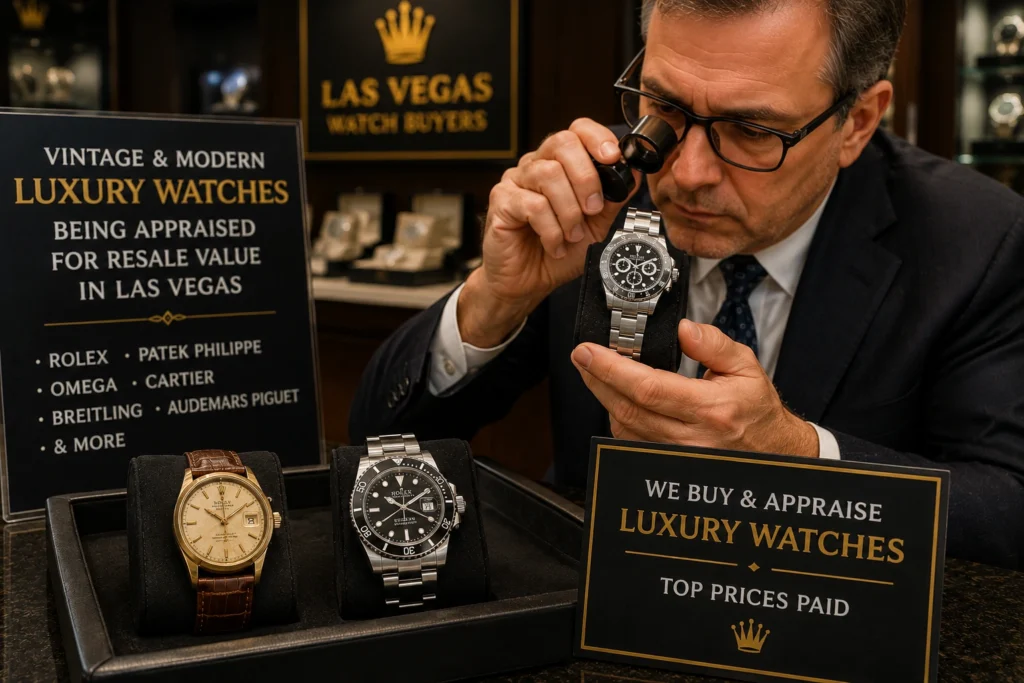
A customer once came in with two watches side by side: his grandfather’s 1960s Rolex Submariner, showing its age with a worn yet authentic character, and his own barely-used modern Daytona, purchased just a few years ago. He wanted to know which watch would be the better investment to hold onto. The honest answer is that Vintage vs Modern Watches value isn’t a straightforward competition with one clear winner. Both categories have their own advantages and risks, and the potential value ultimately depends on the specific watch.
Here’s how vintage and modern luxury watches actually compare when it comes to holding and growing value, and what to look for on either side.
Vintage vs Modern Watches Value: What the Market Actually Shows
The luxury watch secondary market has cooled considerably since its 2021–2022 peak, when “buy anything Rolex and watch it double” was a fair description of the market. Today, growth is more measured — the broader luxury watch market has settled into roughly a 5% compound annual growth rate, with select models from top brands seeing stronger appreciation in the 5% to 12% range over longer periods. Within that more sober environment, vintage and modern pieces behave in genuinely different ways.
The Case for Vintage Watches
Rarity and Historical Significance
Certain vintage references have delivered extraordinary returns precisely because they’re irreplaceable — no more will ever be made. The Rolex “Paul Newman” Daytona and early Patek Philippe Nautilus references are the textbook examples, having appreciated far beyond what most modern watches have managed over the same period. Discontinuation is one of the single biggest value triggers in this market: when Patek Philippe ended Nautilus production in 2021, existing examples saw values spike dramatically, with some trading well above $40,000 at auction.
The Authentication Risk
The tradeoff for that upside is real risk. Vintage watches are harder to authenticate, more likely to have replaced parts (a practice sometimes called “Frankenwatching,” where original components get swapped for mismatched ones), and more dependent on original paperwork that may simply no longer exist. A vintage piece without documented provenance carries meaningfully more risk — and more potential reward if it proves genuine — than one with a clean paper trail.
The Case for Modern Watches
Easier to Verify, Easier to Sell
Modern watches typically come with clear serial numbers, warranty cards, and dealer records, making authentication far more straightforward than with a 50-year-old piece. That verification ease translates directly into liquidity: modern watches with complete documentation generally sell faster and with less buyer hesitation than unverified vintage pieces.
Limited Editions and Discontinued References
Modern watches can still appreciate significantly, particularly limited editions or references that get discontinued. Watches tend to behave as “spike-and-plateau” assets — flat for long stretches, then jumping suddenly around a specific catalyst like a discontinuation announcement or a headline auction result — which means patience and picking the right reference matter more than simply buying a well-known brand name.
Best Watches to Invest In: The “Big Three” and Beyond
If you’re weighing the best watches to invest in, market data consistently points to three brands dominating the secondary market:
Rolex — commands roughly a third of global secondary market transaction volume and remains the most liquid, most widely recognized luxury watch brand, often described as protecting capital more than aggressively growing it.
Patek Philippe — generally considered the most prestigious name in the space, with strong resale performance on iconic references like the Nautilus.
Audemars Piguet — a smaller share of the market, but one that saw prices roughly triple between 2019 and 2022, and continues to offer stronger growth potential alongside higher volatility.
Together, these three brands account for roughly two-thirds of the luxury watch secondary market — a concentration that makes them the natural starting point for anyone thinking about a watch as part of a broader collection or investment strategy, whether vintage or modern.
Why Box and Papers Matter More Than You’d Think
Regardless of vintage or modern, one factor consistently moves the needle on resale value: whether a watch is sold as a “full set” — meaning the original box, papers, and warranty card, all matching the watch’s serial number.
A complete set can add anywhere from 10% to 35% to a watch’s resale value, depending on the brand and rarity.
For vintage pieces specifically, original papers can sometimes double the price compared to the identical watch without documentation.
Full-set watches also sell roughly 13% faster than watch-only sales, since buyers are more confident in the authenticity and history of a documented piece.
If you’re holding onto original boxes and papers for any luxury watch, keep them — they’re doing real work for the eventual resale value, much like how grading paperwork elevates the value of certified gold coins.
Buying or Selling Luxury Watches in Las Vegas
Whether you’re weighing a vintage piece against a modern reference, or you’ve inherited a watch and want an honest read on its value, authentication is the foundation everything else is built on. DEI Gold and Silver Coins evaluates luxury watches as part of our broader precious items and fine jewelry services in Las Vegas, checking authenticity, documentation, and condition before giving you a number — backed by more than 50 years of experience and certifications from CAC, NGC, PCGS, GIA, and AGL.
Buy or Sell Gold & Silver Coins with Confidence
Work with a trusted Las Vegas coin dealer offering fair pricing, honest appraisals, and expert guidance every step of the way.
Get Your Luxury Watch Evaluated in Las Vegas
Whether you’re deciding between a vintage classic and a modern reference, or you already own a watch and want to know what it’s really worth, the right answer starts with professional authentication.
Contact our showroom or call/text DEI Gold and Silver Coins at (702) 460-5188 to schedule a same-day, private appraisal or to sell your valuables in Las Vegas. Our team will evaluate your watch’s authenticity, documentation, and condition, and give you a clear, honest value.
Frequently Asked Questions
It depends on the specific reference. Certain vintage pieces, particularly discontinued or historically significant models, have delivered extraordinary returns, but they also carry higher authentication risk. Modern watches with clear documentation tend to be more liquid and easier to verify, though typically with steadier, less dramatic appreciation.
Rolex, Patek Philippe, and Audemars Piguet collectively dominate the luxury watch secondary market and have the strongest track records for value retention. Within those brands, discontinued or limited references — like the Rolex Daytona, Patek Philippe Nautilus, and Audemars Piguet Royal Oak — tend to perform best.
Typically 10% to 35%, depending on the brand and model, with vintage pieces sometimes seeing even larger premiums — in some cases nearly doubling the value compared to the same watch without documentation.
Yes, relatively speaking. Watches without original documentation are harder to authenticate and more likely to have replaced or mismatched parts, which is why professional authentication matters even more for undocumented vintage pieces.
DEI Gold and Silver Coins offers private, same-day evaluations of luxury watches at our Las Vegas showroom — call or text (702) 460-5188 to schedule an appointment.