A customer once watched us wave a small handheld device over his gold bracelet, glanced at a number on a screen a few seconds later, and asked, half-joking, “Is that thing actually reading the gold, or just guessing?” It’s a fair question—and understanding how dealers test gold purity is one of the best ways to walk into any transaction with confidence, whether you’re selling inherited jewelry or verifying a bullion purchase.
Modern testing has come a long way from a simple scratch and a drop of acid. Here’s what’s actually happening when a dealer tests your gold, why some methods are trusted more than others, and where even the best technology has limits. If you want to sell your gold in Las Vegas 💎, knowing these professional protocols helps maximize your return.
How Dealers Test Gold Purity: Main Methods
Reputable dealers rarely rely on a single test. Verification generally falls into four categories: XRF analysis, acid testing, specific gravity testing, and fire assay—each with different strengths, and each better suited to different situations.
XRF Gold Testing: The Industry Standard
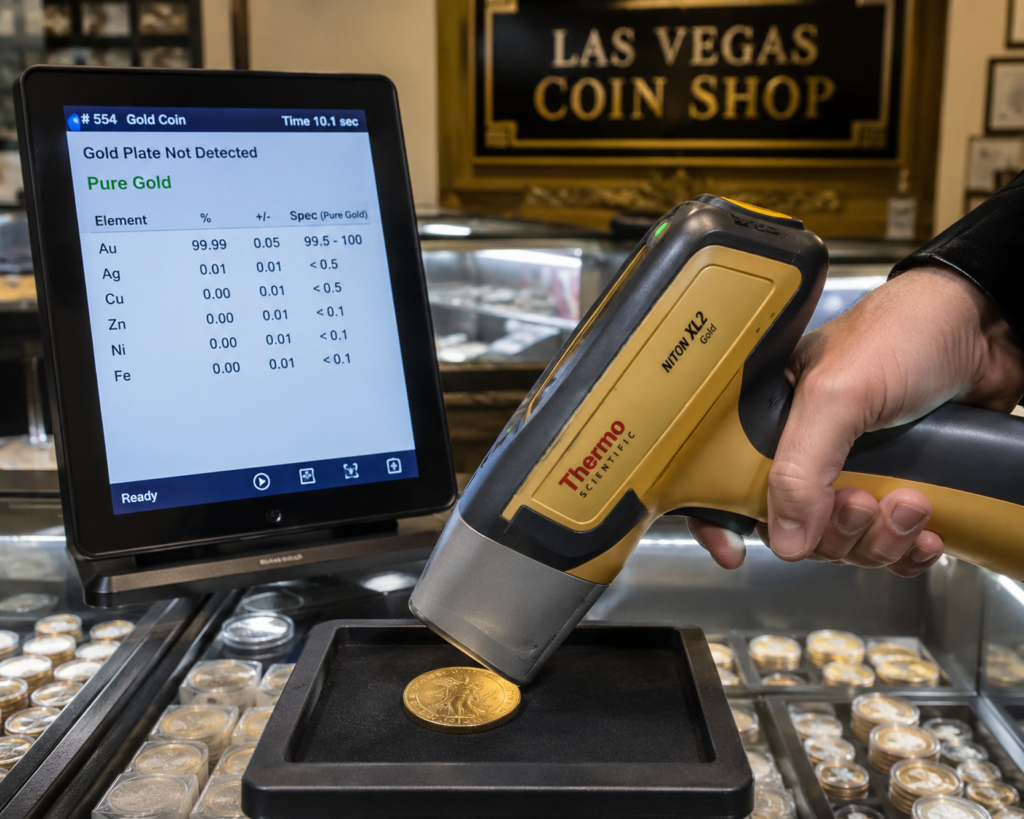
XRF gold testing—X-ray fluorescence analysis—has become the preferred method for jewelry stores, coin shops, and refineries worldwide. It’s likely the handheld device most customers see during an evaluation.
How XRF Works
An XRF analyzer directs a primary X-ray beam at the metal’s surface. That beam excites the atoms in the sample, causing them to emit secondary fluorescent X-rays at energy levels unique to each element. The device’s detector reads those energy signatures and translates them into a precise elemental composition—displaying gold, silver, copper, and other alloy content within seconds.
Why XRF Is Fast, Accurate, and Non-Destructive
XRF’s biggest advantages are speed and safety for the item being tested. It doesn’t touch, cut, or damage the coin, bar, or jewelry piece in any way. This matters enormously for certified gold coins 💎 where even a small scratch could ruin collector value. A reading typically takes just seconds, giving both dealer and customer an immediate, documented answer.
The Limits of XRF: Why One Test Isn’t Always Enough
The Tungsten Problem
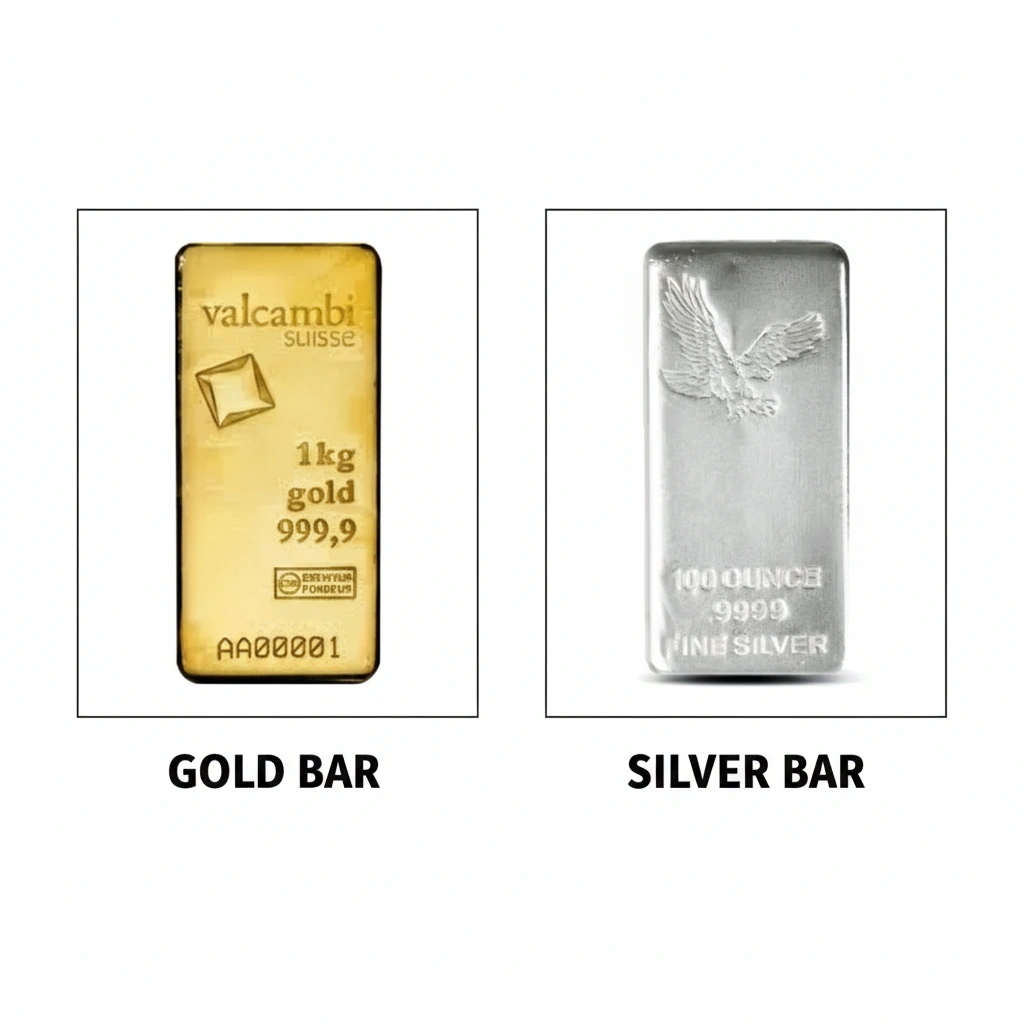
Here’s what most people don’t realize about XRF: it only reads the outer 10 to 50 microns of a metal’s surface. That’s an important limitation because tungsten has a density of $19.25\text{ g/cm}^3$, nearly identical to gold’s $19.32\text{ g/cm}^3$. This means large gold bars 💎 manufactured with a thick tungsten core and a thin gold shell can falsely register as 99.9% pure gold on an XRF reading. This isn’t a technological flaw; it’s simply a physical limit of how X-ray fluorescence works.
Combining Tests for Full Confidence
Because of that surface-only limitation, experienced dealers pair XRF with additional deep-penetration verification methods for heavier bullion assets, rather than relying on a single data point. They use baseline industrial procedures to establish absolute legitimacy, adhering to international verification standards like those highlighted by the London Bullion Market Association (LBMA) ↗.
Other Common Gold Testing Methods
Acid Testing: An acid test applies small drops of nitric or hydrochloric acid to a discreet area of the item and observes the reaction. Pure gold won’t react; lower-karat gold or base metals will show discoloration. Acid testing is fast and inexpensive, but it’s less precise than XRF and typically used as a quick supplementary check.
Specific Gravity (Archimedes’ Method): This non-destructive test compares an item’s weight in air to its weight submerged in water. The resulting density calculation estimates purity. It’s a useful, low-cost verification step, but as noted above, it can be fooled by tungsten since the two metals’ densities are nearly indistinguishable.
Fire Assay: Fire assay is considered the most exact method available. A small sample is melted down and analyzed for purity directly. It’s the gold standard for refineries and precise certification, but it’s destructive—the tested portion of the item is consumed in the process—which makes it impractical for coins or jewelry. You can review more comprehensive testing breakdowns via educational platforms like Kitco Precious Metals ↗.
What This Means When You Sell Your Gold or Silver
When you bring precious metals to a dealer, the testing method used should match the item. XRF provides a fast, non-destructive read on coins, jewelry, and most bullion. However, additional verification steps should always be deployed for larger bars or unusual items where a tungsten core or hidden alloy is a realistic risk. If a buyer only offers a rough visual estimate or a basic magnet test with no documented reading, that’s worth treating as a red flag rather than a final answer.
A trustworthy dealer will explain what test they’re using, show you the reading, and answer questions about the process—not just quote you a random number with no explanation.
Buy or Sell Gold & Silver Coins with Confidence
Work with a trusted Las Vegas coin dealer offering fair pricing, honest appraisals, and expert guidance every step of the way.
Get Your Gold and Silver Tested the Right Way
Understanding how dealers test gold purity is useful, but there’s no substitute for having your gold, silver, coins, or jewelry evaluated in person with professional equipment. DEI Gold and Silver Coins uses XRF and other multi-tiered verification methods to give Las Vegas customers fast, accurate, non-destructive testing, backed by more than 50 years of experience and certifications from CAC, NGC, PCGS, GIA, and AGL.
Call or text DEI Gold and Silver Coins at (702) 460-5188 to schedule a same-day appraisal 💎. We’ll test your items with the same equipment and standards used by refineries and grading services, and walk you through exactly what the results mean. To book your secure evaluation slot directly, please feel free to schedule an appointment 💎 through our digital portal.
Frequently Asked Questions
XRF (X-ray fluorescence) testing uses X-rays to identify a metal’s elemental composition without touching or damaging the item. It’s highly accurate for surface composition and is the industry standard for jewelry, coins, and most bullion—though it only reads the outer 10 to 50 microns of an item.
Not on its own. Because XRF only analyzes the surface, a gold-plated tungsten bar can read as high-purity gold. Reputable dealers use additional methods, such as specific gravity or ultrasonic testing, alongside XRF for larger bars where this risk is more realistic.
XRF testing is completely non-destructive, making it ideal for coins and jewelry. Fire assay, by contrast, is destructive and typically reserved for refining or situations where extreme precision outweighs preserving the item.
XRF testing typically takes just seconds per item, making it possible to evaluate an entire collection or jewelry box in a single visit.
Acid testing can confirm whether an item is clearly not pure gold, but it’s less precise than XRF and generally used as a supplementary check rather than the sole basis for a purchase offer.