A customer once brought in her grandmother’s diamond ring, insurance paperwork in hand, confused and more than a little upset — her homeowner’s policy listed it at $8,000, but the offer she’d just received to sell it was closer to $3,000. She assumed something was wrong, or that she was being lowballed. Nothing was wrong. She’d simply run into the difference between an insurance appraisal vs selling appraisal — two entirely different numbers that measure two entirely different things, on the exact same piece of jewelry.
If you’ve ever been surprised by a gap like this, this guide explains exactly why it happens, what each appraisal type actually measures, and which one you need depending on your situation.
Insurance Appraisal vs Selling Appraisal: The Core Difference
Both appraisals evaluate the same physical item, but they answer completely different questions and totally have the core difference
Replacement Value: What Insurance Appraisals Measure
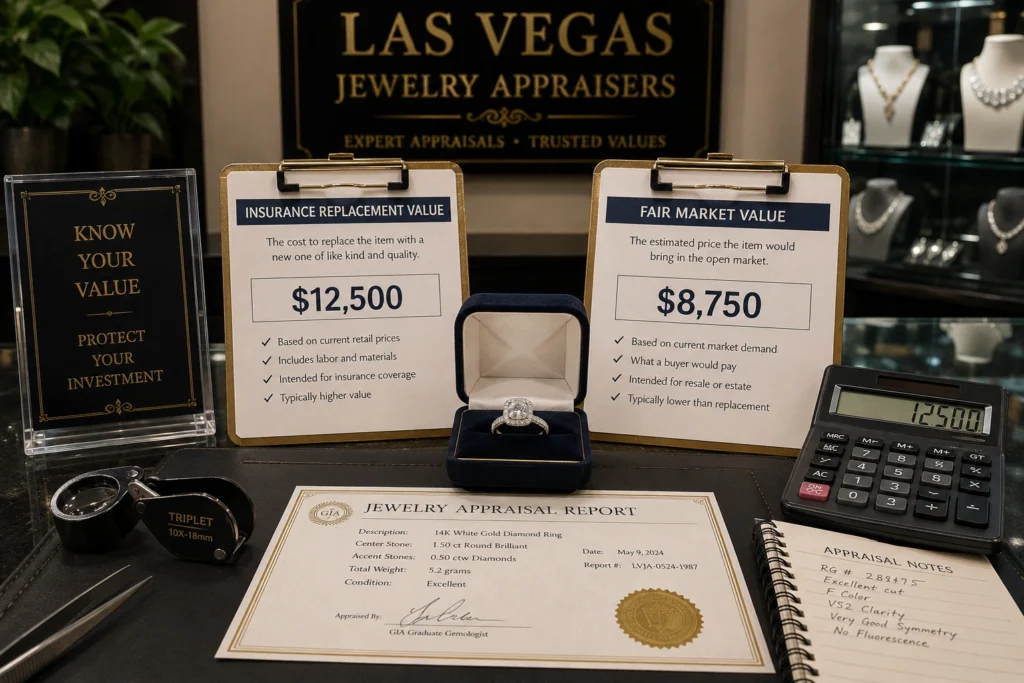
An insurance appraisal determines what it would cost to replace an item with a comparable one — same age, quality, materials, and craftsmanship — purchased at full retail price from a jewelry store that regularly sells that type of item. This is called retail replacement value, and it’s deliberately set on the higher end, because it has to account for full retail markup, sourcing costs, and the practical difficulty of finding a genuinely comparable replacement on short notice.
Fair Market Value: What Selling Appraisals Measure
A selling appraisal (also used for estates, probate, and donations) reflects fair market value — the price a willing buyer would actually pay a willing seller, with neither party under pressure to buy or sell and both having reasonable knowledge of the item. This number is grounded in real transaction data: what similar pieces are actually selling for in the current market, not what it would cost to walk into a store and buy new.
Why the Same Ring Can Have Two Very Different Numbers
Because these two values are measuring different things, they can differ by 50% or more on the exact same item — and that’s not a red flag, it’s how appraisals are supposed to work. A retail replacement value has to include a jeweler’s markup, overhead, and full retail pricing; fair market value reflects what buyers are genuinely willing to pay, which sits closer to wholesale. Selling values often land even lower than fair market value when time is limited or the buyer needs to resell the item themselves, which is a separate concept called liquidation value.
Understanding which number you’re looking at — and why — prevents exactly the kind of confusion and frustration that customer experienced with her grandmother’s ring.
Getting a Jewelry Appraisal for Insurance
If you’re insuring an engagement ring, inherited fine jewelry, or a valuable coin collection, a proper jewelry appraisal for insurance is what your insurer will require to schedule the item on your policy (adding it as a named, individually covered item beyond standard homeowner’s or renter’s limits).
What a Proper Insurance Appraisal Should Include
A detailed written description of the item, including materials, gemstone characteristics (for jewelry), and condition
Current photographs
A stated retail replacement value, clearly labeled as such
The appraiser’s credentials and methodology
USPAP Standards: Why They Matter
Look for appraisals that comply with the Uniform Standards of Professional Appraisal Practice (USPAP) — the recognized national standard for appraisal methodology. A USPAP-compliant appraisal carries more weight with insurers and, if it’s ever needed, more credibility in legal situations like disputes or estate proceedings.
When You Need a Selling or Estate Appraisal Instead
A fair market value appraisal is the right tool when:
You’re considering sell your coin collection, bullion, or jewelry and want to know a realistic number before you talk to buyers.
You’re settling an estate and need values for a probate inventory.
You’re donating an item and need documentation for tax purposes.
You’re dividing assets, such as in a divorce, and need an objective valuation both parties can rely on.
Using an insurance replacement value in any of these situations will overstate what the item is actually worth on the market — which can create unrealistic expectations or, in a probate or tax context, inaccurate paperwork. When assessing a collection for selling purposes, having certified gold coins or certified jewelry helps establish a rock-solid foundation for the fair market value.
Getting Both Types of Appraisals in Las Vegas
Whether you need a number for your insurance policy or a realistic figure before selling, the appraiser matters just as much as the appraisal type. DEI Gold and Silver Coins provides both insurance-purpose and fair market value appraisals for coins, bullion, and fine jewelry at our Las Vegas showroom, clearly labeled for their intended purpose, backed by more than 50 years of experience and certifications from CAC, NGC, PCGS, GIA, and AGL.
Frequently Asked Questions
Insurance appraisals reflect retail replacement value — the full cost to buy a comparable new item at retail — while a selling offer reflects fair market or liquidation value, which is closer to what buyers actually pay. A 50% or greater gap between the two is common and expected, not a sign of an error.
Most insurers and appraisers recommend updating insurance appraisals every 2 to 3 years, since market values for gold, silver, and gemstones can shift meaningfully over that time.
No. Because they measure different values (replacement cost vs. fair market value), a single appraisal typically isn’t appropriate for both purposes — you should request the specific appraisal type that matches your need.
USPAP stands for the Uniform Standards of Professional Appraisal Practice, the recognized national standard for appraisal methodology. A USPAP-compliant appraisal carries more credibility with insurers, courts, and tax authorities than an informal or non-standardized estimate.
It’s strongly recommended. A fair market value appraisal gives you a realistic benchmark before you talk to any buyer, so you know whether an offer is fair.
Whether you need to insure a valuable piece or want an honest number before selling, using the right type of appraisal from the start saves confusion — and money — down the line.
Call or text DEI Gold and Silver Coins at (702) 460-5188 or contact our showroom to schedule an appraisal. Let us know whether you need an insurance replacement value or a fair market value estimate, and our team will provide the right documentation for your situation.