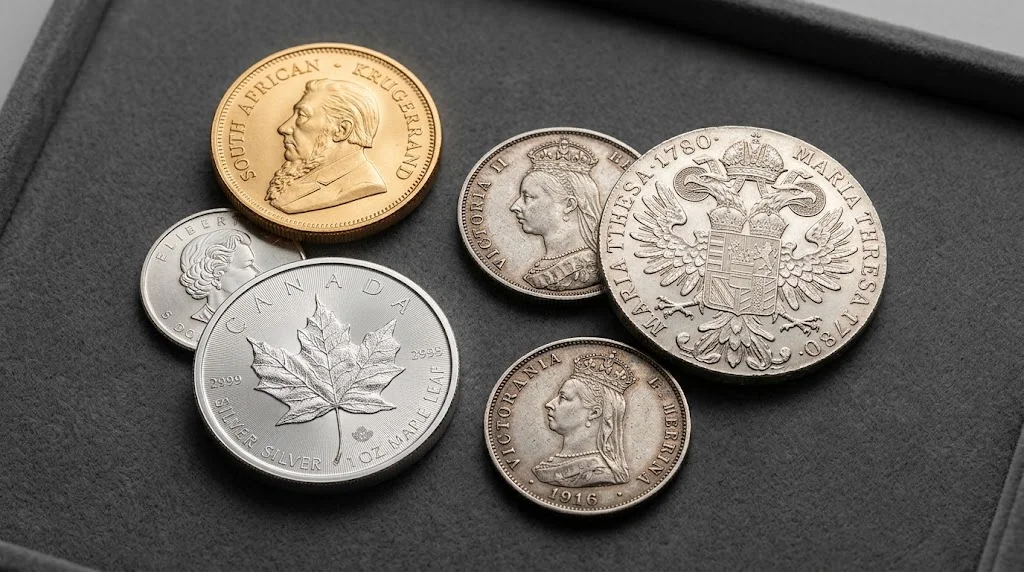
A first world coin can come from anywhere: a Krugerrand bought as a gold keepsake, a silver crown found in an inherited box, a Maria Theresa thaler picked up at a show. That range is the appeal of international coin collecting, and it is also why beginners stall. There are thousands of issuers and more than two thousand years of coinage, with no single checklist to follow.
This guide shows how to narrow your focus, which references to use for identification and value, and where counterfeits, hidden costs and legal limits can catch a new collector. It also explains where collecting ends and bullion buying begins.
What Counts as a World Coin
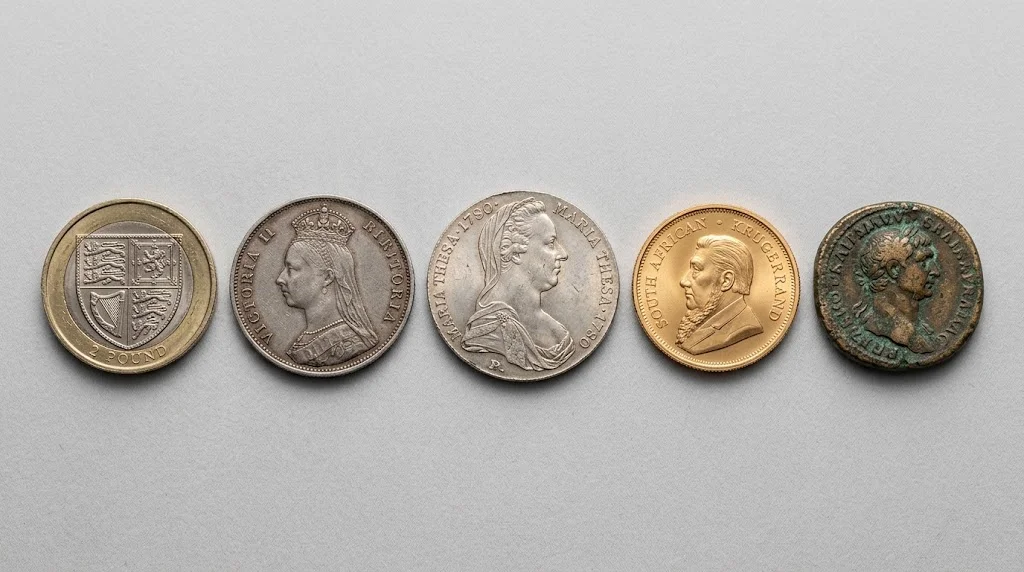
“World coins” is a convenience label for everything outside a collector’s home country’s coinage. For a collector in the United States, that means anything except U.S. issues. Several quite different kinds of coin fall under it.
- Circulating coins are the everyday issues of a country, collected by date and mintmark.
- Crowns and commemoratives are large, often silver, coins issued for events or anniversaries.
- Trade coins circulated across borders, such as the Maria Theresa thaler.
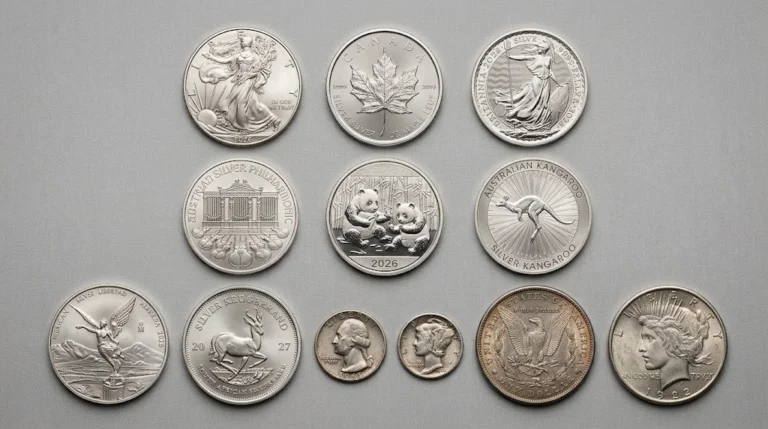
- Modern gold and silver bullion coins are priced mostly by metal content.
- Ancient and medieval coins are collected by ruler, mint and era.
The old version of this article listed the American Gold Eagle among “foreign” bullion coins. For a U.S. collector it is a domestic coin, and for a collector in London the Krugerrand is the foreign one. Always think about which category a coin belongs to, because bullion pricing and collector pricing work differently.
Pick a Focus Before You Buy
Beginners who buy at random usually end up with a drawer of unrelated coins they cannot value or sell. A defined focus keeps spending disciplined and makes research manageable.
| Focus | Good for | Watch for |
|---|---|---|
| One country | Learning a series deeply, with catalogs and collectors to turn to | Some countries have very thin dealer markets |
| One type per country | Seeing the world cheaply, one representative coin per issuer | Condition and authenticity vary widely |
| Era or theme | Stories such as the Age of Sail, Roman emperors or royal portraits | Themes can sprawl without a budget limit |
| Gold and silver bullion coins | Straightforward pricing based on metal weight | Premiums over metal value, and counterfeits |
| Ancient coins | Real history in your hand | Attribution skill, forgeries and import law |
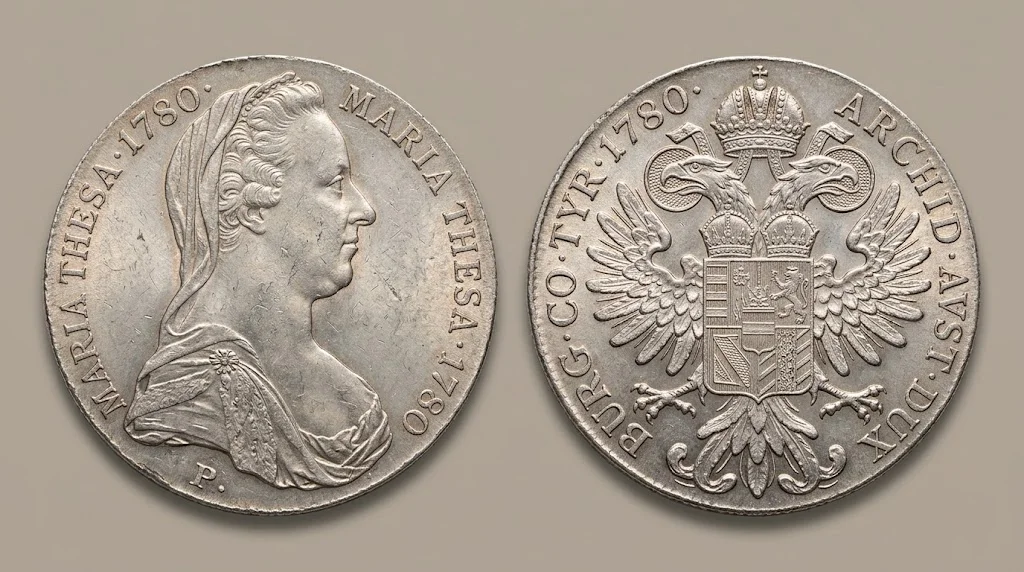
A useful early example is the Maria Theresa thaler. It was originally struck in Austria between 1740 and 1780, and the 1780-dated coin continued to be restruck for trade, so the date stayed fixed. An official restrike is .833 silver, weighs about 28.07 grams and measures about 40 mm, and the Vienna Mint was still selling the coin as of 2024. The date on a coin does not always tell you when it was struck, which is why reference books matter. iwmnumisbids
Learn to Identify and Value a World Coin
Three tools do most of the work.
Catalogs. The Standard Catalog of World Coins is the standard reference. The by-century volumes list virtually every coin type by date, with photographs, mintage and other details, plus market values in up to five grades. Where earlier numbering systems fall short, the catalog assigns “KM#” numbers, named for Krause-Mishler. Auction houses and grading holders quote those numbers, so learn to read them. Published values are guides, not guarantees, and catalog prices can lag the market. alephfandom
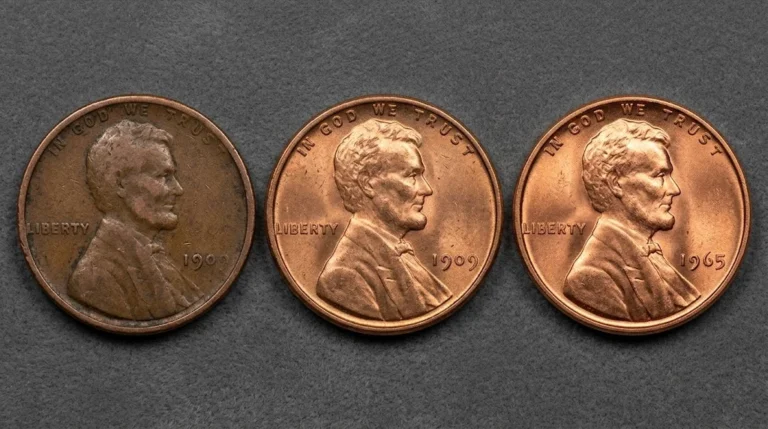
Grading. Condition is a larger driver of value than age. The one-to-seventy Sheldon scale used for U.S. coins is also used for many world coins by PCGS and NGC, and an NGC grade on a world coin looks like “MS 63” in an auction listing. The old article’s “poor to mint state” description is too loose. Learn the actual grade steps, and for our approach to the major services see our guide to PCGS vs. NGC vs. CAC grading.
Real prices. The best evidence of value is what comparable coins actually sell for. One example is a May 14, 2025 online auction lot of a Maria Theresa thaler restrike graded NGC MS 63. It sold for 32 GBP, and the listing showed 190 coins at that grade in NGC’s census with more than 1,100 finer. A coin can be centuries old in design and still be common in high grades. numisbids
That same lot also shows costs a beginner can miss. The auction charged a 22.5 percent buyer’s premium, noted that VAT could apply to the premium, and charged an exchange fee for payment in other currencies. Those extras can move a “cheap” coin well past its hammer price. This is a historical result from one house, not a rule, so always read each seller’s terms. numisbids
Bullion Coins vs. Collectible Coins
Many beginners start with modern gold and silver bullion coins, and a few details are worth knowing.
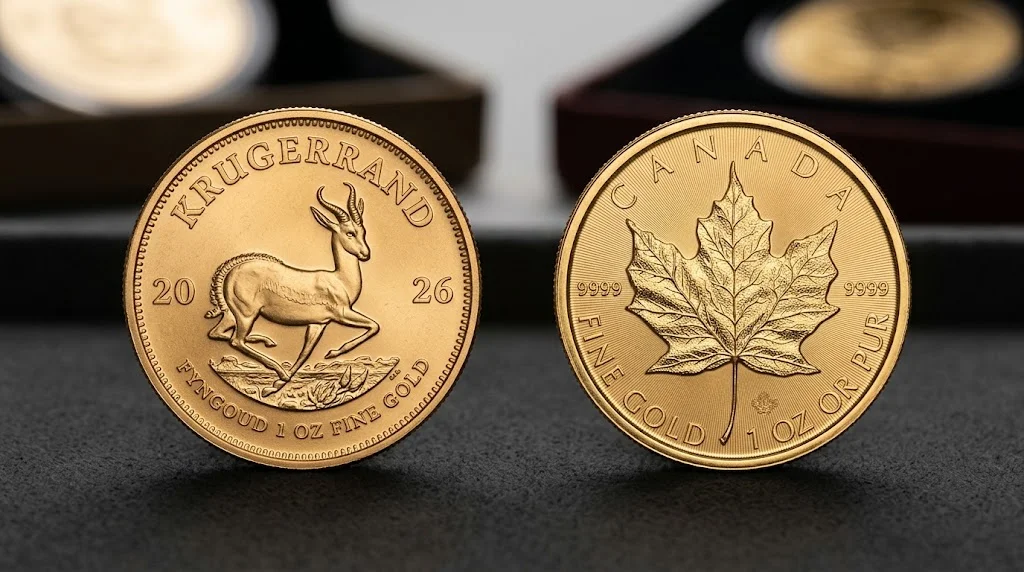
The South African Krugerrand was first minted in 1967 and is a 22-karat (.9167) coin containing one troy ounce of gold, struck with no face value. The Canadian Gold Maple Leaf followed in 1979. The Maple Leaf, Philharmonic and Britannia are .9999 fine, while the American Gold Eagle uses the same .9167 fineness as the Krugerrand. A 22-karat coin and a 24-karat coin of the same weight in gold content differ in alloy, not in how much gold they hold. South African Gold Krugerrand +2
The price of these coins is mostly metal value plus a premium. That is useful because it is easy to track, but it also means a bullion coin is not automatically a “collection” with a collector’s upside. Our article on melt value vs. collector value explains how dealers separate the two. Metal prices go up and down, and no world coin comes with a guarantee of appreciation, so the old article’s language about “significant investment potential” and hedging was too confident.
DEI GOLD AND SILVER COINS carries foreign gold and silver bullion coins in Las Vegas, and you can browse our world gold coins as one starting point.
Risks Beginners Underestimate
Counterfeits and replicas. World coins are heavily targeted. NGC publishes counterfeit-detection guides covering the 25 Chinese coins and 25 other world coins its graders see forged most often. Check a certified coin’s number with the grading service, because counterfeit coins have been found in counterfeit holders. Replicas sold in the U.S. are supposed to be marked “COPY” under the Hobby Protection Act. A magnet catches only crude forgeries, so expensive pieces should be bought certified or from a dealer who will stand behind them. ngc helps collectors dealers identify top world counterfeit coins +2
Legal limits on ancient coins. Importing certain ancient coins can require paperwork. Coins covered by import restrictions may not be brought into the U.S. without documentation certifying lawful export from the country that requested the restriction. Restrictions have covered coins from Cyprus, China, Iraq, Italy and Syria, among others. Before importing ancient coins, check current customs rules and ask the seller for provenance. findlawcoinworld
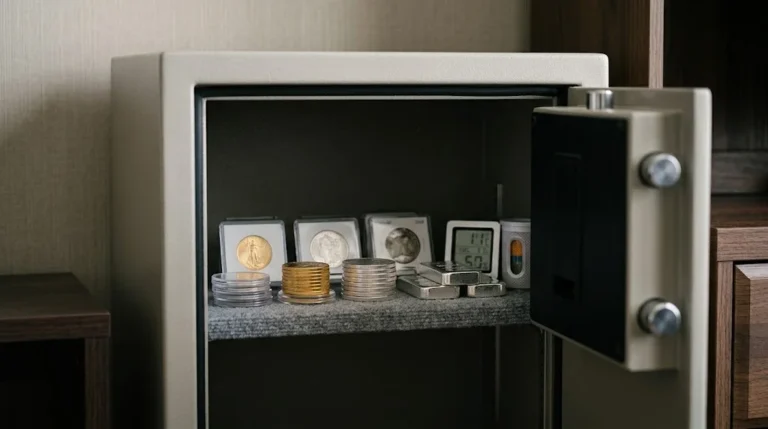
Cleaning and storage. Cleaning removes original surface and lowers collector value. Soft PVC flips can leave a damaging green residue, so use inert holders such as Mylar flips or rigid capsules.
Thin markets. Some countries have only a handful of active buyers, which can make a coin hard to resell at what you paid. Start with common, well-documented coins and add scarcer pieces once you know the series.
Where to Buy and How to Keep Records
Coin shows, established dealers and auctions all work, and each has tradeoffs. Compare more than one source, favor sellers who describe flaws plainly, and buy certified coins for anything expensive. Avoid prices that are far below comparable coins, since a rare piece offered cheaply is a warning sign.
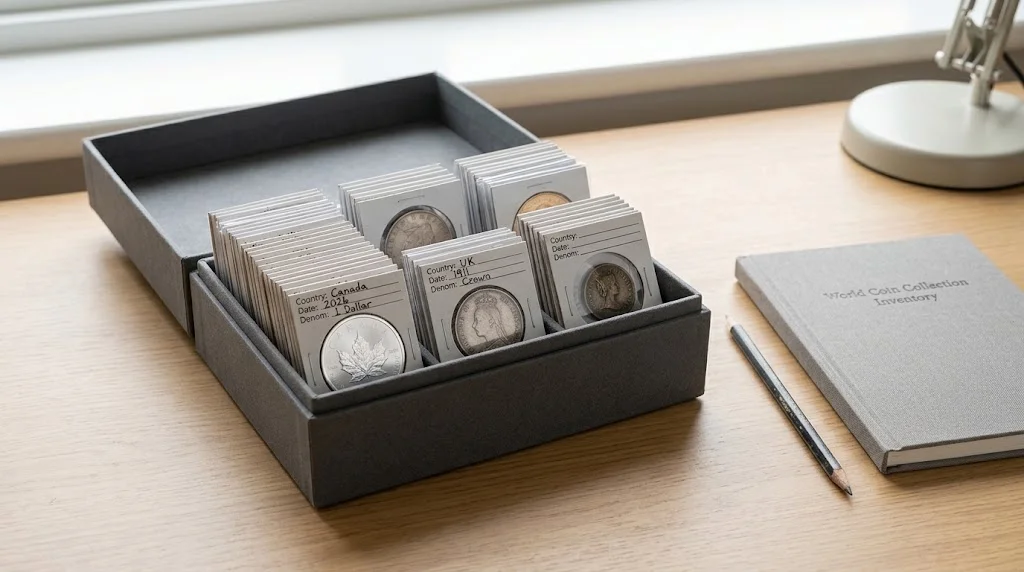
Record what you bought, when, from whom and for how much. Good records matter for insurance, resale and any later appraisal. If you inherit foreign coins and are unsure what you have, DEI GOLD AND SILVER COINS offers coin appraisals, and our guide to starting a gold and silver coin collection covers general collecting basics.
Conclusion
International coin collecting rewards the collector who chooses a focus first and verifies before paying. Learn the catalog numbers, grade standards and typical costs for the series you pick. Treat bullion pricing as metal value plus a premium, and treat every unusually cheap rarity as suspect until a certified example or a trusted seller says otherwise. Start small and keep records.
By DEI GOLD AND SILVER COINS | Articles by DEI GOLD AND SILVER COINS