Coin Value and Pricing Terms
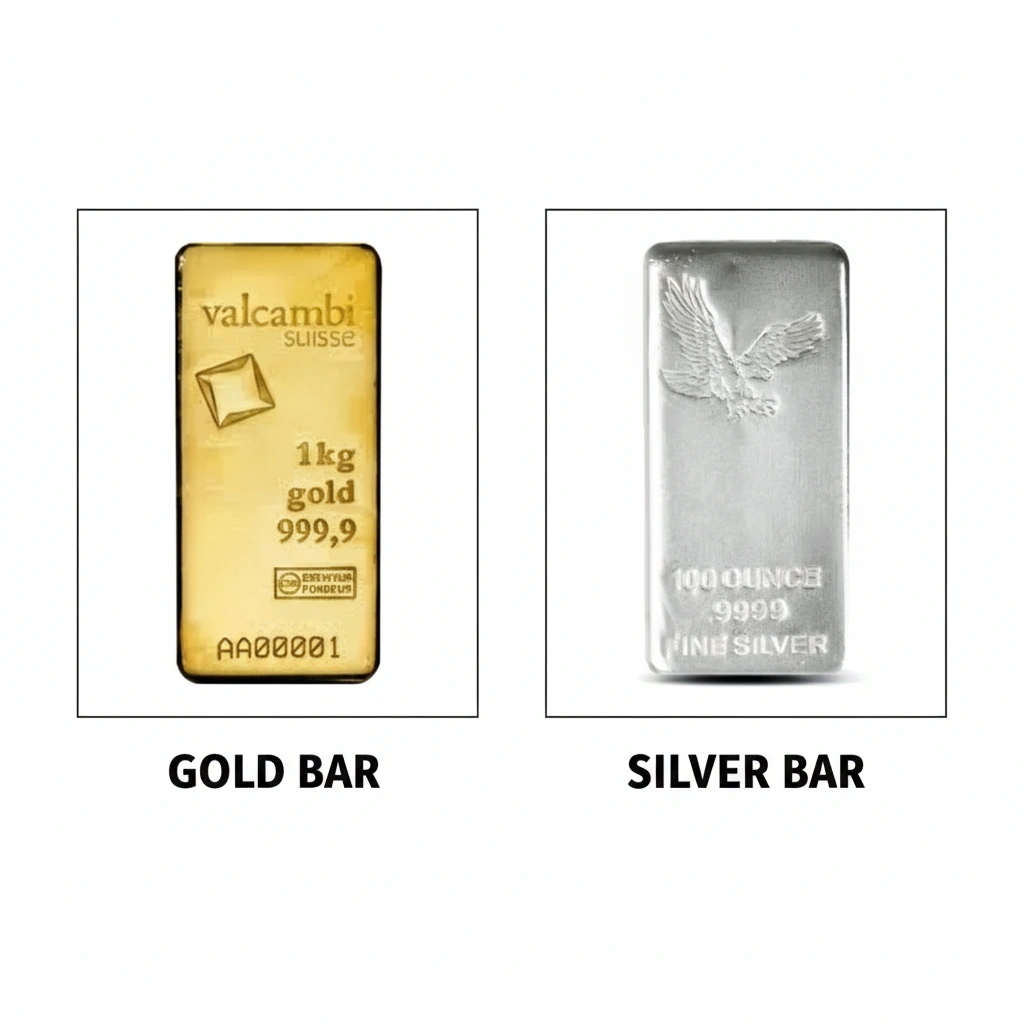
These are the terms that most directly affect what a coin is actually worth:- Melt Value — the raw value of a coin’s precious metal content alone, calculated from its weight, purity, and the current spot price. This is the floor value for any gold or silver coin weighing scrap gold vs. coins before a sale.
- Spot Price — the current market price for one troy ounce of a metal, updated continuously during trading hours. Nearly every dealer quote references spot price as a starting point.
- Premium — the amount a coin sells for above its melt value or spot price, reflecting minting costs, brand recognition, rarity, or demand.
- Bullion Coin — a coin valued primarily for its metal content and traded close to spot price, such as an American Gold Eagle or Silver Eagle.
- Numismatic Coin — a coin valued for rarity, condition, and collector demand, where the price can significantly exceed its melt value.
Grading and Condition Terms
Grading is where most coin collecting terminology gets confusing fast, because grades are expressed as both letters and numbers on a 70-point scale developed by the American Numismatic Association:| Grade Range | Common Name | What It Means |
| MS/PF 60-63 | Uncirculated / Mint State | No wear from circulation, but visible marks, weak strike, or dull luster |
| MS/PF 64-66 | Choice to Premium Uncirculated | Fewer marks, better strike and eye appeal than lower Mint State grades |
| MS/PF 67-70 | Gem to Perfect Uncirculated | Minimal to no visible imperfections even under magnification; the top tier |
| AU 50-58 | About Uncirculated | Slight trace of wear on the highest points, but most original luster remains |
| XF/EF 40-45 | Extremely Fine | Light, even wear across the design, with most fine detail still visible |
| VF, F, VG, G | Very Fine to Good | Progressively more wear; major design elements still identifiable |
- Details Grade — a grade assigned to a coin that has been cleaned, damaged, or altered, noting the technical grade it would have received along with the problem (e.g., “AU Details — Cleaned”). Details-graded coins typically sell for less than problem-free coins of the same technical grade.
- Eye Appeal — a subjective but market-relevant assessment of how attractive a coin looks overall, including luster, toning, and strike, beyond what the numeric grade alone captures.
Certification and Authentication Terms
These terms come up constantly once a coin has been professionally evaluated:| Organization | What They Do | Why It Matters to Buyers |
| NGC (Numismatic Guaranty Company) | Grades and encapsulates coins in a tamper-evident holder with a certification number | Independent grade removes guesswork about condition and authenticity |
| PCGS (Professional Coin Grading Service) | Same core function as NGC — grading, authentication, and encapsulation | One of the two most widely recognized US grading services |
| CAC (Certified Acceptance Corporation) | Reviews already-graded NGC/PCGS coins and adds a sticker for coins at the high end of their grade | Signals a coin is a strong example for its assigned grade, not just a bare minimum |
- Slabbed — collector slang for a coin that has been graded and sealed in a hard plastic holder by a service like NGC or PCGS. A slabbed coin’s grade and authenticity are backed by that service.
- Population Report — a published count of how many coins a grading service has certified at each grade for a given date and type, useful for gauging relative rarity at the top end of the grading scale.
- Certificate of Authenticity (COA) — a document, often included with modern bullion or limited releases, confirming the item’s specifications and sometimes its mintage or serial number.
Coin Anatomy Terms
Basic vocabulary for describing where something appears on a coin:- Obverse — the front, or “heads,” side of a coin, typically featuring a portrait or primary design.
- Reverse — the back, or “tails,” side of a coin.
- Legend — the lettering or inscription on a coin, such as a country name or motto.
- Field — the flat background area of a coin’s design, not raised as part of the main image or lettering.
- Mint Mark — a small letter indicating which US Mint facility struck the coin (for example, “D” for Denver or “S” for San Francisco), which can significantly affect rarity and value.
Minting and Production Terms
Terms describing how a coin was actually made:- Planchet — the blank metal disc before it’s struck with a design and becomes a coin.
- Strike — the process of stamping a design onto a planchet using dies; a “strong strike” shows crisp, fully formed details, while a “weak strike” looks soft or incomplete even without wear.
- Proof — a coin struck using specially polished dies and planchets, usually for collectors, resulting in a mirror-like background and frosted design elements rather than the satin finish of a standard business-strike coin.
- Uncirculated (or Mint State) — a coin that shows no evidence of wear from actual use in commerce, regardless of small imperfections from the minting process itself.
Rarity and Collectability Terms
Understanding these terms helps explain why two coins of the same face value can carry very different price tags:- Mintage — the total number of coins produced for a specific date, mint mark, and design; lower mintage generally supports higher demand and pricing, all else equal.
- Key Date — a specific year and mint mark within a coin series that is notably scarcer and more valuable than others in the same series, such as the 1916-D Mercury Dime.
- Variety — a distinct, identifiable difference in a coin’s design or die from the standard issue of that date, such as a doubled die or repunched mint mark, which can carry a meaningful premium among specialists.
- Type Coin — a single representative example of a coin design or series, often collected to represent that type rather than every date and mint mark within it.
Buy or Sell Gold & Silver Coins with Confidence
Work with a trusted Las Vegas coin dealer offering fair pricing, honest appraisals, and expert guidance every step of the way.
Buying and Selling Terms
A shorter list of practical terms that come up specifically during a transaction:- Appraisal — a
- professional evaluation of a coin’s or collection’s value, which may be verbal or written depending on the purpose. If you’re unsure where to start, a free coin appraisal in Las Vegas is a straightforward way to get an accurate read on a piece.
- Buyback Guarantee — a dealer’s policy of repurchasing certain coins or bullion it originally sold, usually at a price tied to current market value.
- Spread — the difference between a dealer’s buy price and sell price for the same item, which reflects part of how a dealer covers operating costs and risk.
Frequently Asked Questions
MS stands for Mint State, meaning the coin shows no wear from circulation. It’s paired with a number from 60 to 70 on the standard grading scale, with higher numbers indicating fewer marks, a stronger strike, and better overall eye appeal.
Bullion coins are valued mainly for their precious metal content and trade close to spot price, like a standard American Gold Eagle. Numismatic coins are valued for rarity, condition, and collector demand, which can push their price well above melt value regardless of the metal they contain.
A slabbed coin has been professionally graded and sealed in a tamper-evident plastic holder by a service like NGC or PCGS. The holder displays the assigned grade and a certification number, giving buyers independent confirmation of the coin’s condition and authenticity.
Grading involves professional judgment, and small differences in strike, luster, or marks can lead two services to land on slightly different grades for a similar coin. Both NGC and PCGS are widely respected, and most dealers accept coins certified by either.
A key date is a specific year and mint mark within a coin series that had unusually low production or survival, making it significantly scarcer — and typically more valuable — than other dates in the same series. Collectors building a complete set often pay the most attention to acquiring key dates.
Conclusion
Coin collecting terminology can look intimidating at first, but most of it breaks down into a few categories: what something is worth, how it was made, how it’s been evaluated, and how rare it actually is. Keep this numismatic terms glossary handy the next time you’re reading a listing or talking with a dealer, and the conversation will make a lot more sense. DEI Gold and Silver Coins, backed by certifications from CAC, NGC, PCGS, GIA, and AGL and more than 50 years of combined numismatic experience, is glad to walk through any of these terms in person as part of a coin evaluation. A little vocabulary goes a long way toward a fair, informed transaction.