Typing “sell gold near me in Las Vegas” into your phone is the easy part. What actually happens once you walk through the door is what most first-time sellers wonder about — and what most guides skip. This article walks through the real, step-by-step process of a gold appraisal in Las Vegas: what to bring, how your item gets examined and weighed, how the offer is calculated, and what happens once you accept or decline. By the end, you’ll know exactly what to expect before you ever leave the house.
What “Sell Gold Near Me in Las Vegas” Actually Involves
Las Vegas has one of the more active local gold-buying markets in the country, driven partly by tourism and partly by a strong base of collectors and estate sellers. That means plenty of options when you search for a nearby buyer — but it also means the actual in-person process can vary a lot depending on who you visit. A licensed coin dealer or numismatist typically follows a more thorough, transparent process for a coin appraisal than a quick pawn-counter transaction, which is worth knowing before your first visit.
Before Your Appraisal: What to Bring and How to Prepare
A little preparation makes the visit faster and the quote more accurate:
- The item itself — rings, chains, coins, bars, or flatware, ideally uncleaned since aggressive cleaning can occasionally damage delicate settings.
- A valid, government-issued photo ID. Nevada law requires buyers to verify and record seller identification on precious metals transactions.
- Any paperwork you have — certificates of authenticity for coins or bars, appraisal documents, or purchase receipts, though none of this is required to get an offer.
- A general sense of your goal: selling outright, getting an insurance-purpose appraisal, or simply finding out what something is worth.
Step-by-Step: What Happens During a Gold Appraisal Visit
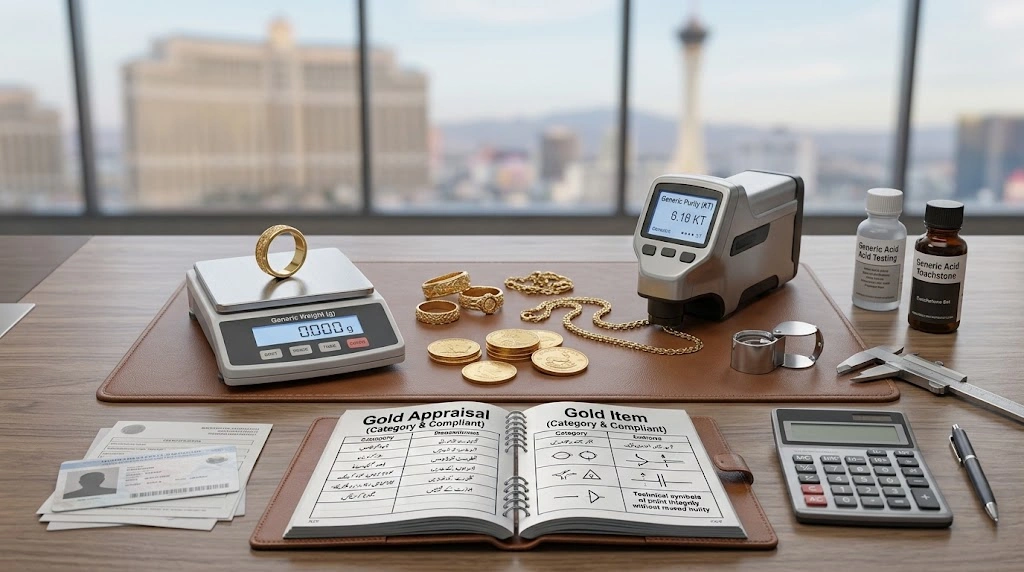
This is the part most searches for gold appraisal in Las Vegas don’t actually explain. Here’s the typical sequence at a professional coin and bullion dealer:
- Check-in and a quick conversation. You’ll briefly describe what you’re bringing in and what you’re hoping to do with it — sell, appraise for insurance, or just learn more.
- Visual inspection. A numismatist examines each item for karat stamps, hallmarks, wear, and any gemstones or unique features before any testing begins.
- Purity testing. Since stamps can wear off or occasionally misrepresent purity, the item is tested — commonly with an electronic tester, acid test, or X-ray fluorescence (XRF) machine — to confirm the actual gold content.
- The item is weighed on a calibrated scale, usually in grams, to determine exactly how much metal is present.
- Offer calculation and explanation. Using the weight, confirmed purity, and the current spot price, the dealer calculates an offer and should walk you through exactly how they arrived at that number.
- Your decision. You can accept, negotiate, ask questions, or simply decline and walk away — a reputable dealer won’t pressure you either way.
- ID verification and paperwork. If you accept, Nevada’s secondhand dealer regulations require the buyer to record your ID and details of the transaction before completing payment.
- Once paperwork is complete, payment is typically made on the spot, often by cash or check depending on the dealer and transaction size.
A single-item visit, like one ring or chain, often takes well under 30 minutes from check-in to payment. Larger collections or multiple pieces naturally take longer, since each item needs to be individually tested and weighed.
How Your Gold Appraisal Offer Is Calculated
Every legitimate offer comes down to the same core inputs:
Factor | How It Affects Your Offer |
Weight | Measured precisely on a calibrated scale — heavier pieces contain more raw metal value. |
Purity (Karat) | Confirmed by testing, not just the stamp — determines what percentage of the weight is actual gold. |
Current Spot Price | The live market price of gold at the moment of your visit, which changes throughout the trading day. |
Condition & Extras | Gemstones, designer marks, or numismatic/collector value beyond the raw metal, evaluated separately. |
A quick example: a 14K gold ring weighing 6 grams contains roughly 3.5 grams of pure gold (14K is 58.5% purity). Converted to troy ounces, that’s about 0.113 troy ounces. If gold is trading around $4,300 an ounce, the raw melt value would be roughly $486. A dealer’s actual offer is typically set at a percentage of that melt value, which covers their own costs and margin — a transparent dealer will explain exactly what percentage they’re offering and why.
ID Verification and Nevada Recordkeeping Requirements
This step surprises some first-time sellers, but it’s standard and required by law. Nevada regulates precious metals buyers under its secondhand dealer statutes, which require ID verification and transaction recordkeeping on every purchase — details are covered in full in our guide to Nevada’s gold selling laws. The short version: bring a valid photo ID, expect your information to be recorded as part of the sale, and treat any buyer who skips this step as a red flag rather than a convenience.
What Happens After You Accept — or Decline — an Offer
If you accept, you’ll complete the required paperwork and typically receive payment before you leave. If you decline, there’s no obligation and no cost — a professional appraisal should never come with pressure to sell on the spot. Many sellers use a first visit purely to understand value, then decide later whether or when to sell, especially for larger collections or sentimental pieces.
Choosing Where to Get Your Gold Appraised in Las Vegas
The process above describes a professional, transparent appraisal — but not every buyer operates the same way. For a full breakdown of what separates a trustworthy Las Vegas gold buyer from one to avoid, including credentials to look for and questions to ask, see our guide on choosing a coin appraisal service in Las Vegas.
Conclusion
Selling gold near you in Las Vegas doesn’t have to feel like a mystery once you know the sequence: preparation, inspection, testing, weighing, a clearly explained offer, and paperwork before payment. Knowing what to expect ahead of time makes it easier to spot a rushed or vague process versus a genuinely professional one. DEI Gold and Silver Coins, backed by certifications from CAC, NGC, PCGS, GIA, and AGL and more than 50 years of combined numismatic experience, follows exactly this kind of transparent, step-by-step process for every appraisal. Whether you’re ready to sell today or just curious what you have, walking in prepared makes the whole visit faster and clearer.
Comparing offers at a coin show? Get a DEI appraisal to see how they stack up.
DEI Gold and Silver Coins is the official sponsor of these shows.
Held and produced by CK Shows, Las Vegas, NV.
Frequently Asked Questions
A single item, like one ring or chain, usually takes well under 30 minutes from check-in to payment. Larger collections take longer since each piece needs to be individually inspected, tested, and weighed before an overall offer can be calculated.
Many dealers accept walk-ins, though calling ahead for an appointment can reduce wait time, especially for larger collections or estate sales. It also gives the dealer a chance to let you know what to bring for your specific type of item.
A valid, government-issued photo ID, such as a driver’s license or state ID card, is required. Nevada’s secondhand dealer regulations require buyers to verify and record seller identification as part of every precious metals transaction.
Most reputable dealers offer free verbal appraisals for gold and silver items being considered for sale. Written appraisals for insurance or estate purposes sometimes carry a fee, since they require more detailed documentation than a same-day selling quote.
Yes. A professional appraisal should never come with pressure to sell on the spot. Many people use an initial visit simply to learn what an item is worth, then decide later whether or when to move forward with a sale