An old flatware set or a piece of jewelry can look identical whether it’s solid silver or just silver on the surface — and that difference determines whether it’s worth its weight or essentially worth nothing as metal. Understanding sterling silvervs silver plated comes down to a handful of checkable details: the marks stamped on the piece, its weight and wear pattern, and a couple of simple tests you can do before ever taking it anywhere. This guide walks through exactly how to identify sterling silver, what silver-plated items look like instead, and why getting this right matters before you sell, insure, or appraise anything.
What Is Sterling Silver?
Sterling silver is a metal alloy made of 92.5% pure silver, with the remaining 7.5% typically made up of copper for added strength and durability. Pure silver (99.9%) is too soft for most practical uses, so sterling has been the standard for fine silver jewelry, flatware, and hollowware for centuries. Because it’s genuinely 92.5% silver by weight, sterling silver carries real, calculable metal value based on its weight and the current market price.
What Is Silver-Plated?
Silver-plated items are made from a base metal — commonly copper, brass, or a nickel alloy sometimes called “nickel silver” (which, despite the name, contains no actual silver) — coated with a thin layer of real silver through an electroplating process. The plating gives the piece the look of solid silver at a fraction of the cost, but the silver layer itself is extremely thin, often just a few thousandths of an inch, and doesn’t carry meaningful metal value on its own.
Sterling Silver vs Silver-Plated: Key Differences at a Glance
Feature | Sterling Silver | Silver-Plated |
Composition | 92.5% pure silver, 7.5% other metal (usually copper) | Base metal (copper, brass, or nickel alloy) with a thin silver layer on the surface |
Common Marks | “925,” “Sterling,” “Ster,” or a hallmark stamp | “EPNS,” “EPBM,” “Silverplate,” “Quadruple Plate,” or a maker’s mark without a purity number |
Melt Value | Real, calculable value based on weight and current spot price | Negligible — the silver layer is too thin to carry meaningful metal value |
Wear Pattern | Uniform tarnish and color throughout, since the whole piece is silver | Base metal often shows through as a different color (brassy, coppery, or grayish) at edges and high-contact points |
Typical Uses | Fine jewelry, formal flatware, heirloom pieces | Decorative flatware, costume jewelry, mass-produced serving pieces |
How to Identify Sterling Silver: Hallmarks and Stamps to Look For
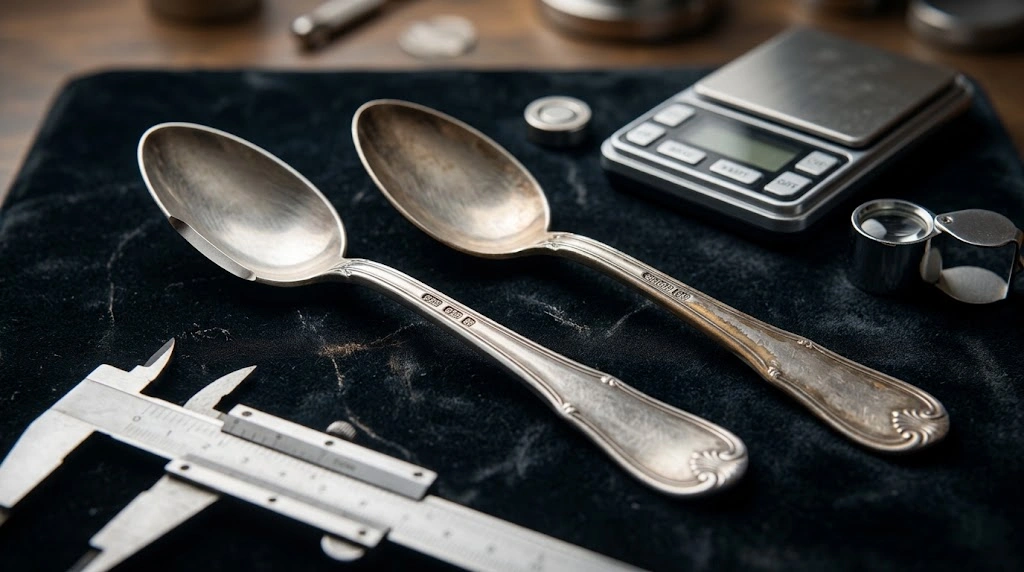
The fastest way to identify sterling silver is checking for a stamp, usually found on the underside, clasp, or inner band of a piece:
- “925” or “.925” — the most common modern sterling mark, indicating 92.5% purity.
- “Sterling” or “Ster” — spelled-out versions of the same purity standard, common on older American pieces.
- Hallmarks or maker’s marks — British and European sterling often carries a lion passant, crown, or assay office symbol instead of a written purity number.
By contrast, silver-plated pieces are typically marked with letters like “EPNS” (electroplated nickel silver), “EPBM” (electroplated Britannia metal), “Silverplate,” “Quadruple Plate,” or simply a manufacturer’s name with no purity number at all. A missing purity mark, or a mark referencing plating rather than fineness, is one of the clearest signs you’re looking at plated rather than solid silver.
Simple At-Home Tests for How to Identify Sterling Silver
Marks aren’t always visible or legible on older pieces, so a few hands-on checks can help confirm what you have:
- The weight test — sterling silver feels notably heavier than plated pieces of the same size, since it’s solid metal rather than a thin coating over a lighter base.
- The wear test — look closely at edges, high points, and areas of frequent contact. On plated items, the base metal often shows through as a different color — brassy, coppery, or dull gray — once the thin silver layer wears away. Sterling silver shows consistent color and tarnish throughout, since the entire piece is the same alloy.
- The magnet test — silver, sterling or plated, is not magnetic, so a magnet won’t stick to either. This test is mainly useful for ruling out steel or iron fakes, not for distinguishing sterling from plate.
- Professional testing — for a definitive answer, an acid test or an X-ray fluorescence (XRF) scan can confirm exact silver content without damaging the piece, which is standard practice at a professional appraisal.
Why the Difference Matters for Value
The value gap between these two categories is significant. Take a serving spoon weighing 60 grams (about 1.93 troy ounces). If it’s sterling silver, it contains roughly 1.78 troy ounces of pure silver (92.5% of its weight). At a spot price of around $70 an ounce, that’s approximately $125 in raw melt value alone, before factoring in any pattern or maker premium. A silver-plated spoon of the exact same weight and appearance contains only a microscopic layer of actual silver worth a few cents at most — the rest of that 60 grams is base metal with no meaningful precious metal value.
This is exactly why sellers sometimes overestimate what a full set of “silver” flatware is worth. A plated set, even a large and attractive one, is generally valued for its condition, pattern, and collectibility rather than its metal content — while a sterling set of the same size carries real, weighable value in addition to any collector interest.
What to Do If You’re Not Sure
If a stamp is worn, missing, or ambiguous, or if you simply want certainty before selling or insuring a piece, a professional evaluation is the most reliable next step. A dealer can confirm purity with proper testing equipment in minutes, without damaging the item, and explain exactly what that means for value — whether the answer turns out to be sterling silver worth its weight or a well-made plated piece worth appraising for its design and condition instead.
Conclusion
Telling sterling silver vs silver-plated apart comes down to checking the marks, weighing the piece, and looking closely at how it wears — and when in doubt, professional testing settles the question definitively. Getting this right before you sell or insure something means you know exactly what you actually have. DEI Gold and Silver Coins backed by certifications from CAC, NGC, PCGS, GIA, and AGL and more than 50 years of combined numismatic experience, tests silver items using the same standards as major refiners and grading services. Bringing in a piece you’re unsure about costs nothing and settles the question for good.
Frequently Asked Questions
Silver-plated items typically have little to no metal resale value, since the silver layer is too thin to be worth extracting. Any resale value usually comes from the design, brand, condition, or collectibility of the piece rather than its silver content.
A “925” stamp indicates sterling silver, meaning the piece is 92.5% pure silver by weight, with the remaining 7.5% typically made up of copper for added durability. It’s the most common purity mark found on modern sterling jewelry and flatware.
No, silver and most base metals used in plating (like copper, brass, or nickel alloys) are not magnetic, so a magnet won’t stick to either sterling or plated silver. This test is useful mainly for catching steel or iron fakes, not for telling sterling apart from plate.
Yes. Since the silver layer on plated items is extremely thin, repeated handling, cleaning, or polishing can gradually wear it away, especially at edges and high-contact points. This is often visible as a different-colored base metal showing through on older plated pieces.
It can be, especially for larger or well-preserved sets from recognized makers, where collectibility and pattern can add value beyond the metal itself. An appraisal can also confirm definitively whether a piece is plated or solid sterling if there’s any uncertainty.