What “Spot Price” Actually Means
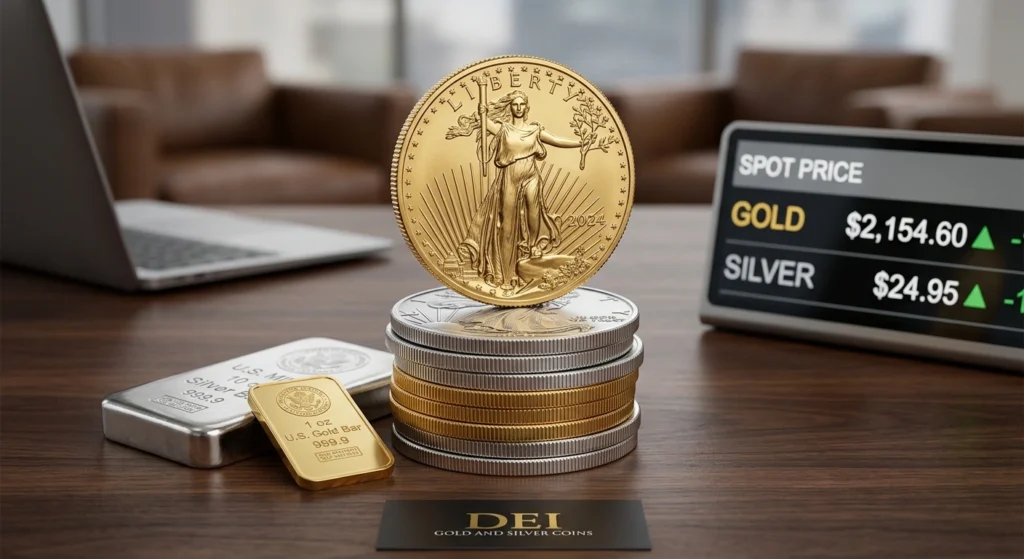
Spot price is the current market price for one troy ounce of raw, unrefined gold or silver, traded in bulk on global commodities markets. It updates constantly during trading hours and reflects the price at which large quantities of metal change hands between institutional buyers — refiners, banks, and bullion wholesalers — not the price an individual buyer pays at a retail counter.
That distinction matters. Spot price is a benchmark, not a retail price. No dealer, anywhere, sells individual coins or bars to the public at spot price, because spot price doesn’t account for the cost of turning raw metal into a finished, recognizable product that a collector or investor can actually hold, verify, and later resell.The same principle works in reverse when you sell — if you’ve ever wondered why don’t I get spot price when I sell, the underlying reason is closely related to why you don’t pay exact spot price when buying.
Why You Never Pay Spot Price for Physical Gold or Silver
Every physical gold or silver product — a Gold Eagle, a Silver Maple Leaf, a generic 1 oz round, a 10 oz bar — has to be mined, refined, struck or minted, packaged, distributed, insured, and sold through a dealer network before it reaches a buyer’s hands. Each of those steps costs money, and that cost is layered on top of the raw metal value in the form of a premium.
This is the same basic principle behind why a gold ring costs more than its melt value, or why a finished product from any manufacturer costs more than its raw materials. The bullion premium explained simply: it’s the markup that covers fabrication, distribution, dealer overhead, and a reasonable margin, sitting on top of the metal’s intrinsic value.
What Goes Into a Bullion Premium
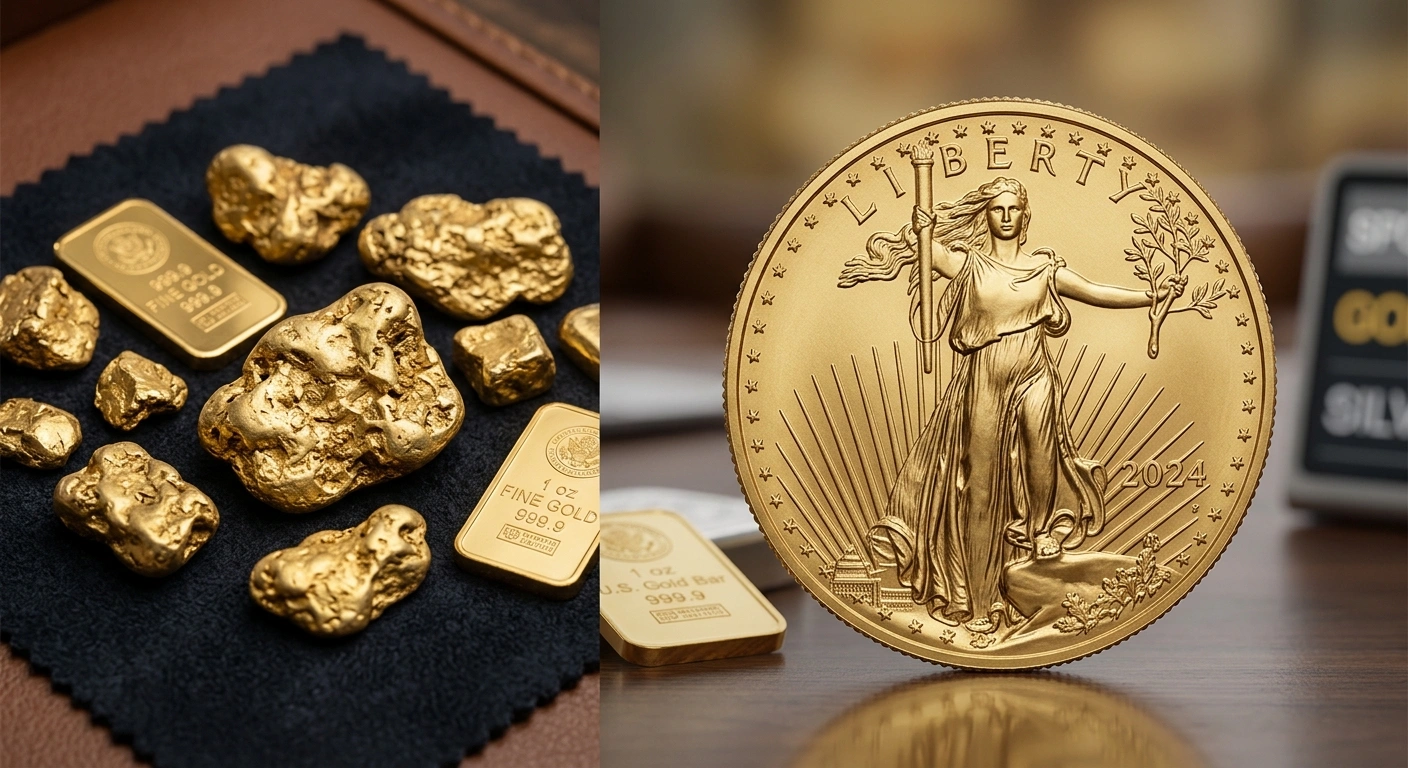
A handful of factors typically make up the premium on any given piece of gold or silver:
- Minting and fabrication costs. Striking a coin or casting a bar requires specialized equipment, dies, and labor — costs that scale differently for a government mint producing millions of coins versus a private mint producing a smaller run.
- Distribution and dealer costs. Metal has to move from refiner to wholesaler to dealer to buyer, and each link in that chain adds handling, shipping, insurance, and storage costs.
- Dealer margin. Like any retail business, a coin dealer needs a margin to cover overhead — rent, staff, security, certification services — and to operate sustainably.
- Scarcity and demand. Products that are harder to source, discontinued, or in unusually high demand at a given moment can carry a higher premium simply because supply is tighter relative to buyer interest.
- Certification and grading. A coin certified by a third-party grading service such as PCGS or NGC carries additional costs tied to that certification process, which is reflected in its price above a raw, uncertified equivalent.
None of this is unique to any one dealer. It’s the structure of the physical precious metals market everywhere.
Coins vs. Bars vs. Rounds: How Premiums Differ
Not all bullion products carry the same premium, and the differences are worth understanding before you buy.
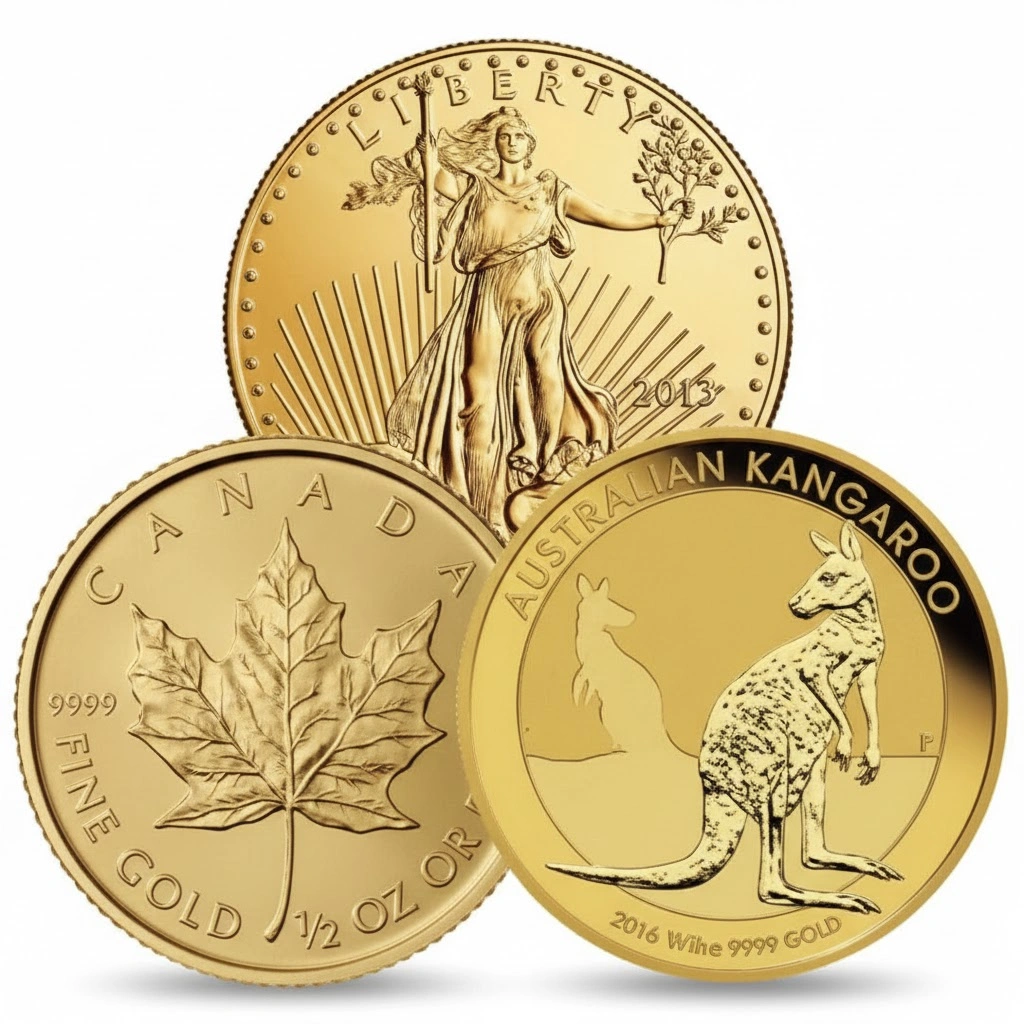
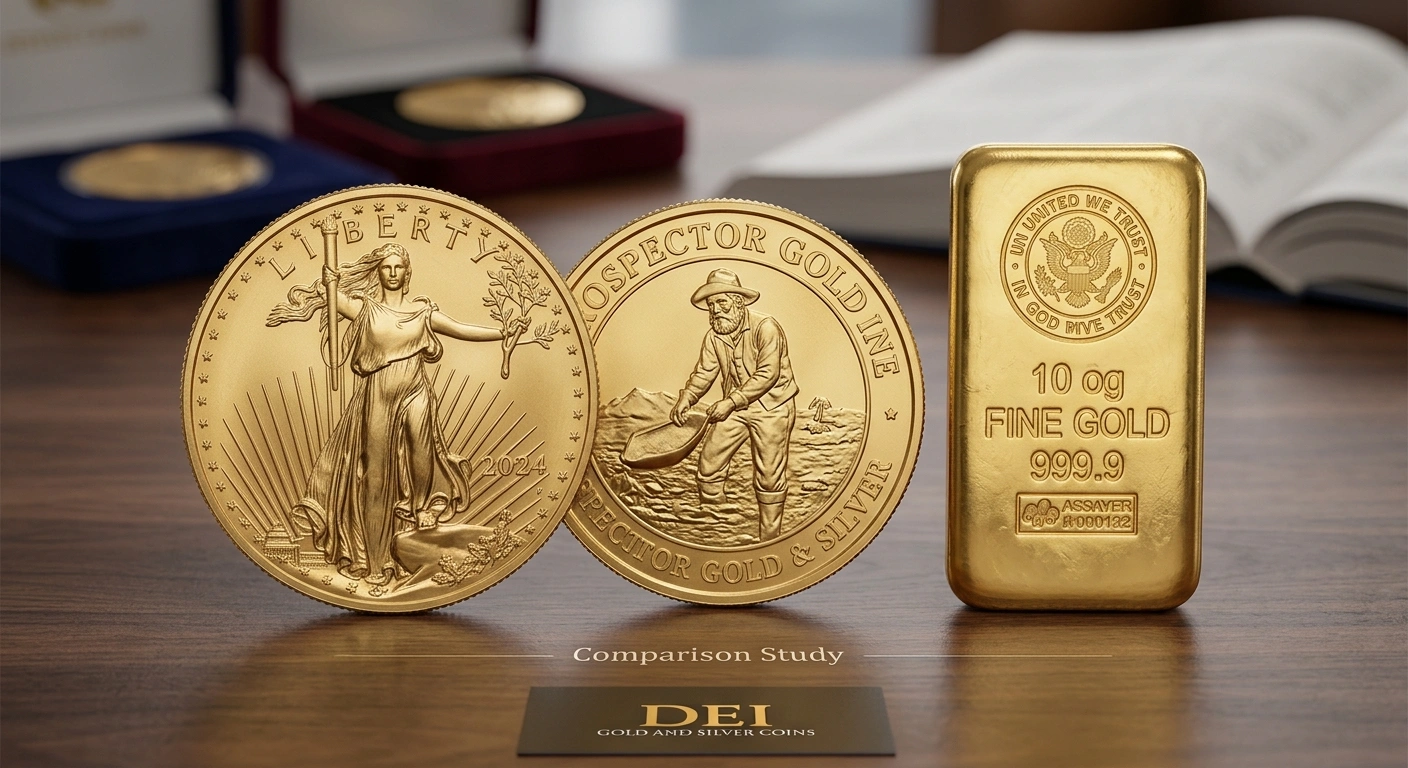
Government-minted coins — American Gold Eagles, Canadian Silver Maple Leafs, and similar sovereign issues — typically carry higher premiums than generic rounds or bars of the same metal weight. That’s because they’re backed by a national mint, produced to strict purity and weight standards, and legally recognized as currency in their country of origin, all of which adds cost and demand.
Generic rounds and bars, produced by private mints rather than governments, generally carry lower premiums because they skip the sovereign-mint costs and legal-tender status. For a buyer whose primary goal is accumulating metal weight as efficiently as possible, these lower-premium products are often the more cost-effective choice.
Larger silver bars — 10 oz, kilo, or 100 oz silver bars, for example — typically carry a lower premium per ounce than smaller bars or coins, because fabrication and packaging costs are spread across more ounces of metal. A 1 oz coin has to be struck, packaged, and handled individually; a 100 oz bar involves the same basic steps but produces far more metal per unit of labor.
How Market Conditions Move Premiums
Premiums are not fixed. They move with supply and demand, sometimes independently of the underlying spot price itself. During periods of high demand — economic uncertainty, currency concerns, or a spike in retail buying interest — premiums on physical coins and bars can widen noticeably, even if spot price stays flat, because mints and dealers can’t always increase production fast enough to match demand.
The reverse is also true. During calmer periods with steady supply and more typical demand, premiums tend to settle back toward more normal ranges. This is why two buyers purchasing the same product a few months apart can end up paying noticeably different premiums, even if spot price hasn’t moved much between those two dates. Because premiums shift with market conditions, this article won’t quote specific current premium percentages — any figure that felt current today could be outdated within weeks, so it’s worth asking a dealer directly for current pricing on the specific product you’re considering.
A Practical Example
Here’s a hypothetical scenario to illustrate the concept, not a real transaction: imagine two buyers each want to purchase $2,000 worth of silver. One buys a single 100 oz silver bar. The other buys the equivalent value in 1 oz government-minted silver coins. Even though both are buying the same total weight of the same metal at the same spot price, the buyer purchasing 1 oz coins will typically pay a higher total premium than the buyer purchasing the single large bar, purely because of how fabrication and distribution costs scale differently across smaller versus larger products. Neither buyer is being overcharged — they’re simply paying for different products with different production economics.
How to Evaluate Whether a Premium Is Fair
Since premiums vary by product, dealer, and market conditions, the best approach for a buyer isn’t to chase a single “correct” number, but to compare. A few practical habits help:
- Compare the same product across a few dealers rather than comparing a coin at one dealer to a bar at another — you want an apples-to-apples comparison.
- Ask what’s included in the price — some dealers may include shipping, insurance, or certification costs in a quoted price, while others itemize them separately.
- Understand that the lowest listed premium isn’t always the best deal if it comes from an unfamiliar source with no track record, unclear return policies, or questionable authentication practices.
- Factor in the buyback side, not just the purchase price. A dealer who buys back product at a fair, transparent rate can matter more over time than saving a small amount on the initial premium.
Buying Gold and Silver in Las Vegas
Buyers in Las Vegas have the advantage of being able to walk into a physical shop, examine a product in hand, and ask a dealer direct questions about premium, certification, and buyback terms before committing to a purchase — something an online-only transaction can’t fully replicate. DEI Gold and Silver Coins sells certified gold and silver coins, bullion bars, and rounds in Las Vegas, with pricing that reflects current market conditions and transparent premiums rather than hidden markups. For collectors and investors who are new to bullion, working with a dealer who is willing to explain how a quoted price breaks down — spot value plus premium — is one of the simplest ways to buy with confidence.
Conclusion
The gap between spot price and what you actually pay isn’t a hidden fee or a markup to be suspicious of by default — it’s the real cost of turning raw metal into a finished, verifiable, resellable product. What matters for a buyer is understanding what that premium is paying for, how it differs across coins, rounds, and bars, and how to compare it across dealers so you can recognize a fair price when you see one. A little bit of that knowledge goes a long way toward buying gold and silver with confidence, whether it’s your first purchase or your fiftieth.
By DEI Gold and Silver Coins | Articles by DEI Gold and Silver Coins
Beyond helping buyers understand pricing and premiums, DEI Gold and Silver Coins also connects with the wider Las Vegas numismatic community through the coin shows it proudly supports.
DEI Gold and Silver Coins is the official sponsor of these shows.
Held and produced by CK Shows, Las Vegas, NV.
IG @CKShows