The U.S. Mint does not simply decide to release a coin. Every release starts with a law, passes through a design review, and then reaches buyers by a specific channel. That channel shapes what you pay and how the coin is likely to hold up later. Knowing that sequence helps you tell a bullion product from a collectible, a one-year design from a routine annual issue, and a real opportunity from marketing.
This guide covers who decides what the Mint releases, how the main release types differ, what changed in 2026, and what to check before you buy.
Who Decides What the Mint Releases
Congress sets the programs
Congress writes much of U.S. coin law, including denominations, specifications and special programs. Commemorative coins are struck only when Congress passes an act authorizing them. The Congressional Research Service notes that Congress has authorized more than 150 commemorative coins since 1892, and the legislation typically names the organizations that benefit from each coin’s surcharges. Circulating programs work the same way. The state quarters, for example, were created by legislation.
Design review
After a coin is authorized, the Treasury begins the design process. The Mint’s artists submit designs, and two advisory bodies review them: the Citizens Coinage Advisory Committee (CCAC), which advises on theme and design, and the U.S. Commission of Fine Arts (CFA). Both make recommendations, and the Secretary of the Treasury makes the final decision. Engravers then prepare the dies and the coins are struck. The Mint describes this on its design and selection page.

Three Kinds of Mint Releases, Three Different Markets
Bullion coins
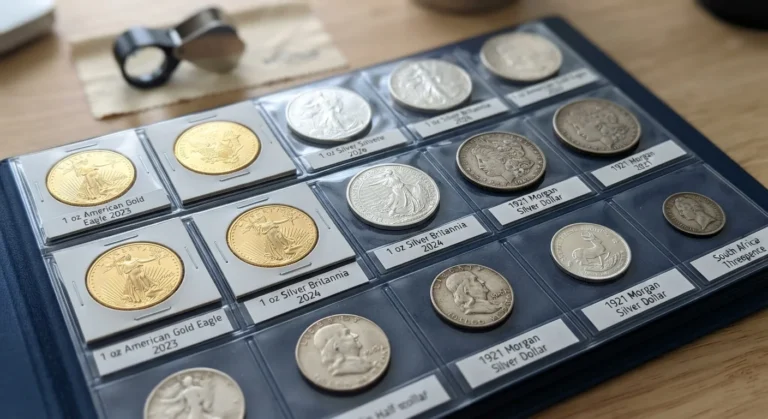
American Eagle gold and silver bullion coins were introduced in 1986, and the Mint’s bullion line also includes the American Gold Buffalo. Their price follows the metal market plus a premium that covers minting, distribution and dealer margin. The Mint does not sell bullion coins directly to the public. It sells them to a network of authorized purchasers at the metal’s market price plus a small premium, and those firms supply dealers. Designs on the Eagles stayed consistent for decades, with a new reverse introduced in 2021, so a bullion release is usually not a “new design” event. If you are comparing products, see our pages on American Gold Eagles and American Silver Eagles, and our guide to understanding bullion premiums.
Commemorative coins
Commemoratives mark an event, person or anniversary and are produced only when Congress authorizes them. Authorizing laws set limits on production and direct surcharges to designated organizations. Examples include the 2019 Apollo 11 50th Anniversary coins, struck with a curved surface, and the 2020 Women’s Suffrage Centennial silver dollar. They are made to be collected, not circulated. They sell above their metal content at release, and later prices depend on demand for that specific coin and its grade, so do not assume they rise.
Circulating coins and annual collector sets
Circulating coins are the cents, nickels, dimes, quarters and half dollars made for commerce. Their designs usually change only when Congress directs it, as with the state quarters (1999–2008). The Mint also sells collector versions in annual proof and uncirculated sets, often with different finishes and mint marks than the coins in your change. Most circulating-issue coins are worth face value unless they are in top condition, have an unusual error or variety, or belong to a notable one-year design.
2026: A Release Year With Real Changes
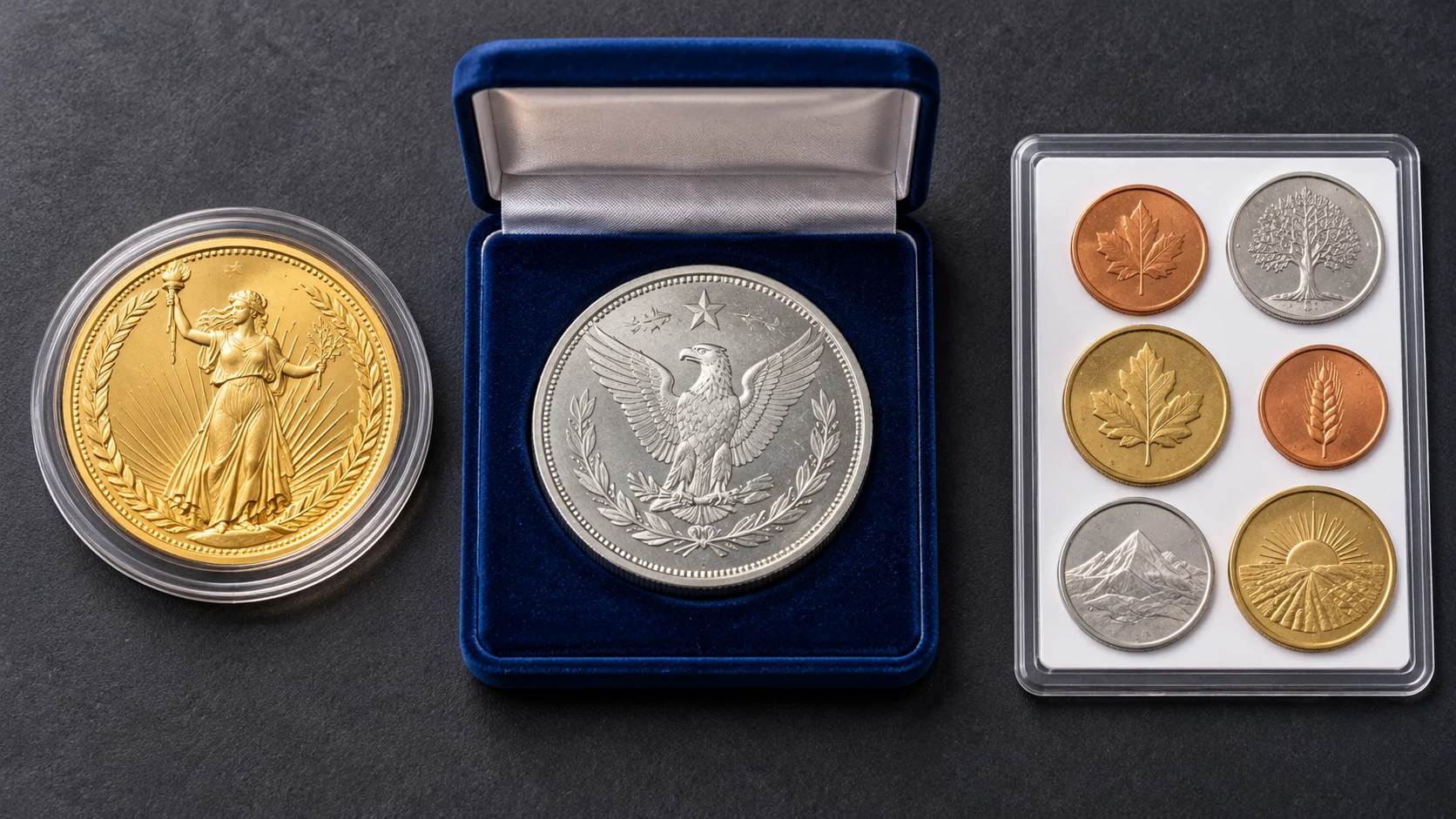
2026 shows how much a single release year can shift the lineup. The Mint struck its final circulating cent in the fall of 2025, though it continues to make collectible cents in annual products. For the 250th anniversary, the 2026 program features five Semiquincentennial quarters (Mayflower Compact, Revolutionary War, Declaration of Independence, U.S. Constitution and Gettysburg Address), a one-year Emerging Liberty dime that returns Liberty to the dime’s obverse for the first time since 1945, and a one-year Enduring Liberty half dollar. The nickel and cent carry a dual 1776–2026 date. Our guide to America 250 coins looks at which are worth collecting. A one-year design draws attention, but circulating coins are still made in large numbers, so scarcity depends on the specific version and grade.
How Mint Releases Reach Collectors
Collectors usually buy through one of three routes:
- Directly from the U.S. Mint. Collector products such as proof and uncirculated sets, rolls, bags and commemoratives are sold on the Mint’s website. Some products have order limits and can sell out.
- Through authorized purchasers and dealers. Bullion coins go to authorized purchasers, then to dealers, then to buyers. The Mint lists its authorized purchasers online.
- On the secondary market. After release, coins resell through dealers, auctions and online marketplaces, where authenticity, condition and pricing vary widely.
Buy or Sell Gold & Silver Coins with Confidence
Work with a trusted Las Vegas coin dealer offering fair pricing, honest appraisals, and expert guidance every step of the way.
Do New Releases Hold Their Value?
Sometimes, but not automatically. The price of a modern Mint product usually includes the Mint’s costs and marketing on top of the metal or face value, so resale prices can land below the issue price if demand fades. What tends to support value:
- Metal content. Precious-metal products have a floor tied to the metal price.
- Grade. Certified modern coins graded very high, such as 69 or 70, can carry premiums over ungraded ones.
- Sustained demand. A series with active collectors holds interest better than a one-time promotion.
Be careful with marketing labels. Terms like “First Strike” or “First Day of Issue” describe when a coin was submitted or received, not its quality grade. Our comparison of PCGS, NGC and CAC grading explains what each certification service actually verifies.
How to Follow Mint Releases
- Check the U.S. Mint’s product schedule and sign up for its email alerts. This tells you what is coming and when.
- Watch the design reviews. The CCAC and CFA review designs in meetings before the Treasury decides, which gives an early look at upcoming coins.
- Read the order limits and release times before a popular product launches, since some sell out quickly.
- Get an appraisal before you resell. DEI GOLD AND SILVER COINS offers coin appraisals in Las Vegas, so you can find out what a Mint product is worth on the current market before you decide to sell or hold.
FAQ
1. How does the U.S. Mint decide which coins to release?
Congress authorizes programs and specifications. The Treasury, through the Mint, then develops designs, with the CCAC and CFA reviewing them and the Secretary of the Treasury making the final decision. The Mint publishes a schedule of what it plans to issue.
2. Can I buy American Eagle bullion coins directly from the Mint?
The Mint sells bullion coins to authorized purchasers rather than to the public, so most buyers purchase them from dealers. Some collector versions, such as proof coins, are sold on the Mint’s website.
3. Are commemorative coins a good investment?
Not reliably. They are priced above their metal content at release, and later prices depend on demand for the specific coin and its grade. Treat them as collectibles first.
4. Are the 2026 America 250 coins rare?
Several are one-year designs, but circulating coins are produced in large quantities. Scarcity depends on the specific version, finish and grade, and some collector-only products have limits.
5. Does the Mint still make pennies?
The Mint ended circulating cent production in the fall of 2025 but continues to strike collectible cents for products such as proof and uncirculated sets.
6. How do I find out what my Mint coin is worth?
Identify the exact coin, finish and grade, then compare it with recent sold prices for the same version. An appraisal is the most reliable way to confirm.
Conclusion
U.S. Mint releases follow a clear path: Congress authorizes, the Treasury designs with advisory review, and the coins reach buyers through the Mint, authorized purchasers or the secondary market. Knowing whether a release is bullion, a commemorative or a circulating issue tells you how to value it. Check the grade, the version and the sold prices before assuming a new coin will gain value.
By DEI GOLD AND SILVER COINS | Articles by DEI GOLD AND SILVER COINS