Starting a gold and silver coin collection means learning a few terms, making a handful of early decisions and avoiding easy ways to overpay. The market has also been unusually volatile in 2026. On February 23, 2026, gold was about $5,149 an ounce and silver about $86. By October 23, gold had fallen to $4,032. Silver was near $60 on October 7. Those are dated snapshots, not forecasts, but they show why knowing what you are paying for matters. current price of silver 2 23 2026 +2
This guide walks through six decisions in order: why you are collecting, which type of coin fits, which coins to start with, how to judge one, where to buy, and how to protect what you own.
Step 1: Decide Why You Are Collecting
Your goal decides what you buy, so settle it first. Most beginners fall into one of three groups.
- Metal-focused buyers want precious metal at a fair price and buy mostly bullion.
- Collectors enjoy history, design and rarity and buy mostly numismatic coins.
- Legacy builders want something to pass on and often combine both.
You can change course later, but a clear goal keeps you from accumulating coins you do not need. Set a budget at the same time, and treat it as a limit.
Step 2: Understand Bullion vs. Numismatic Coins
Bullion coins are priced mainly by their metal content. They are struck by government mints in standard weights and purities, so they are easy to value and resell.
Numismatic coins are priced by rarity, condition, age and collector demand, and the price can sit far above the metal value. That makes them more rewarding for informed buyers and harder for beginners to value. Our comparison of bullion vs. numismatic coins goes deeper.
Three terms come up constantly.
- Spot price is the market price for an ounce of metal.
- Melt value is what a coin’s metal is worth at spot.
- Premium is the amount over spot that you pay. It is usually higher per ounce on smaller coins.
Dealers also quote two prices, one to sell and one to buy, and the gap is the spread. Expect to receive less than you paid if you resell soon, so think of a coin as a purchase you may hold for years, not a quick trade.
Step 3: Choose Starter Coins
These coins are widely traded and have verifiable specifications.
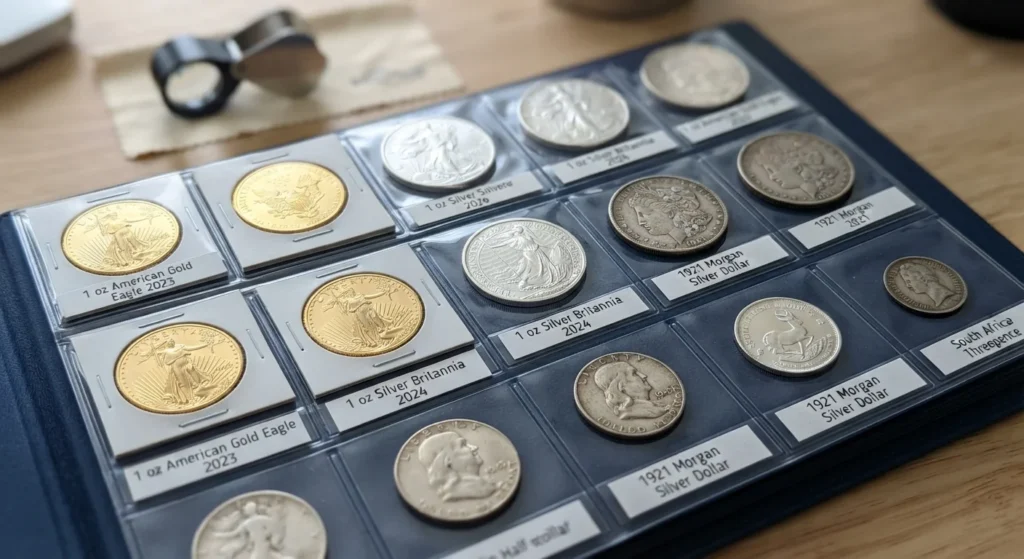
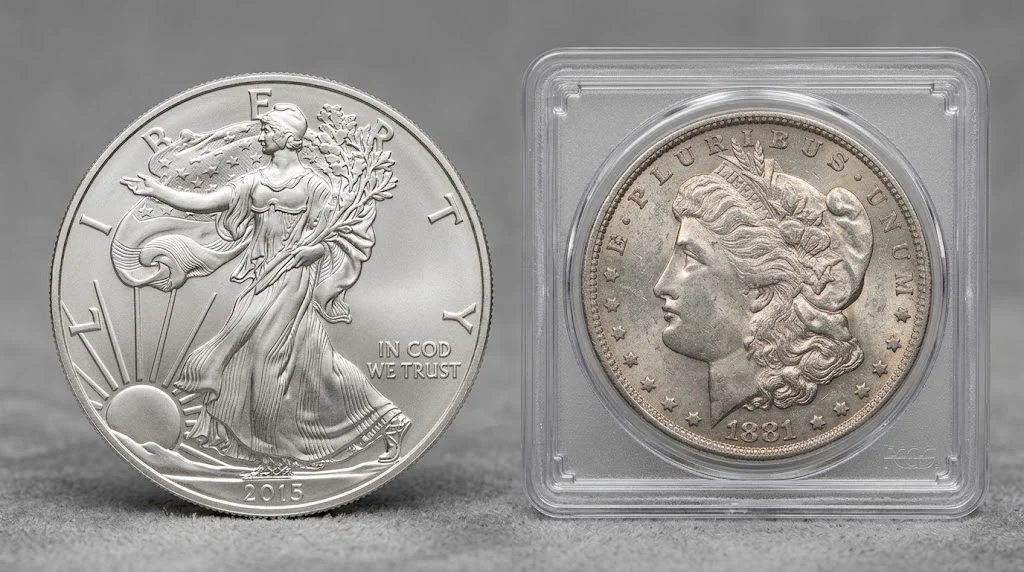
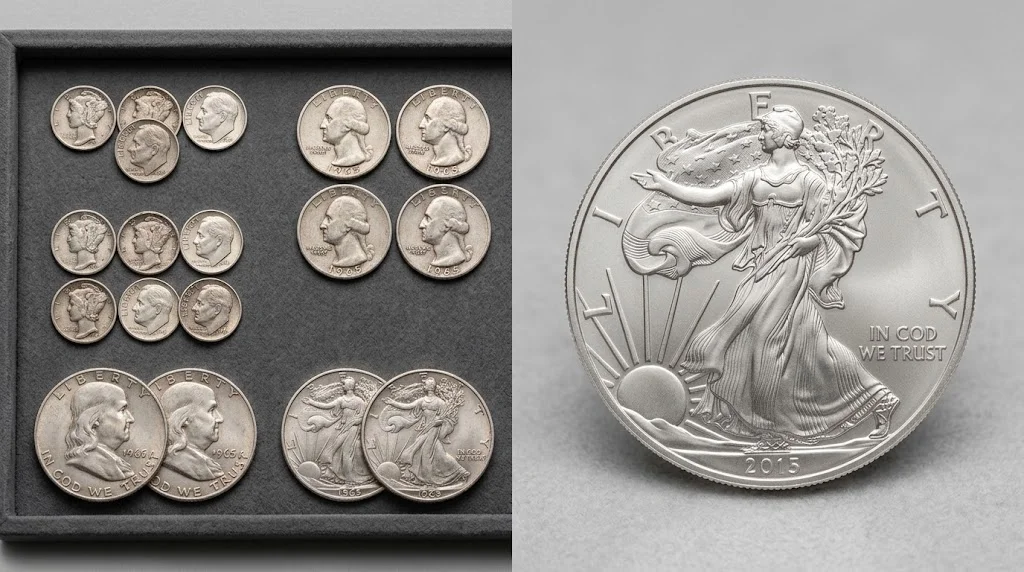
American Silver Eagle. The 1-ounce, 99.9 percent silver coin is 40.6 mm across, and the U.S. Mint first released it on November 24, 1986. The obverse shows Adolph Weinman’s Walking Liberty, and a new reverse by Emily Damstra replaced John Mercanti’s heraldic eagle in 2021. It is one of the most common first silver coins. Wikipediawhitman
Canadian Silver Maple Leaf. A one-ounce coin of very high purity (.9999 fine) from the Royal Canadian Mint, widely recognized and easy to resell.
Pre-1965 U.S. silver coins. Dimes and quarters dated 1964 or earlier are 90 percent silver. Half dollars dated 1964 and earlier are 90 percent silver, while 1965–1970 Kennedy halves are 40 percent. Each $1 of face value in 90 percent coins holds about 0.715 troy ounces of pure silver. At about $60 an ounce, that is roughly $42.90 of silver per dollar of face value. Our explainer on 90% junk silver melt value covers the math. usagoldmonumentmetals
Morgan silver dollar. A classic 90 percent silver coin with 0.7734 troy ounces of pure silver. Common dates are priced close to metal value, while rare dates and high grades are priced by collectors. Wikipedia
American Gold Eagle and Krugerrand. The American Gold Eagle shares the Krugerrand’s .9167 (22-karat) fineness, so the alloy is gold and copper. The Krugerrand was first minted in 1967, contains one troy ounce of gold, and carries no face value. findbullionpricesusagold
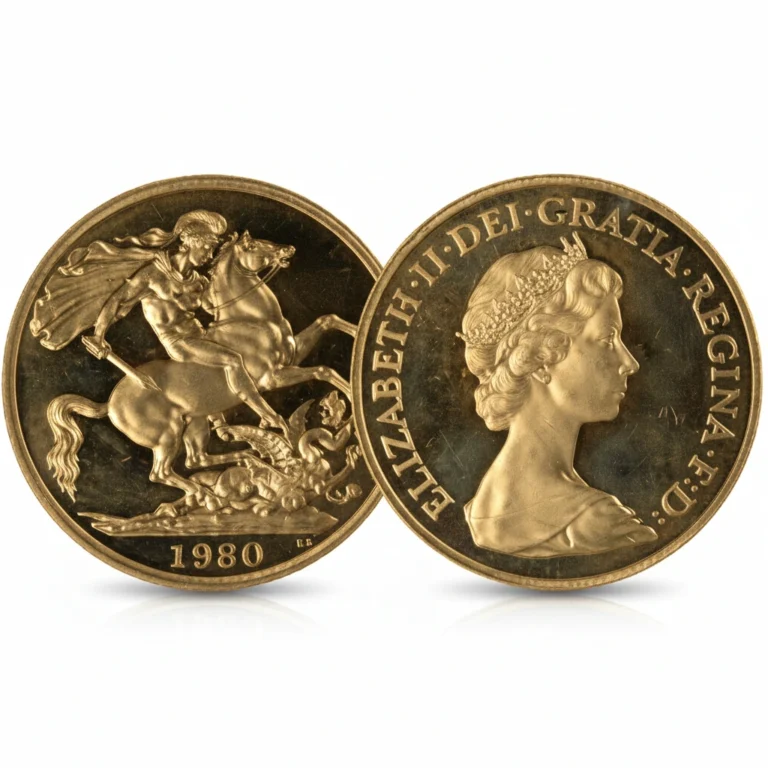
British gold sovereign. It weighs 7.98 grams, measures 22.05 mm, is .9167 fine and contains 0.2354 ounce of pure gold. That makes it a smaller entry point into gold than a full-ounce coin. coinworld
Step 4: Plan Around a Volatile Market
Because gold has traded near $4,000 an ounce, a one-ounce gold coin costs about that much in metal alone, before premium. You have practical options.
- Start with silver. The metal costs a fraction of gold per ounce, so mistakes are cheaper.
- Consider fractional gold. One-tenth and quarter-ounce coins cost less up front, but the premium per ounce is usually higher.
- Buy in stages. Smaller purchases over time reduce the risk of one badly timed buy, though they do not guarantee a better price.
Do not buy because of one big price day, and never spend money you may need soon.
Step 5: Learn to Judge a Coin
Check four things before you buy.
- Weight and purity. These determine melt value. Compare the weight and diameter with the published specification. A scale and caliper catch crude fakes, though not good ones.
- Condition. U.S. collectible coins are graded on a one-to-seventy scale, and a single grade step can change the price a lot. Cleaned or damaged coins are discounted. Our guide to the coin grading scale explains each step.
- Rarity and demand. Low mintages and strong collector interest raise price, while age alone does not.
- Authenticity. Many counterfeit coins are well made. Counterfeits have also turned up in counterfeit holders, so verify certification numbers with the grading service. Use our checklist for spotting fake gold and silver coins before you pay for anything expensive. littletoncoincoinshowradio
Step 6: Buy Safely, Store Carefully and Grow with a Plan
Buying. Work with established dealers, and ask for the premium over spot and the dealer’s buy price on the same coin. Membership in the American Numismatic Association or the Professional Numismatists Guild is a useful signal, though not a guarantee. For expensive collectible coins, buy certified by PCGS or NGC. Keep every receipt. DEI GOLD AND SILVER COINS carries gold and silver coins in Las Vegas and offers appraisals if you want a second opinion on something you own or are considering.
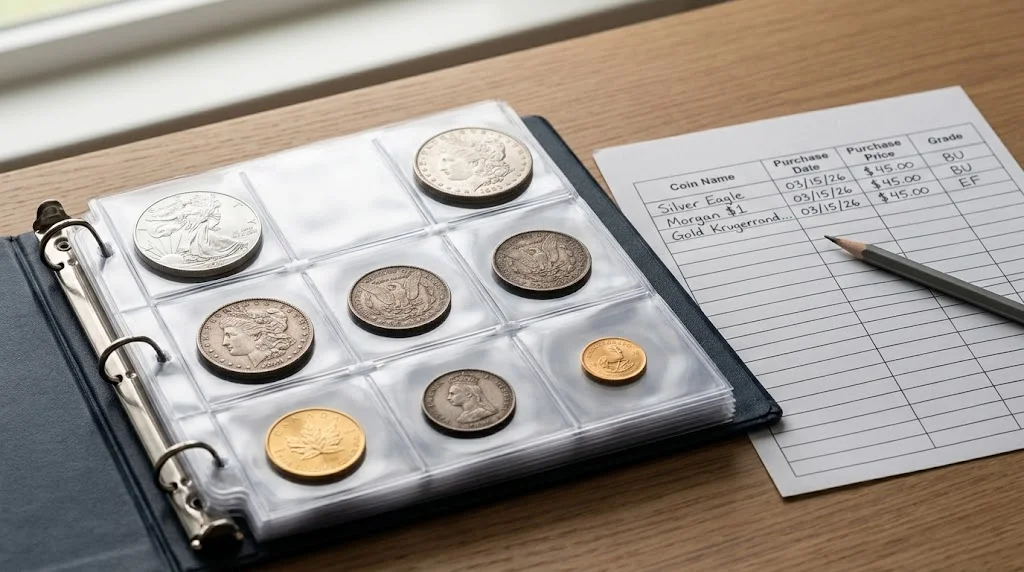
Storing. Handle coins by the edges, use PVC-free holders such as Mylar flips or rigid capsules, and never clean a coin, because cleaning scratches the surface and lowers collector value. Keep coins dry and away from sunlight, and keep an inventory with purchase date, price and grade. Insurance and a safe become worth considering as the collection grows.
Growing. Pick a theme. A silver set could be a run of U.S. half dollars: Walking Liberty halves were struck from 1916 to 1947, Franklin halves from 1948 to 1963, and the 1964 Kennedy half was the last 90 percent silver issue. A reference such as the annual Red Book, whose 2027 edition is now available, helps you learn dates and mintages. Coin clubs and shows are a good way to handle coins in person. gainesvillecoinsgreysheet
If you want a professional opinion on coins you already own, you can request an appraisal. An appraisal estimates what a coin is worth, while a dealer’s offer is what the dealer will pay, which is lower because it includes resale risk.