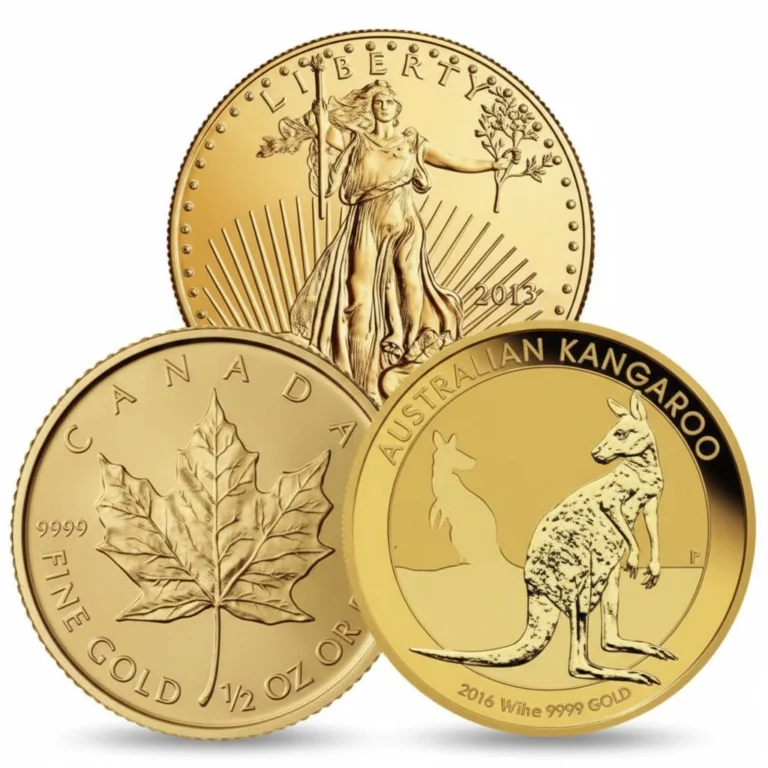
For coins and bullion, the carrier you choose matters more than the box you use. UPS lists gold and other precious metals among its restricted items. FedEx has historically capped declared value on precious metals and collector’s coins at a low figure. The one mainstream service that insures bullion and coins at declared value is USPS Registered Mail, up to $50,000 per package.
Most shipping problems come from a mismatch between what the sender assumes is covered and what the carrier will actually pay. This guide explains which options protect gold and silver, how to value a shipment for insurance, how to pack coins, bars and certified slabs, and what to document before anything leaves your hands.
Start With Which Carrier Will Actually Pay a Claim
Packaging only reduces the chance of damage. Insurance and carrier terms decide whether you are made whole if something goes wrong, so settle those first.
USPS Registered Mail
Registered Mail can travel as First-Class Mail, USPS Ground Advantage or Priority Mail. It is the only USPS option whose included insurance pays out at full value, up to $50,000. If the declared value is higher, the extra handling fees do not raise the Postal Service’s liability, so the maximum payout stays at $50,000. USPS has also noted that Registered Mail does not generate the frequent scans of an ordinary tracked parcel. It travels hand to hand, with each transfer signed for. Expect fewer tracking updates and keep your receipt safe. Postal rules have also historically limited payment on bullion sent through non-registered services to a nominal amount, so do not assume ordinary Insured Mail covers it. Confirm current terms in the Domestic Mail Manual or with your post office before shipping.
UPS and FedEx
Both carriers’ terms treat precious metals as restricted or limited. In the FedEx terms we reviewed, precious metals and collector’s coins carried a very low maximum declared value (US$500 in older terms, US$1,000 in newer ones). FedEx also lists bullion and coins among prohibited items for some international shipments. FedEx runs a Declared Value Advantage program that raises limits for eligible contract shippers, but it is aimed at businesses with an account, not occasional senders. Carrier terms change, so read the current service guide before you rely on any of this.
Specialty shipping insurance
Some insurers cover coins and bullion in transit regardless of carrier. Before you buy, confirm in writing that:
- the policy covers your specific contents (bullion, certified coins, jewelry)
- it covers your chosen carrier and service
- it pays replacement value, not just declared value
- you know what proof of value and packing a claim requires
Standard homeowners and renters policies often sub-limit or exclude coins and precious metals, and they rarely cover items in transit. Check your own policy rather than assuming.
Buy or Sell Gold & Silver Coins with Confidence
Work with a trusted Las Vegas coin dealer offering fair pricing, honest appraisals, and expert guidance every step of the way.
Insure for Replacement Value, Not Melt Value
Bullion and collectible coins are valued differently, and declared value should reflect that.
A one-ounce gold or silver bullion coin or bar is valued off the spot price plus a premium. That premium reflects mint, product type and market demand, and it is the reason retail cost sits above spot. Our guide to understanding bullion premiums explains how it works. For insurance, the relevant figure is what it would cost you to replace the item, not what a buyer would pay for the metal alone.
A rare or certified coin works differently. Its value depends on date, mintmark, grade, surface preservation, eye appeal and collector demand. A pre-1933 U.S. gold coin in a high grade can be worth many times its gold content. If you declare only the melt value, you could be badly under-insured. For certified coins, the grade and certification number from PCGS or NGC tell a claims adjuster exactly what the coin is. Our comparison of PCGS, NGC and CAC explains what each service verifies.
Prices move, so declare the value at the time of shipping, not the value you remember from last year.
Pack for the Weight, Not Just the Fragility
Silver is heavy. One hundred troy ounces weighs about 6.9 pounds (roughly 3.1 kg), and a small box of coins can easily outweigh what its cardboard was built for. A thin box can burst at the seams and a coin tube can punch through a seam.
- Use a rigid, double-walled corrugated box sized close to the contents. A box that is too large lets weight slide and compress the padding.
- Immobilize every item. Coins should not rattle or shift. Fill voids with dense padding so nothing can migrate to a corner.
- Keep the weight centered and away from box walls and corners.
- Seal it the way the carrier requires. Registered Mail has its own sealing rules, and USPS advises avoiding tapes that do not absorb postmarking ink. Ask the clerk what they want.
- Use a plain outer box. Do not print or write anything on it that suggests the contents.
Coins and bullion. Keep tubes, capsules and mint packaging intact where you can. Do not tape directly onto coins. Avoid soft PVC flips for long-term storage, since they can leave residue on a coin’s surface.
Bars. Heavy bars can scratch each other and the packaging. Keep them in their assay cards or sealed packaging, and separate each with padding.
Certified slabs. A slab protects a coin from handling, but it can still crack, and the coin inside can still be damaged by a hard impact. Pad slabs individually and do not let them knock against each other.
Raw rare coins. Never clean a coin before shipping. Cleaning can reduce a numismatic coin’s value permanently. Leave the coin in its holder, and if a coin has any history (an old envelope, a dealer holder), keep that with it.
Document Everything Before the Package Leaves
Documentation protects you in a claim and in any dispute with a buyer or dealer.
- Photograph each item before packing. For certified coins, include the label and certification number.
- Record weights, serial numbers on bars, and certification numbers.
- Photograph the open box after packing, the sealed box, and the shipping label with the receipt.
- Include a printed inventory inside the package and keep a copy.
- Keep proof of purchase or appraisal that supports the declared value.
If a claim is ever needed, filing deadlines are strict. USPS rules have historically set a 60-day window for domestic claims, so do not wait to start the process.
Reduce Risk Beyond the Box
- Confirm the recipient and address. Verify them independently before you ship, especially for a first-time buyer, and be wary of requests to rush.
- Require a signature on delivery.
- Time the shipment. Avoid sending late in the week when a package may sit in a facility over a weekend.
- Keep tracking numbers private. Share them only with the intended recipient.
- Agree on who carries the risk in writing. Many dealers specify that the seller is responsible until the shipment is received and inspected, but terms differ, so confirm it.
Before You Ship Coins You Plan to Sell
If you are shipping to sell, shipping may not be the best first step. Gold or silver coins that have been in a family for decades can carry a numismatic premium well above their metal content, and the right buyer for them is not always the one with the cheapest shipping label. A quick in-person evaluation can tell you whether you hold common bullion-type coins, key dates, or certified pieces, which also tells you how to insure and ship them.
If you are in the Las Vegas area, DEI GOLD AND SILVER COINS offers appraisals in person, which removes shipping risk entirely. If you inherited a collection, our guide to selling inherited coins covers sorting before you sell, and our page on selling gold coins in Las Vegas explains how the process works. Whether it is a good time to sell depends on your goals and the market at that moment, and an appraisal is the right way to see where your coins stand. If you are out of state and want to ship, ask any buyer how they handle in-transit insurance and who pays for it before you send anything.
International Shipments
Cross-border shipping adds customs rules, import duties and country-specific restrictions. Some countries restrict or prohibit importing coins or bullion, and some carriers list precious metals as prohibited internationally. Transporting more than $10,000 in monetary instruments (which can include legal-tender coins) into or out of the U.S. can trigger a reporting requirement with U.S. Customs and Border Protection. Verify current rules with CBP and the destination country, or use a customs broker, before shipping.
If Something Goes Wrong
Report the problem immediately. Keep the original box, padding and receipt, and do not discard damaged packaging. Gather your photos, inventory, certification numbers and proof of value, then file with the carrier or insurer within their deadline. If the shipment was between you and a buyer or dealer, notify them at the same time.
Conclusion
Shipping gold and silver safely comes down to three decisions. Choose a carrier that will actually pay a claim, which for most senders means USPS Registered Mail or a dedicated specialty insurer. Insure for replacement value rather than melt value. Pack and document the shipment so you can prove what was in the box. If you are only shipping to find out what your coins are worth, an in-person appraisal may remove the need to ship at all.
By DEI GOLD AND SILVER COINS | Articles by DEI GOLD AND SILVER COINS