What Actually Determines the Value of Gold Jewelry
Gold jewelry value comes down to three core inputs, plus one variable that can swing the number significantly:- Weight — how much the piece weighs, usually measured in grams or troy ounces (a troy ounce equals about 31.1 grams, slightly more than a standard ounce).
- Purity — the karat rating, which tells you what percentage of the piece is actually gold versus other alloy metals.
- Spot price — the current market price of gold per troy ounce, which changes throughout each trading day.
- Extras — gemstones, designer markings, brand name, or collectible/antique status, which can add value beyond the raw gold content.
Understanding Gold Purity: Karat Stamps and What They Mean
Pure gold (24 karat) is soft, so most jewelry is alloyed with metals like copper, silver, or zinc for durability. The karat stamp on a clasp or inner band tells you the ratio:| Karat Stamp | Gold Purity | Approx. % Pure Gold | Common Use |
| 24K | .999 / .9999 fine | 99.9%+ | Bullion coins, bars, some Asian jewelry |
| 22K | .916 fine | 91.6% | Traditional/Middle Eastern & Asian jewelry |
| 18K | .750 fine | 75.0% | Fine jewelry, engagement rings |
| 14K | .585 fine | 58.5% | Most US-made jewelry |
| 10K | .417 fine | 41.7% | Budget jewelry, class rings |
How to Estimate Your Gold Jewelry’s Value at Home
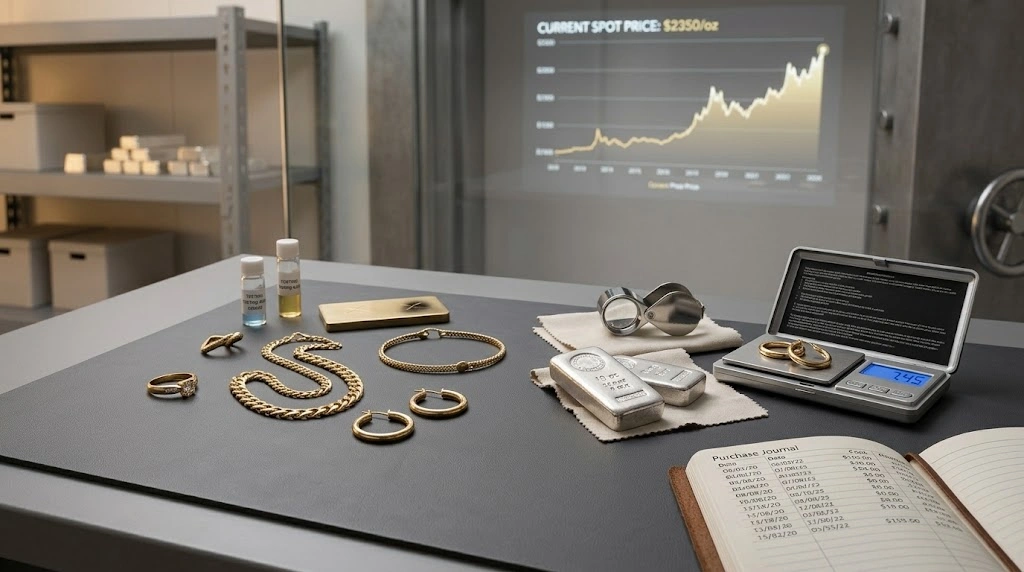
You can get a reasonable ballpark using this formula: Weight (troy oz) × Purity (%) × Current Spot Price = Estimated Melt Value Worked example: a 14K gold necklace weighing 20 grams. First, convert grams to troy ounces: 20 ÷ 31.1 = 0.643 troy ounces. Next, apply 14K purity (58.5%): 0.643 × 0.585 = 0.376 troy ounces of pure gold. If gold is trading at roughly $2,600 per troy ounce, the melt value would be approximately 0.376 × $2,600 = $978 This is your floor, not your ceiling. It tells you what the raw gold is worth if nothing else about the piece adds value — a useful number before you sell, insure, or use a gold jewelry value calculator online.Melt Value vs. Retail Value vs. Numismatic Premium
It’s easy to confuse what a piece cost, what it’s insured for, and what a buyer will actually pay. This is the same distinction that comes up when weighing scrap gold vs. coins — melt value, retail value, and any collectible premium are three different numbers:| Value Type | What It Reflects | When It Matters |
| Melt Value | Raw gold content only, based on weight × purity × spot price | Selling scrap, broken, or dated jewelry with no design premium |
| Retail Value | Melt value plus craftsmanship, brand, and retail markup | Buying new jewelry or insuring a piece at replacement cost |
| Numismatic / Designer Premium | Extra value from rarity, maker’s mark, gemstones, or collectibility | Signed designer pieces, antique jewelry, or estate collections |
Using a Gold Jewelry Value Calculator: What It Can (and Can’t) Tell You
A gold jewelry value calculator is a fast way to plug in weight, karat, and the live spot price to get an instant melt-value estimate. It’s genuinely useful for a quick sanity check before you visit a dealer. But calculators have real limits:- They can’t verify your stated karat or weight is accurate — a scale and a purity test still matter.
- They don’t account for gemstones, designer markings, or antique/collectible value.
- They show melt value only, not what a specific buyer will actually offer.
Why Two Identical-Looking Pieces Can Be Worth Different Amounts
Two 14K gold rings of the same weight can have very different values once you account for:- Gemstones — diamonds, sapphires, or other stones are valued separately from the gold setting.
- Designer or maker’s marks — signed pieces from recognized jewelry houses can carry a premium over melt value.
- Condition and age — antique or vintage pieces sometimes have collectible value beyond their gold content, which comes up often when evaluating an inherited jewelry collection that spans several decades of acquisitions
- Hollow vs. solid construction — hollow chains and bangles weigh less than they appear, which affects the melt-value calculation.
What to Bring to a Professional Gold Jewelry Appraisal
A short prep list makes the appraisal faster and the quote more accurate:- The jewelry itself, ideally uncleaned — aggressive home cleaning can sometimes damage delicate settings.
- Any original certificates, receipts, or gemstone grading reports (GIA, for example) you still have.
- Photo ID, since reputable dealers are required to verify identity on purchases by law in most states, including Nevada.
- A general sense of your goal — selling outright, getting an insurance appraisal, or simply finding out what you have. Any of these are a good reason to book a free coin appraisal in Las Vegas and get a professional read before deciding.
Buy or Sell Gold & Silver Coins with Confidence
Work with a trusted Las Vegas coin dealer offering fair pricing, honest appraisals, and expert guidance every step of the way.
How to Choose a Trustworthy Gold Buyer
Before you sell, look for a few concrete signs of a legitimate, transparent dealer:- Certifications from recognized industry bodies — for coins and bullion, that includes NGC, PCGS, and CAC; for gemstones, GIA is the standard.
- A dealer who weighs and tests the item in front of you, rather than out of sight.
- A clear explanation of how the offer was calculated — weight, purity, and current spot price — not just a flat number.
- No pressure to decide on the spot. A fair appraisal should hold up whether you sell today or come back next week.
Frequently Asked Questions
It’s accurate for estimating melt value if you enter the correct weight and karat, since it’s just applying a formula to the live spot price. It cannot account for gemstones, designer premiums, or condition, so treat the result as a starting estimate rather than a final offer.
Gram for gram, yes — 18K contains 75% pure gold versus 58.5% for 14K, so it has a higher melt value at the same weight. However, a heavier 14K piece can still be worth more in total than a lighter 18K piece, since weight and purity both factor into the final number.
A gentle wipe with a soft cloth is fine, but avoid harsh chemicals, ultrasonic cleaners, or vigorous scrubbing on delicate or antique pieces. Since sale value for scrap gold is based on weight and purity rather than shine, aggressive cleaning adds risk without adding value.
Yes. A missing or worn stamp doesn’t mean there’s no gold value — a reputable buyer can confirm purity using an acid test, electronic tester, or XRF analysis before making an offer, so you don’t need documentation in hand to get an accurate reading.
Offers vary based on each buyer’s margin, refining costs, and how they price non-metal factors like gemstones or design. Getting a second opinion is reasonable, and a transparent dealer will walk you through exactly how their number was calculated rather than just stating a total.
Conclusion
The real answer to “how much is my gold jewelry worth” starts with three numbers you can check yourself — weight, karat, and the current spot price — and finishes with a professional eye for anything a calculator can’t see, like gemstones or designer value. Getting both halves right is how you avoid leaving money on the table or overestimating what you have. DEI Gold and Silver Coins, backed by certifications from CAC, NGC, PCGS, GIA, and AGL and more than 50 years of combined numismatic experience, offers straightforward, transparent evaluations for exactly this kind of question. Whether you’re ready to sell or just want a clear number, an in-person look is the most reliable next step.