Most people worry about theft first, but the more common problems are quieter: moisture and sulfur slowly dulling silver, soft plastic holders leaving residue, and insurance that pays far less than expected. Many homeowners policies follow a standard that caps theft payouts for coins and bullion at about $200. That is a figure to check on your own declarations page before you decide a closet shelf is enough. pages
This guide explains how to store gold and silver safely at home: what each metal needs, how to choose a safe, how to control the environment, which holders to use, how to insure and document your holdings, and when storage itself becomes a reason to sell.
Know What You Are Protecting
Gold resists oxidation, but gold coins are usually alloyed with copper. Tarnished silver gives off sulfur compounds that can affect gold alloy coins containing copper, so spotting is possible in poor conditions. goldsilver
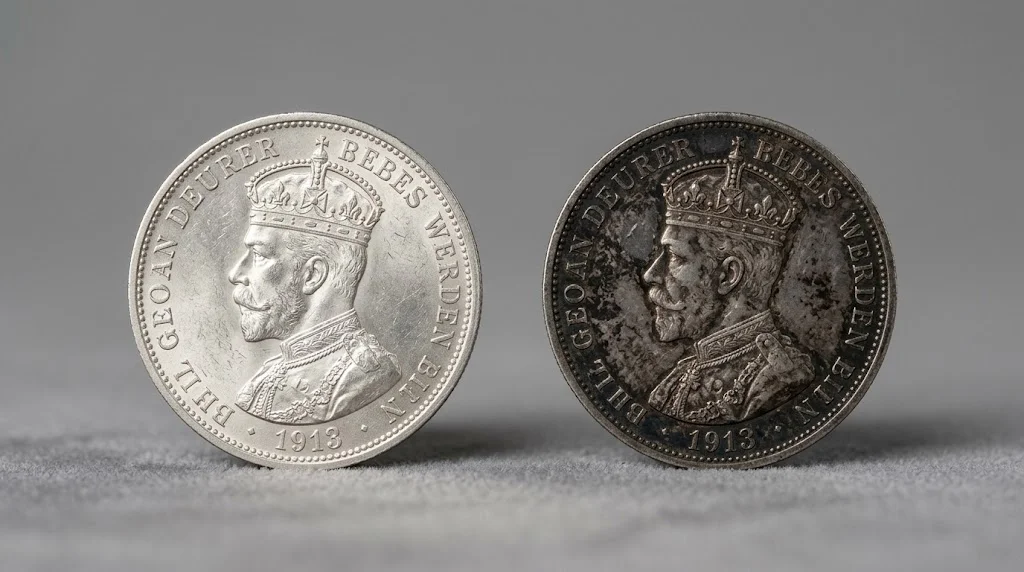
Silver is the more vulnerable metal. It tarnishes when it reacts with trace hydrogen sulfide and sulfur dioxide in the air, and humidity speeds the reaction. goldsilver
Bullion vs. collectible coins. For a plain bar or round, tarnish and scratches mostly affect appearance and resale premium. For a collectible coin, original surfaces are part of the value, and cleaning is noted on a coin’s grading label and significantly reduces collector appeal and price. Our article on why cleaned coins lose value explains the hidden damage. If you are unsure which category you own, an appraisal can tell you before you choose a storage method. goldsilver
Choose Where to Keep It A home safe
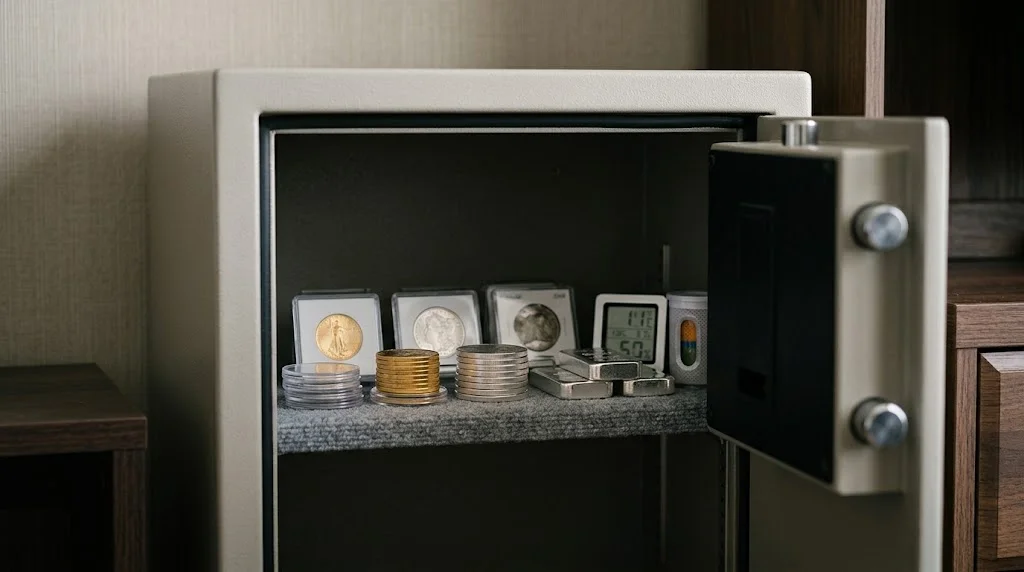
Two ratings matter, and they measure different things. UL fire testing heats a safe to 1,500°F outside and measures how long the interior stays below 350°F. Theft ratings such as TL-15 or TL-30 describe the net working time an attacker needed. A lightweight model built mainly for fire protection can be carried away: some light-duty safes weigh only 60 to 80 pounds, so anchor the safe to the floor or a concrete slab. Decisions about home safe need serious consideration +2
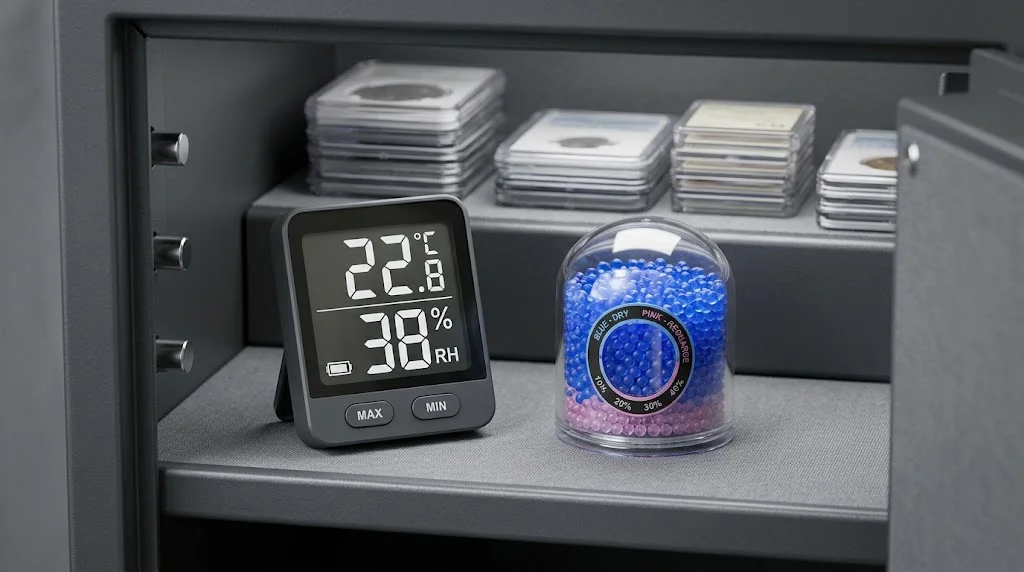
There is a catch for coin collectors. The insulation in fire-resistant safes holds moisture, so the interior often feels damp, which can lead to corrosion. If you use one, add a desiccant or a small dehumidifier rod and a hygrometer, and check them regularly. Fire-resistant is also not the same as fireproof. A rating describes a time limit, not immunity. coinworld
A bank safe-deposit box
A box protects against casual theft but has real gaps. The FDIC does not insure the contents of a safe deposit box. Bank liability under box contracts is typically capped at low levels, and a homeowners policy generally will not cover flood damage to box contents. If you are the sole owner and pass away, the bank seals the box until an executor proves the right to open it, which can delay your heirs. Access is also limited to bank hours. Insured or Not Insured? +3
A private vault
Some companies store metals commercially. Before using one, ask whether your metals are stored in your own name or pooled, who insures them and for how much, whether independent audits take place, and how you take delivery.
Hiding places
A concealed spot is an extra layer, not a substitute for a safe. Burglars check the obvious places, and a hidden spot can be lost to fire, water or a relative who didn’t know it was there. Don’t store coins in a place that isn’t dry.
Control the Environment
One guide recommends roughly 65–70°F with relative humidity between 35 and 50 percent, while others cite 30 to 50 percent. The ranges vary, so aim for dry and stable. Stable temperature matters more than an exact number, since rapid swings cause condensation. Avoid attics, which get too hot, basements, which are damp, and garages, where temperatures swing. Las Vegas summer heat makes attics and garages especially poor choices. Choose an interior closet and keep metals out of bathrooms and kitchens. Silver Rises Over 120% YTD Invest Now arrow small top right +3
A hygrometer costs little and shows what is actually happening. Replace silica gel packs when their color indicators show they are saturated. Keep metals out of direct light as well. goldsilver
Use the Right Holders
Many storage mistakes come from the holder, not the room.
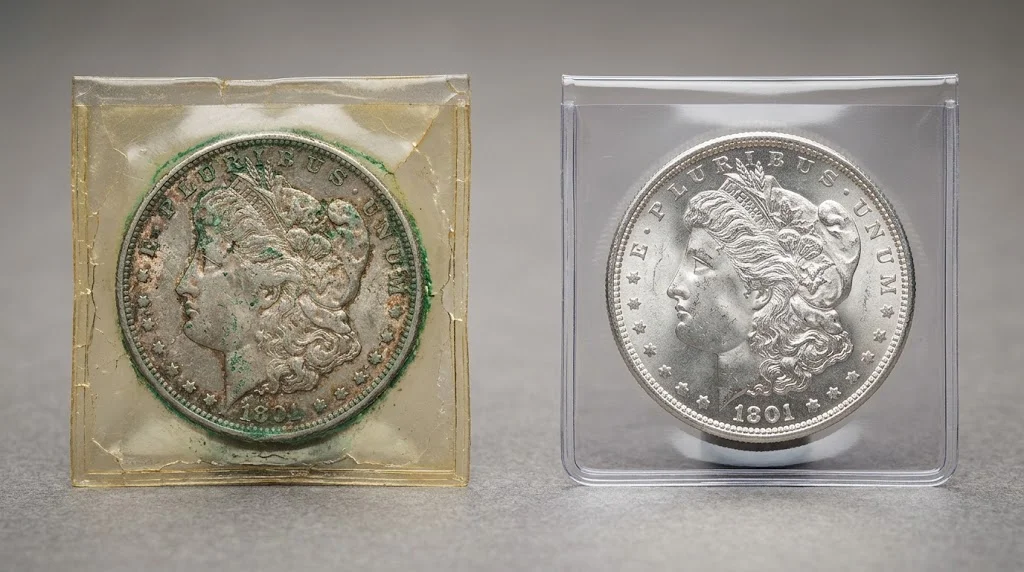
- Avoid PVC. PVC decays and releases corrosive gas and an oily softener, and silver coins often turn green and lose luster. The damage cannot be reversed by conservation. The old article said plastic bags cause tarnishing. The accurate rule is to avoid PVC and soft, rubbery plastics. coinsitegoldsilver
- Use inert materials. Mylar, acetate and hard plastic are recommended for long-term storage. Use flips labeled “archival” or “PVC-free.” coinsite
- Be careful with paper. Standard paper and cardboard contain sulfur and acids that can tone coins over time. Don’t let coins touch them. coinagerings
- Keep rubber and wool away. Rubber gives off hydrogen sulfide, a prime agent of silver tarnish, and wool, velvet and felt also promote corrosion. That means no rubber bands. bankofcanadamuseum
- Store certified coins upright. Graded slabs should stand in purpose-built slab boxes to prevent rattling and friction. Our guide to PCGS vs. NGC vs. CAC grading explains what a slab verifies. goldsilver
- Use tubes and capsules. Inert plastic tubes work for bulk silver rolls. Airtight capsules suit single coins. coinagerings
- Add anti-tarnish strips. Products such as 3M Intercept absorb sulfur compounds in a storage area. mintbuilder
Handle coins by the edges, and never polish, coat or “protect” them with films or oils. The old article suggested coating metals, and conservators and collectors warn against it. Separate gold and silver where practical.
Insure and Document
This is the step most owners skip. Precious metals, coins and bullion fall under special limits of liability in a standard homeowners policy, and those limits apply to total loss, not per item. State Farm and Allstate both follow the $200 limit for bullion and coins. One broker’s August 2026 note calls it a common misconception that precious metals are fully covered. Why Insurance Matters +2
The usual fix is a scheduled personal property endorsement, also called a rider or floater, or a collectibles policy. Ask the insurer how it treats bullion versus numismatic coins, and read the declarations page for your exact cap. propertyinsurancecoveragelaw
Keep records. List each item with photos, purchase receipts, weights and certification numbers, and store a copy of the inventory separately from the collection. An appraisal can help establish values to discuss with your insurer, and DEI GOLD AND SILVER COINS offers appraisals in Las Vegas. vercel
Keep a Low Profile and Plan for Heirs
Security starts with how few people know. Don’t post photos of your holdings, and limit who knows where they are. Then plan for the opposite problem: make sure someone you trust can find everything. Write down where the coins are, how to open the safe and what the items are, and keep that note somewhere your executor can reach. Our checklist for sorting an inherited coin collection shows what families face when records are missing.
When Storage Becomes a Reason to Sell
Sometimes the right answer is not better storage. If your holdings have outgrown what you can store and insure comfortably, or you inherited coins you don’t plan to keep, that can be a sign it is time to sell. Our guide to the best time to sell gold and silver coins covers when to sell old gold coins and what to weigh first.
Conclusion
Good home storage comes down to a dry, stable spot, a safe that is anchored and monitored for moisture, inert holders, and coverage that matches what you own. Check your insurance limits this week, and keep a written inventory in a second location. If you are not sure whether your coins are bullion or collectible, get them appraised before you decide how to store them.
By DEI GOLD AND SILVER COINS | Articles by DEI GOLD AND SILVER COINS