The U.S. Mint produced its final pennies in Philadelphia on November 12, 2025. Although pennies remain legal tender, production has stopped. As a result, the Lincoln wheat cent, minted from 1909 to 1958, has become an even more appealing collectible. While you are unlikely to find one in your everyday change today, these coins can still turn up in coffee cans, jars, penny rolls, and inherited collections, making them worth checking for valuable wheat pennies.
Most wheat pennies are worth only a few cents each. A small group of key dates, errors and high-grade coins are worth hundreds or thousands of dollars. This guide shows which ones to check first, what the published numbers say, and how to avoid the mistakes that cost sellers the most.
What Makes a Wheat Penny Valuable
The Lincoln cent, designed by Victor David Brenner, debuted in 1909 for the centennial of Lincoln’s birth. The wheat-ear reverse ran until 1958, and the Lincoln Memorial reverse replaced it in 1959. Hundreds of millions of cents were struck in most years, so age alone adds almost nothing. Value comes from four things.
Mintage and survival. Low-mintage issues from San Francisco and Denver are scarce, and some years survive mainly in worn condition because few people saved them.
Condition. Grade runs from Good-4 (a worn coin with a readable date) to Mint State. A sharp strike, clean surfaces and eye appeal all move the price.
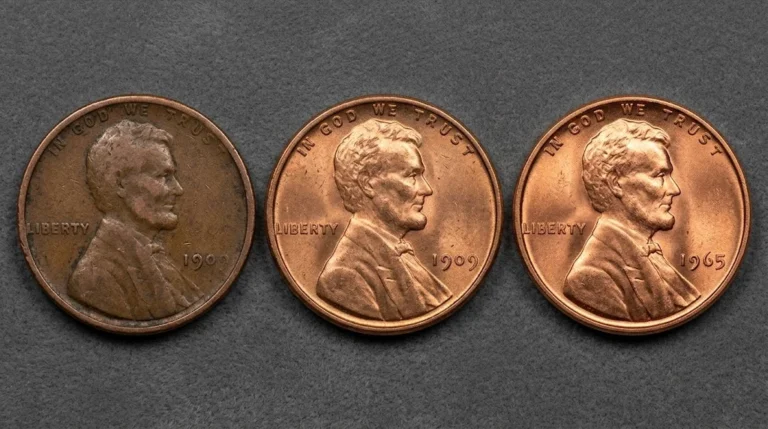
Color. Mint State bronze cents are described as Red (RD), Red-Brown (RB) or Brown (BN), based on how much original mint color remains. A red coin can be worth many times a brown one of the same grade.
Authenticity. Several valuable dates are altered or counterfeited, so certification matters more here than on most U.S. coins.
Metal content adds little. Cents made before 1982 are 95 percent copper. The copper is worth only a few cents per coin at current prices. The Mint says that melting cents and nickels is prohibited without a license, with a narrow recycling exception. A wheat penny’s worth is almost entirely numismatic. Substackcoinworld
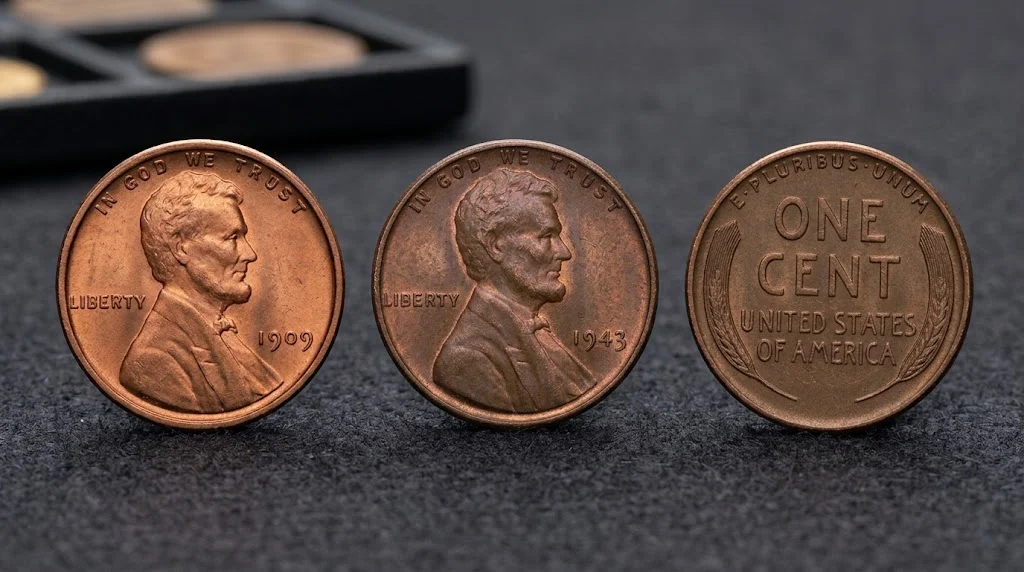
Key Dates and Varieties Worth Checking
The table below shows approximate retail estimates from published price guides when this article was prepared in October 2026. Prices move, so verify against a current guide such as the PCGS Price Guide or Greysheet before buying or selling. Circulated figures use USA Coin Book estimates, with the 1931-S figures dated February 2026. Treat all of them as ranges, not offers.
| Coin | Mintage | Approx. retail, circulated | Notes |
|---|---|---|---|
| 1909-S VDB | 484,000 | About $830 (G-4) to $1,040 (F-12) | The series’ most famous key date |
| 1909-S (no VDB) | 1,825,000 | About $100 (G-4) to $140 (F-12) | Semi-key |
| 1914-D | 1,193,000 | About $200 (G-4) to $275 (F-12) | Heavily altered and counterfeited |
| 1922 No D (strong reverse) | 7,160,000 (all 1922-D varieties) | Often four figures by XF; see below | Die-state variety, not a separate mintage |
| 1931-S | 866,000 | About $90 (G-4) to $115 (F-12) | Frequently missed in jars |
| 1955 Doubled Die Obverse | More than 20,000 estimated | About $1,200 (F-12) to $1,500 (VF-20) | Doubling visible without magnification |
| 1943 bronze (copper) | Fewer than two dozen known | Six figures and up | Off-metal error |
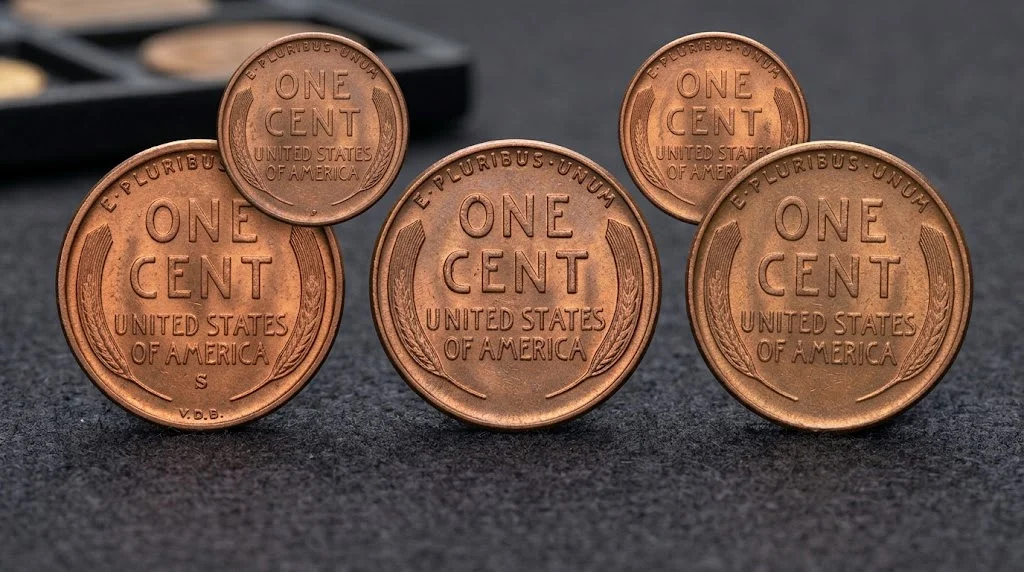
1909-S VDB. More than 27.9 million 1909 VDB cents were struck in Philadelphia, but only 484,000 in San Francisco, before the designer’s initials were removed after public criticism. The “VDB” sits at the bottom of the reverse, between the wheat ears. The price depends heavily on grade: Greysheet lists an MS67 Red example at $120,000, or $180,000 with a CAC sticker. Compare that with about $830 for a Good-4 example. The plain 1909 VDB from Philadelphia is common. coinweekgreysheet
1914-D. Greysheet calls it a true condition rarity in better uncirculated grades. Greysheet also warns buyers about counterfeit raw specimens. The usual fakes are Philadelphia cents with an added “D”. Never buy a raw 1914-D at a premium without having it authenticated. greysheetgreysheet
1922 “No D.” All 1922 cents came from Denver, but a worn and polished die lost its mintmark. After a die clash, a mint employee polished the die and inadvertently removed the D. The coin’s mintage was 7,160,000, but only about 15,000 plain examples are thought to survive. Three diagnostics for authenticity are a strong reverse, a weaker second 2 in the date, and strong TRUST in the motto. Cents with a weak but visible D are worth far less. The old article listed this coin as having fewer than 10,000 minted, which is incorrect. Certified XF-45 examples have been listed by a national dealer at roughly $1,800 to $2,300. Those are asking prices, not sales. nnp.wustl.edu +2
1931-S. Its mintage was 866,000, and USA Coin Book’s February 2026 estimates put it near $90 in Good-4 and $115 in Fine-12. It looks ordinary, and sellers often overlook it. usacoinbook
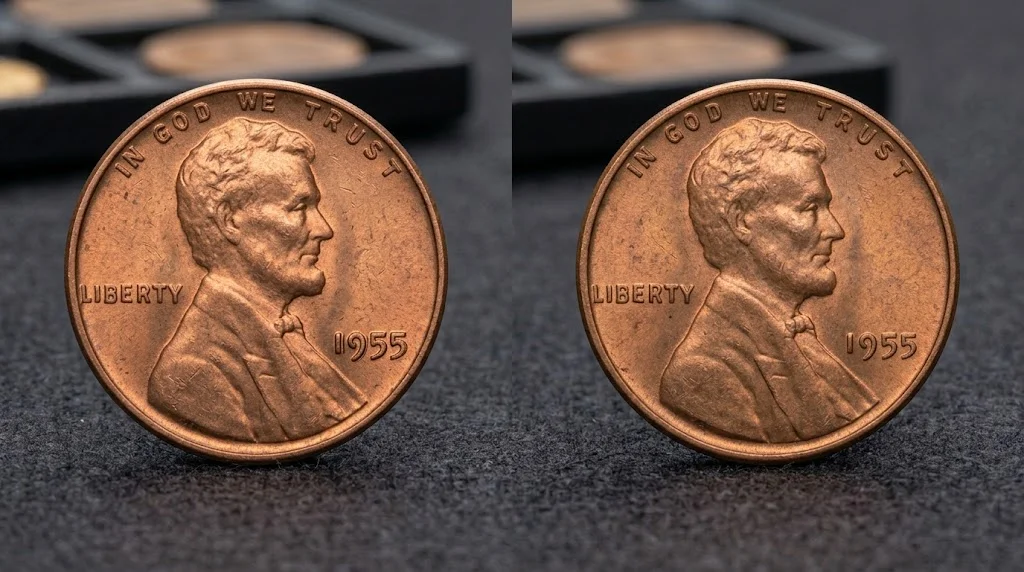
1955 Doubled Die Obverse. The date and lettering show strong doubling to the naked eye. Greysheet says more than 20,000 were made and perhaps 10,000 to 15,000 survive, and that many turned up in cigarette packs given as change. CopperCoins lists about $1,200 in Fine-12 and $1,500 in Very Fine-20. It is widely counterfeited, so get any example certified before paying a premium. greysheetcoppercoins
The wartime errors. In 1943 the cent was struck in zinc-coated steel to save copper, but a few bronze blanks slipped into the presses. CoinWeek counts not quite two dozen 1943 bronze cents. The unique Denver example sold at Heritage Auctions in January 2021 for $840,000. PCGS notes it had reportedly sold privately for $1.7 million in 2010. Those are historical results. A 1944-S cent on a leftover steel blank sold at Heritage’s ANA auction in 2008 for $373,750. A magnet is the first screen. A genuine 1943 steel cent sticks. A non-magnetic 1943 or a magnetic 1944 should go straight to PCGS or NGC. Our guide to 1943 steel cents covers the test in more detail. 1943 steel pennies an important part of u s numismatic history +3
How to Check a Wheat Penny Date and Mintmark
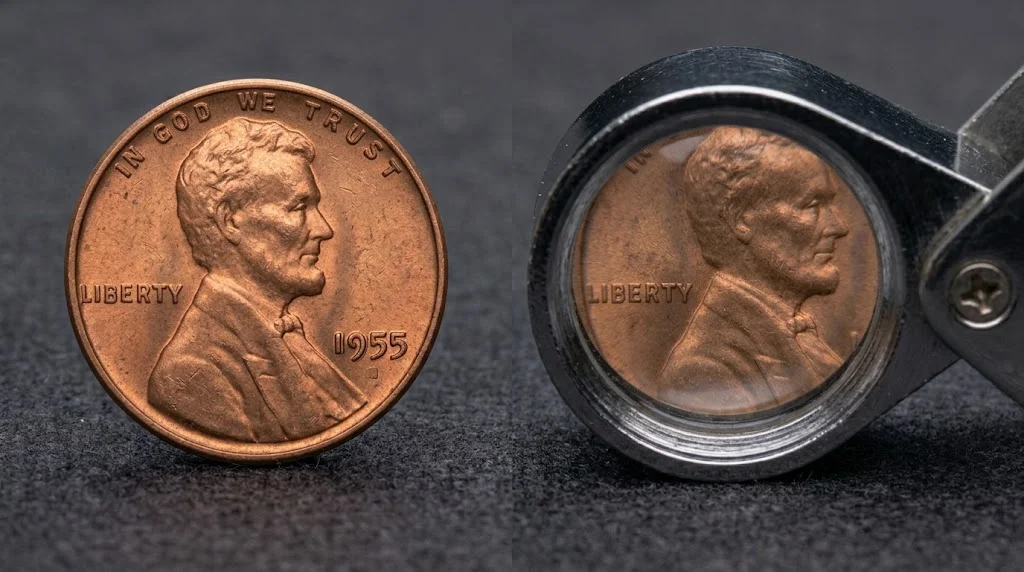
The date is on the obverse below Lincoln’s bust, and the mintmark sits just below it. No letter means Philadelphia, D is Denver and S is San Francisco. A 5x to 10x loupe is more reliable than a phone camera for faint marks.
Condition
Good-4 shows a clear date with flat wear. Fine-12 shows more wheat detail. Very Fine-20 shows light wear on the cheek and wheat heads. Only coins without damage reach those price levels. Scratches, corrosion, holes and removed or added mintmarks all lower value, and graders label them “Details.”
Never Clean a Coin
Cleaning is one of the most costly mistakes in this series. Polishing leaves hairlines that grading services identify, and a polished key date sells at a steep discount to an original one. DEI GOLD AND SILVER COINS has seen collectors bring in a key-date cent that was nearly About Uncirculated, only to find an old polishing had put it in the Details category. Original dark surfaces are almost always worth more than bright, damaged ones.
Where Wheat Pennies Turn Up Today
With penny production ended, the supply of wheat cents is whatever already exists. The usual sources are inherited jars and boxes, coin-roll searches, flea markets, and bulk lots at coin shows. Estate collections in the Las Vegas area are a regular source, since many retirees saved coins for decades without ever sorting them. A dry climate can slow corrosion, but storage in the original envelope or a clean drawer matters more than geography.
If you are going through an inherited jar, our checklist for sorting an inherited coin collection covers what to set aside before you sell anything.
Certification, Fakes and Selling
Third-party grading does two jobs for valuable wheat cents. It confirms the coin is genuine, and it assigns a grade the market trusts. That matters because 1909-S VDB, 1914-D, 1922 No D and 1955 doubled die coins are all commonly altered or counterfeited. For a comparison of what PCGS, NGC and CAC each verify, see PCGS vs. NGC vs. CAC grading. Grading fees vary by service and tier, so check current schedules. Submission rarely makes sense for ordinary dates in circulated grades.
A dealer offer and an appraisal answer different questions. An appraisal estimates a coin’s market value. An offer is what a dealer will pay, which is normally lower because it includes the dealer’s resale risk. For an inherited collection, bring the coins in their original container, don’t clean or sort them, and note where they came from. DEI GOLD AND SILVER COINS offers coin appraisals in Las Vegas, and our page on selling inherited coins explains the process.
One tax note. Gains from selling collectibles held more than a year are generally taxed at up to 28 percent federally, and inherited coins often have a different cost basis than purchased ones. This is general information, not tax advice, so check with a tax professional.
Conclusion
Most wheat pennies are keepsakes, and a few are worth real money. Check the date and mintmark first, then condition and color, and never clean anything that might be a key date. If a coin matches the 1909-S VDB, 1914-D, 1922 No D, 1931-S or 1955 doubled die, or a 1943 or 1944 cent behaves unexpectedly with a magnet, have it authenticated before you buy or sell.
By DEI GOLD AND SILVER COINS | Articles by DEI GOLD AND SILVER COINS