What to bring to a coin show is the first question worth answering before you ever walk through the door — because knowing this is the difference between spending a few productive hours on the bourse floor and standing around wondering why you left half your gear at home. Coin shows aren’t complicated, but they do have their own unspoken rhythm — a mix of retail shopping, informal appraisal, and hobbyist networking all happening in one room. For someone walking into that environment for the first time, a little preparation goes a long way toward making the day useful instead of overwhelming. Here’s a practical, no-nonsense rundown of what to pack, what to expect, and how to spend your time once you’re through the door.
Why First-Time Preparation Actually Matters
It’s tempting to treat a coin show like any other shopping trip — show up, browse, leave. But a bourse floor rewards a bit of forethought in a way a retail store doesn’t. Dealers are often working from memory and a loupe, not a barcode scanner, and the more clearly you can communicate what you’re looking for — or what you’re bringing to sell — the more useful the conversation becomes for both sides.
What to bring to a coin show isn’t about looking like a seasoned collector on day one .They’re about making sure you don’t waste the trip because you forgot a magnifier, left your coins in a plastic sandwich bag, or showed up without cash for a dealer who doesn’t take cards. If this is your first real exposure to the hobby, it’s worth spending a little time on the basics of coin collecting and numismatics before you go, so the terminology on the floor doesn’t slow you down.None of this requires much effort — it just requires knowing what to expect before you’re standing at the door.
What to Bring If You’re Buying
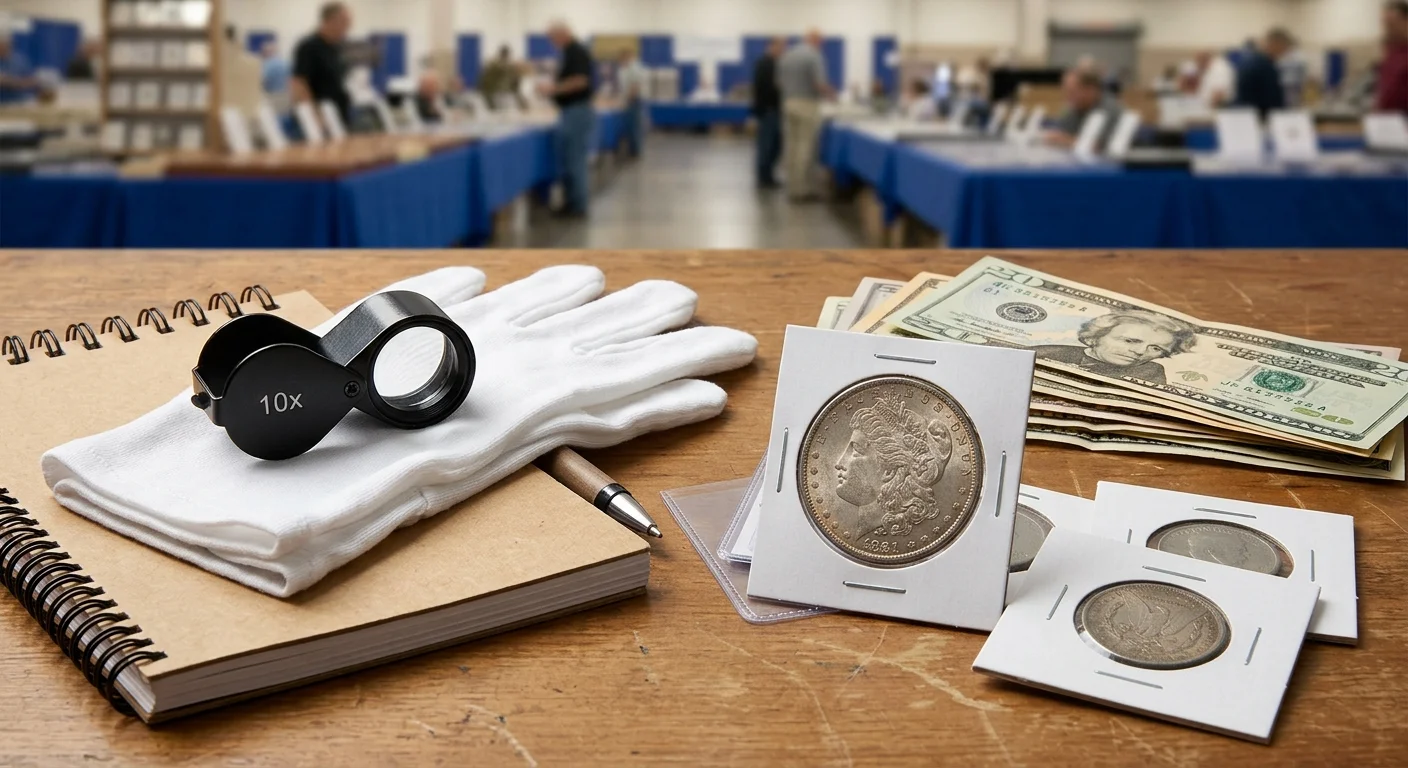
If your main goal is browsing and possibly purchasing, a few simple items make the experience smoother.
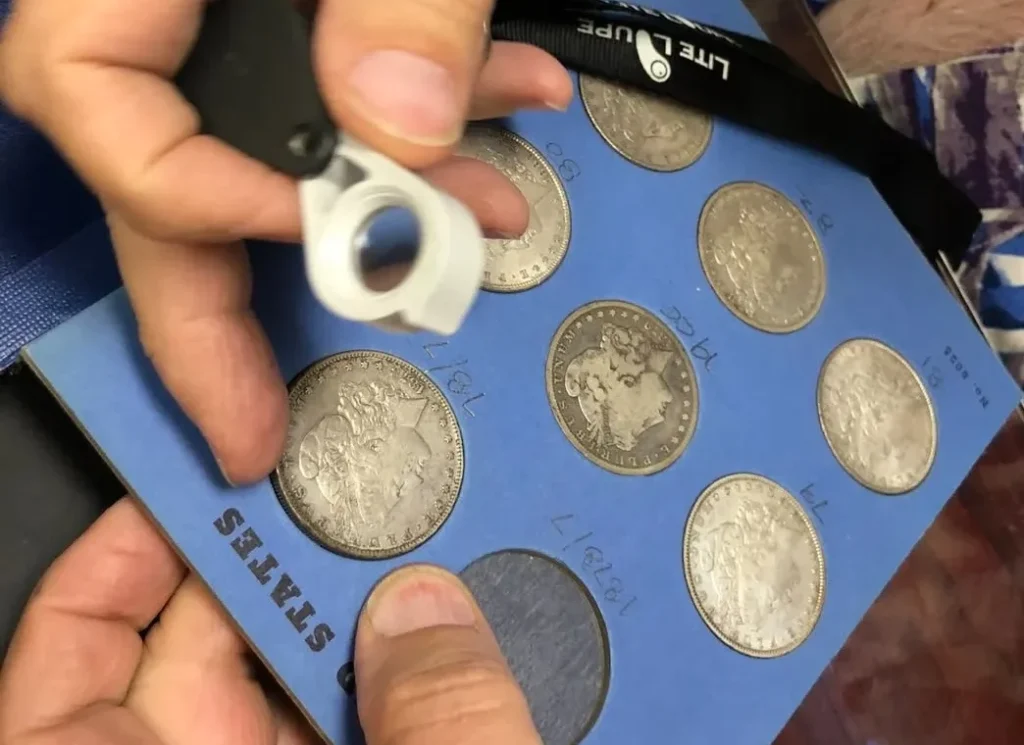
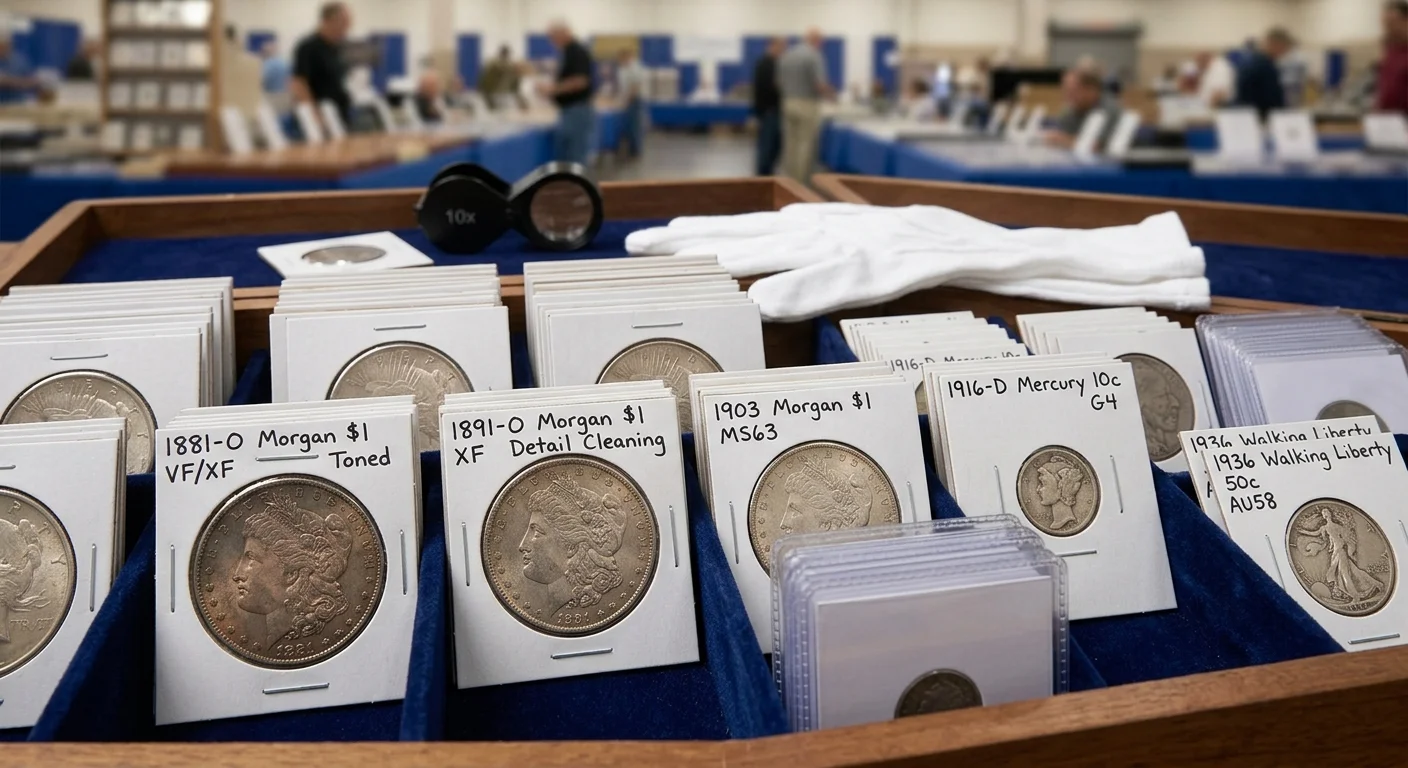
A magnifying loupe — typically 10x power — lets you examine a coin’s surface, strike, and any wear the same way a dealer or grading service would. Most dealers will let you use your own loupe on a coin they hand you, and having one signals that you’re taking a serious look rather than a casual glance.
Cash is worth having on hand even if you plan to use a card for larger purchases. Smaller transactions, negotiations, and some independent dealers are still more comfortable with cash, and it gives you flexibility a card doesn’t always offer at a show.
A notepad or your phone to jot down dealer names, table numbers, and prices you’re quoted is genuinely useful, especially if you’re comparing the same coin across multiple tables before deciding where to buy. It’s easy to lose track after the fifth or sixth table.
Cotton gloves, while not strictly required at every show, are good practice when handling uncertified coins, since the oils on bare skin can contribute to toning or surface damage over time — something worth avoiding on a coin you’re hoping to keep in top condition.
What to Bring If You’re Selling
If you’re bringing coins to sell or get evaluated, the preparation looks a little different, and a few things matter more than others.
Bring your coins exactly as you found them — do not clean them beforehand. This is one of the most common and costly mistakes a first-time seller makes. Cleaning, even gently, can strip a coin’s original surface and reduce its value, sometimes significantly, because collectors and grading services place a real premium on originality. A coin that looks “better” after a light polish to an untrained eye often looks worse to someone who knows what to look for.
If you have any paperwork, provenance, or history that came with the coins — an old purchase receipt, an estate document, a note from a previous owner — bring it along. That context can matter to a dealer evaluating the coins, even if it doesn’t change the coin itself.If you’re unsure what you actually have before the show, it can help to schedule a free coin appraisal in Las Vegas ahead of time so you walk in already knowing roughly what you’re working with.
Keep coins in individual holders or flips if you have them, rather than loose in a bag or box where they can rub against each other and pick up scratches. If you don’t have proper holders, soft paper envelopes are a reasonable temporary substitute — just avoid anything with PVC plastic, which can chemically damage a coin’s surface over time.
What to Expect Once You’re on the Floor
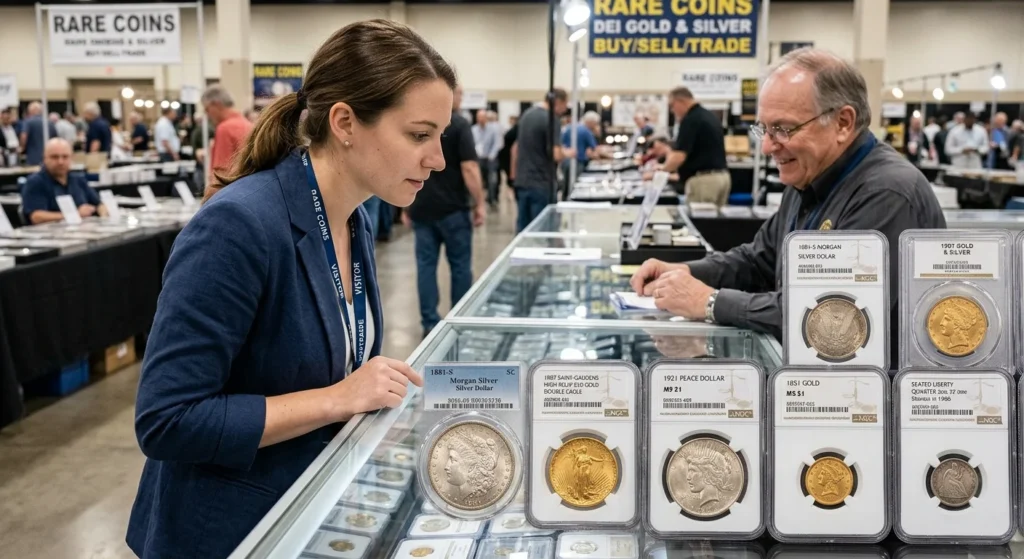
A coin show bourse floor is organized as rows of dealer tables, each set up independently with its own inventory, pricing, and specialties. Some dealers focus heavily on U.S. coinage, others on world coins, paper currency, or bullion — walking the entire floor once before settling in anywhere gives you a sense of who has what before you commit time or money to a single table.
Don’t expect price tags on everything the way you would in a retail shop. Pricing at a coin show is often conversational — you ask, the dealer answers, and in many cases there’s room to discuss the number, particularly on higher-value items. This isn’t the same as haggling at a flea market; it’s simply how a lot of numismatic pricing works, especially for uncertified or less-standardized material.
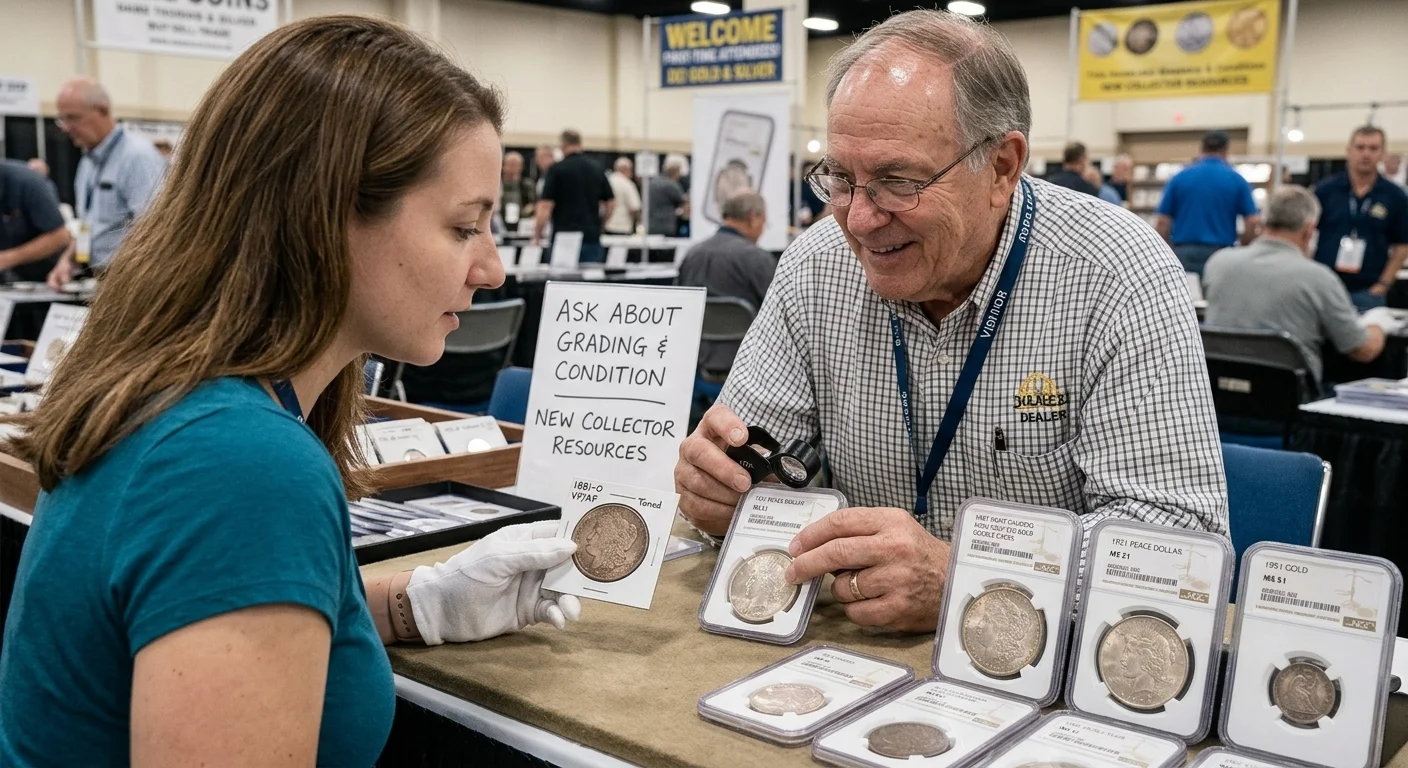
If you’re new to grading terminology, don’t be afraid to ask a dealer to explain what a specific grade means, or why one certified gold and silver coin is priced higher than a similar-looking one. Terms like Mint State, luster, and strike quality come up constantly on a bourse floor, and most dealers are genuinely willing to explain them to a curious first-timer — it’s part of how the hobby sustains itself.
A Practical First-Timer Scenario
Here’s a hypothetical walk-through to illustrate how a first visit might go: imagine a first-time attendee arrives with a small collection of inherited silver dollars, unsure what they’re worth, and also curious about picking up a certified coin for their own collection. A sensible approach would be to first walk the floor once, noting a few dealers who seem knowledgeable and approachable. Next, they’d visit one or two tables to ask about the inherited coins — bringing them exactly as found, in their original holders — and compare what different dealers say about condition and value before deciding whether to sell. Only after that would they turn to browsing for a coin to buy, now with a better sense of current pricing from having just had those conversations. This kind of sequencing — evaluate first, buy second — tends to make for a more informed, less rushed experience than diving straight into a purchase.
Etiquette Worth Knowing
A few unwritten rules make the day smoother for everyone. Ask before handling a coin rather than picking it up directly from a display case — most dealers are happy to hand you a piece, but it’s their inventory and their call. Hold coins by the edges, never the faces, to avoid transferring oils onto the surface. And if you’re not planning to buy, it’s still fine to ask questions and look — dealers generally understand that browsing and learning is part of what brings people back as future buyers.
Getting Ready in Las Vegas
For collectors in Southern Nevada, Las Vegas hosts coin shows throughout the year at venues like the Tuscany Suites and Casino, giving local collectors regular opportunities to practice exactly what’s covered in this guide. DEI Gold and Silver Coins works with collectors and sellers in the Las Vegas area year-round, including outside of show hours, offering private appraisals for anyone who’d rather have a coin or collection evaluated one-on-one before or after attending a show.
Conclusion
Knowing what to bring to a coin show rewards a little preparation more than it demands expertise. Bringing the right basics — a loupe, cash, proper coin storage, and any relevant paperwork — along with a willingness to ask questions, is really all it takes to make your first visit worthwhile. Whether you leave with a new coin for your collection, a clearer sense of what an inherited set is worth, or simply a better feel for how the hobby works, walking in prepared turns a potentially overwhelming first experience into a genuinely enjoyable one.
By DEI Gold and Silver Coins | Articles by DEI Gold and Silver Coins
Beyond helping collectors get ready for a show, DEI Gold and Silver Coins also connects with the wider Las Vegas numismatic community through the coin shows it proudly supports.
DEI Gold and Silver Coins is the official sponsor of these shows.
Held and produced by CK Shows, Las Vegas, NV.
IG @CKShows