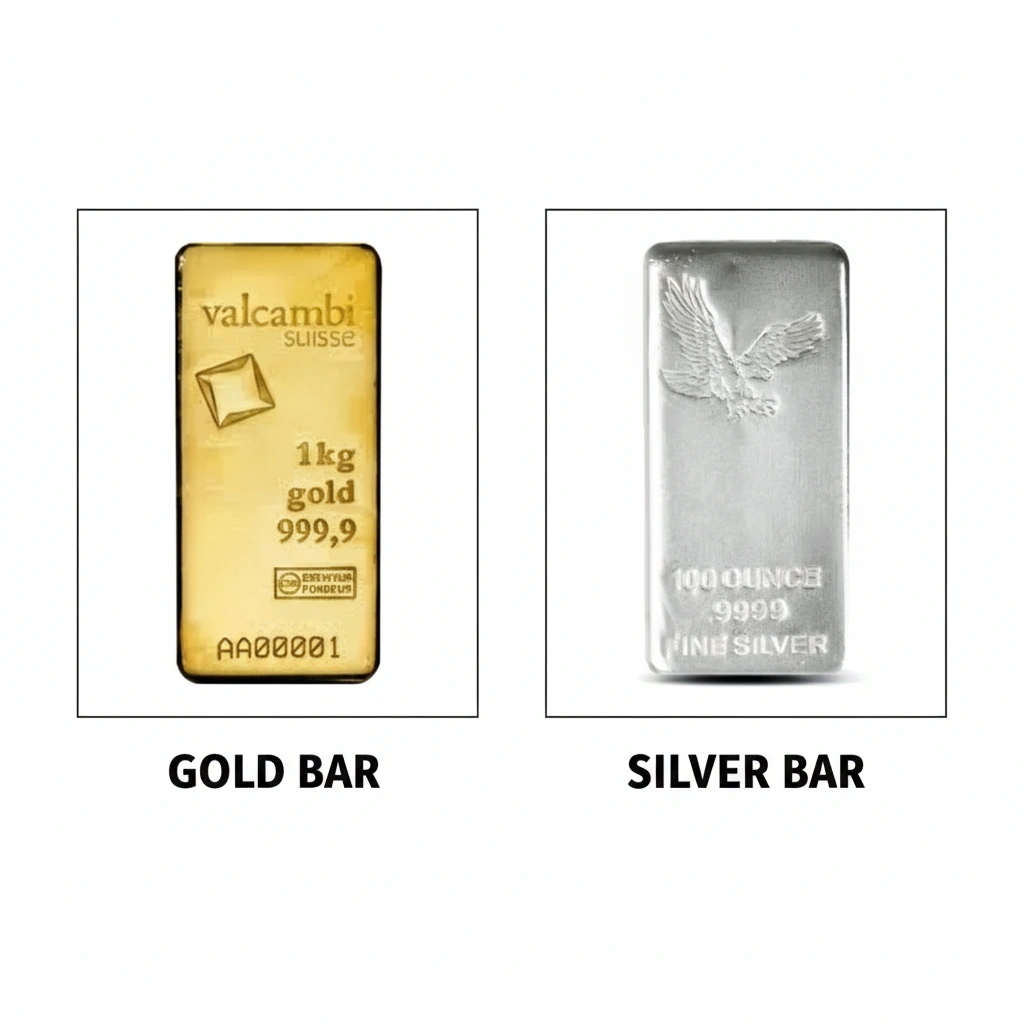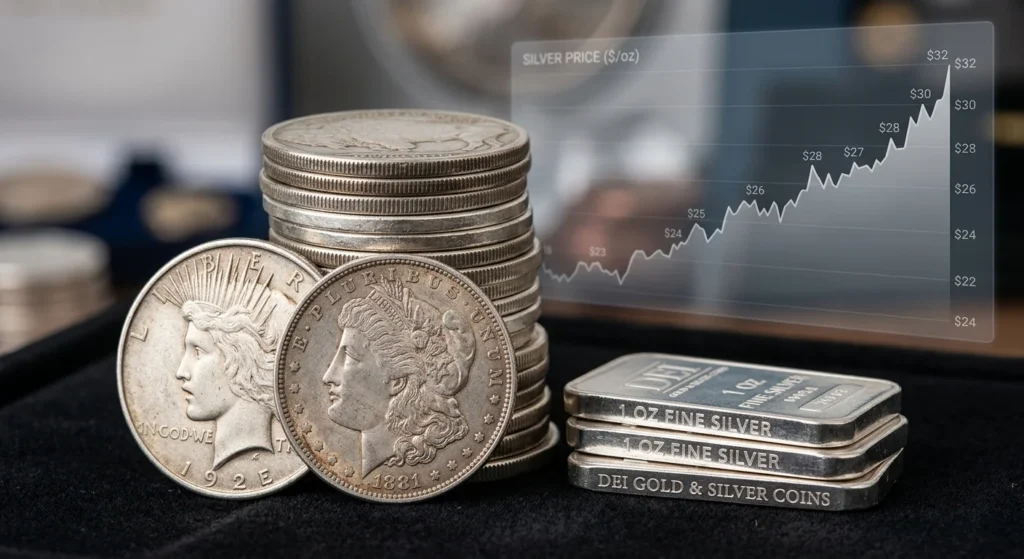
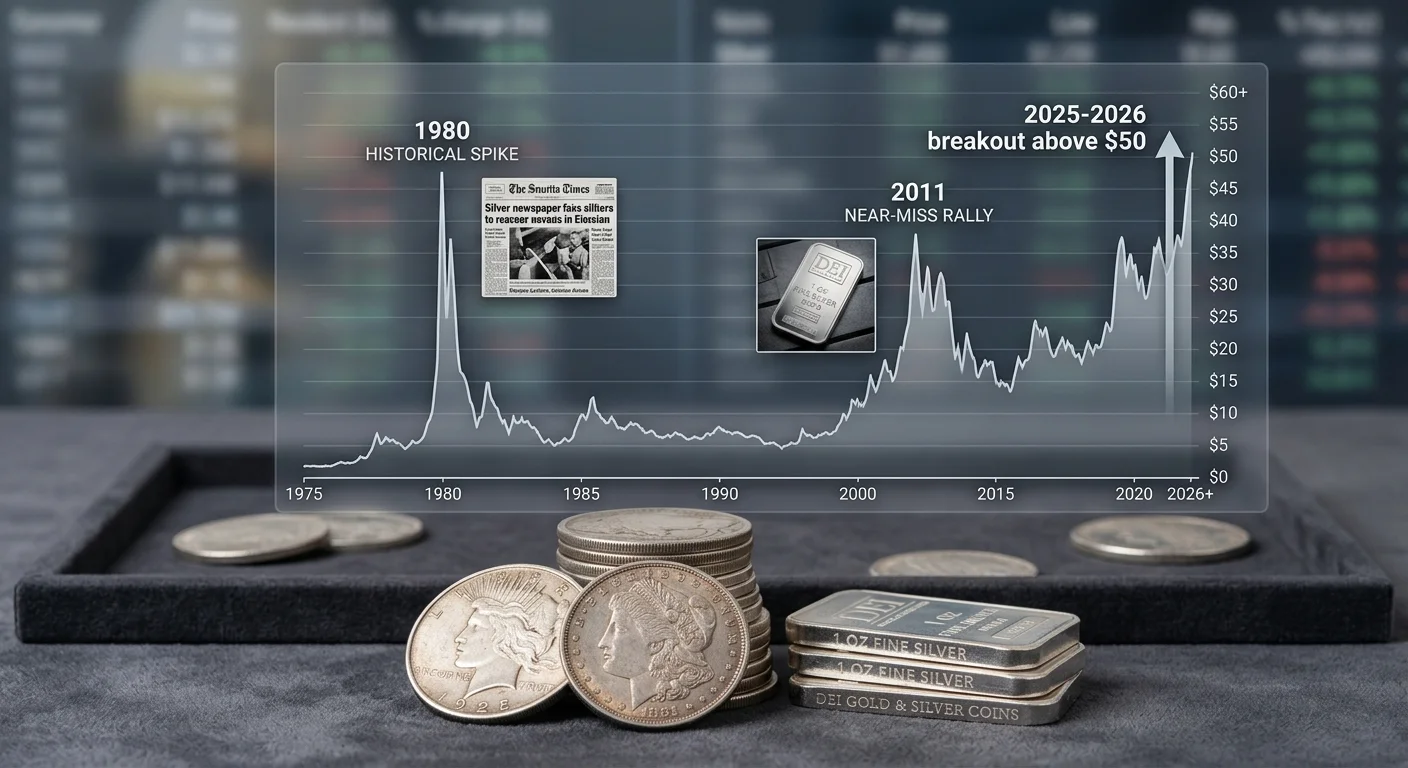
The silver price record high 2026 story is really the story of that number finally falling — decisively, and then some. In October 2025, silver broke above the $50-an-ounce mark that had stood, essentially unchallenged, since a speculative spike in January 1980. What followed wasn’t a brief spike back below the old high, the way it had come close and failed in 2011. Silver kept climbing, and by late January 2026 it had reached levels that would have seemed absurd to suggest just months earlier. For anyone who has spent years quietly building a stack of silver coins, rounds, or bars, this wasn’t a headline to skim past — it was the moment their holdings’ underlying story actually changed.
How Silver Reached a Record High in 2026
To understand why this mattered, it helps to understand how stubborn that old high really was. Silver’s previous record, roughly $50.36 an ounce, was set in January 1980 amid the Hunt brothers’ attempt to corner the physical silver market — a speculative episode, not a reflection of underlying industrial or investment demand, that collapsed almost as quickly as it formed once exchange rules changed. Silver came close to that level again in April 2011, during a period of quantitative easing and European debt concerns, trading near $48 before pulling back. For decades, $50 functioned as a kind of psychological ceiling that silver approached but never definitively cleared.
That changed in October 2025. Silver moved through $50 and kept going, driven by a combination of forces that built on each other rather than a single catalyst: a structural global supply deficit that by some industry estimates had persisted for multiple consecutive years, tightening registered inventories on futures exchanges, and a wave of physical buying demand from major markets including India and China. By late January 2026, silver had gone on to set new all-time highs well above that October breakout level, before settling into a lower — though still historically elevated — trading range as the year progressed.
What Actually Drove the Move
A price move of this scale doesn’t happen because of one factor, and it’s worth understanding the pieces rather than treating it as a mystery.
Industry sources tracking the physical silver market reported a persistent structural deficit — meaning global demand for silver, across investment, industrial applications like solar panels and electronics, and jewelry, outpaced newly mined and recycled supply for several consecutive years running into 2025 and 2026. That kind of sustained imbalance tends to draw down above-ground inventories over time, and inventories were already tightening on major exchanges before the October breakout.
Export restrictions out of China, one of the world’s major silver refiners, added further pressure on available supply heading into 2026. Combined with strong retail and investment demand in several countries, the result was a market where available physical silver simply couldn’t keep pace with buyer interest at the old price levels.
None of this means the move was inevitable or guaranteed to continue in a straight line — markets that move quickly in one direction can also move quickly in reverse, and silver’s price has in fact pulled back meaningfully from its January 2026 extreme even while remaining well above where it started the prior year.
Should I Sell, or Keep Stacking? Start With Your Original Goal
Silver stacking sell or hold is the question every long-term accumulator is now facing, and the honest answer depends less on the price chart and more on why you started stacking in the first place.
If your silver position was built as a long-term hedge — against inflation, currency risk, or simply as a tangible store of value outside the financial system — a historic price milestone doesn’t necessarily change that underlying reasoning. The case for holding silver as insurance against those risks hasn’t disappeared just because the price moved; if anything, some of the same forces that pushed silver higher (currency and debt concerns among them) are the forces that motivated the original hedge.
If you were stacking with a specific price target in mind, intending to convert part of your position to cash once silver reached a meaningful gain, this move may represent exactly the outcome you were positioned for. Taking some profit in that case isn’t market timing — it’s following through on a plan you already had.When you’re ready, DEI Gold and Silver Coins makes it straightforward to sell your gold and silver coins with a transparent, same-day appraisal.
If your silver is inherited, or part of an estate you’re settling, the decision often has less to do with the price chart and more to do with practical considerations: liquidity needs, dividing assets among heirs, or simply not wanting the ongoing responsibility of storing and insuring physical metal. Current price strength is a reasonable factor to weigh in that decision, though rarely the only one.
What This Means for Numismatic Silver vs. Bullion Silver
It’s worth separating two different kinds of silver holdings, because a record price affects them differently.
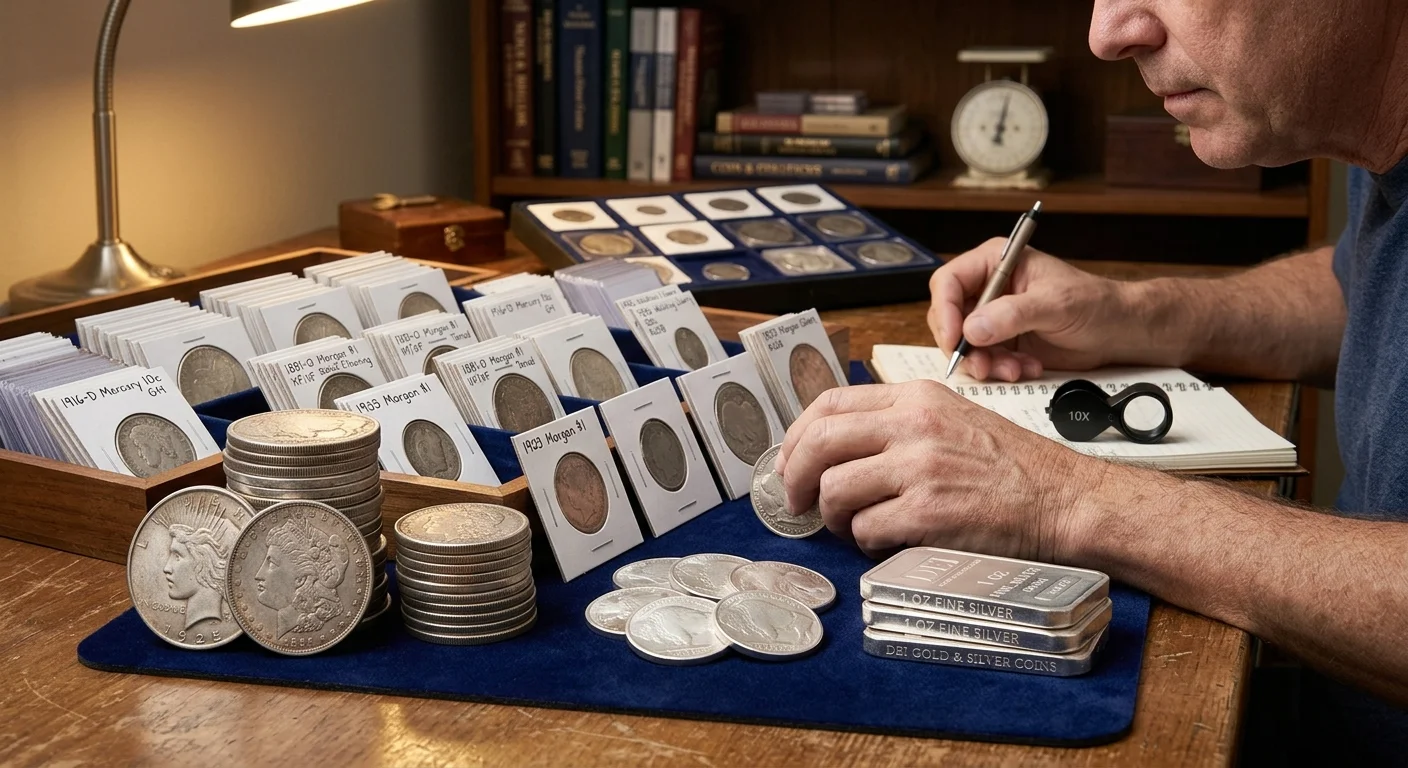
Generic bullion silver — rounds, bars, and common-date coins valued mainly for their metal content — moves almost dollar-for-dollar with the spot price. A stacker holding this kind of silver has seen the dollar value of their holdings rise in a fairly direct, easy-to-calculate way as spot price climbed.
Certified or numismatically significant silver dollars — a well-preserved Morgan silver dollar in high Mint State grade, for example, or a coin carrying a scarce date-and-mintmark combination — carry value from two separate sources: the underlying silver content, which moves with spot price, and a numismatic premium tied to rarity, condition, and collector demand, which does not move in lockstep with the metals market. As a hypothetical illustration: two Morgan dollars from the same era, one heavily circulated and one certified in a high uncirculated grade, will both see their bullion-value floor rise with silver’s price, but the gap between them in total value — driven by the numismatic premium on the better example — can remain largely independent of where silver trades on a given day. A stacker holding numismatic pieces should have those coins evaluated individually rather than assuming a spot-price calculator tells the whole story.
A Practical Stacking Scenario
Here’s a hypothetical example to illustrate the kind of thinking involved, not an account of any real transaction: imagine a collector who has spent a decade quietly accumulating 1 oz silver coins, adding a few each month regardless of price, with the general goal of building a long-term store of value. Watching silver clear its 1980 record and continue climbing doesn’t automatically mean this collector’s original plan was wrong or needs to change. A sensible next step wouldn’t necessarily be selling everything at once, but rather reviewing the stack: separating any certified or numismatically interesting pieces that might warrant individual appraisal from the bulk of generic bullion coins, deciding whether the silver still represents an appropriate share of overall savings, and only then deciding whether to sell a portion, hold everything, or continue adding on a more selective basis going forward.
Getting an Accurate Picture of What You Hold
Whether you’re leaning toward holding, selling some, or simply want to understand what a decade of stacking is actually worth today, an accurate appraisal is the right starting point — particularly if any certified or older coins have mixed into the stack over the years. Scheduling a free coin appraisal in Las Vegas is the most reliable way to separate bullion value from numismatic premium before making any decision. DEI Gold and Silver Coins provides private, same-day appraisals for silver coins, bullion, and full collections in Las Vegas, distinguishing bullion value from numismatic premium so collectors can make an informed decision rather than guessing based on spot price alone.
Conclusion
The silver price record high 2026 delivered — silver’s move past its 45-year-old $50 ceiling and on to new record highs — is one of the more significant developments precious metals markets have seen in decades. But for anyone who has been stacking silver over the years, the right response isn’t found in the price chart — it’s found in revisiting why you started stacking in the first place, understanding what kind of silver you actually hold, and making a decision that fits your own financial picture rather than reacting to a headline number.
Beyond helping stackers understand what their holdings are worth, DEI Gold and Silver Coins also connects with the wider Las Vegas numismatic community through the coin shows it proudly supports.
DEI Gold and Silver Coins is the official sponsor of these shows.
Held and produced by CK Shows, Las Vegas, NV.
IG @CKShows
702-528-2091By DEI Gold and Silver Coins | Articles by DEI Gold and Silver Coins