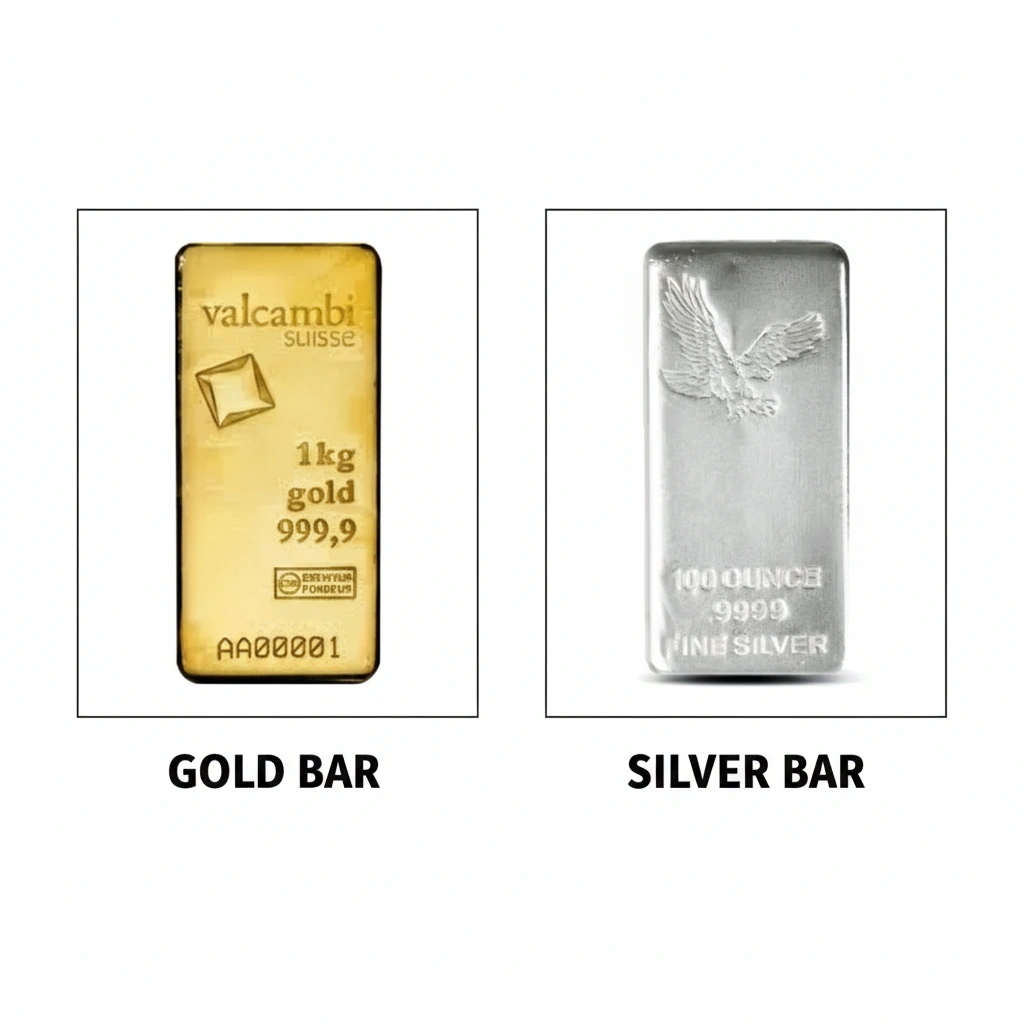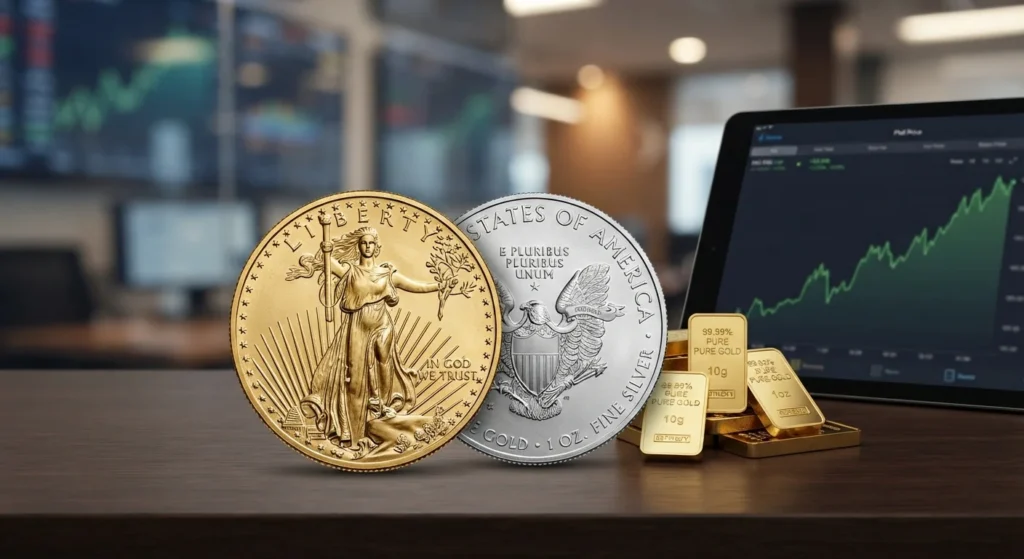
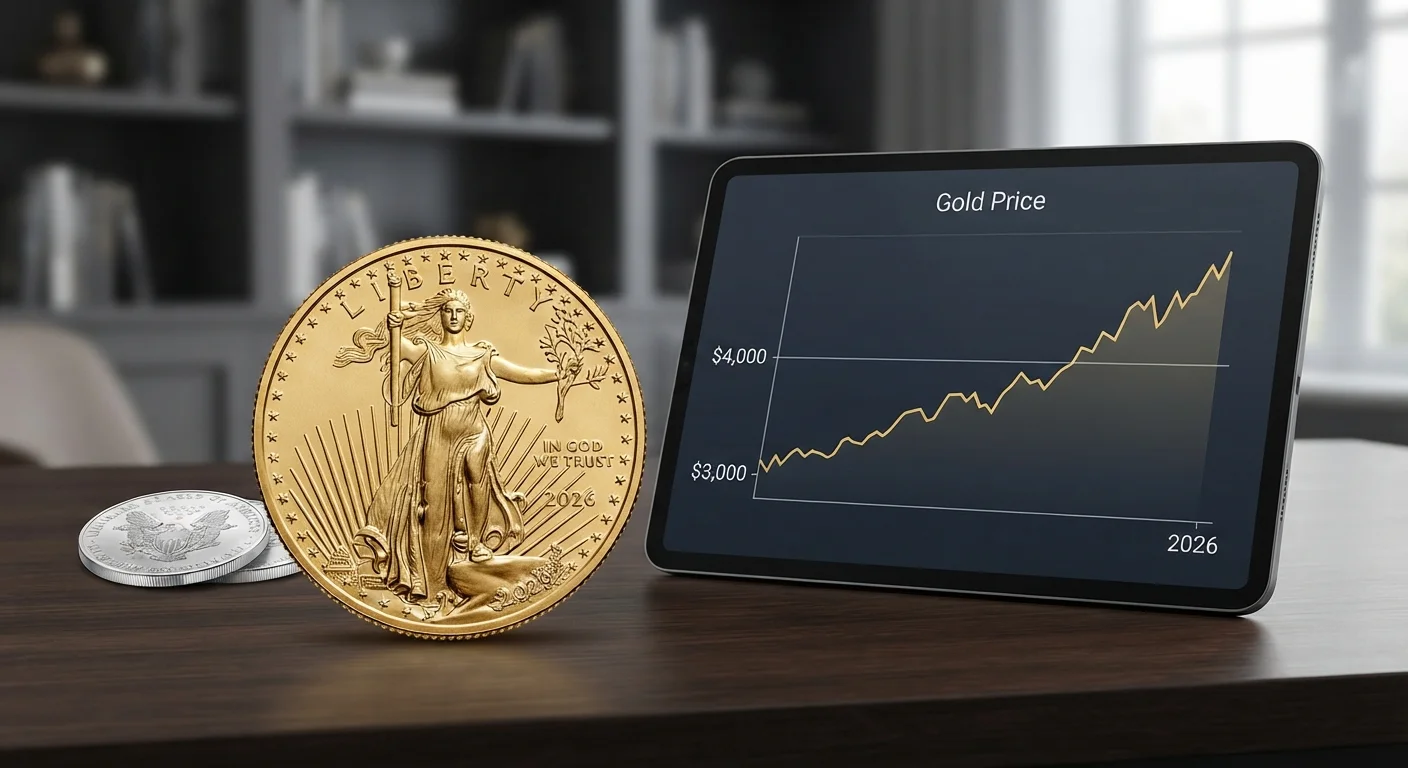
Gold price $4000 an ounce, what to do is one of the more common questions collectors and investors have been asking as gold has pushed well past that threshold and kept climbing through 2026. Watching a metal you own — or are thinking about buying — move through a price level that once seemed almost symbolic naturally raises the question of timing. Should you cash in gains? Hold for more? Or treat the move as confirmation that now is the moment to buy? There’s no single right answer that applies to everyone, but there is a clear-headed way to think through the decision, and that’s what this article walks through.
Why Gold Crossed $4,000 in the First Place
Gold doesn’t move for one reason at a time. Prices in 2026 have been shaped by a combination of factors that tend to move together during periods of sustained strength: central bank buying at scale, ongoing concerns about currency stability and government debt levels in multiple countries, and persistent investor demand for an asset seen as a hedge against inflation and broader economic uncertainty. None of these forces are new to gold markets — they’re the same basic drivers that have pushed gold higher during past periods of economic stress — but 2026 has seen them line up at the same time, which is part of why the metal has traded through a wide and often volatile range this year, moving well beyond the $4,000 level at various points.
It’s worth being honest about what this means for a reader trying to make a decision today: nobody, including professional traders, reliably predicts short-term moves in gold with consistency. What’s useful isn’t trying to call the next move, but understanding what actually drives your decision as an individual holder — which is different from what drives the broader market.
Should I Sell Gold Now? Start With Why You Bought It
Should I sell gold now 2026 is really a question that can’t be answered without first asking why you bought the gold in the first place. Gold ownership tends to fall into a few different categories, and the right move for someone in one category can be the wrong move for someone in another.
If you bought gold as a long-term store of value — a hedge against inflation or currency risk you intend to hold for years — a price milestone like $4,000, or any specific number, generally shouldn’t be the deciding factor in whether you sell. The original reasoning for holding it likely hasn’t changed just because the price moved.
If you bought gold opportunistically, expecting to sell once it reached a target price or a meaningful gain, then a strong move like this one may be exactly the outcome you were positioned for, and taking some profit could align with your original plan.
If the gold in question is inherited, or part of an estate you’re settling, the decision is often less about market timing and more about practical needs — liquidity, dividing an estate among heirs, or simply not wanting the responsibility of holding physical metal. In that case, current market strength can be a reasonable, though not the only, consideration in the timing of a sale.
The Case for Holding
There are solid reasons some collectors and investors choose to hold through a price milestone rather than sell into it.
Gold has historically been used as a long-term hedge precisely because it tends to hold value across different kinds of economic stress — currency devaluation, inflation, geopolitical instability — that don’t resolve quickly If you’re weighing a long-term hedge against other ways of holding gold, it’s worth reading through the difference between a Gold IRA vs physical gold before deciding how to structure your position. Selling because a number felt significant, rather than because your underlying financial goals changed, can mean giving up a position you originally built for reasons that are still valid.
There’s also the tax and transaction cost side of the equation. Selling and later deciding to buy back in means paying transaction costs twice, and potentially triggering a taxable capital gain in the process. For readers with specific tax questions about selling precious metals, this is a conversation worth having with a qualified tax professional, since individual circumstances vary and this article isn’t a substitute for that guidance.
The Case for Selling Some
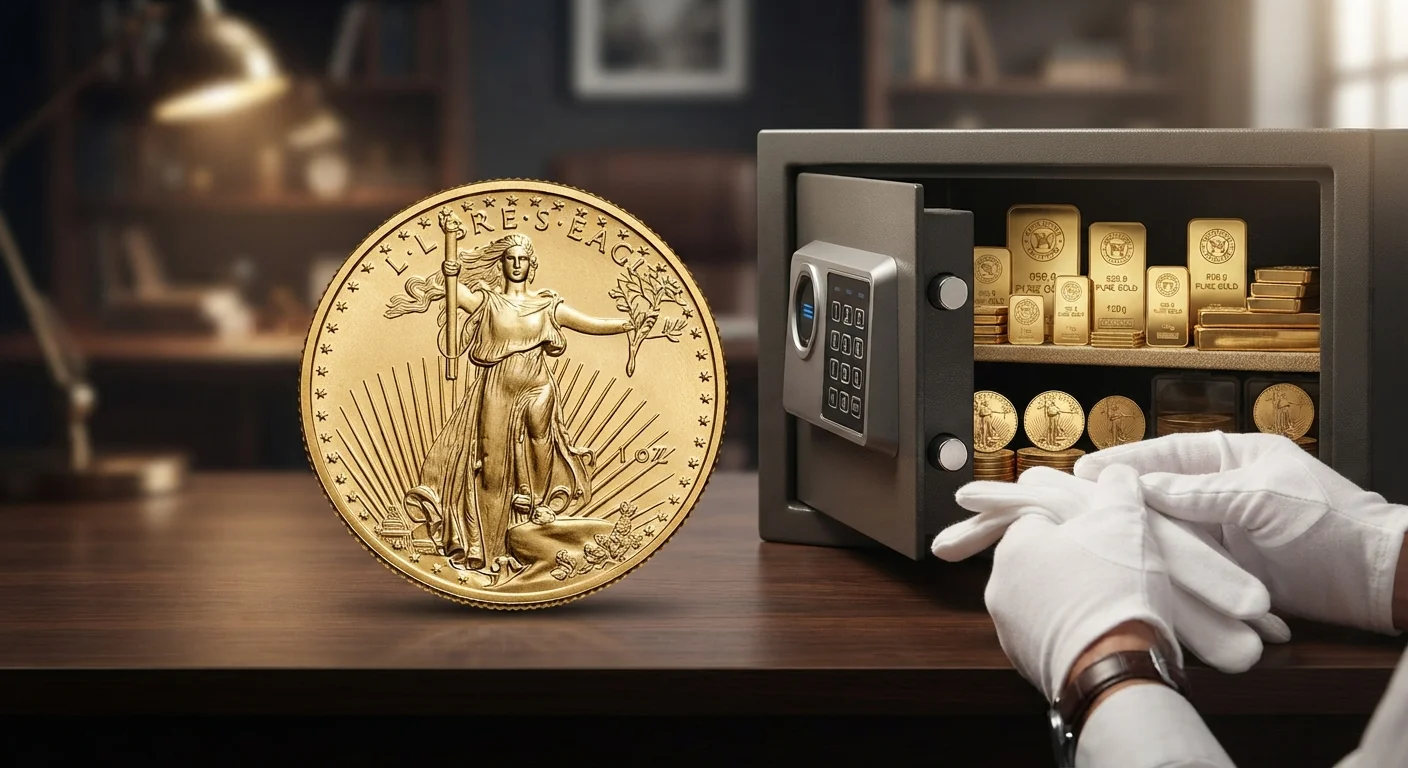
Selling doesn’t have to be all-or-nothing, and for many holders, partial selling is a more realistic approach than trying to time an exact top.
If gold now makes up a larger share of your overall portfolio than you originally intended — because its value has risen faster than your other assets — trimming a position back to your target allocation is a disciplined, non-emotional reason to sell some, regardless of where the price sits relative to any round number.
Similarly, if you have a near-term need for cash — a major purchase, debt payoff, or simply wanting to lock in a gain you’re satisfied with — selling into strength is a reasonable, practical decision that doesn’t require predicting where the price goes next.
The Case for Buying More
For readers on the other side of this question — those wondering whether a strong gold market is itself a reason to buy — a few things are worth separating out.
Buying because gold is going up, purely as a reaction to price momentum, is a different decision than buying because your underlying reasons for wanting gold exposure — diversification, an inflation hedge, a long-term store of value — haven’t changed and you simply hadn’t gotten around to it yet. The second reasoning tends to hold up better over time than the first.
It’s also worth remembering that buying at a higher spot price means paying a higher total price for the same premium in dollar terms, even if the percentage premium over spot stays consistent. That’s simply the mechanics of the market, not a reason to avoid buying, but something to factor into your total cost when deciding how much to purchase.
What Numismatic Value Adds to the Equation
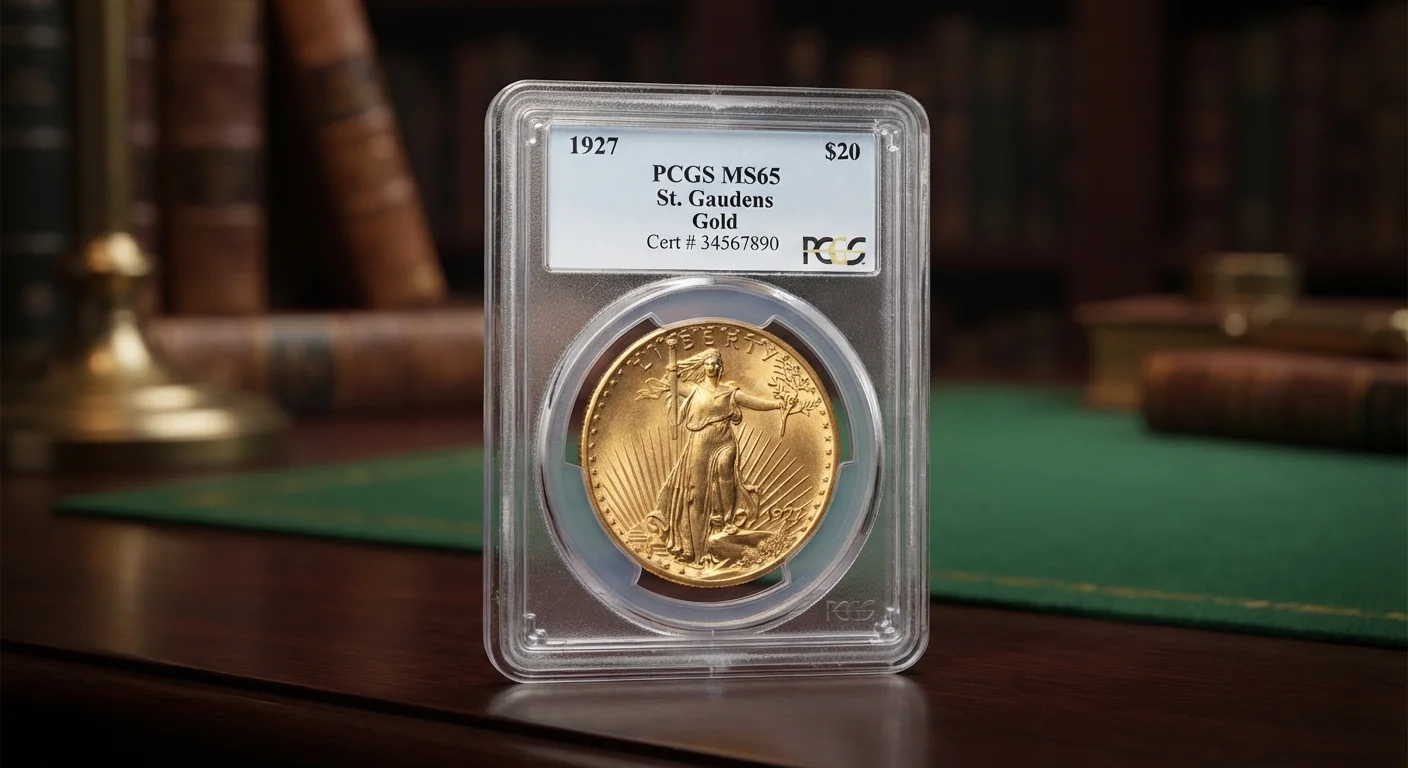
For readers holding certified or rare coins rather than generic bullion, this decision has an additional layer. A certified pre-1933 U.S. gold coin, for example, carries both a bullion value tied to its gold content and a separate numismatic premium tied to its rarity, condition, and collector demand. As a hypothetical illustration: two coins of the same date and gold weight, one heavily worn and one in high Mint State condition with strong luster and eye appeal, can carry meaningfully different total values — the bullion value moves with spot price for both, but the numismatic premium on the better example can be far more significant, and largely independent of where gold trades on a given day.
This matters for the sell-or-hold decision because a coin’s total value isn’t just a spot price calculation. Selling a numismatically significant coin purely because gold crossed $4,000 could mean leaving real value on the table if the coin’s collector premium hasn’t been properly accounted for. This is one of the clearest reasons to get a professional appraisal before selling anything beyond plain bullion — a generic gold round is priced almost entirely off spot, but a certified rare coin is not.
A Practical Way to Approach the Decision
Rather than trying to answer “sell, hold, or buy” as a single yes-or-no question, it helps to break it down:
- What was my original reason for holding this gold, and has that reason changed?
- Is this bullion, priced mainly off spot, or a certified or rare coin with a separate numismatic premium that needs its own evaluation?
- Do I have a near-term financial need that a sale would meaningfully help with?
- Has gold grown to represent a larger share of my overall portfolio than I’m comfortable with?
- Am I reacting to a price milestone emotionally, or does this decision fit a plan I already had?
Working through these questions tends to produce a clearer answer than trying to guess where gold goes next.
Getting an Accurate Picture Before You Decide
Whatever direction you’re leaning, the decision is easier to make with accurate, current information about what you actually hold. DEI Gold and Silver Coins provides a free coin appraisal in Las Vegas for gold coins, bullion, and estate collections in Las Vegas, helping collectors and investors understand both the bullion value and, where applicable, the numismatic premium of what they own before making a decision to sell, hold, or buy more.
Conclusion
Gold moving above $4,000 an ounce is a real and significant market development, but it isn’t, by itself, a reason to act. The right move — selling, holding, or buying more — depends far more on why you own gold in the first place, what kind of gold you hold, and what your broader financial picture looks like than it does on any single price level. Taking the time to separate the emotional pull of a big round number from your actual financial plan is the most reliable way to make a decision you’ll still feel good about later.
By DEI Gold and Silver Coins | Articles by DEI Gold and Silver Coins
Beyond individual sales and appraisals, DEI Gold and Silver Coins also connects with the wider Las Vegas numismatic community through the coin shows it proudly supports.
DEI Gold and Silver Coins is the official sponsor of these shows.
Held and produced by CK Shows, Las Vegas, NV.
IG @CKShows