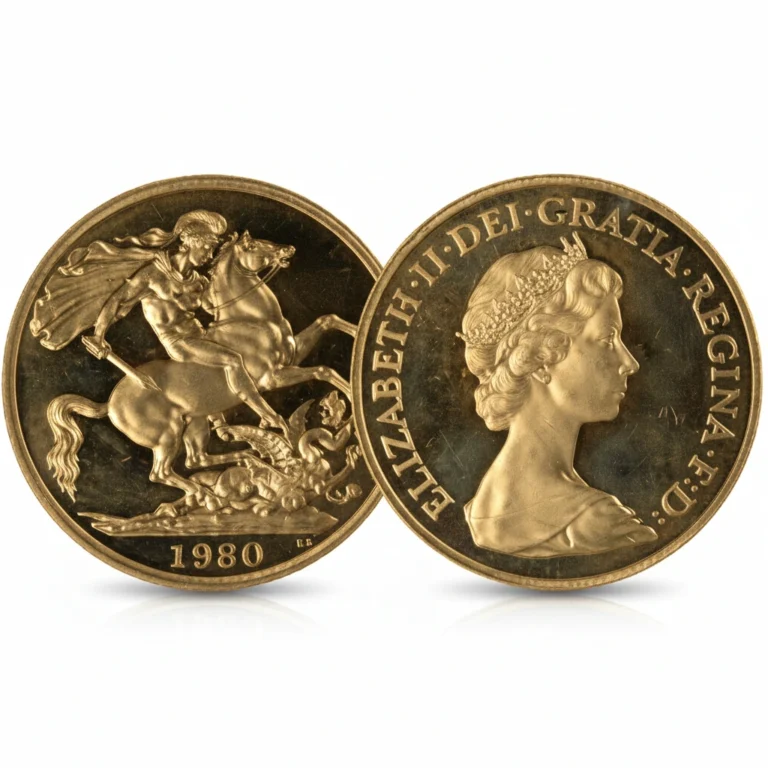
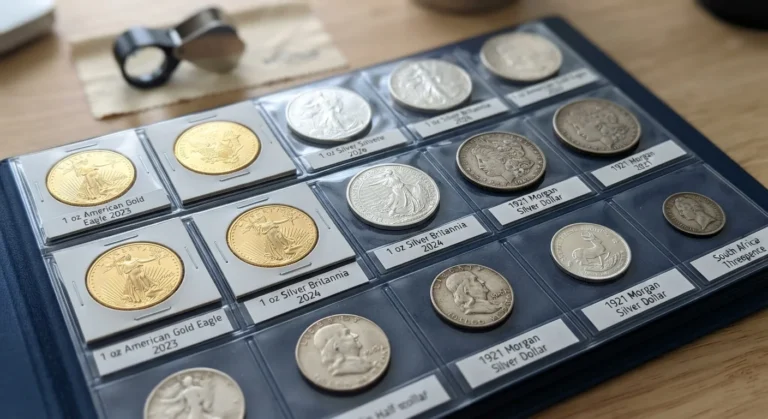
A British sovereign, a Mexican 50-peso gold coin, and an Austrian silver thaler may receive less attention in the same display case than an ordinary-looking U.S. coin. The reason is rarely their quality. Underappreciated World Coins are often overlooked because the American market primarily focuses on U.S. coinage, leaving many collectors unfamiliar with the catalog numbers, mint histories, and grading practices that help them identify and evaluate foreign coins.
That gap is where careful collectors find interesting material: trade coins that circulated across continents, gold coins priced close to their metal, and historic silver with real stories. It is also where mistakes are made. This guide covers what makes world coins easy to miss, which categories reward a closer look, and what to check before buying.
Why World Coins Get Overlooked
Most U.S. collectors grew up with a shared framework: the Red Book, the Sheldon scale, familiar series such as Morgan dollars and Lincoln cents. World coins have no single equivalent. A coin from one country may be referenced by a Krause-Mishler number, usually written as KM, in the Standard Catalog of World Coins, but few casual buyers recognize those numbers when they see them on a certified label.
Three other factors add to the effect:
- Unfamiliar design and language. Legends in other languages and unfamiliar rulers make it harder to judge what is common and what is scarce.
- Fewer reference points. Population reports and auction records exist, but they are less widely known than their U.S. counterparts.
- Counterfeit concerns. Some series, especially Chinese coins, have seen heavy counterfeiting, which makes cautious buyers walk away. Coin World’s coverage of the global market has noted the flood of counterfeit Chinese coins that entered it.
Less attention can mean less competition, but it can also mean thinner markets and more work to verify what you are buying.
“Underappreciated” Does Not Mean “Guaranteed to Appreciate”
This distinction matters. A coin can be overlooked and stay overlooked. Collector awareness can grow, or it can stay where it is. No one can promise that a particular world coin will rise in value, and any article that suggests otherwise is selling an outcome it cannot deliver.
What you can reasonably say is narrower: some world coins are priced mainly on metal content or on thin collector attention, and a collector who understands their history, grade and authenticity can buy them with clear eyes. That is a case for learning, not for expecting returns. This article is educational, not investment advice.
A Silver Trade Coin That Traveled the World: The Maria Theresa Thaler
Few coins show how far a design can travel better than the Maria Theresa thaler. Maria Theresa thalers are historic silver trade coins first struck in the early 1740s, showing a portrait of Empress Maria Theresa of Austria. The coin’s weight and silver content were stabilized at about 28.07 grams of .833 fine silver, which works out to roughly .7517 troy ounces of silver. britanniacoincompanyjmbullion
What makes it unusual is the date. The coin became the best known silver coin in the Arabian world and was prized in Levant trade, and the date 1780, the year of the Empress’s death, was kept on later strikes so the coin stayed recognizable and trusted. Austria’s official trade coinage status ended in 1858, but the Austrian Mint continues to produce restrikes dated 1780. gmicsilveragecoins
The collecting lesson is about telling apart original strikes from modern restrikes. A restrike dated 1780 is a legitimate coin, but it is not the same thing as an early strike, and the two are valued differently. The design is also one of the most copied in Europe, so authenticity matters. silver
There is a neat American connection too. The Austrian thaler and the Spanish eight reales were the basis for the silver dollar adopted by the United States, and the word “dollar” comes from “thaler.” Collecting thalers is one way to see where the American dollar came from. apmex
World Gold Coins and the Metal Beneath Them
World gold is where many collectors first notice how differently a foreign coin is priced. Many circulating gold coins from other countries trade close to their gold content, with a modest premium on top, unless a date, mint or grade is scarce.
Dealers describe that gold content as AGW, or actual gold weight. It tells you how much pure gold is in the coin regardless of its face value, and it gives a quick floor for what the coin is worth as metal. Some common examples:
| Coin | Actual gold weight |
|---|---|
| British half sovereign | about 0.1177 oz |
| British sovereign | about 0.2354 oz |
| Italian 20 lire | about 0.1867 oz |
| German 20 mark | about 0.2305 oz |
| Mexican 50 peso | about 1.2057 oz |
The Mexican 50 peso is worth singling out. Certified examples from the 1930s and 1940s appear regularly at auction, listed with an actual gold weight of 1.2057 ounces. That is a large gold coin by weight, and the series is often described as one of the more cost-efficient ways to own a big gold piece. greatcollections
A caution applies, as it does with U.S. gold. Metal value sets a rough floor, not a price. Scarce dates, high grades and strong eye appeal can bring premiums well above the metal, while worn or common examples usually track spot gold. Our guide to what you pay over spot when buying gold or silver explains how that premium works.
The High End: Chinese Rarities and a Reality Check
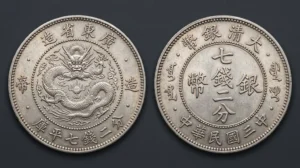
At the top of the world coin market, prices can be dramatic. In June 2026, a rare Chinese dragon dollar from the Peh Family Collection sold for close to $5 million, helping Heritage’s Hong Kong world and ancient coin and paper money auctions reach a combined $26.96 million. Those are historical auction results, not a forecast for similar coins. rumnicoin
That headline is useful context, but it describes a rarefied corner. The same market that produces a seven-figure result also contains plenty of coins worth far less, and heavy counterfeiting in Chinese series makes certification and provenance especially important. For most collectors, the lesson is to buy the coin that fits your knowledge, not the one with the best story.
How Collectors Evaluate a World Coin
The same fundamentals apply as with U.S. coins, with a few world-specific habits.
Identify the coin precisely. Country, ruler, date, mint, denomination and KM number should all line up. A mismatch is a warning sign.
Check for originality versus restrike. Some series are famous for restrikes. A restrike can be a fine collectible, but it should be priced as one.
Look at the surfaces. Luster, strike and surface preservation matter just as they do for U.S. coins. Cleaned or damaged pieces sell at a discount.
Prefer certified coins when the stakes are meaningful. PCGS and NGC both grade world coins, and certification is especially valuable in series with many counterfeits. The label should show the KM number, date and grade. Our article on PCGS vs. NGC vs. CAC grading explains what each service verifies.
Consider the market. Some world coins have deep, active markets, while others trade rarely. Thin markets can mean wider dealer spreads and slower sales.
A Hypothetical Example
This scenario is illustrative, not a real transaction.
Imagine a family inherits a cigar box of foreign coins brought home from overseas travel decades ago. At first glance the box looks like clutter. A careful sort produces four groups: gold pieces whose actual gold weight sets a baseline, large silver coins that may be historic trade coins, certain older silver pieces worth checking for rarity, and common base-metal coins worth little.
Nothing in that sort requires guesswork about the final value. It simply routes each coin to the right kind of evaluation. A single gold sovereign might be valued mostly by weight, while a silver thaler might turn out to be a restrike with modest value or an earlier strike worth more. The point is that the box was worth looking through.
Tips for Buyers and Sellers
- Do not assume foreign means worthless. Some of the most solid coins in a collection are world gold and silver.
- Do not assume foreign means valuable either. Many foreign coins are common and worth little.
- Check the metal first. Gold and silver content gives a floor and helps you spot a bargain or an overpriced piece.
- Never clean a coin. It can destroy collector value.
- Ask about authenticity. In heavily counterfeited series, buy certified or from a dealer who can stand behind the coin.
- Keep records. Receipts, certification numbers and family notes add to a coin’s story.
For a broader look at which foreign coins people often undervalue, see our guide to foreign coin values, and keep our glossary of numismatic terms handy for unfamiliar vocabulary.
How DEI GOLD and SILVER COINS Looks at World Coins
DEI GOLD and SILVER COINS is a Las Vegas coin dealer that buys, sells and appraises gold coins, silver coins, rare coins, bullion, paper money and fine jewelry. When foreign coins come in, the first questions are practical: what metal, what weight, what date and mint, and is it authentic? Those answers separate coins valued for their metal from those with real collector interest.
Its free and confidential appraisal service is a straightforward way to find out what a group of foreign coins is worth before deciding whether to keep, sell or certify them. Appointments can be set by calling or texting 702-460-5188.
Conclusion
World coins are overlooked less because they lack merit than because they require a different set of tools: catalog numbers, comfort with foreign legends, and a healthy respect for counterfeits. The collectors who do that work find trade coins with real history, gold priced close to its metal, and corners of the market where careful buying still matters more than hype.
Treat “underappreciated” as an invitation to learn, not as a promise of profit. Verify the coin, understand what you are paying for, and let curiosity do the rest.
DEI GOLD and SILVER COINS is the official sponsor of the CK Shows coin shows in Las Vegas. See show dates and what to bring.
By DEI GOLD and SILVER COINS | Articles by DEI GOLD and SILVER COINS