What Is Silver Stacking, and Why Do Investors Do It?
“Stacking” simply means building a personal reserve of physical silver over time, usually in coins, rounds, or bars, rather than through paper assets like ETFs or mining stocks. Stackers own the metal outright, which means no counterparty risk and no reliance on a fund holding the silver on their behalf. People stack silver for a few common reasons: as a hedge against inflation, as a way to diversify outside of stocks and bonds, and because silver’s lower per-ounce price makes it more accessible than gold for someone starting with a modest budget. Silver also has meaningful industrial demand — electronics, solar panels, and medical devices all use it — which adds a layer of demand beyond pure investment buying.Bars vs. Rounds vs. Coins: What Should Beginners Stack First?
Physical silver comes in a few common forms, and each has a different cost structure and resale profile:| Form | Typical Premium Over Spot | Liquidity | Best For |
| Generic Rounds | Low (roughly 3-8%) | Good — widely accepted | Stretching a budget, lowest cost per ounce |
| Silver Bars (1-10 oz) | Low-to-moderate (roughly 4-9%) | Good — recognized by weight/brand | Compact storage, buying in bulk |
| Government Bullion Coins (e.g. American Silver Eagle) | Higher (roughly 10-20%+) | Excellent — globally recognized | Easiest resale, long-term core holdings |
| 90% Junk Silver (pre-1965 US coins) | Low-to-moderate, priced by face value | Good — familiar, easy to verify | Budget-friendly entry point, small denominations |
Understanding Premiums Over Spot Price
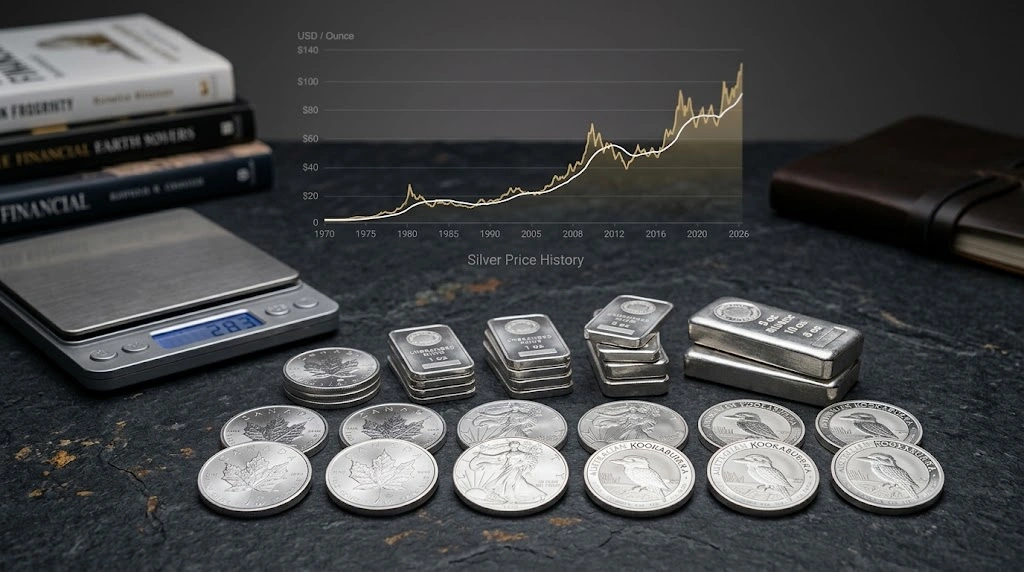
The “spot price” is the current market price for one troy ounce of raw silver. Almost nothing physical sells at exactly spot — dealers add a premium to cover minting, distribution, and their own margin. This premium is the single biggest factor that separates a good purchase from an overpriced one. Example: if spot silver is trading around $70 an ounce, a generic 1 oz silver round might sell for roughly $73-$75 (a 4-7% premium), while a 1 oz American Silver Eagle might sell for $80-$85 (a 14-20% premium) for the same amount of actual silver. Through much of 2026, silver has traded broadly in the roughly $65-$75 per ounce range, so premiums of this size represent a real difference in cost per ounce, especially at larger order sizes. Neither choice is wrong — you’re paying for different things. The premium on a Silver Eagle reflects a globally recognized, easy-to-resell product; the lower premium on a generic round reflects a lighter brand but the same underlying metal content.Junk Silver: An Affordable Entry Point for New Stackers
“Junk silver” refers to pre-1965 US dimes, quarters, and half dollars that were struck in 90% silver before the US Mint switched to copper-nickel coinage. It’s a popular starting point for silver stacking for beginners because it’s sold in small, affordable increments, is easy to verify by date, and carries broad recognition among US buyers and dealers. Junk silver is typically priced based on face value multiplied by a silver-content multiplier tied to the current spot price, rather than per coin, which makes it simple to buy in whatever dollar amount fits a monthly budget.How to Stack Silver the Smart Way: Building a Buying Strategy
The biggest edge a beginner has isn’t picking the perfect coin — it’s building a consistent, low-stress buying habit. A few principles make up most of how to stack silver the smart way in practice:- Dollar-cost average — buy a fixed dollar amount on a regular schedule (monthly or quarterly) instead of trying to time the exact bottom, which smooths out the impact of short-term price swings.
- Buy from established, verifiable dealers — reputable dealers test and verify what they sell, and stand behind it if a problem ever comes up.
- Prioritize recognizable products for the bulk of your stack — widely known coins and mint-brand bars resell faster and with less friction than obscure, no-name pieces.
- Compare total cost, not sticker price — factor in shipping, sales tax where it applies, and payment-method surcharges before comparing two dealers’ prices.In Nevada specifically, how Nevada sales tax applies to gold and silver can meaningfully change your true cost per ounce depending on the product.
- Keep records — save receipts and note purchase prices, since this documentation matters both for tracking your cost basis and for any future tax reporting.
Where to Store Your Silver Stack Safely
Storage is often an afterthought for new stackers, but it matters as much as the buying decision. Common options include:- A quality home safe, bolted down and ideally fire-rated, for stacks you want immediate access to.
- A bank safe deposit box, which adds a layer of security but comes with limited access hours and, in rare cases, restrictions on contents.
- Third-party depository or vault storage, often used for larger holdings or silver held inside a precious metals IRA, which typically requires IRS-approved storage rather than a home safe.
Common Beginner Mistakes to Avoid When Stacking Silver
- Chasing the lowest possible premium from an unverified seller — a slightly better price isn’t worth the risk of counterfeit or misrepresented metal.
- Buying only rare or numismatic pieces early on — collectible value is harder to judge than bullion value, and it’s easy to overpay before you’ve built enough experience to evaluate rarity and grade.
- Ignoring liquidity — a stack made entirely of obscure private-mint rounds can be harder and slower to sell than one anchored in recognized coins and brands.
- Trying to time the market perfectly — consistent buying over time has historically served new stackers better than waiting indefinitely for a “perfect” entry point.
When and How to Sell Part of Your Stack
Eventually, most stackers sell at least part of their holdings, whether to rebalance, cover an expense, or take profit after a strong run in silver prices. When that time comes, a dealer will typically evaluate your silver based on its exact weight, purity, and current spot price, with certified or well-known coins generally fetching offers closer to full bullion value than unbranded pieces. Bringing organized documentation — receipts, certificates of authenticity for bars, and original packaging where you have it — tends to speed up the evaluation and can support a stronger offer, particularly on larger or higher-value pieces.Buy or Sell Gold & Silver Coins with Confidence
Work with a trusted Las Vegas coin dealer offering fair pricing, honest appraisals, and expert guidance every step of the way.
Frequently Asked Questions
There’s no fixed minimum — some stackers start with a single junk silver coin or a single 1 oz round. A common approach is setting a modest, sustainable monthly budget rather than committing a large lump sum upfront, which builds the habit while limiting exposure to any single price point.
Yes, for many beginners it’s an ideal entry point. Pre-1965 90% silver US coins are affordable in small increments, easy to verify by date, and widely recognized by dealers, making them a low-friction way to start building a stack before moving into bars or bullion coins.
Purchases generally aren’t reported, but sales can trigger capital gains considerations depending on your holding period and profit. Reporting requirements for dealers also vary by transaction size and payment method. It’s worth speaking with a tax professional about your specific situation rather than relying on general assumptions.
Compare total out-the-door cost — not just the listed price — across a few reputable dealers, and understand that lower premiums usually come with less-recognized products. Buying recognized government coins for part of your stack and lower-premium rounds or bars for the rest often balances cost with resale ease.
Neither is strictly better — it depends on your goal. Bars typically offer a lower cost per ounce for the same silver content, while government-minted coins like the American Silver Eagle carry higher premiums but tend to resell faster and more easily due to their broad recognition.
Conclusion
Silver stacking for beginners doesn’t require picking the perfect coin on day one — it requires a consistent strategy, an understanding of premiums, and a habit of buying from dealers you trust. Start with recognizable products, keep good records, and let the stack grow steadily rather than trying to time every purchase. DEI Gold and Silver Coins, backed by certifications from CAC, NGC, PCGS, GIA, and AGL and more than 50 years of combined numismatic experience, carries a range of silver coins, rounds, and bars suited to exactly this kind of long-term stacking strategy. Whether you’re buying your first ounce or your fiftieth, a knowledgeable dealer can help you build a stack that makes sense for your goals.