A gold IRA is built to protect wealth for retirement, but many account holders never ask what happens to it after they’re gone. Gold IRA inheritance works differently than inheriting a stock portfolio or a savings account, mainly because the account holds physical bullion instead of paper assets. That difference affects how quickly a beneficiary must act, how the metal moves (or doesn’t), and how much they’ll eventually owe in taxes.
This guide walks through who can inherit a gold IRA, the distribution rules beneficiaries face, what actually happens to the physical coins or bars inside the account, and the practical steps an heir should take in the first few months. It’s written as general education, not personalized tax or legal advice — an estate attorney or CPA should always review the specifics of your situation.
Who Can Inherit a Gold IRA: Spouse vs. Non-Spouse Beneficiaries
The IRS treats spousal and non-spousal beneficiaries very differently, and that distinction shapes nearly every decision that follows.
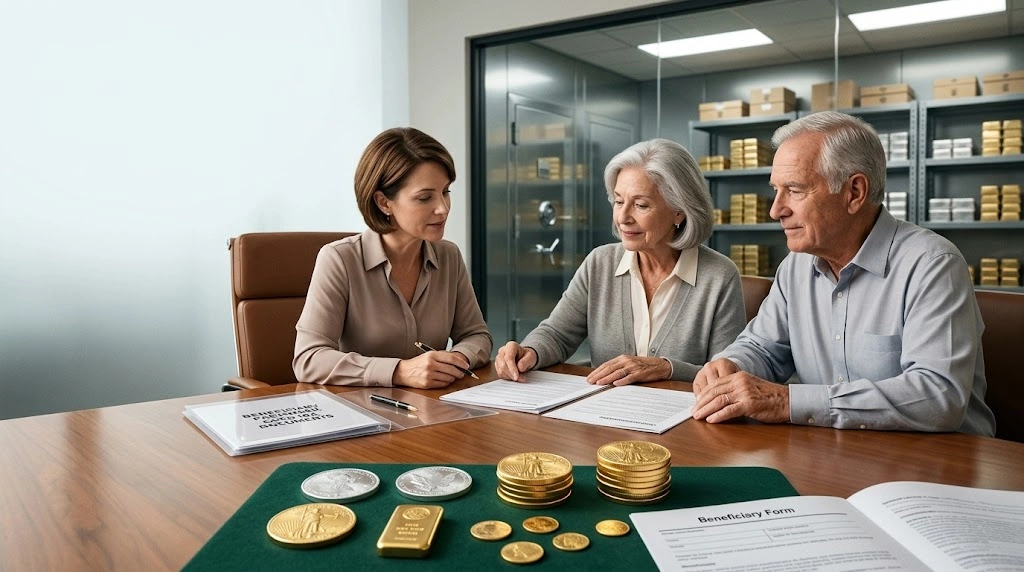
A spouse beneficiary generally has the greatest flexibility when managing an inherited gold IRA. They can usually treat the account as their own by rolling it into an existing IRA or a new IRA under their name and following the standard required distribution rules based on their own age. Alternatively, a spouse may choose to keep the account as an inherited IRA and follow different distribution timing rules.
A non-spouse beneficiary — an adult child, sibling, or other named heir — generally cannot roll the account into their own IRA. Instead, they open what’s called an inherited IRA (sometimes called a beneficiary IRA) and must follow a separate set of distribution rules.
Beneficiary Type | Can Roll Into Own IRA? | Distribution Timeline |
Spouse | Yes, in most cases | Based on spouse’s own age, or inherited-IRA timing |
Adult child / non-spouse individual | No | Generally must fully distribute within 10 years |
Certain eligible beneficiaries (minor child, disabled, chronically ill, or beneficiary less than 10 years younger than owner) | No | May stretch distributions over their own life expectancy |
Estate or non-qualifying entity | No | Often subject to a shorter distribution window |
RMD Rules for an Inherited Gold IRA
Since the SECURE Act reshaped inherited retirement account rules a few years ago, most non-spouse beneficiaries fall under what’s commonly called the 10-year rule: the entire inherited precious metals IRA generally must be emptied by the end of the tenth year after the original owner’s death. Depending on whether the original owner had already started required minimum distributions (RMDs), the heir may also need to take annual distributions during those ten years rather than waiting until year ten to withdraw everything at once.
A smaller group of “eligible designated beneficiaries” — including a surviving spouse, a minor child of the account owner, a disabled or chronically ill beneficiary, or someone less than ten years younger than the original owner — may qualify for a different timeline that stretches distributions over their own life expectancy instead.
Because these rules changed relatively recently and include exceptions, an heir should confirm their specific category with the IRA custodian and a tax professional before assuming which timeline applies. Getting this wrong can trigger IRS penalties on missed distributions.
What Actually Happens to the Physical Metal
Here’s where a gold IRA diverges sharply from a typical retirement account. The IRS requires that IRA-eligible bullion be held in an approved depository, not at home, for as long as it stays inside the IRA structure. When an heir inherits the account, the coins or bars themselves don’t move — what moves is ownership of the account and, eventually, distribution rights.
When the beneficiary takes a distribution, they generally have two options:
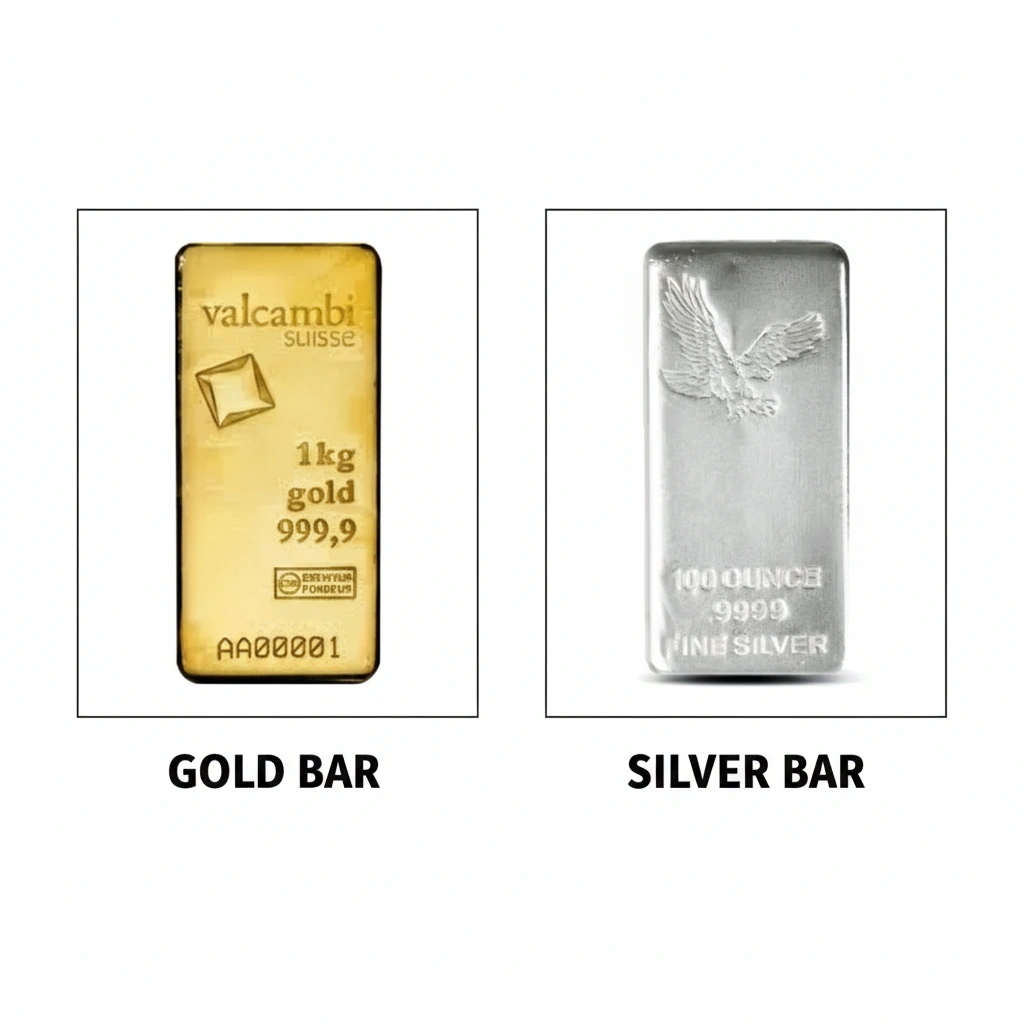
- In-kind distribution: The custodian ships the actual coins or bars to the beneficiary (or to a dealer on their behalf), and the fair market value at the time of distribution is reported as taxable income.
- Cash distribution: The custodian arranges for the metal to be sold, typically through a qualified dealer, and the beneficiary receives cash instead of physical bullion. This avoids shipping and storage but locks in a sale price at that moment.
Many heirs choose a combination — taking some distributions in physical form to keep as coins and liquidating the rest for cash, especially if they don’t already have a home security setup or a relationship with a numismatic dealer.
Custodian’s Role vs. Dealer’s Role
It helps to understand who does what, since heirs sometimes assume one party handles everything.
The IRA custodian (a trust company or bank that administers the account) manages the paperwork: verifying beneficiary status, tracking required distribution deadlines, and coordinating with the depository that physically stores the metal. The custodian does not appraise coins, set buy prices, or advise on which pieces are worth the most.
A precious metals dealer steps in once metal is being distributed and either sold or transferred. A dealer can appraise the coins or bars, explain current melt value versus any numismatic premium (the extra value a coin carries beyond its raw metal content due to rarity, grade, or demand), and handle the actual purchase if the heir wants cash rather than physical bullion.
Tax Implications for Beneficiaries
Distributions from an inherited traditional gold IRA are generally taxed as ordinary income to the beneficiary in the year they’re received, similar to distributions from any traditional IRA. If the original account was a Roth gold IRA, qualified distributions to the beneficiary are typically tax-free, though rules around what counts as “qualified” still apply.
Nevada residents catch a break here that residents of some other states don’t: Nevada has no state income tax, so an inherited IRA distribution that’s taxable at the federal level won’t also trigger a state income tax bill for a Nevada-based heir. This is general information, not a substitute for a CPA reviewing your specific filing.
A Practical Example
Consider Linda, a Henderson resident whose husband held a gold IRA funded with American Gold Eagles and gold bars, held at an approved depository. After his passing, Linda — as the named spousal beneficiary — had the option to roll the account into her own IRA and continue managing it under her own required distribution schedule. She chose instead to keep a portion as an inherited IRA and take a partial in-kind distribution of coins she wanted to keep as family keepsakes, while directing the custodian to liquidate the rest for cash to cover near-term expenses. Before finalizing the cash portion, she brought the distributed coins to a local dealer for a free appraisal to confirm she wasn’t leaving numismatic value on the table by selling at melt price alone.
Step-by-Step: What an Heir Should Do First
- Locate the account paperwork and contact the custodian. Confirm beneficiary status and request the account’s current holdings statement.
- Determine your beneficiary category. Spouse, minor child, disabled beneficiary, and “everyone else” all face different rules — don’t assume the standard 10-year rule automatically applies to you.
- Decide between in-kind and cash distributions. This often depends on whether you want to hold physical coins long-term or need liquidity.
- Get an independent appraisal before selling. A custodian’s paperwork values metal at spot or melt price; a numismatic dealer can flag if any coins carry grading or rarity premiums worth more than raw metal content.
- Consult a CPA or estate attorney before taking any distribution, especially if the estate involves multiple beneficiaries or other retirement accounts.
Common Mistakes Heirs Make
- Missing the distribution deadline entirely, which can result in IRS penalties on the account balance.
- Assuming a non-spouse beneficiary can roll the account into their own IRA — in most cases, they cannot.
- Selling distributed coins at the first offer without comparing melt value against any numismatic premium.
- Forgetting that in-kind distributions are still taxable the year the metal is transferred, even if it isn’t sold.
Frequently Asked Questions
No. A beneficiary can take an in-kind distribution and keep the physical coins or bars, though the fair market value is still counted as taxable income in the year of distribution. Selling is optional, but many heirs liquidate at least a portion to cover taxes owed on the distribution.
Most non-spouse beneficiaries fall under the 10-year rule established after the SECURE Act, meaning the account generally must be fully distributed by the end of the tenth year following the original owner’s death. Some may also owe annual distributions during that window depending on the owner’s RMD status.
In most cases, yes. A surviving spouse can typically roll an inherited gold IRA into their own IRA and follow standard distribution rules based on their own age, which offers more flexibility than the non-spouse beneficiary rules.
Yes. Unlike inheriting a home or a taxable brokerage account, distributions from a traditional inherited IRA are generally taxed as ordinary income to the beneficiary, not treated as a simple inheritance with a stepped-up basis.
Custodians are required to attempt to notify named beneficiaries, but accounts can go unclaimed if paperwork is outdated. Reviewing a deceased family member’s tax returns and mail for custodian statements is often the fastest way to locate an overlooked account.
Conclusion
Gold IRA inheritance comes with its own rulebook — different timelines for spouses versus other heirs, required distributions that can trigger penalties if missed, and a physical asset that has to move through a custodian and depository rather than simply changing hands. Heirs who understand these mechanics early avoid rushed decisions and unnecessary tax exposure. DEI Gold & Silver Coins, a certified Las Vegas dealer with over 50 years of combined experience, is available to appraise distributed coins and bars so heirs can make an informed decision about what to keep and what to sell.