What “Scrap Gold” Actually Means
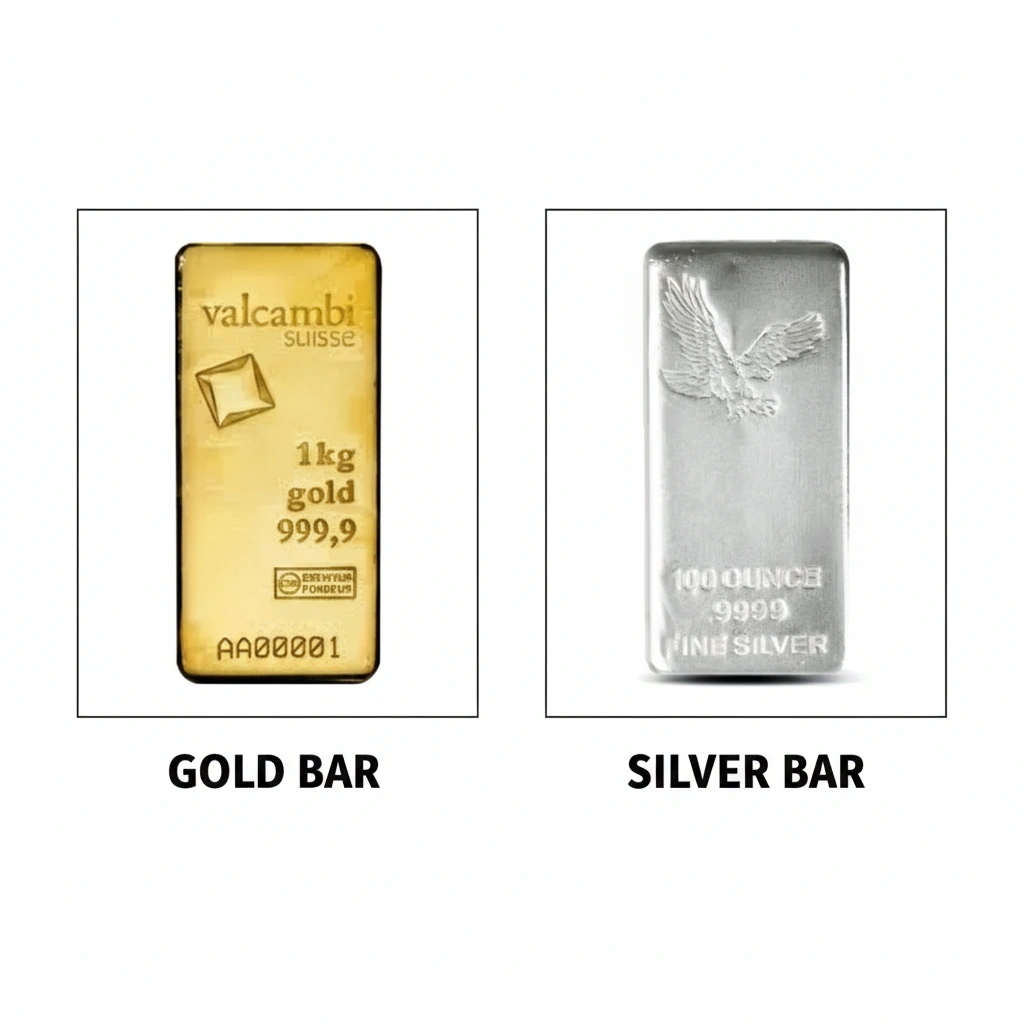
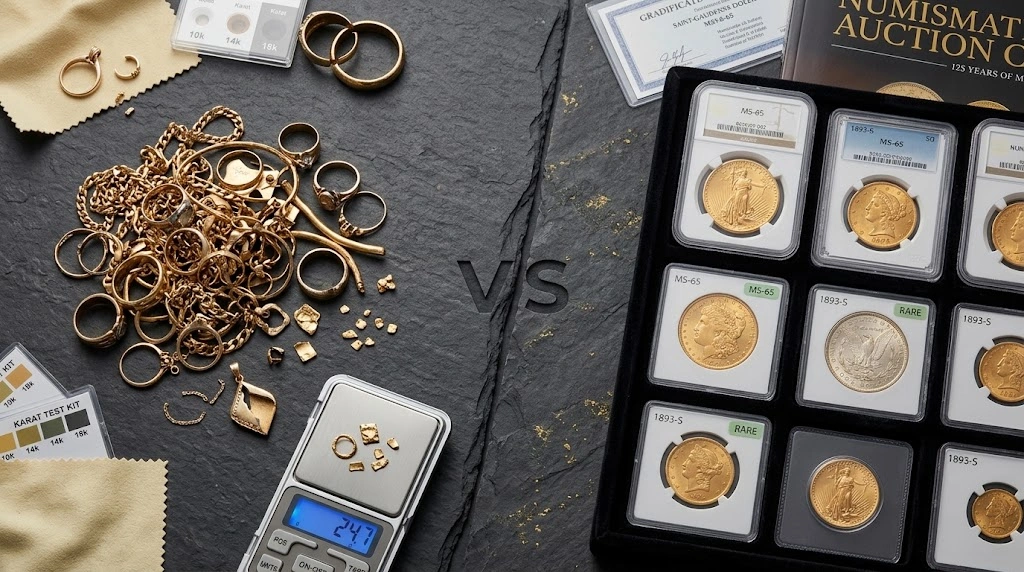
Scrap gold refers to any gold item valued purely for its metal content, not its design, history, or rarity. This includes broken jewelry, mismatched earrings, old dental gold, damaged coins, and bullion that’s been scratched or altered enough to lose collector appeal. A buyer weighs it, tests the purity (usually with an XRF analyzer or acid test), and pays based on the gold content relative to the current spot price. Scrap value is straightforward math: weight × purity × spot price, minus the dealer’s margin. There’s no guesswork about rarity or demand — just metal content.What Makes a Coin “Collectible” Instead
A collectible or numismatic coin carries value beyond its metal weight. That extra value — often called a premium — comes from factors like mintage numbers (how many were made), historical significance, condition, and demand among collectors. A common-date Morgan silver dollar in worn condition might sell close to its silver melt value, while the same coin in uncirculated condition, or a rare mint mark, can sell for many times that. The distinction matters because two coins that look nearly identical — same metal, same weight — can have wildly different values depending on rarity and grade. This is where sellers most often leave money on the table by treating every old coin as scrap.Scrap Gold vs Coins: A Side-by-Side Comparison
| Factor | Scrap Gold | Collectible Coins |
| Valued by | Weight and purity only | Rarity, grade, demand, plus metal content |
| Pricing basis | Live spot price | Spot price plus numismatic premium |
| Typical premium over melt | None to minimal | Can range from 10% to several hundred percent or more, depending on rarity |
| Condition matters? | Rarely — even damaged pieces work | Significantly — grade drives price |
| Best sold when | Spot price is high | Collector demand or a specific coin series is strong |
| Verification needed | Basic metal testing | Authentication, sometimes third-party grading |
How to Tell Which Category Your Pieces Fall Into
Before deciding what to sell, sort what you have. A few practical checks:- Look for a mint mark and date. Certain years and mints (like early Carson City silver dollars or low-mintage gold commemoratives) command strong premiums even in average condition.
- Check condition under good light. Deep scratches, cleaning marks, or bends usually push a coin toward scrap territory, since collectors pay for originality.
- Research recent sale prices, not just spot price. Auction archives and dealer price guides show what similar coins in similar grades actually sold for.
- Separate bullion coins from numismatic coins. Modern American Gold Eagles or Canadian Maple Leafs are usually valued close to metal content unless they’re a special low-mintage release — different from historic or limited-run pieces.
The Role of Certification (NGC and PCGS)
Third-party grading services like NGC and PCGS authenticate a coin and assign it a numeric grade on the 1–70 Sheldon scale, then seal it in a tamper-evident holder. A certified coin removes the guesswork buyers face when judging condition and authenticity, which typically makes it easier to sell for a fair price — especially for higher-value or rare pieces. Certification isn’t necessary for every coin. A worn, common-date coin worth close to melt value usually isn’t worth the grading fee. But if you suspect a coin might be a key date, a low-mintage variety, or in unusually nice condition, getting it evaluated before selling through a free coin appraisal in Las Vegas — can prevent you from accepting a scrap-level offer for a coin worth far moreWhich Should You Sell First? A Practical Framework
There’s no single right answer, but a few principles help most sellers decide:- Sell obvious scrap first. Broken jewelry, damaged coins, and pieces with no collector interest don’t gain value by waiting — sell them when spot price is favorable.
- Hold pieces you’re unsure about until they’re appraised. A five-minute evaluation can be the difference between a scrap offer and a numismatic one.
- Consider your timeline. If you need cash quickly, scrap and bullion-grade pieces convert fastest since they price directly off spot. Rare coins may take longer to find the right buyer or auction window for full value.
- Think about the whole lot, not each piece in isolation. Estate collections and old accumulations often mix true scrap with a handful of standout coins — separating them before any sale protects the standout pieces. which is also why evaluating an inherited coin collection as a whole, rather than piece by piece, matters so much.
What to Bring to an Appraisal
A smoother, more accurate appraisal usually comes from bringing:- Any coins in their original holders, folders, or certification slabs
- Purchase receipts or estate documentation, if available
- A rough inventory or photos if you’re bringing a large collection
- Any prior appraisal paperwork, even if it’s old
Choosing a Dealer for a Mixed Lot
When you’re searching for sell scrap gold near me, look for a dealer who can evaluate both categories under one roof — someone who tests metal content accurately for scrap and has the numismatic knowledge to recognize collectible value when it’s there. A dealer who only weighs gold may undervalue a rare coin; a dealer who only handles high-end numismatics may not offer competitive scrap pricing. Look for transparent, live-market pricing, clear explanations of how an offer was calculated, and credentials from recognized grading and appraisal organizations. In Nevada, sales of investment-grade bullion (coins and bars meeting certain purity thresholds) are generally exempt from state sales tax, while sales tax rules for jewelry and lower-purity items can differ a reputable local dealer can walk you through how Nevada sales tax applies to gold and silver for a specific transaction.Buy or Sell Gold & Silver Coins with Confidence
Work with a trusted Las Vegas coin dealer offering fair pricing, honest appraisals, and expert guidance every step of the way.
Frequently Asked Questions
It depends on the coin. If it has no numismatic premium, scrap and coin value are nearly identical, so selling as scrap is fine. If it’s rare, well-preserved, or certified, selling it as a collectible coin — through a knowledgeable dealer or auction — usually returns more than melting it down for weight alone.
Check the date, mint mark, and condition, then compare to recent sale prices for that exact coin and grade. If it’s an uncommon date, low-mintage variety, or in exceptional condition, it likely carries a premium. A professional appraisal is the most reliable way to confirm this before selling.
Not always. Common, worn coins usually aren’t worth the grading fee. But if a coin might be rare, high-grade, or unusually well-preserved, certification from NGC or PCGS can confirm authenticity and condition, often resulting in a stronger offer from buyers.
Look for an established local dealer with transparent, spot-price-based pricing, proper testing equipment, and recognized industry credentials. Avoid buyers who won’t explain how they calculated an offer or who pressure you to sell on the spot without letting you compare prices.
Yes. Many sellers split a lot — liquidating obvious scrap or duplicate bullion pieces now while holding onto rarer or sentimental coins for later, or until they’ve been properly appraised. A good dealer will evaluate the whole lot and let you decide piece by piece.
Conclusion
The real difference between scrap gold vs coins comes down to one question: is this piece worth more melted down, or more intact as a collectible? Sorting your items by condition, rarity, and mint details — and getting anything uncertain appraised before you sell — protects you from underselling a coin that’s worth far more than its weight in gold. DEI Gold and Silver Coins, with certifications from CAC, NGC, PCGS, GIA, and AGL and decades of combined numismatic experience, can evaluate a mixed lot and tell you honestly which pieces are scrap and which deserve a second look.