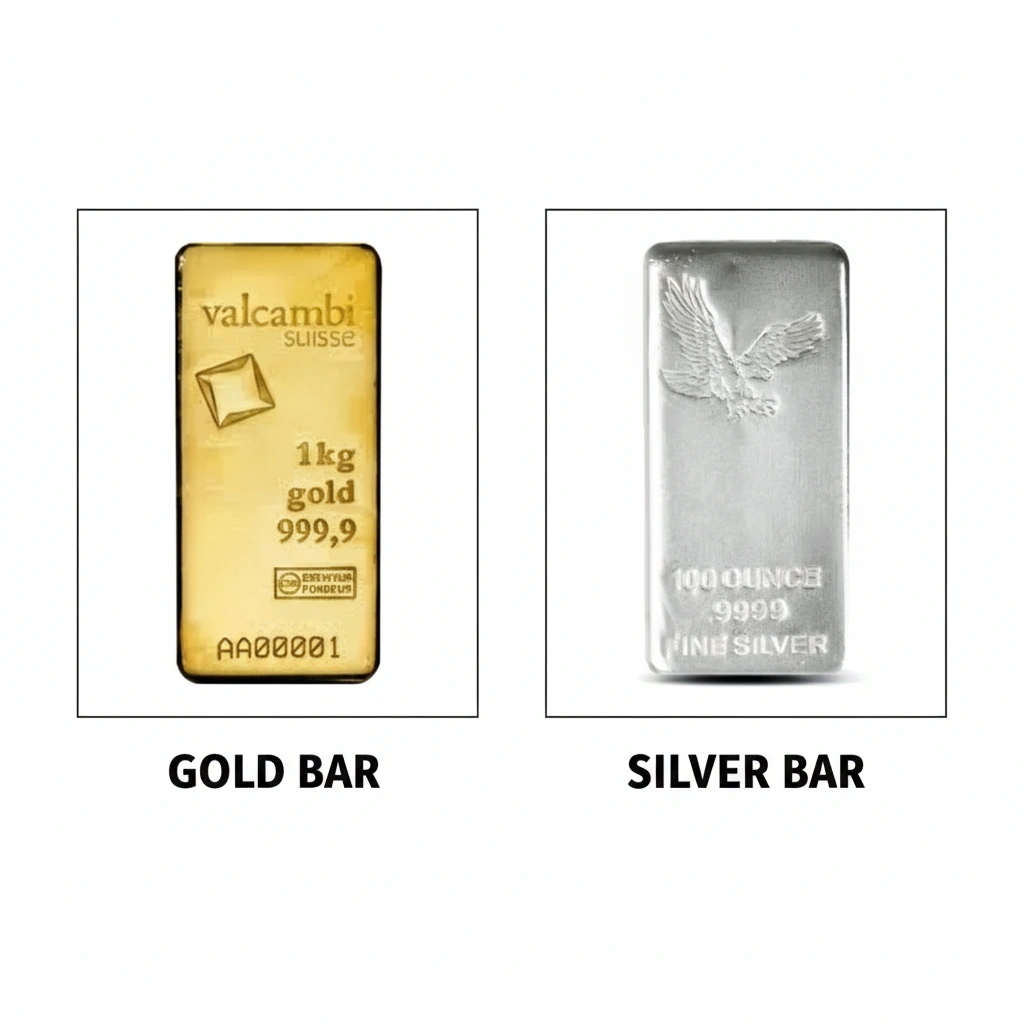
Gold IRA RMD rules can be confusing, especially when your retirement account holds physical gold or silver instead of stocks and mutual funds. Required minimum distributions from a gold IRA raise an important question: how do you withdraw the required amount when your account contains actual coins and bars? This guide explains how a gold IRA RMD works, how the required amount is calculated, and the different ways you can take a gold IRA withdrawal. You’ll also learn about in-kind gold IRA distributions, taxes, deadlines, and common mistakes to avoid when taking required minimum distributions from a gold IRA.
This guide breaks down how required minimum distributions work once your retirement savings are sitting in physical gold or silver, what your options are when the distribution deadline arrives, and how to avoid the penalties that come with getting it wrong. It’s meant as general education based on current, well-established rules — not personalized tax advice, so a CPA or financial advisor should review your specific numbers before you take any distribution.
What Triggers an RMD in a Gold IRA
A traditional gold IRA is subject to the same required minimum distribution rules as any other traditional IRA. Current law generally requires account holders to begin taking RMDs starting at age 73, with that age scheduled to rise to 75 for people born in 1960 or later, under changes made by recent retirement legislation. The exact starting age can depend on your birth year, so it’s worth confirming your specific RMD start date with your custodian rather than assuming.
The first RMD technically has some flexibility on timing — account holders generally have until April 1 of the year after they turn the required age to take that first distribution. Every RMD after that first one, however, must be taken by December 31 of each calendar year. Some retirees delay their first RMD into the following spring, but doing so means taking two RMDs in that same calendar year, which can push them into a higher tax bracket. Planning ahead for this timing quirk is one of the more overlooked parts of gold IRA RMD strategy.
Roth gold IRAs work differently. The original account owner generally does not face RMDs during their lifetime with a Roth account, which is one of the more overlooked advantages of choosing a Roth structure when setting one up. That said, a beneficiary who later inherits a Roth gold IRA does face separate distribution rules of their own.
Why Physical Gold Makes RMDs More Complicated
With a standard brokerage IRA, satisfying an RMD is simple: sell a fraction of a mutual fund or stock position, and the exact dollar amount comes out cleanly. A gold IRA holds physical, indivisible units — coins and bars — instead. You can’t sell 3.77% of a one-ounce gold bar.
The custodian calculates your RMD amount in dollars, using your account balance as of December 31 of the prior year divided by a life expectancy factor from the IRS’s official tables. But turning that dollar figure into an actual withdrawal from physical metal requires one of the approaches below.
Buy or Sell Gold & Silver Coins with Confidence
Work with a trusted Las Vegas coin dealer offering fair pricing, honest appraisals, and expert guidance every step of the way.
Your Three Options for Satisfying a Gold IRA RMD
- Cash distribution. The custodian arranges for enough metal to be sold to cover the RMD dollar amount, and you receive cash. This is the simplest option and avoids owning fractional or oddly-sized pieces, but it means parting with metal you may have wanted to keep.
- In-kind distribution. Instead of selling, you take physical possession of whole coins or bars equal to or exceeding the RMD’s dollar value. This is often called an IRA gold withdrawal in kind, and it lets you keep holding the metal outside the IRA structure. Because coins and bars come in fixed sizes, the distributed value will often exceed the exact RMD amount slightly, since you can’t distribute a fraction of a coin.
- A combination of both. Many retirees split the difference: taking some metal out physically to keep, and selling the rest for the cash portion of the RMD. This approach offers flexibility without forcing an all-or-nothing decision each year.
Whichever method you choose, the IRS treats the fair market value of the distribution as taxable income in the year it’s withdrawn, whether or not you actually sold anything.
How the Distribution Options Compare
| Distribution Method | What You Receive | Key Consideration |
| Cash | Dollar amount in cash | Requires selling metal at that day’s market price |
| In-kind | Physical coins or bars | May exceed the exact RMD amount due to fixed coin/bar sizes |
| Combination | Partial cash, partial physical | Offers flexibility but requires more coordination with the custodian |
How the RMD Amount Is Calculated
The custodian (not the coin dealer) handles the actual RMD calculation, using your prior year-end account balance and an IRS life expectancy factor tied to your age. As a general illustration: a 73-year-old typically uses a divisor in the mid-20s from the IRS Uniform Lifetime Table, which works out to withdrawing somewhere around 3-4% of the account’s value that year. The exact percentage shifts slightly every year as the divisor changes, so this should be treated as a rough illustration rather than a number to rely on for your own filing.
Because gold and silver prices move throughout the year, the value used for the calculation is fixed at the prior December 31 balance, even if metal prices have since risen or fallen. This timing mismatch is worth understanding: if gold prices jump significantly between the valuation date and when you actually take the distribution, you may end up distributing less metal (by weight) than you would have needed to a few months earlier, or vice versa.
Custodian’s Role vs. Dealer’s Role in an RMD
The IRA custodian manages the compliance side: calculating the RMD amount, tracking the December 31 annual deadline, and coordinating with the depository that physically holds the metal. The custodian typically does not appraise individual coins for numismatic value or advise on which specific pieces to distribute.
A precious metals dealer becomes relevant once metal is actually leaving the IRA structure — whether it’s being sold for the cash portion of an RMD or picked up as an in-kind distribution. A dealer can explain current melt value (the metal’s worth based purely on weight and purity) versus any numismatic premium the coin might carry, and can handle a purchase directly if you’re liquidating part of your distribution for cash. Many retirees also use this moment to get an independent appraisal of the specific coins in their account, since not every one-ounce gold coin is priced identically — mint, condition, and demand can all shift a coin’s value slightly above pure melt.
A Practical Example
Consider a Las Vegas retiree, age 74, holding a gold IRA funded primarily with one-ounce American Gold Eagles. Her custodian calculates an RMD of roughly $9,200 for the year based on her account’s December 31 balance. Because one-ounce coins don’t divide evenly into that dollar figure, she works with her custodian to take one full coin as an in-kind distribution — worth slightly more than the RMD requirement — rather than trying to sell a fraction of a coin. She keeps the physical coin at home for now, understanding that its full fair market value at distribution counts as taxable income for the year, regardless of whether she ever sells it.
Common Mistakes to Avoid
- Missing the December 31 deadline. RMDs not taken on time can trigger a significant IRS excise tax penalty on the amount that should have been withdrawn.
- Assuming you can distribute a fraction of a coin. Physical gold and silver come in fixed sizes, so in-kind distributions typically round up to the nearest whole coin or bar, not down to the exact dollar figure.
- Forgetting that in-kind distributions are still taxable. Keeping the physical metal instead of cashing out doesn’t avoid the tax bill — the fair market value at distribution is taxable income either way.
- Not accounting for Nevada’s tax treatment. Nevada has no state income tax, so a Nevada resident’s RMD is taxable at the federal level only, though this doesn’t change anything about federal reporting requirements.
Frequently Asked Questions
Under current rules, most account holders must begin RMDs at age 73, with the age set to rise to 75 for people born in 1960 or later. Your exact start date depends on your birth year, so confirm the specific date with your custodian well before you turn 73.
Yes. An in-kind distribution lets you take the full RMD value in physical coins or bars rather than cash. Because metal comes in fixed sizes, the distributed value may slightly exceed the exact RMD dollar amount, since fractional coins aren’t possible.
Yes. The IRS treats the fair market value of the distributed metal as taxable income in the year it leaves the IRA, whether you keep it as physical coins or sell it immediately. Holding onto the metal doesn’t defer or reduce the tax owed on that distribution.
Missing the December 31 deadline can trigger an IRS excise tax penalty calculated on the amount that should have been withdrawn but wasn’t. If you miss a deadline, contact your custodian and a tax professional promptly, since correcting the mistake quickly can sometimes help reduce the penalty.
Conclusion
Gold IRA RMDs follow the same broad framework as any traditional IRA, but the physical nature of the assets adds real complexity: fixed coin and bar sizes, custodian coordination, and a choice between cash, in-kind, or a blended distribution. Understanding these mechanics ahead of your first required withdrawal helps you avoid penalties and make a deliberate decision about whether to keep your metal or convert it to cash. DEI Gold & Silver Coins, a certified Las Vegas dealer with over 50 years of combined experience, is available to appraise and purchase distributed coins or bars for retirees working through this process.