If you’re looking to Sell gold in Las Vegas, one question is more important than anything else:
How can you get the highest possible price for your gold?
Whether you have gold jewelry, bullion bars, rare gold coins, broken or unwanted jewelry, inherited pieces, or an entire estate collection, knowing how gold buyers evaluate and determine the value of your items can make a significant difference in the amount you receive.
Many sellers walk into the first “We Buy Gold” store they see and accept the first offer they receive. Unfortunately, this often leaves money on the table.
This guide explains exactly how gold is valued, what affects pricing, and how to ensure you receive a fair market offer when selling gold in Las Vegas.
Understanding What Determines Gold Value
Before selling your gold, it’s important to understand how buyers calculate value.
Several factors affect the price:
Gold Purity
Gold purity is measured in karats.
- 24K Gold = 99.9% pure
- 22K Gold = 91.7% pure
- 18K Gold = 75% pure
- 14K Gold = 58.5% pure
- 10K Gold = 41.7% pure
The higher the purity, the greater the intrinsic gold value.
Weight
Gold is typically weighed in grams or troy ounces.
A heavier item with the same purity generally has a higher value.
Current Gold Market Price
Gold prices fluctuate daily based on global supply and demand, economic conditions, interest rates, inflation, and investor sentiment.
A reputable gold buyer will reference the current market price when evaluating your items.
Collectible or Numismatic Value
Some gold coins are worth significantly more than their gold content alone.
Rare dates, mint errors, limited mintages, and certified grading can dramatically increase value.
What Types of Gold Can You Sell?
Most professional gold buyers purchase a wide variety of items.
Gold Jewelry
Including:
- Rings
- Necklaces
- Bracelets
- Earrings
- Watches
- Broken jewelry
Even damaged or incomplete pieces may still have substantial value.
Gold Coins
Popular examples include:
- American Gold Eagles
- Gold Buffaloes
- South African Krugerrands
- Canadian Maple Leafs
- Pre-1933 U.S. Gold Coins
Gold Bullion
Gold bars and investment-grade bullion products often receive pricing closely tied to the current spot price.
Estate Collections
Inherited collections frequently contain valuable items that owners may not fully understand.
Professional evaluation helps identify both precious metal value and collectible value.
Why Not Sell to a Pawn Shop?
Many sellers automatically think of pawn shops when they need quick cash.
However, pawn shops and professional precious metals dealers operate differently.
Pawn shops typically handle a broad range of products, including electronics, tools, jewelry, and collectibles.
Specialized gold and coin dealers focus specifically on precious metals and numismatic assets.
This expertise often leads to:
- More accurate evaluations
- Better understanding of rare coins
- More competitive offers
- Greater transparency
When selling investment-grade gold coins or collectible items, working with specialists can be especially important.
Buy or Sell Gold & Silver Coins with Confidence
Work with a trusted Las Vegas coin dealer offering fair pricing, honest appraisals, and expert guidance every step of the way.
Common Mistakes Gold Sellers Make
Accepting the First Offer
Always understand the basis for an offer before agreeing to sell.
Cleaning Coins Before Selling
Cleaning can reduce the value of collectible coins.
Collectors often prefer original surfaces and natural condition.
Selling Without Understanding Market Conditions
Gold prices fluctuate regularly.
Knowing current market conditions helps sellers make informed decisions.
Overlooking Rare Coin Premiums
Many gold coins carry collector premiums above melt value.
Selling solely based on gold weight may result in a lower payout.
What to Expect During a Gold Appraisal
Professional appraisals are typically straightforward.
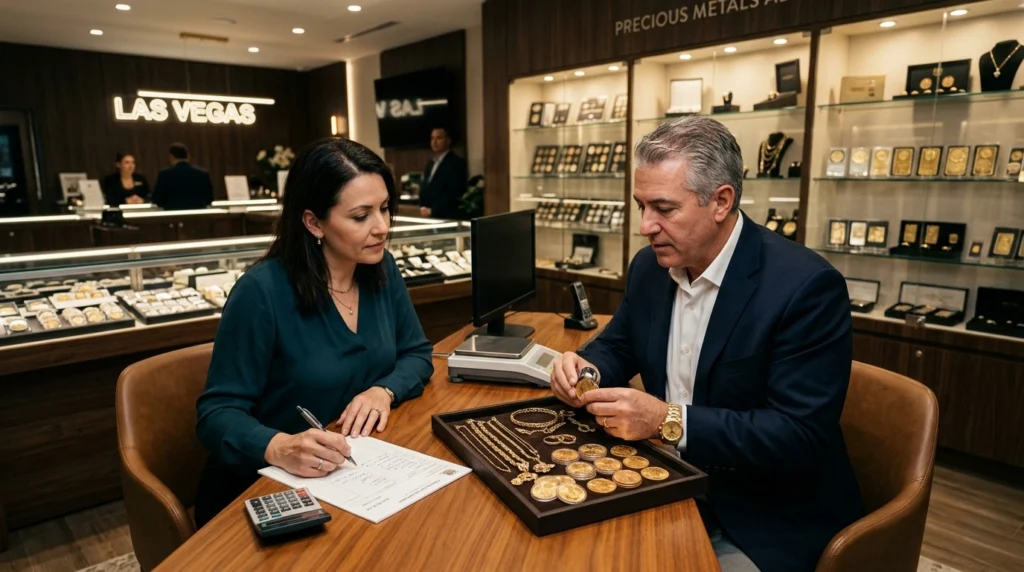
Step 1: Inspection
The buyer examines the item’s condition, markings, certification, and authenticity.
Step 2: Testing
Purity may be verified using modern testing equipment.
Step 3: Weight Verification
Items are accurately weighed.
Step 4: Market Analysis
Current precious metal prices and collectible demand are considered.
Step 5: Offer Presentation
You receive a clear explanation of the valuation and a no-obligation offer.
A trustworthy dealer should explain how the final figure was calculated.
Why Experience Matters When Selling Gold
Gold buying requires more than simply weighing metal.
Professional numismatic expertise helps identify:
- Rare coins
- Valuable varieties
- Certified collectibles
- Historical pieces
- Estate assets
Items that appear ordinary may carry significant collector value.
This is especially true for older U.S. coins, certified coins, and complete collections.
How to Prepare Before Selling Gold
Before your appointment:
Gather Documentation
Bring:
- Certificates
- Grading reports
- Purchase receipts
- Original packaging
Separate Items by Type
Group:
- Jewelry
- Bullion
- Coins
- Silver items
Avoid Cleaning
Leave items in original condition whenever possible.
Make a List
Create a simple inventory of what you intend to bring.
This helps streamline the evaluation process.
Choosing the Right Gold Buyer in Las Vegas
When selecting a gold buyer, look for:
- Industry certifications
- Transparent pricing
- Precious metals expertise
- Positive customer reviews
- Experience handling rare coins and bullion
- Secure private evaluations
The best buyers focus on education, transparency, and fair market offers rather than pressure tactics.
Final Thoughts
Selling gold should never feel rushed or confusing.
Whether you’re selling jewelry, bullion, gold coins, or an inherited collection, understanding how value is determined puts you in a stronger position.
Working with knowledgeable professionals helps ensure you receive an accurate appraisal and a fair offer based on current market conditions.
If you’re considering selling gold in Las Vegas, a professional evaluation is the best first step toward understanding exactly what your items are worth.
FAQ Section
1. How much is my gold worth today?
The value depends on purity, weight, current market prices, and whether collectible premiums apply.
2. Do gold buyers purchase broken jewelry?
Yes. Broken gold jewelry often retains significant precious metal value.
3. Should I clean my gold coins before selling?
No. Cleaning can reduce collectible value.
4. Are gold coins worth more than their gold content?
Many are. Rare dates, grading, and collector demand can create substantial premiums.
5. Do I need an appointment for a gold appraisal?
Policies vary by dealer, but scheduling an appointment can help ensure prompt service.
6. Can I sell inherited gold?
Yes. Estate collections are commonly evaluated and purchased by professional precious metals dealers.
People decide to sell an engagement ring in Las Vegas for all kinds of reasons — an upgrade, a change in life circumstances, an inherited piece that’s never been worn, or simply the need to turn an asset into cash. Whatever brought you here, if you’re looking to sell an engagement ring in Las Vegas, the goal is the same: understanding what your ring is actually worth before you accept the first offer you get.
This guide walks through what really drives resale value, the steps to take before selling, and how to compare your options so you walk away with a fair price.
Sell Engagement Ring Las Vegas: Jewelry Appraisal for Insurance vs. Selling Value
When separating your real cash value from historical documents, you will quickly notice a gap if you are holding a retail jewelry appraisal for insurance. While a traditional jewelry is deliberately written to show the highest possible replacement cost for premium coverage, a selling valuation focuses exclusively on secondary market liquidity. Understanding why that gap exists makes the rest of the selling process straightforward.
Understanding Diamond Ring Resale Value
Diamond ring resale value typically runs somewhere between 20% and 60% of the original retail price, depending on the ring. Quick sales to a dealer often land on the lower end of that range, while private-party sales sometimes reach higher.
Why Rings Sell for Less Than Retail
Retail Markup: When you buy from a jewelry store, you’re not just paying for the diamond — you’re paying for the salesperson’s commission, store rent, marketing, and overhead. None of that adds resale value once the ring changes hands again.
Pre-Owned Status: Even a ring that’s never been worn becomes “pre-owned” the moment it leaves the store, and pre-owned items sell on a different market than new retail pieces.
Different Markets Entirely: Retail jewelry stores and the resale/wholesale diamond market operate on completely different pricing structures. Comparing the two directly is part of what leads to confusion and disappointment.
What Actually Drives Resale Price: The 4 Cs and Beyond
Within the resale market itself, value still comes down to the diamond’s carat, cut, color, and clarity (the 4 Cs), along with the metal content of the band (10K, 14K, 18K gold, or platinum), the setting’s craftsmanship, and — if applicable — the brand or designer name of the fine jewelry 💎.
A GIA-certified diamond, in particular, tends to sell more confidently and closer to fair value than an uncertified stone, since buyers can trust the grading rather than relying on a seller’s description.
Step-by-Step: How to Sell Your Engagement Ring for a Fair Price
Gather Any Paperwork: Original receipts, appraisals, and especially a GIA grading certificate significantly strengthen your position and can raise offers. Much like having paperwork for certified gold coins 💎, diamond documentation eliminates buyer doubt.
Get a Professional Appraisal: Establish a realistic fair market value before talking to any buyer.
Test the Metal and Stone: Have these tested even if you have paperwork, since testing confirms current condition and content.
Get More Than One Offer: This gives you a solid basis for comparison.
Understand the Offer: Ask what factors went into the number, and don’t hesitate to ask questions.
Complete the Sale: Deal with a reputable, established buyer who provides clear documentation.
Where to Sell: Comparing Your Options in Las Vegas
Pawn Shops vs. Online Marketplaces vs. Specialty Buyers
Pawn shops offer speed and convenience but are typically structured around short-term loans rather than gemological expertise, which can mean lower offers for fine diamonds.
Online marketplaces can occasionally net a higher price from a private buyer, but come with real risk: payment disputes, no in-person verification, and no local recourse if something goes wrong.
Specialty precious metals and diamond dealers — like an established Las Vegas coin and jewelry buyer — combine professional appraisal expertise with the ability to pay immediately and in person, without the uncertainty of shipping a valuable ring to a stranger. For most sellers, working with a reputable local dealer offers the best balance of a fair, informed price and a safe, straightforward transaction.
Buy or Sell Gold & Silver Coins with Confidence
Work with a trusted Las Vegas coin dealer offering fair pricing, honest appraisals, and expert guidance every step of the way.
Common Mistakes to Avoid When Selling
Assuming Replacement Appraisals Reflect Resale: A standard replacement evaluation reflects full retail replacement cost, not what a cash buyer will actually pay — the two numbers can differ by 50% or more.
Skipping the Valuation: Accepting the first offer without establishing a benchmark to compare it against is a major pitfall.
Selling Without Checking for Certification: If you have a grading report and don’t present it, you may leave real value on the table.
Rushing the Decision: A ring holding sentimental weight deserves a moment to make sure you are comfortable with both the decision and the price.
Get a Fair, No-Pressure Offer on Your Engagement Ring
Selling a ring, whatever the reason behind it, deserves a straightforward, honest process — not guesswork or pressure to decide on the spot.
Please contact our showroom 💎 or call or text DEI Gold and Silver Coins at (702) 460-5188 to sell your jewelry in Las Vegas 💎 and schedule a same-day private appraisal 💎. Our team will evaluate your ring’s diamond, metal, and craftsmanship, and give you a clear, fair offer whenever you are ready.