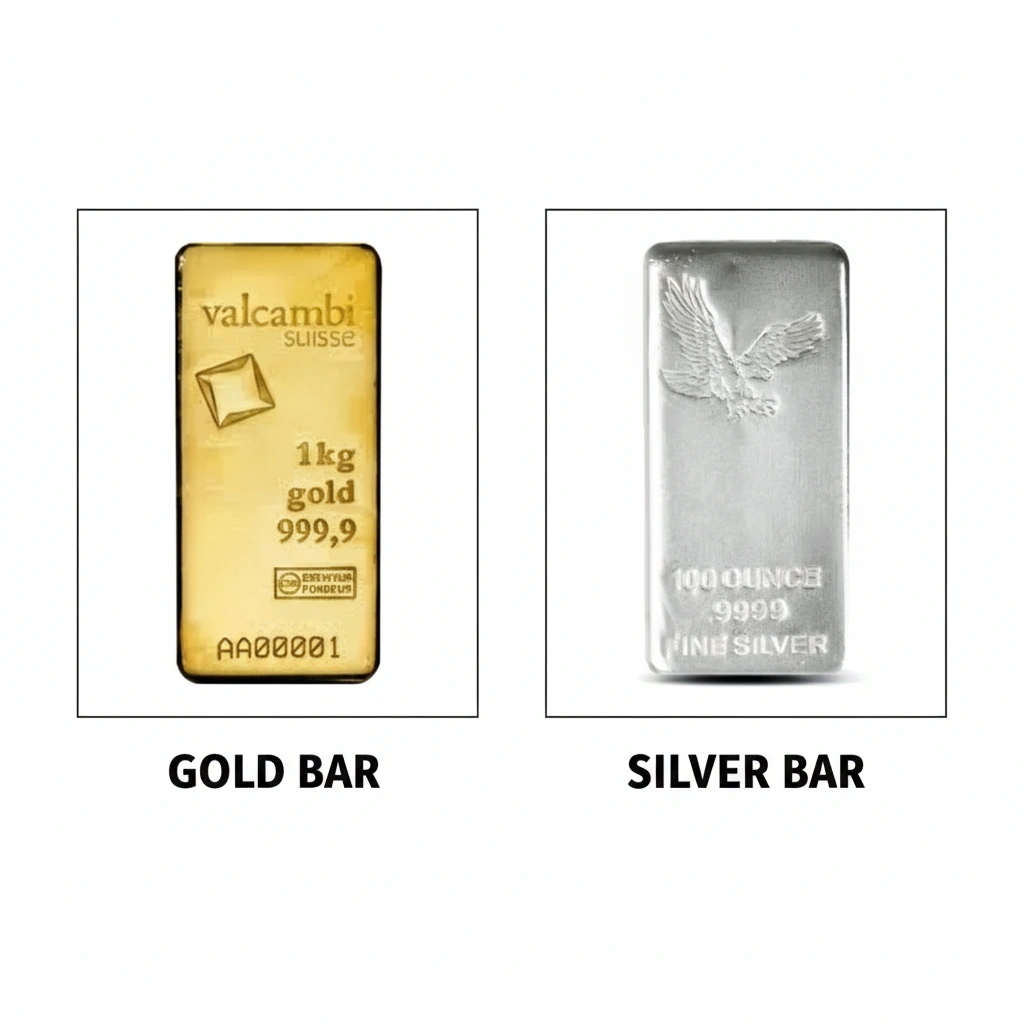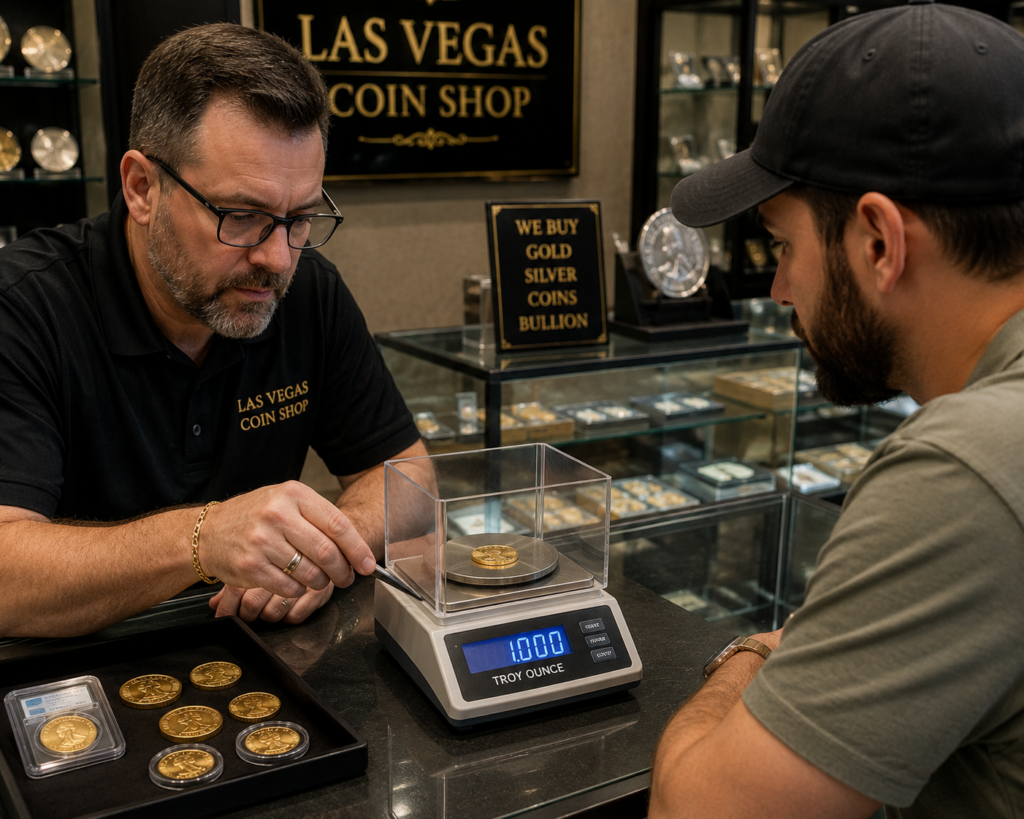
A customer once placed his brand-new one-ounce gold coin on a kitchen scale at home, only to get a reading that didn’t match his expectations. He called us convinced that he had been shorted, but he hadn’t. Instead, he had encountered one of the most common sources of confusion in the precious metals industry: Troy Ounce vs Ounce are not the same unit, even though they share the same name.
If you’re buying, selling, or just trying to understand your first gold or silver purchase, this distinction matters more than it seems. Here’s what’s actually different, where it came from, and why it affects the number on your receipt.
Troy Ounce vs Ounce: The Basic Difference
The ounce most people encounter in everyday life — whether it’s used for a bag of chips or a shot of espresso — is an avoirdupois ounce. This is part of the standard U.S. and British weight system commonly used for groceries, mail, and most everyday products. Gold, silver, platinum, and palladium, on the other hand, are measured in troy ounces, a separate and much older measurement system used almost exclusively for precious metals and gemstones.
The Numbers: 31.1 Grams vs 28.35 Grams
The difference is small in absolute terms but significant in dollar terms:
1 troy ounce = 31.1035 grams
1 avoirdupois ounce (the everyday ounce) = 28.3495 grams
That makes a troy ounce roughly 10% heavier than a standard ounce. When gold is trading at a given spot price “per ounce,” that price always refers to a troy ounce — so a one-ounce gold coin genuinely contains more gold than 1/16 of an avoirdupois pound would suggest.
How Gold Is Weighed: A Quick History of the Troy System
Understanding how gold is weighed today means understanding a system that predates the modern United States by well over a thousand years.
From Roman Uncia to Troyes, France
The roots of the troy ounce trace back to ancient Rome, where standardized bronze bars were divided into 12 pieces called “uncia” — the origin of the word “ounce” — each weighing close to the modern troy ounce’s 31.1 grams. The system takes its name, though, from the medieval French town of Troyes, a major trading hub where merchants from across Europe needed a consistent, trustworthy weight standard to do business with one another.
Why the U.S. Adopted Troy Weight for Coinage
England formally adopted troy weight for gold and silver coinage in the early 1500s, and the system carried over into American coinage when the U.S. officially adopted it for precious metals in 1828. That’s why, nearly 200 years later, every gold and silver coin, bar, and round sold in the United States is still weighed and priced in troy ounces — a direct link back to those medieval European trade fairs.
Troy Pounds, Grains, and Other Units You’ll See
Once you understand the troy ounce, a few related units start to make more sense:
Troy pound = 12 troy ounces (versus a standard pound, which equals 16 avoirdupois ounces)
Grain = the smallest common unit in both systems; a troy ounce equals 480 grains, while an avoirdupois ounce equals 437.5 grains
Pennyweight (dwt) = an older troy subunit, still occasionally used in the jewelry trade, equal to 24 grains (1/20 of a troy ounce)
You likely won’t need most of these day to day, but recognizing them helps when reading older references, jewelry scales, or refiner paperwork.
Why This Matters When You Buy or Sell Gold and Silver
The troy-versus-avoirdupois distinction isn’t just trivia — it directly affects value calculations:
Spot price quotes (the “gold is at $X per ounce” number you see in the news) are always per troy ounce. You can monitor the current gold spot price to see how these live market rates shift.
Coin and bar weights — 1 oz gold coins or 1 oz silver bars contain one troy ounce, not one avoirdupois ounce, of metal.
Scrap gold and jewelry are sometimes weighed in grams or pennyweight rather than troy ounces, which is why it’s worth confirming which unit a buyer is quoting before comparing offers.
A roughly 10% difference between the two ounce systems might not sound like much, but on a large purchase or sale, it’s enough to meaningfully change the final number — which is exactly why a reputable dealer will always specify troy weight clearly.
Common Mistakes Buyers Make With Ounce Confusion
Weighing gold at home on a kitchen or postal scale calibrated in avoirdupois ounces, then assuming a discrepancy means something’s wrong.
Comparing scrap gold quotes without confirming whether a buyer is pricing per gram, per pennyweight, or per troy ounce.
Assuming “ounce” always means the same thing across different product listings, especially when comparing prices between dealers who may present weight differently.
When in doubt, ask directly: “Is that a troy ounce?” Any legitimate precious metals dealer will answer immediately and explain how they calculated your quote.
Get an Accurate Weight and Value on Your Gold or Silver
Understanding troy weight is useful, but the most reliable way to know exactly what your gold or silver is worth is to have it weighed and evaluated by a professional using calibrated, precious-metals-grade scales — not a kitchen scale or a rough estimate. DEI Gold and Silver Coins has been weighing, testing, and buying gold and silver in Las Vegas for more than 50 years, with certifications from CAC, NGC, PCGS, GIA, and AGL.
Buy or Sell Gold & Silver Coins with Confidence
Work with a trusted Las Vegas coin dealer offering fair pricing, honest appraisals, and expert guidance every step of the way.
Bring Your Gold or Silver In for an Accurate Weigh-In
Whether you’re curious what your coins, bars, or jewelry actually weigh in troy ounces or you’re ready to sell your gold in Las Vegas, guessing with a kitchen scale isn’t the way to find out.
Call or text DEI Gold and Silver Coins at (702) 460-5188 to schedule an appointment for a same-day evaluation. We’ll weigh and evaluate your gold or silver on professional, precious-metals-grade equipment and give you a clear, accurate value — no guesswork involved.
Frequently Asked Questions
Troy weight has been the standard for precious metals since it was formally adopted for coinage in England in the early 1500s and in the United States in 1828. The tradition continues today across the global gold and silver markets, so all spot prices and coin weights use troy ounces.
A troy ounce weighs 31.1035 grams, compared to 28.3495 grams for a standard avoirdupois ounce — making it about 10% heavier.
It contains a troy ounce. All bullion coins, bars, and rounds marketed by weight in the U.S. use troy ounces, which is why they weigh slightly more than a kitchen or postal scale calibrated for regular ounces might suggest.
Not always. Jewelry is often weighed in grams or pennyweight (a troy subunit equal to 1/20 of a troy ounce), so it’s worth confirming which unit a buyer is using before comparing quotes on gold jewelry.
It’s named after Troyes, a medieval French trading town where merchants needed a consistent weight standard for commerce. The system’s roots trace back even further to ancient Roman weight divisions.