A customer once walked into our showroom carrying what appeared to be an unusually thick and colorful dollar bill. He asked whether we had ever heard of it after noticing a “we accept Goldbacks” sign at a local business. Unsure of what it meant, he wanted to know, What Is a Goldback and whether it was something worth considering as part of a gold investor’s holdings or simply an interesting novelty. It’s a question we hear more frequently each year.
Goldbacks sit in an interesting space between currency and bullion, and Nevada happens to be one of the states most closely tied to them. Here’s what they actually are, how they’re made, and whether they belong in your collection or portfolio.
What Is a Goldback, Exactly?
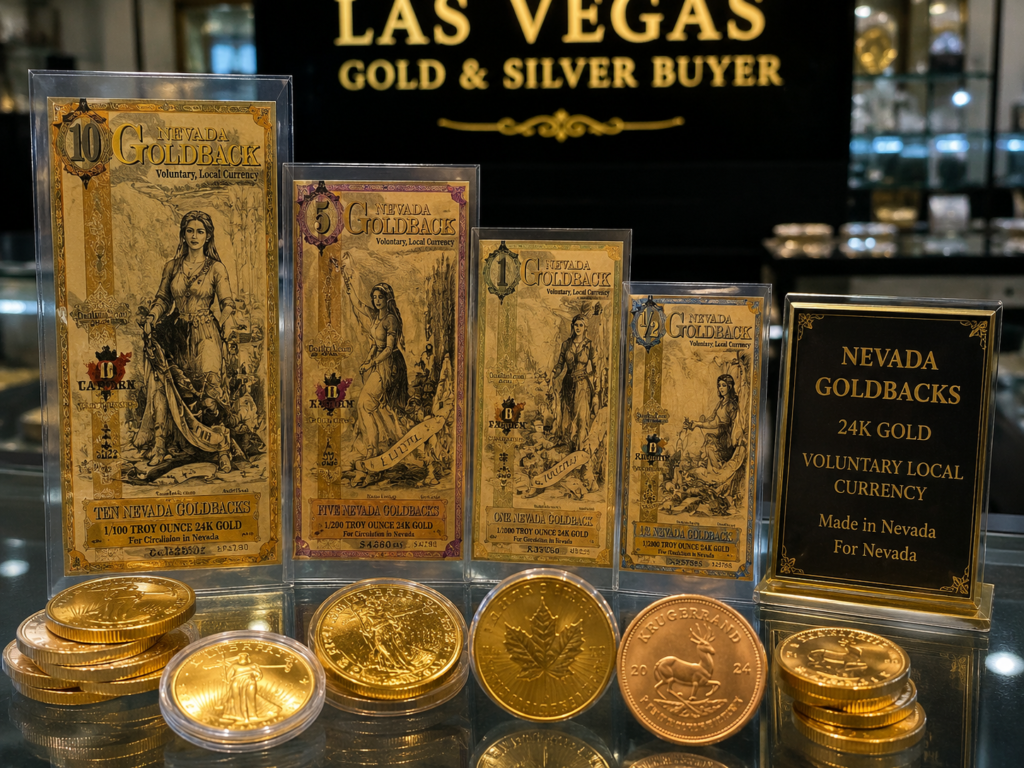
A Goldback is a small, note-shaped form of fractional gold currency—physical, spendable gold designed to be thin enough to function like a banknote rather than a traditional coin or bar. Each Goldback contains a precise, verified amount of 24-karat gold. Unlike a gold certificate or a paper promise representing ownership, the actual gold is physically embedded within the note.
If you’re interested in collecting or selling these unique gold products, explore our selection of Gold Notes, which includes Goldbacks and other collectible fractional gold notes.
How Goldbacks Are Made: 24K Gold Layered in Polymer
Goldbacks are produced using a patented vacuum deposition process that atomizes 24-karat gold down to an extremely fine layer, then fuses it between two sheets of clear, decorated polymer film. The result is a durable, colorful note that’s more resistant to wear than paper currency, with intricate designs — often featuring state history or landmarks — printed around the embedded gold.
Goldback Denominations and Melt Value
Goldbacks are issued in several denominations, most commonly 1, 2, 5, 10, 25, and 50, along with a smaller 1/4 and 1/2 denomination. A single “1” Goldback contains roughly 1/1000 of a troy ounce of gold, meaning its gold content — and therefore its floor value — scales directly with the current spot price of gold. Higher denominations simply contain proportionally more gold.
Fractional Gold Currency Explained: Why Goldbacks Exist
Traditional gold coins and bars are excellent for storing wealth, but they’re impractical for small, everyday transactions — you can’t easily spend a fraction of a one-ounce gold coin. Goldbacks were designed to solve that problem: fractional gold currency that’s small enough in value to actually use for a cup of coffee or a modest purchase, while still being real, physical gold rather than a paper substitute.
That said, it’s worth being clear about their legal status: Goldbacks are not federal legal tender. They’re a voluntary local currency, legally tradable under commercial law in states that recognize them, and accepted only where individual businesses choose to take them.
Nevada’s Connection to Goldbacks
Nevada is one of a small handful of states — alongside Utah, Wyoming, New Hampshire, and South Dakota — with its own dedicated Goldback series, featuring Nevada-specific artwork and design. That gives Las Vegas and the broader Nevada market a genuine local connection to the product, and it’s part of why we field so many questions about them at our Eastern Ave showroom. Whether you’re a longtime Nevada resident or new to the state, seeing “Nevada Goldbacks” accepted at a local business is a distinctly regional experience most states don’t share.
Are Goldbacks a Good Investment?
The Case For Goldbacks
Real, physical gold in small, practical denominations — easier to use for small transactions than a coin or bar.
Durable design that holds up better to handling than paper currency.
Novelty and collectibility, especially state-specific series, which can appeal to both investors and collectors.
The Case Against Goldbacks
Premium over spot price. Because of the manufacturing process, Goldbacks typically carry a meaningfully higher premium over melt value than standard bullion coins or bars.
Limited liquidity. Not every dealer buys and sells Goldbacks, and resale markets are smaller and less standardized than for widely recognized coins like American Gold Eagles.
Not legal tender. Their acceptance depends entirely on individual businesses choosing to take them, which limits their practical use as everyday currency.
For most investors focused purely on accumulating gold at the lowest possible cost per ounce, standard bullion coins or bars remain the more efficient choice. Goldbacks make more sense for buyers who specifically want small-denomination, spendable gold, or who collect state-specific series for their design and novelty value.
Goldbacks vs. Traditional Gold Bullion Coins and Bars
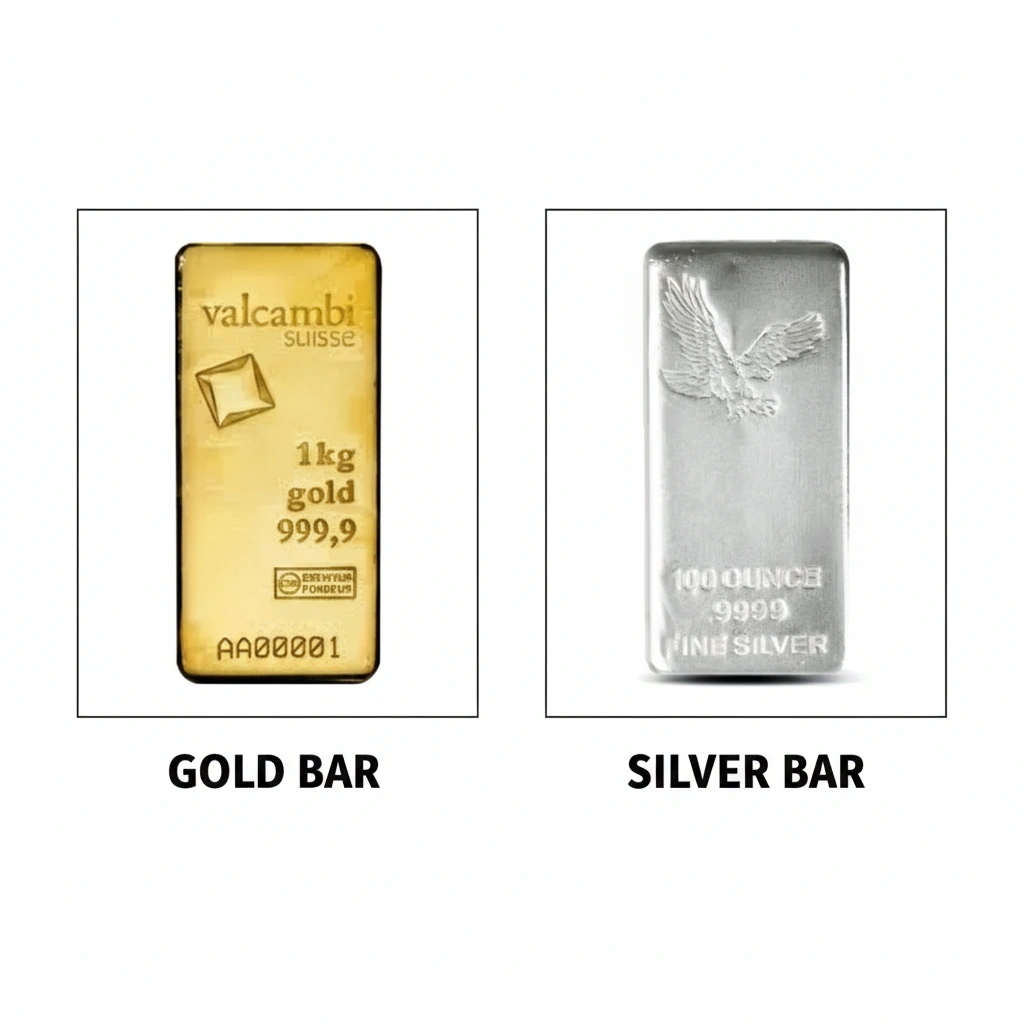
The core difference comes down to purpose. Bullion coins and bars are built to store the maximum amount of gold value per dollar spent, with minimal premiums over spot. Goldbacks trade some of that efficiency for divisibility, durability, and everyday usability — a tradeoff that makes sense for some buyers and not for others. If your goal is long-term wealth preservation with the lowest possible cost basis, coins and bars generally make more sense; if you want a small amount of genuinely spendable gold for practical or novelty reasons, Goldbacks fill a niche nothing else does.
Where to Buy or Sell Goldbacks in Las Vegas
Whether you’re curious about starting a small Goldback collection or you already have some and want an honest valuation, it helps to work with a dealer who understands both the bullion market and the fractional gold currency space. DEI Gold and Silver Coins carries Goldbacks and gold notes as part of our fractional gold offerings, alongside our broader selection of certified gold and silver coins, bars, and bullion — all backed by more than 50 years of experience and certifications from CAC, NGC, PCGS, GIA, and AGL.
Buy or Sell Gold & Silver Coins with Confidence
Work with a trusted Las Vegas coin dealer offering fair pricing, honest appraisals, and expert guidance every step of the way.
Curious About Goldbacks or Fractional Gold? Let’s Talk
Whether you’re interested in adding Goldbacks to a small, spendable gold stash, want to compare them against traditional bullion, or need to know what your existing Goldbacks are worth, our team can walk you through it in plain terms.
Call or text DEI Gold and Silver Coins at (702) 460-5188 to schedule a consultation. We’ll help you understand exactly how fractional gold currency fits — or doesn’t fit — into your goals, no pressure involved.
Frequently Asked Questions
No. Goldbacks are not federal legal tender. They’re a voluntary local currency that’s legally tradable under commercial law in states like Nevada, Utah, Wyoming, New Hampshire, and South Dakota, and acceptance depends on individual businesses choosing to take them.
It depends on the denomination. A “1” Goldback contains roughly 1/1000 of a troy ounce of 24-karat gold, and larger denominations (2, 5, 10, 25, 50) contain proportionally more, scaling with the current spot price of gold.
Goldbacks typically carry a higher premium over spot price than standard bullion coins or bars, making them less cost-efficient for pure gold accumulation. They’re better suited to buyers who want small, spendable, or collectible gold rather than the lowest possible cost per ounce.
Yes, though not every dealer buys them, since the market is smaller and less standardized than for widely recognized bullion coins. It’s worth confirming with a dealer beforehand and getting a clear valuation based on current gold spot price.
Nevada is one of a small number of states with a dedicated, state-specific Goldback design, giving Nevada residents and businesses a direct local connection to the product that most states don’t have.
Looking to buy or sell Goldbacks and other collectible gold notes? Browse our Gold Notes collection to discover investment-grade and collectible options available through DEI Gold & Silver Coins.