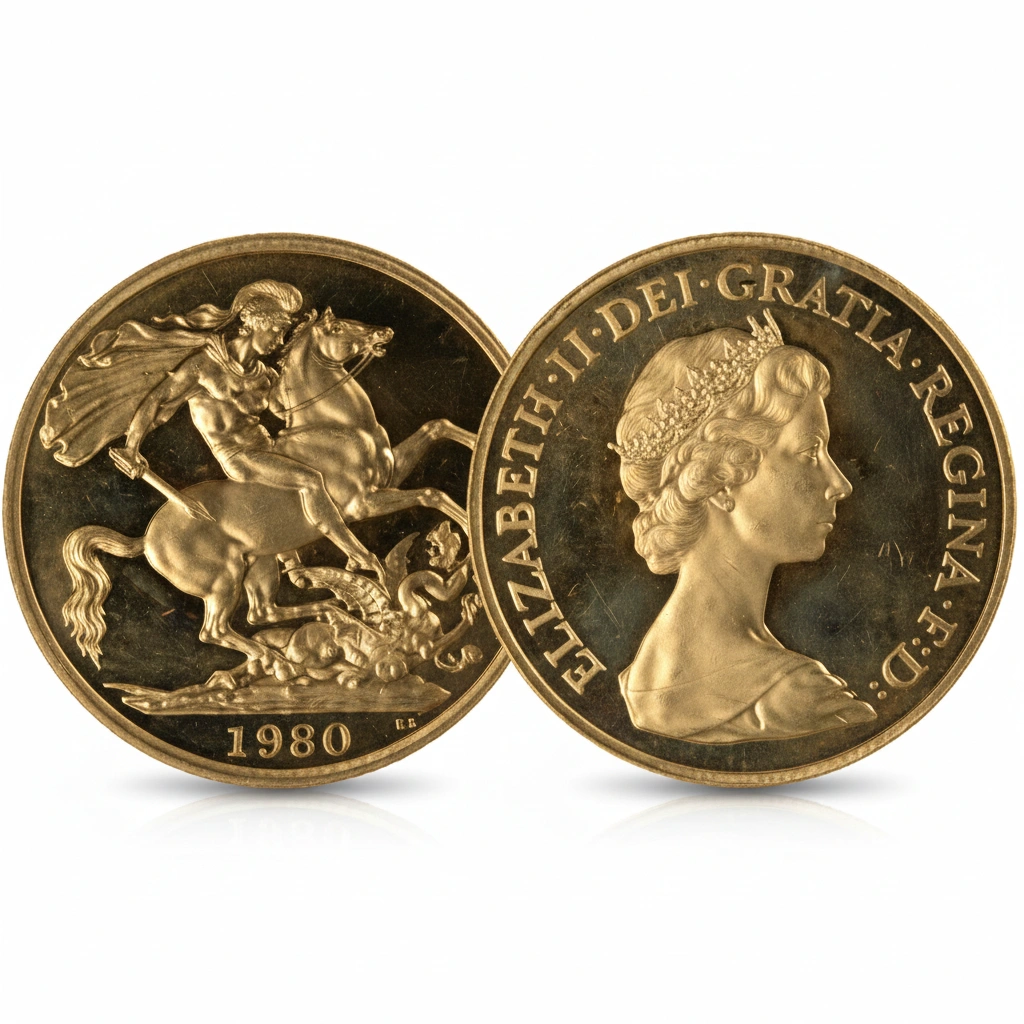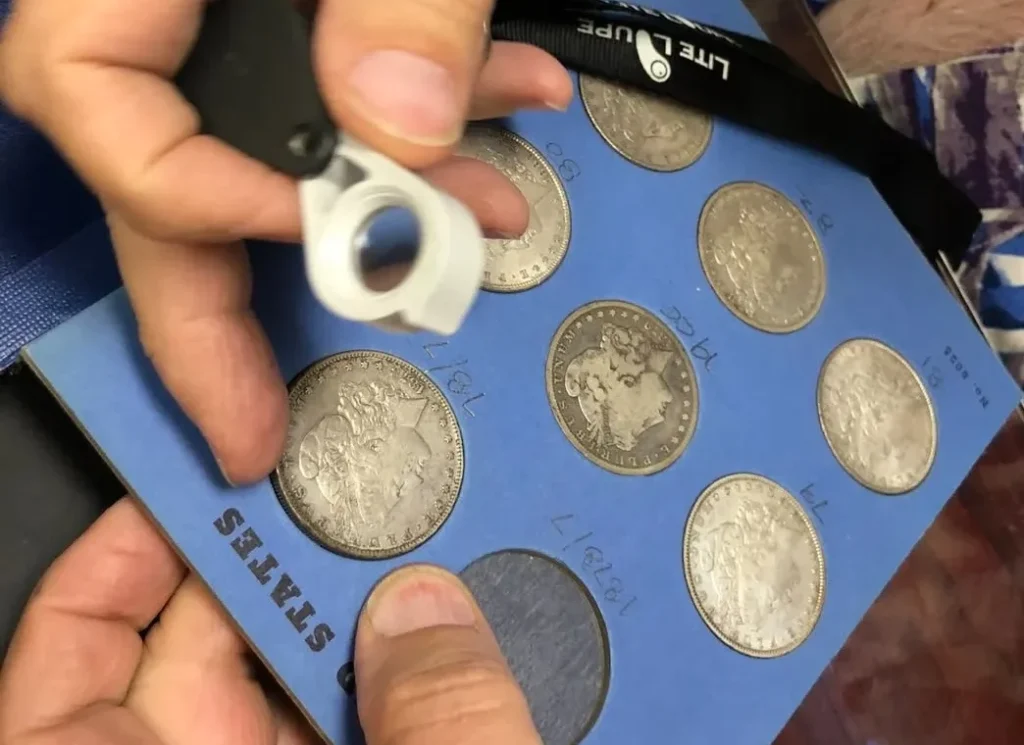
A customer walked into our showroom on Eastern Ave last spring with a coffee can full of Morgan dollars. Most were common Philadelphia strikes worth $35–$45 in circulated condition. Then she handed us one with a small “CC” stamped on the reverse — a Carson City mint mark — and the conversation changed completely. That same coin, same date, same grade, was worth three to four times more than the Philadelphia version sitting right next to it.
According to PCGS CoinFacts, the 1893-CC Morgan dollar in VF-30 trades above $550, while the 1893-P in the same grade can be found for under $60. That’s not a small difference — that’s an entirely different coin category, and the only visible distinction is a two-letter mint mark.
If you’ve ever wondered what a mint mark on a coin actually tells you, why collectors hunt for specific letters, and how to use that knowledge to buy smarter and sell at the right price, this post walks you through the complete picture: what each mark means, which ones drive value, where to find them on common US coins, and what DEI’s team looks at first when a coin comes across our counter.
gWhat Is a Mint Mark and What Does It Actually Tell You?
A mint mark is a small letter stamped on a US coin that identifies the specific Mint facility where the coin was struck, and that single letter is one of the first things experienced collectors and dealers examine when assessing a coin’s rarity and value.
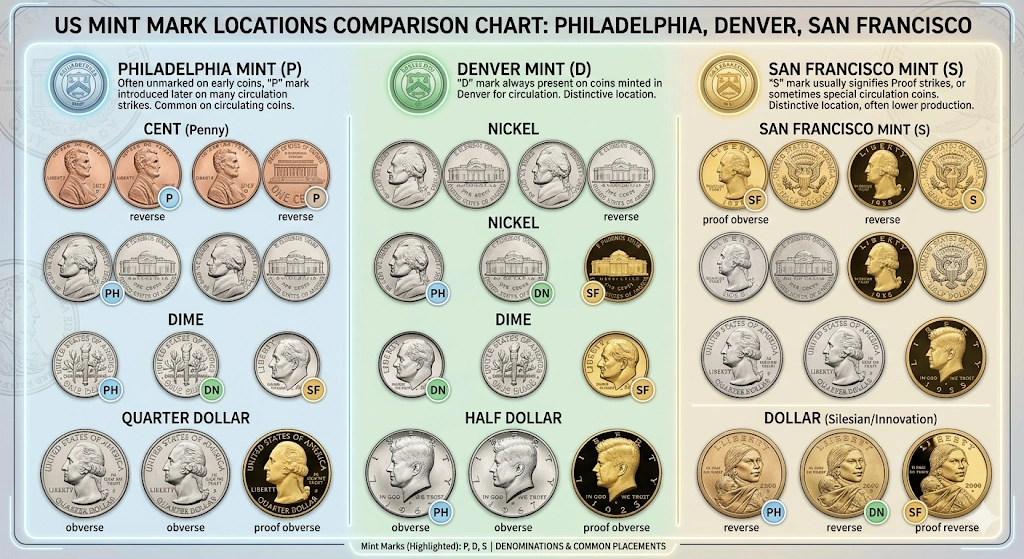
The United States has operated multiple Mint facilities since 1792, and each one used a different letter to mark its production. The marks you’ll encounter most often on US coins are:
- P — Philadelphia (or no mark on coins before 1980 and on Lincoln cents before 2017)
- D — Denver (opened 1906)
- S — San Francisco
- W — West Point
- CC — Carson City, Nevada (1870–1893)
- O — New Orleans (1838–1909)
Each facility had different production runs, different quality controls at different eras, and wildly different mintage numbers. The Denver Mint produced over 27 million Morgan dollars in 1921. The Carson City Mint, by contrast, never struck more than 2.2 million Morgans in a single year — and in several years struck fewer than 750,000. Fewer coins made means fewer survive, which means higher prices for the same date.
At DEI, when a coin comes across our counter, we verify the mint mark under magnification before discussing value with the seller. On some issues — particularly early American coinage — mint marks were hand-punched and can vary in position, which affects attribution and pricing. If you’re evaluating a coin on your own, always use at minimum a 5x loupe before drawing conclusions.
Where Are Mint Marks Located on US Coins?
Mint mark placement on US coins varies by denomination and era, and knowing exactly where to look prevents you from overlooking a coin’s most important identifier.
Here are the locations that matter most for common collector coins:
Morgan Silver Dollars (1878–1904, 1921): Reverse, just above the “DO” in “DOLLAR,” beneath the eagle’s tail feathers. This is where the “CC,” “O,” “S,” or “D” appears. Philadelphia-minted Morgans have no mint mark in this era.
Peace Silver Dollars (1921–1935): Reverse, at the left base of the eagle, just above the word “DOLLAR.” The “S,” “D,” and “P” (no mark on Philly) all appear here.
Lincoln Cents (1909–present): Obverse, below the date on the right side. Pre-1909 cents had no mint mark. The “S” and “D” marks on early Lincoln cents — especially 1909-S VDB — are the most valuable in the series.
Jefferson Nickels (1938–present): Pre-1965, look on the reverse right of Monticello. Wartime nickels (1942–1945) stamped in silver carry a large mint mark above the dome.
Roosevelt and Mercury Dimes: Reverse, left of the torch base (Mercury); above the date area on the obverse (Roosevelt, post-1968).
Washington Quarters: Reverse, right of the eagle’s tail (pre-1968); then moved to obverse above the date.
At DEI, the Morgan dollar reverse is probably the spot we check most often — followed immediately by early Lincoln cent obverses, where a misread or missing “S” can mean the difference between a $3 coin and a $1,000+ example.
How Mint Mark Location History Changed Coin Values Forever
The US Mint moved mint marks from the reverse to the obverse on most coins starting in 1968, a decision that permanently separates two eras of American coinage and affects how you authenticate and value coins today.
Before 1968, mint marks were applied to coin dies by hand, individually. This meant that the position, size, and even the number of mint marks could vary — and on rare occasions, die engravers made errors. The most dramatic of these is the 1942/41 overdate Mercury dime, where a “P” (no mark, Philadelphia) die was repunched over a different year die, creating a visible overdate detectable under magnification.
The hand-punching era also produced repunched mint marks (RPMs) — visible doublings of the mint mark letter when the punch slipped or was re-applied. RPMs on key dates like the 1888-O Morgan dollar (“Hot Lips” variety) command significant premiums. According to PCGS CoinFacts, an 1888-O RPM in MS-63 has traded above $5,000.
After 1968, mint marks were added directly to the master hub, which eliminated RPMs and standardized their placement. This makes pre-1968 coins with visible RPMs or PMMs (punched mint marks) a distinct sub-category that sophisticated collectors actively seek.
📌 DEI Market Observation: In our experience buying coins from estate sales and walk-in sellers across Southern Nevada, the sellers who have done research on their specific mint mark varieties — not just dates — consistently realize 20–40% higher prices on Morgan and Peace dollars than those who know only the date. The variety matters.
Which Mint Marks Are Worth the Most on US Coins?
Certain mint marks dramatically increase a coin’s value because of historically low mintage numbers, and the Carson City “CC” mark is the single most premium-commanding letter in American numismatics for 19th-century silver.
📊 Mint Mark Value Comparison: Morgan Silver Dollars — DEI Quick Reference
| Date | Philadelphia (no mark) | Denver (D) | San Francisco (S) | Carson City (CC) |
|---|---|---|---|---|
| 1878 | $45–$65 (VF) | N/A | $50–$80 (VF) | $200–$350 (VF) |
| 1880 | $40–$55 (VF) | N/A | $45–$65 (VF) | $175–$300 (VF) |
| 1893 | $45–$65 (VF) | N/A | $3,000+ (VF) | $500–$750 (VF) |
| 1895 | Proof only | N/A | $25,000+ (AU) | N/A |
| 1921 | $35–$45 (VF) | $35–$50 (VF) | $38–$55 (VF) | N/A |
Source: PCGS CoinFacts, current price guide (2026). Values are approximate market ranges for circulated grades.
The Carson City Mint operated only from 1870 to 1893, producing coins in relatively small batches. Many of those coins entered circulation in Nevada’s booming silver economy and were spent, lost, or melted. The survivors — especially in higher grades — are genuinely scarce.
The San Francisco “S” mark is the second-most watched. On the 1893-S Morgan, the “S” mint mark transforms what looks like a common date into one of the most valuable US coins in existence. A 1893-S Morgan in VF-20 typically sells above $3,000; in MS-65, prices at Heritage Auctions have reached six figures.
How to Read a Mint Mark on a Coin Without Making Mistakes
To read a mint mark on a coin correctly, examine it under a 5x–10x loupe in good lighting, compare what you see to verified reference images on PCGS CoinFacts or NGC’s registry, and never clean, rub, or disturb the coin surface before examination.
This matters more than most beginners realize. Here’s what can go wrong:
Filled mint marks. Die wear fills the interior of letters with debris or metal flow, making an “S” look like a blob or a “D” look incomplete. A filled “S” on a key-date coin is still that key date — but inexperienced buyers sometimes dismiss the coin as common or damaged. We’ve bought coins at well below market from sellers who didn’t recognize a filled mint mark.
Altered mint marks. On rare, high-value dates, unscrupulous sellers have been known to alter a common mint mark into a rare one — particularly adding or shaving letters on coins like the 1916-D Mercury dime (where a “P” becomes a “D”) or the 1909-S VDB Lincoln cent. Always buy key-date coins in PCGS or NGC holders, where the authentication has already been done.
No mint mark ≠ worthless. On some series — especially early Lincoln cents — a Philadelphia coin with no mint mark is the rare one. The 1922 Lincoln cent is a case where a weakly struck “D” sometimes disappeared from the die entirely, creating the famous 1922 Plain (No D) variety, which in MS-63 trades above $7,000 per PCGS CoinFacts.
🪙 DEI Dealer Observation When customers bring us coins to evaluate, we see the “filled S” misread probably twice a week — someone convinced they have a common coin when the mint mark is simply obscured by die wear. We also see the reverse: people convinced they have a rare “S” when the mark they’re looking at is a die scratch or post-mint damage. Neither mistake is obvious to the naked eye, which is exactly why authentication at a PCGS- or NGC-certified dealer matters before buying or selling any key-date coin. At DEI, our first step on any suspect coin is magnified examination under a bright directional light source, followed by comparison to PCGS CoinFacts attribution images. If the coin is potentially significant, we recommend third-party grading before any transaction.
Why the CC Mint Mark Is Nevada’s Most Valuable Numismatic Legacy
The Carson City Mint mark “CC” has special significance for Nevada collectors because the facility operated at the literal source of America’s silver bonanza and ceased production in 1893, making every CC-marked coin a finite historical artifact from a 23-year window that can never be repeated.
The Carson City Mint was established in 1870 to process silver from Nevada’s Comstock Lode — the largest silver discovery in US history. At its peak, the facility struck coins continuously, but its total lifetime output was a fraction of what Philadelphia or San Francisco produced. When the Mint closed in 1893 due to declining silver prices and the repeal of the Sherman Silver Purchase Act, that was the end. No more CC coins — ever.
Today, the Carson City Mint building is the Nevada State Museum, located downtown on Carson Street. The original coin press — the “Morgan Press” — is still on display and is demonstrated for visitors. For Las Vegas and Henderson collectors, this isn’t just numismatic history; it’s Nevada’s direct connection to the coin in your hand.
For Southern Nevada residents evaluating inherited collections or purchasing at auction, CC-mint coins represent the strongest regional provenance story in American coinage. At DEI, we see strong demand from local collectors specifically seeking CC Morgans — both for their numismatic value and for the Nevada connection.
How to Buy, Sell, or Get a Mint Mark Coin Appraised at DEI in Las Vegas
If you have a coin with a potentially valuable mint mark, the correct sequence is: don’t clean it, don’t polish it, don’t store it loose with other coins — and bring it to a certified dealer for a free appraisal before making any decisions.
Cleaning is the single most destructive action a coin owner can take. Even a light rinse removes the original mint luster that graders call “skin,” and a coin that grades MS-65 raw becomes a “Details — Cleaned” coin at PCGS or NGC — which trades at a massive discount and is unsellable to serious collectors. We see this mistake at our counter every week.
If your coin has a mint mark that looks significant — a “CC,” an “S” on a key date, or a mark that appears doubled or repunched — the correct path is:
- Place it in a 2×2 cardboard flip or non-PVC plastic holder
- Bring it to a certified dealer (PCGS, NGC, CAC-affiliated) for evaluation
- If the coin has significant value, submit it for third-party grading through PCGS or NGC
- DEI offers free same-day appraisals and can guide CAC submission for coins that qualify
DEI’s free appraisal service is available at our showroom at 8985 S. Eastern Ave, Suite 160, Las Vegas — no appointment required. We regularly assist with estate evaluations where multiple coins need identification and mint mark verification before sale.
Conclusion
Understanding the mint mark on a coin is one of the fastest ways to turn a guessing game into a confident, informed decision — whether you’re buying, selling, or evaluating an inherited collection.
Here are your four actionable takeaways:
First, always identify the mint mark before assigning any value — the letter tells you where the coin was made, and that location directly determines scarcity. Second, know where to look: Morgans carry the mark above “DOLLAR” on the reverse; Lincoln cents carry it below the date on the obverse; other denominations have their own specific locations by era. Third, never clean a coin with a potentially valuable mint mark — “Details — Cleaned” designation at PCGS or NGC eliminates most of the premium. Fourth, key mint marks like “CC” and certain “S” issues trade for multiples of their face-value peers on the same date, and that gap only grows with grade.
FAQ SECTION
1. What is a mint mark on a coin?
A mint mark on a coin is a small letter stamped into the coin’s surface that identifies which US Mint facility produced it. Common marks include “P” for Philadelphia, “D” for Denver, “S” for San Francisco, “W” for West Point, and the historic “CC” for Carson City. The mint mark directly affects collector value and scarcity.
2. Does a mint mark change a coin’s value?
Yes — a mint mark can change a coin’s value by hundreds or thousands of dollars on the same date and grade. A 1893-S Morgan dollar in VF-20 is worth over $3,000, while the same date from Philadelphia trades under $65. Low-mintage mint marks like “CC” and “S” on key dates consistently command the highest premiums, according to PCGS CoinFacts.
3. Where is the mint mark located on a Morgan silver dollar?
The mint mark on a Morgan silver dollar is on the reverse of the coin, just above the word “DOLLAR,” beneath the eagle’s tail feathers. Look for a small “S,” “D,” “O,” or “CC” in that location. Philadelphia Morgans have no mint mark in that position. Always examine under a 5x loupe for accurate identification.
4. What does “CC” mean on a coin?
“CC” on a coin means it was struck at the Carson City Mint in Nevada, which operated from 1870 to 1893. Carson City coins are among the most collected in US numismatics because the facility had low mintage numbers and permanently closed in 1893. The “CC” mint mark is especially valuable on Morgan silver dollars and Seated Liberty coinage.
5. How do I get a coin with a rare mint mark appraised?
To get a coin with a rare mint mark appraised, bring it to a PCGS- or NGC-affiliated coin dealer without cleaning or altering it first. DEI Gold & Silver Coins in Las Vegas offers free same-day appraisals at 8985 S. Eastern Ave, Suite 160 — no appointment needed. For high-value coins, third-party grading through PCGS or NGC is recommended before any sale.
6. Can a mint mark be faked or altered on a valuable coin?
Yes — mint mark alteration is a known form of coin fraud, particularly on high-value issues like the 1916-D Mercury dime and the 1909-S VDB Lincoln cent, where adding or reshaping a letter can create a fake “rare” date. The only reliable protection is purchasing key-date coins in authenticated PCGS or NGC holders. Never buy a raw key-date coin without verification from a certified dealer.