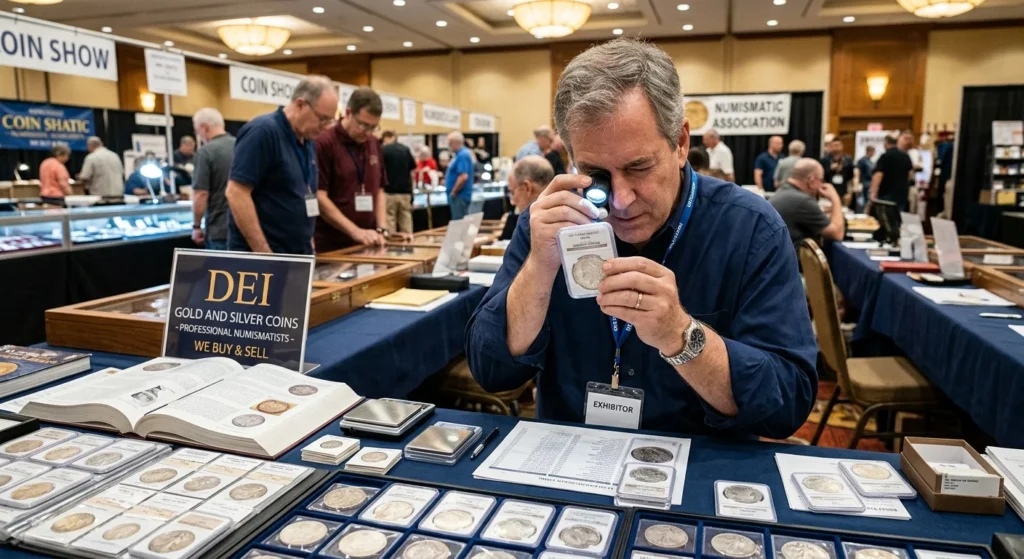
A coin show appraisal and a private appraisal can produce very different experiences for the same box of coins. At a show, you carry your coins to a crowded room, wait for a dealer to look up, and get an answer in a few minutes. In a private consultation, the coins come out on a desk, the door closes, and someone spends real time with each piece.
Neither approach is better in every case. The right choice depends on what you own, what you want to learn, and whether you intend to sell. This article explains what each format can and cannot do, so you can match the setting to your collection.
What a Free Show-Floor Appraisal Actually Is
A free appraisal at a coin show is usually a verbal opinion from a dealer at a bourse table, sometimes with an offer attached. It is fast and informal. The dealer looks at the coin, judges the date, mintmark and condition, and tells you whether it has collector interest or is mostly worth its metal content.
That speed is useful. Many people bring a small group of coins to a show mainly to find out whether anything is worth pursuing. If a dealer glances at your inherited dimes and says they are common circulated silver, you have learned something worth knowing in about ninety seconds.
Shows also make comparison easy. In Las Vegas, one example is the Vegas National Show, produced by CK Shows at the Tuscany Suites and Casino. DEI Gold and Silver Coins covered the October 2026 edition of the Vegas National Show, which is listed for October 29–31. A room with many dealers lets you hear more than one opinion in an afternoon and see how different tables handle the same kind of coin.
The trade-offs come from the setting itself:
- Time is short. A dealer at a busy table may have several customers waiting.
- Privacy is limited. Others can see and hear what you are bringing.
- Handling is quick. A fast look can miss problems that need magnification, good lighting or a comparison coin.
- The opinion is informal. A verbal estimate at a table is not a written valuation.
What a Private Consultation Adds
A private consultation changes the pace. There is time to examine each coin under proper light, to discuss surface preservation and eye appeal, and to explain why two coins that look alike to a beginner are priced very differently.
That matters because the details that drive collector value are often subtle. Luster is the way a coin’s original mint surface reflects light. Strike describes how fully the design was impressed. Surface preservation covers marks, wear and any cleaning or damage. A coin that has been cleaned, polished or altered can look attractive at arm’s length and still be worth far less to a collector. Spotting that usually takes patience, not a quick glance.
A private setting also suits collections that are hard to assess in passing. Consider a real historical example: the 1916-D Mercury dime, a key date in the series with a recorded mintage of 264,000. Coins like this attract alterations and counterfeits precisely because the date and mintmark carry so much of the value. A responsible evaluation of a coin like that needs time, magnification and often third-party certification, none of which fits a two-minute exchange at a bourse table.
Privacy is the other real advantage. Coins can represent an estate, a retirement asset or a family keepsake. Many people would rather discuss that behind a closed door than across a crowded table.
Coin Show Appraisal vs. Private Appraisal: A Side-by-Side View
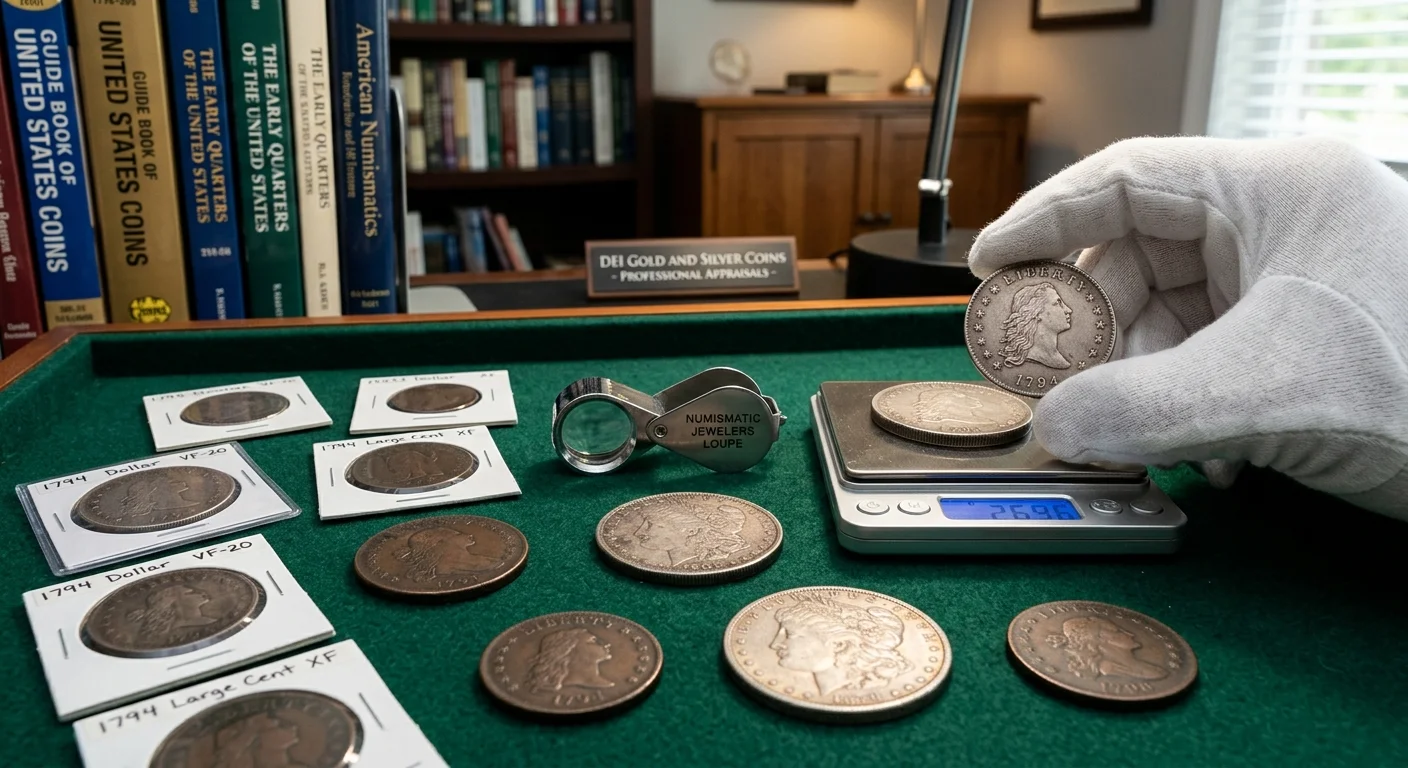
The main differences are easiest to see together:
| Show-floor appraisal | Private consultation | |
|---|---|---|
| Speed | Minutes per item | As long as the collection needs |
| Depth | Quick read on date, mintmark, condition | Close examination, testing and discussion |
| Privacy | Public, in a busy room | Confidential, one-on-one |
| Best for | Triage, curiosity, price comparison | Larger, valuable or sensitive collections |
| Comparison | Many dealers in one place | One specialist’s full attention |
| Output | Usually a verbal opinion | Explanation of value, with an offer if you want one |
The two settings answer different questions. A show helps you learn quickly whether something is worth a closer look. A private session helps you understand what you have and what it is worth.
When the Show Floor Makes Sense
The show-floor route works well in a few situations.
You have a few coins and modest expectations. If you found a handful of common silver dollars in a drawer, a quick opinion may be all you need.
You want to compare prices. Bullion premiums and pricing on popular series can vary from table to table. Walking the floor gives you a feel for the range.
You are still learning. Standing at a table while a dealer explains, coin in hand, why one example carries a premium is real hobby education. DEI Gold and Silver Coins’ guide to numismatic terms is a useful primer before your first visit.
You are already at the show. If you are there anyway, asking a few quick questions costs nothing.
When a Private Consultation Is the Better Fit
A private setting is usually the better choice in these cases:
- An estate or inherited collection. Large groups of coins, mixed with paper money, jewelry and bullion, are hard to review in passing.
- Certified or high-grade coins. Coins in PCGS or NGC holders, or coins that may be worth certifying, deserve a careful look at grade, eye appeal and market demand.
- Anything you may sell. If you are deciding whether to sell, you want time to ask questions without feeling rushed.
- Sensitive situations. Privacy matters when the collection belongs to a family member who has passed away or represents a significant asset.
- Mixed collections. Some coins may carry numismatic premiums while others are worth roughly their metal content. Sorting them takes time. DEI Gold and Silver Coins explains that difference in its article on scrap gold vs. collectible coins.
For Las Vegas residents, a same-day private coin appraisal in Las Vegas is often practical because the coins do not have to wait for the next show. Shows in the area take place at set times of the year, while a private appointment can happen when you need it.
A Hypothetical Example
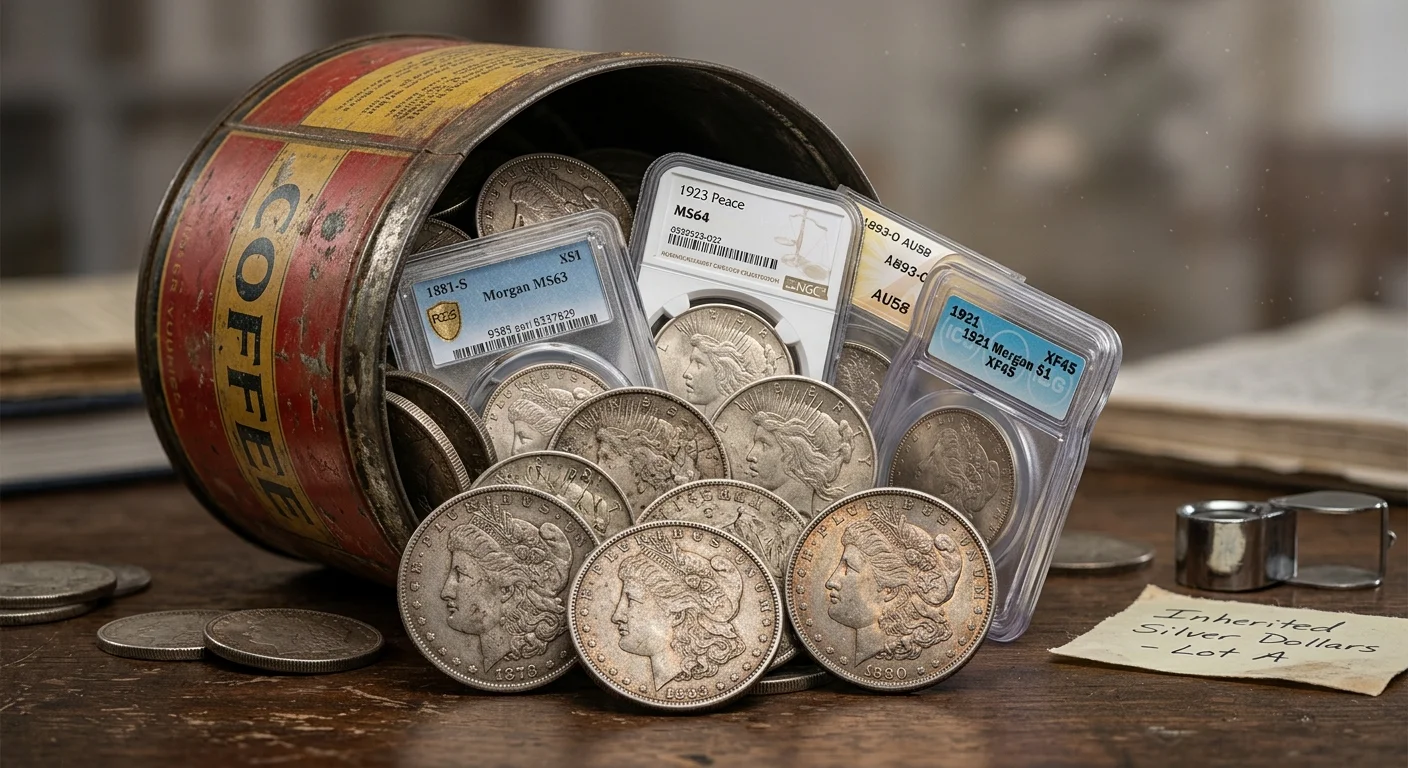
This is a hypothetical scenario, not a real transaction.
Imagine someone inherits a coffee can of old silver dollars. The person walks the floor of a coin show and gets quick opinions on a few coins. One dealer says most of them are common. Another notices one coin that might be more interesting and suggests a closer look.
That is exactly what a show does well: it surfaces a possibility. The next step, deciding whether that coin is a scarcer variety, whether it has been cleaned, and what condition it is really in, usually calls for a private session with time and proper tools. Neither step replaces the other. In practice, many collectors use both.
What to Ask No Matter Where You Go
Whichever setting you choose, a few habits protect you.
Do not clean your coins. Cleaning, even gentle cleaning, can strip original surfaces and lower collector value. Bring coins exactly as you found them.
Ask how the value is reached. A good dealer will explain whether a coin’s value comes mostly from its silver or gold content or from collector demand, and why.
Understand the difference between an opinion and a written appraisal. A dealer’s estimate or offer is not the same as a formal written appraisal for insurance or estate purposes. Those documents follow their own requirements and may carry a fee. If you need one, ask up front. For estate or tax questions, a qualified tax professional or attorney is the right person to consult.
Do not treat one number as final. Rare coin prices depend on rarity, condition, certification, eye appeal, provenance, demand and market conditions. A quick opinion is a starting point.
Bring anything that came with the coins. Old envelopes, receipts and family notes can add useful context.
How DEI Gold and Silver Coins Approaches Appraisals
DEI Gold and Silver Coins is a Las Vegas coin dealer that buys, sells and appraises gold coins, silver coins, rare coins, bullion, paper money and fine jewelry. The company describes its appraisals as free and confidential, with no pressure to sell, and it offers same-day private consultations for coin collections. Its appraisal page outlines the process, which covers an initial conversation, inspection with a loupe, testing and measurement, comparison against current market conditions, and a clear explanation of value.
If you decide to sell after the consultation, you can sell your gold and silver coins there, but you are under no obligation. For appointments, call or text 702-460-5188.
Choosing the Right Setting
If you have a handful of coins and want a quick reaction, the show floor is a fine place to start. If you have an estate, a certified group, or coins you are seriously thinking about selling, a private consultation gives you the time and privacy that kind of decision deserves.
Many collectors use both: the show to get oriented and compare, then a quiet appointment to go deep on the coins that matter.
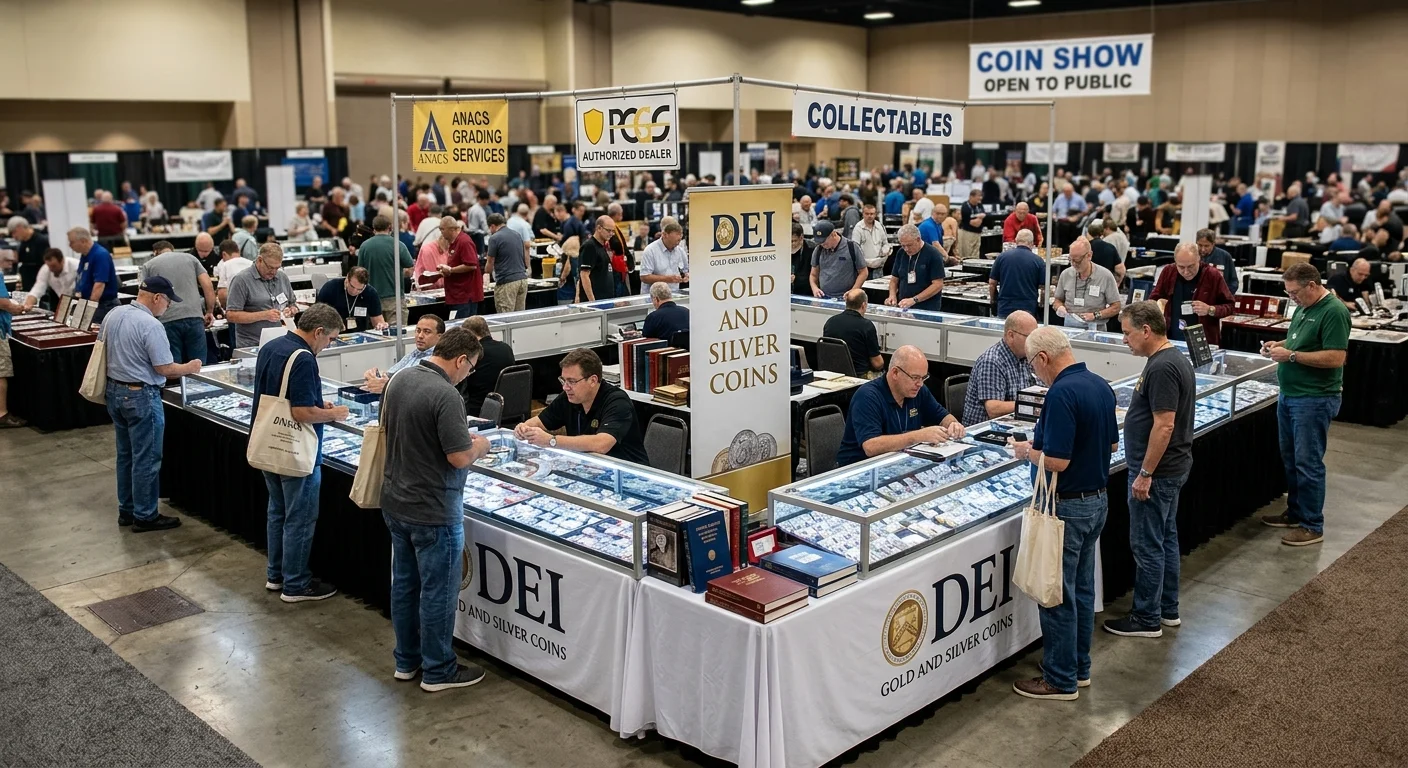
DEI Gold and Silver Coins is the official sponsor of these shows.
Held and produced by CK Shows, Las Vegas, NV.
By DEI Gold and Silver Coins | Articles by DEI Gold and Silver Coins