If you’ve checked the gold or silver spot price online, then gotten a buyback offer that’s lower, you’re not being shortchanged — you’re seeing how the market actually works. Many first-time sellers ask why don’t I get spot price for gold when the number on the screen and the number on the offer sheet never quite match. The short answer is that spot price is a wholesale benchmark, not a retail transaction price. This guide explains the real difference between gold spot price vs sell price, what determines how close to spot your offer will land, and how to know if a payout is fair.
Spot Price Is a Benchmark, Not a Selling Price
The spot price you see quoted by Kitco, COMEX, or a live price widget reflects the real-time wholesale price for a large, standardized quantity of raw metal — typically a 400-ounce gold bar or a 1,000-ounce silver bar traded between major financial institutions. It’s a reference number, not an offer to buy or sell any specific coin, bar, or piece of jewelry from you.
No dealer, anywhere, buys or sells retail-sized products at exactly that number. When you bought your coin or bar, you almost certainly paid spot plus a premium. When you sell it back, you’ll typically receive spot minus a margin. That two-sided gap — buy above spot, sell below spot — is standard across the entire precious metals industry, not something specific to one dealer.
It helps to think of spot price the way you’d think of a wholesale commodity index. A grocery store doesn’t sell you wheat at the commodities-market price for wheat; it sells you bread, which has been milled, baked, packaged, and marked up along the way. Gold and silver work similarly — spot is the raw ingredient price, and every retail coin or bar carries the cost of getting it into a form you can actually buy or sell.
What Actually Determines Your Payout
Several factors combine to set the actual price a dealer offers, and understanding them helps explain the gap between spot price and sell price:
- Dealer margin: Every dealer needs a spread between what they pay you and what they can resell the item for, to cover overhead, staffing, testing, and the risk that metal prices move before they resell your item.
- Refining and melting costs: If an item isn’t easily resold as-is (scrap jewelry, damaged coins), the dealer factors in what it will cost to refine it back into pure metal.
- Testing and verification: Authenticating gold or silver — checking purity, weight, and condition — takes time and equipment, and that cost is built into the offer.
- Product liquidity: Widely recognized bullion coins are easy to resell quickly, so dealers can offer closer to spot. Less common items take longer to move, which widens the margin.
- Current demand: During high-demand periods, dealers competing for inventory may offer closer to spot. In slower markets, offers tend to sit further below it.
Gold Spot Price vs Sell Price: A Side-by-Side Example
Here’s a simplified example showing how spot, retail purchase price, and sell-back offer typically relate for a common bullion coin:
Stage | Approximate Price | What It Reflects |
Spot price (benchmark) | Baseline wholesale price per ounce | Raw metal value only, no product costs |
What you’d pay to buy | Spot + retail premium | Minting, distribution, dealer margin on the buy side |
What you’re offered to sell | Spot − dealer margin | Testing, resale risk, dealer margin on the sell side |
For a widely traded bullion coin like an American Gold Eagle, the round-trip gap between buy and sell price is often in the low single digits as a percentage of spot, reflecting the coin’s strong liquidity. For less liquid or harder-to-verify items, that gap widens considerably — which is why two people selling different items on the same day, at the same spot price, can walk away with noticeably different percentages of spot.
Not All Gold and Silver Are Priced the Same Way
The type of item you’re selling has a major effect on how close to spot your offer will be.
Bullion Coins and Bars
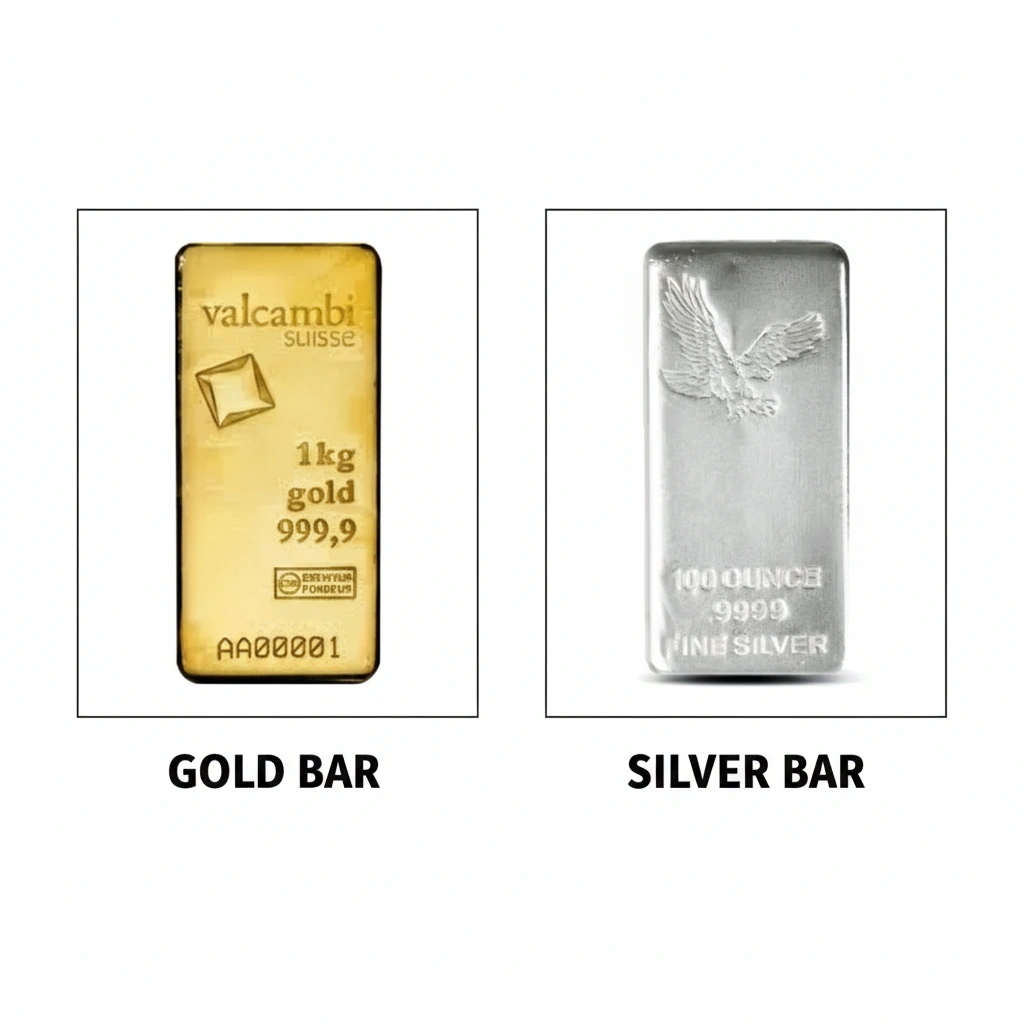
Government-minted bullion — American Gold Eagles, Canadian Maple Leafs, generic gold or silver bars — is the easiest category to price and resell. These items typically bring offers closer to spot because dealers already know exactly what they’re worth and can move them quickly.
Junk Silver and Pre-1965 Coins
90%, 40%, and 35% silver coins are priced based on their silver content relative to face value, not their spot-per-ounce rate directly. Dealers calculate melt value using the coin’s silver weight, then apply a smaller margin since these coins are simple to verify and in steady demand. Because the silver content per dollar of face value is a known, fixed quantity, junk silver is one of the more transparent categories to price — you can generally estimate melt value yourself before you ever walk in.
Numismatic and Certified Coins
Coins with collector value — rare dates, low mintages, or pieces graded MS-65 or higher by NGC or PCGS — may sell for well above melt value, but that premium is separate from the spot-price conversation entirely. A dealer isn’t paying you spot-minus-margin on these; they’re pricing the coin’s numismatic value, which depends on grade, rarity, and current collector demand.
Scrap and Estate Jewelry
Jewelry is rarely pure gold or silver — most pieces are 10K, 14K, or 18K, mixed with other metals. Dealers test purity first, then price based on the actual fine-metal content, minus a margin that covers refining. This is often the category where sellers are most surprised by how far the offer sits below spot, simply because spot price assumes 24K purity and most jewelry isn’t close to that.
How Grading and Certification Affect Your Payout
Certification changes the pricing conversation entirely for numismatic pieces. An NGC- or PCGS-graded coin comes with a verified grade on a widely recognized 1–70 scale, which removes guesswork for the buyer and can justify a price well above melt value for desirable grades. Uncertified coins of the same type are priced more conservatively, since the dealer has to account for the uncertainty of condition and authenticity until it’s verified in-house. If you’re selling a coin you believe has collector value beyond its metal content, having it graded — or at least appraised by a certified numismatist — before selling can make a real difference in your payout.
Market Conditions That Widen or Narrow the Spread
The gap between spot and your offer isn’t fixed — it shifts with market conditions. During periods of high volatility, dealers widen spreads slightly to protect themselves against the metal’s price moving before they can resell. During calm, high-demand periods, competition among dealers for inventory can push offers closer to spot. Seasonal factors matter too: in a market like Las Vegas, tourist traffic and convention season can temporarily shift local demand and pricing for walk-in sellers.
Timing your sale around these swings is rarely worth the effort for a small holding, but it’s useful context if you’re deciding whether to sell now or wait. A dealer who explains why their spread is wider on a given day — rather than just quoting a number — is generally one you can trust to be pricing fairly rather than opportunistically.
How to Know You’re Getting a Fair Offer
- Check the live spot price yourself right before you sell, using a source like Kitco or COMEX, so you have a real-time benchmark to compare against.
- Ask the dealer to explain their offer, item by item, including how they calculated melt value or applied a numismatic premium.
- Get more than one appraisal for anything with potential collector value, since numismatic pricing can vary between dealers.
- Bring documentation — certification slabs, purchase receipts, or prior appraisals — since verified information reduces the dealer’s uncertainty and can improve your offer.
- Compare percentage of spot, not just dollar amount, especially across different item types, so you’re judging the offer on the same basis.
What to Bring When You Sell
A smooth, well-priced transaction usually starts with a little preparation:
- Any certification paperwork (NGC or PCGS slabs, grading reports)
- Original purchase receipts, if you have them
- Government-issued ID, since dealers are required to verify seller identity
- A general idea of current spot price, checked shortly before your appointment
- Separated categories — bullion, junk silver, numismatic coins, and jewelry priced differently and benefit from being reviewed separatel
Conclusion
The gap between what you see quoted online and what you’re offered at the counter isn’t a mystery or a markup trick — it reflects the real costs and risks involved in turning your gold or silver into cash. Understanding how spot price, product type, and grading interact puts you in a much stronger position to judge any offer you receive. When you’re ready to sell, DEI Gold and Silver Coins offers transparent, certified appraisals backed by over 50 years of combined numismatic experience, so you always know exactly how your offer was calculated.
Frequently Asked Questions
Spot price is a wholesale benchmark for large, standardized quantities of raw metal, not a retail transaction price. Dealers offer spot minus a margin to cover testing, resale risk, and operating costs, which is standard practice across the precious metals industry, not a sign of an unfair deal.
It varies by product. Highly liquid bullion coins typically see a narrower gap, while jewelry, damaged items, or less common products see a wider one due to refining costs and resale uncertainty. Comparing offers as a percentage of spot is the clearest way to judge fairness.
Yes, the same spot-minus-margin principle applies, though silver premiums and spreads tend to run proportionally higher than gold’s, since silver’s lower per-ounce value means fixed handling and testing costs make up a larger share of the price.
For numismatic coins, yes — a verified NGC or PCGS grade can push the price well above melt value if the coin has collector demand. For plain bullion, grading doesn’t typically change the offer much since the coin’s value is already tied closely to its metal content.
Dealers set their own margins based on overhead, current inventory needs, and how quickly they expect to resell an item. Getting more than one offer, especially for numismatic or jewelry pieces, is the most reliable way to see where the fair-market range actually sits.