If you’re weighing a gold IRA vs physical gold you already own outright, you’re really asking two different questions: where should this metal live, and who should control it? Both paths put real gold or silver in your hands (or in a vault on your behalf), but they follow very different rules for taxes, storage, and access to your metal. This guide breaks down how each option works, walks through the gold IRA pros and cons compared with buying and holding metal yourself, and helps you match the right structure to your retirement goals.
What Does “Physical Gold” Mean Outside a Retirement Account?
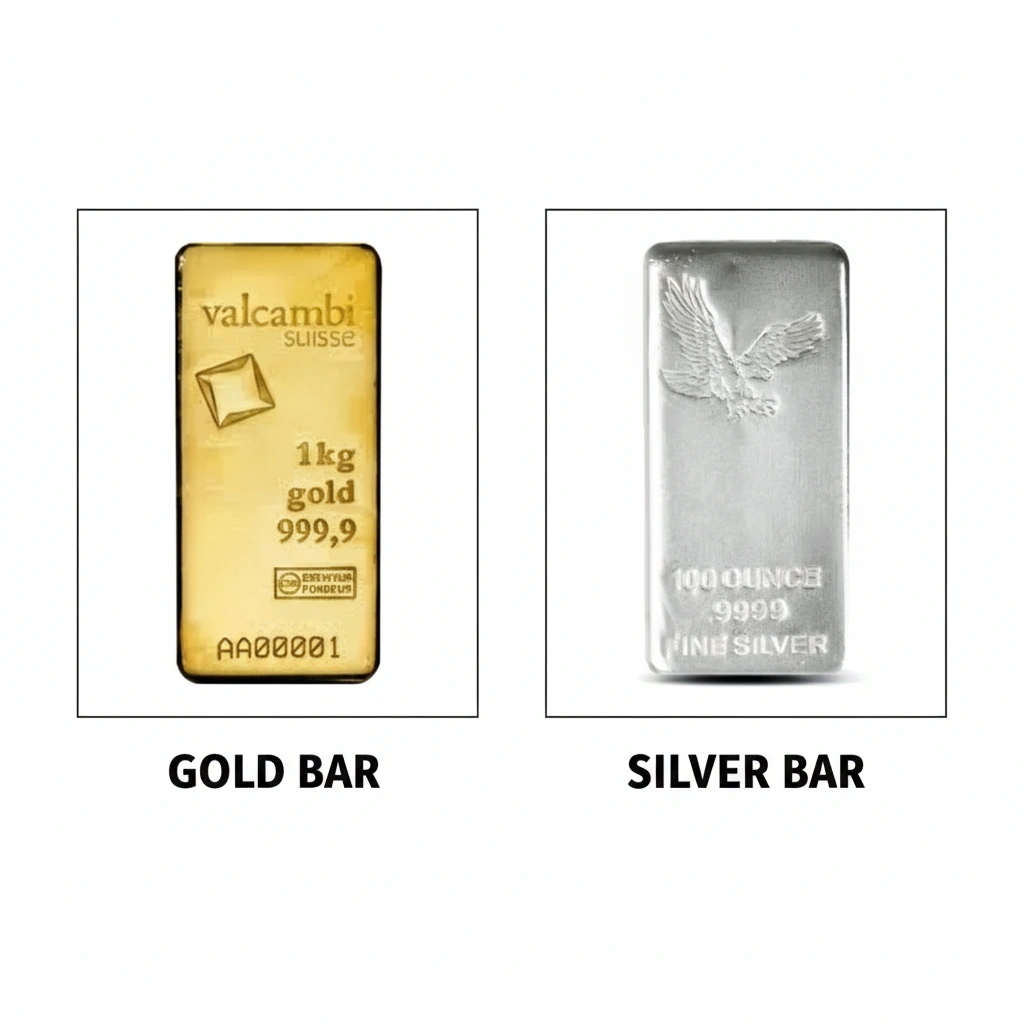
Physical gold held outside a retirement account is metal you buy with after-tax dollars and take direct possession of, or store yourself in a safe, a bank box, or a private vault. It can be bullion coins like American Gold Eagles, gold bars, or numismatic coins with collector value. There’s no custodian, no IRS storage rule, and no paperwork beyond your purchase receipt. You decide where it sits, when you sell it, and to whom.
This is the traditional way people have owned gold for generations: buy it, hold it, sell it when you choose. It sits outside your retirement accounts entirely, which means it isn’t subject to IRA contribution limits or required minimum distribution (RMD) rules.
What Is a Gold IRA, in Brief?
A gold IRA is a self-directed individual retirement account that holds IRS-approved physical gold, silver, platinum, or palladium instead of stocks, bonds, or mutual funds. It follows the same contribution limits, tax treatment, and age-based withdrawal rules as a standard IRA — the difference is the asset inside the account. A custodian manages the paperwork and compliance, and the metal itself must be stored at an IRS-approved depository rather than at home. If you want a deeper walkthrough of account setup and custodian selection, our earlier guide on how a gold IRA works covers that ground in detail.
Gold IRA vs Physical Gold: The Core Differences
The decision usually comes down to five factors: tax treatment, who holds the metal, how easily you can sell, what it costs to maintain, and how much flexibility you have day to day.
Factor | Gold IRA | Physical Gold (Outside IRA) |
Tax treatment | Tax-deferred (Traditional) or tax-free growth (Roth); ordinary income tax on Traditional withdrawals | No tax advantage; capital gains tax applies when you sell |
Who holds the metal | IRS-approved depository, via your custodian | You — at home, a bank box, or a private vault |
Eligible products | Only IRS-approved coins and bars meeting minimum purity (generally .995+ for gold) | Any coin, bar, or round, including numismatic and collectible pieces |
Access to the metal | You don’t physically touch it while it’s in the IRA | Immediate — it’s already yours |
Selling process | Sell through your custodian, proceeds go back into the IRA (or out, with tax consequences) | Sell directly to a dealer whenever you choose |
Annual costs | Custodian fees, storage fees, insurance | None required, though private storage or insurance is optional |
Contribution limits | Subject to annual IRA limits | No limit — buy as much as your budget allows |
Early withdrawal penalty | 10% IRS penalty before age 59½ (Traditional) | None — it’s not a retirement account |
Gold IRA Pros and Cons
Weighing the gold IRA pros and cons honestly is the best way to decide if the structure fits your goals.
Advantages:
- Tax-deferred or tax-free growth, depending on account type
- Metal is professionally stored, audited, and fully insured at an approved depository
- Fits neatly into an existing retirement strategy, including rollovers from a 401(k) or another IRA
- Removes the temptation to sell impulsively, since access is more deliberate
Drawbacks:
- Custodian and storage fees reduce net returns over time, typically running from roughly $100 to $300 or more per year depending on the provider and metal value
- You can’t store the metal at home — the IRS requires an approved depository for IRA-held metals
- Selling and distribution take more steps than a direct sale
- Only certain IRS-approved products qualify, which rules out numismatic and many foreign coins
- Withdrawals before age 59½ trigger a 10% penalty on top of ordinary income tax
Physical Gold: Pros and Cons of Direct Ownership
Advantages:
- Full, immediate control — you can hold it, move it, or sell it whenever you want
- No custodian fees, no annual storage requirement, no IRS product restrictions
- You can buy numismatic and certified rare coins for their collector premium, not just bullion for melt value
- Simple to gift, pass down, or liquidate part of a holding without touching a retirement account
Drawbacks:
- No tax-deferred growth; selling at a profit triggers capital gains tax
- You’re responsible for secure storage and insurance, which has its own cost if you use a bank box or private vault
- Harder to fold into a formal, professionally managed retirement strategy
- Risk of loss, theft, or damage if not properly secured
Tax Treatment: Where the Real Difference Lies
This is where the two paths diverge most. Inside a Traditional gold IRA, contributions may be tax-deductible and the account grows tax-deferred until you take distributions, which are then taxed as ordinary income. A Roth gold IRA works in reverse: contributions are after-tax, but qualified withdrawals in retirement are tax-free.
Physical gold you own directly gets no such treatment. When you sell, the IRS generally taxes long-term gains on physical precious metals at the collectibles capital gains rate, which is capped higher than the standard long-term capital gains rate for most other assets. There’s no deduction on the purchase and no deferral on the growth. For buyers in Nevada, it’s also worth knowing how Nevada sales tax applies to precious metals purchases, since that affects your upfront cost regardless of which structure you choose.
A Practical Example
Say an investor puts $20,000 into gold at $2,600/oz — a little under 7.7 troy ounces. Inside a Traditional gold IRA, that metal grows tax-deferred; if it doubles in value over a decade, the investor owes no tax until they begin taking distributions, at which point the withdrawal is taxed as ordinary income. Buying the same 7.7 ounces outright, storing it themselves, and selling a decade later at double the value means paying the collectibles capital gains rate on the profit in the year of sale — but the investor also had full access to that gold the entire time, with no custodian fees eating into the position and no RMD clock to watch.
Which Option Fits Your Situation?
- You’re building tax-advantaged retirement savings and don’t need access to the metal for decades: a gold IRA usually makes more sense, especially if you’re already rolling over a 401(k) or another IRA.
- You want numismatic or rare coins, not just bullion: physical ownership is the only path, since IRA-eligible products are limited to specific bullion coins and bars.
- You want to keep some metal fully liquid and under your own control for emergencies or estate planning: direct ownership wins.
- You’re retired or near retirement and want to diversify existing IRA assets without new tax exposure: a gold IRA rollover keeps the tax-deferred status intact.
Many investors do both — a gold IRA for the retirement-account portion of their strategy, and a smaller physical holding they keep on hand or store privately for flexibility.
What to Check Before You Commit Either Way
Whichever path you choose, verify these before buying:
- Purity and authenticity — confirm any bullion meets IRS purity standards if it’s going into an IRA, and ask for certification (NGC or PCGS) on numismatic pieces bought outright.
- All-in costs — for a gold IRA, get the custodian’s full fee schedule in writing; for physical gold, factor in storage, insurance, and dealer premiums over spot price.
- Dealer reputation — work with a dealer who holds real industry certifications (CAC, NGC, PCGS, GIA, AGL) and is transparent about pricing, whether you’re funding an IRA or buying coins to hold yourself.
- Liquidity plan — know in advance how and where you’ll sell, since a rushed sale in either structure rarely gets you the best price.
Conclusion
Choosing between a gold IRA and physical gold you hold yourself comes down to what you want that metal to do: grow tax-advantaged inside a retirement structure, or stay fully liquid and under your own control. Both are legitimate ways to own real, tangible metal, and plenty of investors use a mix of both. Whichever path fits your retirement plan, DEI Gold and Silver Coins — certified through CAC, NGC, PCGS, GIA, and AGL with over 50 years of combined numismatic experience — can help you source IRA-eligible bullion or select physical coins with confidence.
Frequently Asked Questions
Neither is universally better — it depends on your goals. A gold IRA offers tax-deferred or tax-free growth and fits into a broader retirement strategy, while direct ownership gives you full access and flexibility with no custodian involved. Many investors use both to balance tax advantages against liquidity.
No. The IRS requires that gold and other metals held in an IRA be stored at an approved depository under your custodian’s arrangement. Storing IRA-owned gold at home, sometimes marketed as a “home storage gold IRA,” can trigger distribution taxes and penalties if not properly structured.
The main pro is tax-advantaged growth within a retirement structure; the main con is added custodian and storage fees plus restricted product eligibility. Direct ownership skips those fees and restrictions but offers no tax deferral and requires you to handle storage and security yourself.
Yes. Gains on physical gold and silver held outside a retirement account are generally taxed at the IRS collectibles capital gains rate when sold at a profit, which differs from the rate applied to stocks and most other long-term investments.
Generally, no — you can’t simply deposit metal you already own into an IRA. Gold IRAs are typically funded through cash contributions or rollovers from an existing retirement account, then used to purchase IRS-approved metals through your custodian.