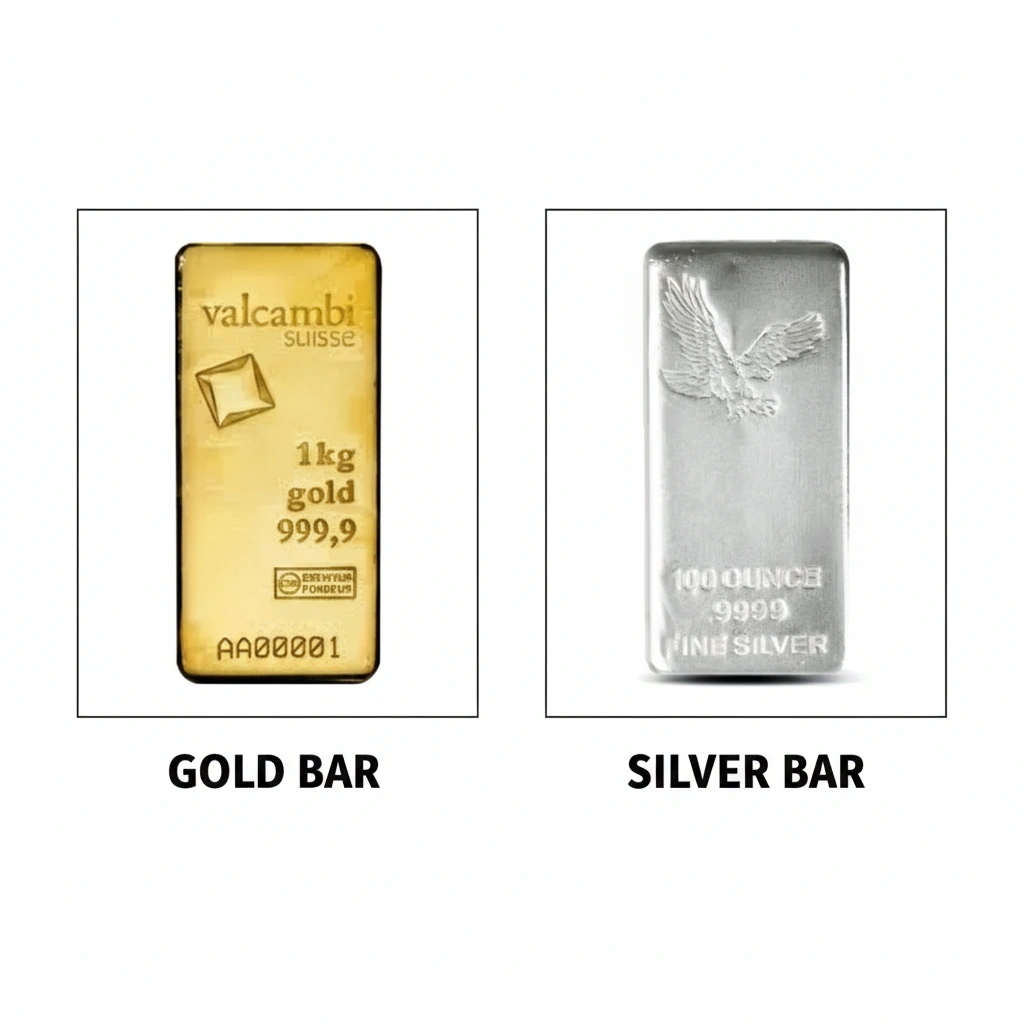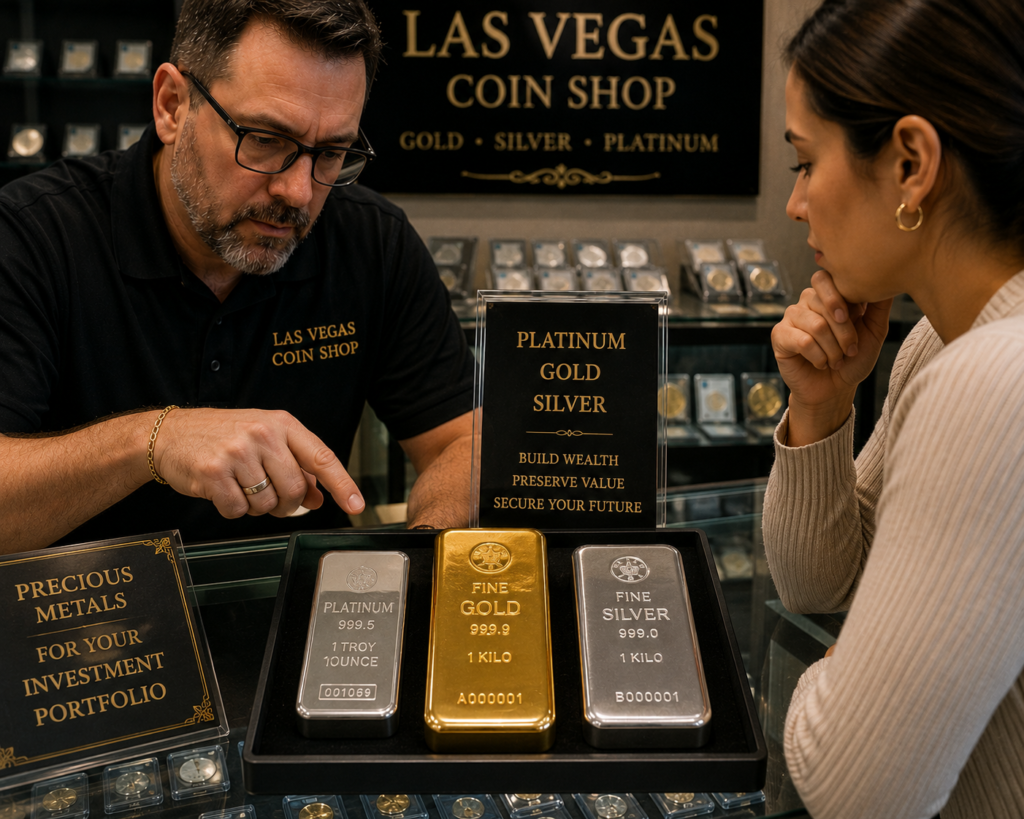
A longtime gold customer recently asked us an interesting question: why is platinum, a metal that is rarer than gold, currently trading at less than half the price of gold? It’s a fair question, and it’s exactly why we created this Platinum investment guide. At the moment, platinum is experiencing one of the more unusual valuation gaps we’ve seen in years, encouraging more investors to consider whether it deserves a place in their portfolios alongside gold and silver.
Here’s what actually makes platinum different, how it compares to gold today, and what to weigh before adding it to a precious metals strategy.
Platinum Investment Guide: What Makes Platinum Different
Platinum isn’t just “another precious metal” — its supply, demand, and pricing dynamics work differently from both gold and silver in ways that matter to investors.
Platinum Is Far Rarer Than Gold
By almost any measure, platinum is far rare than gold. Annual global platinum mine production runs around 190 tonnes, compared to roughly 3,500 tonnes for gold — meaning gold is mined at close to 18 times the rate of platinum. Total above-ground platinum stocks are estimated at around 9,000 tonnes, versus more than 212,000 tonnes for gold that’s been mined throughout history.
Supply is also heavily concentrated: more than 70% of the world’s platinum comes from South Africa’s Bushveld Igneous Complex, where deep underground mining faces chronic challenges from power shortages, rising labor costs, and declining ore grades — all of which constrain how quickly new supply can come online.
Industrial Demand Drives Platinum, Not Just Investment Demand
Unlike gold, which is held primarily for investment and jewelry, platinum’s demand is dominated by industry. Roughly 40% of platinum demand comes from automotive catalytic converters, about 30% from jewelry, and around 25% from broader industrial uses — leaving investment demand as a comparatively small slice of the total market. That makes platinum prices more sensitive to industrial cycles, particularly automotive production, than gold prices typically are.
Platinum vs Gold Price: Why the Historic Relationship Has Flipped
For much of modern market history, platinum traded at a premium to gold — it was, after all, the rarer metal. That relationship has reversed dramatically over the past decade. As of mid-2026, gold has been trading in the $4,000–$4,150 per ounce range, while platinum has traded closer to $1,600 per ounce — meaning platinum currently sells for roughly a third to 40% of gold’s price, despite being significantly scarcer.
This gap largely exists because gold’s investment demand has increased significantly over the past decade, fueled by central bank purchases, inflation concerns, and its long-standing reputation as a safe-haven asset. In contrast, platinum’s price is more closely tied to industrial demand, particularly from the automotive sector, which has been impacted by the growing shift toward electric vehicles that do not require catalytic converters. Some analysts believe that the ongoing supply deficit in the platinum market—after the World Platinum Investment Council reported several consecutive years of undersupply—could eventually help narrow this gap. However, this outcome is not guaranteed and will depend on how market conditions develop.
(Spot prices change daily — check current gold and silver pricing on our site before making any buying or selling decision.)
The Case for Adding Platinum to Your Portfolio
Genuine diversification. Platinum’s price drivers — industrial and automotive demand — differ meaningfully from gold’s investment-driven demand, which can make it behave differently during certain market conditions.
Historically undervalued relative to gold. Some investors view the current gold-to-platinum price ratio as unusually wide by historical standards, and are positioning for it to eventually narrow.
Potential upside from emerging demand. Platinum’s role as a catalyst in hydrogen fuel cell technology is a developing demand source that didn’t meaningfully exist a decade ago.
The Risks and Downsides of Platinum Investing
Higher volatility tied to industrial cycles. Because platinum demand leans heavily on the automotive sector, prices can swing with manufacturing trends in ways gold typically doesn’t.
Uncertain long-term demand. The continued shift toward electric vehicles poses a real question mark over catalytic converter demand, historically platinum’s single largest use case.
Smaller, less liquid market. Platinum’s investment market is considerably smaller than gold’s, which can mean wider buy/sell spreads at some dealers.
Platinum vs Gold vs Silver: How They Compare
| Factor | Gold | Silver | Platinum |
| Primary demand driver | Investment & jewelry | Investment & industrial | Industrial & automotive |
| Relative rarity | Baseline | More abundant than gold | Roughly 18x rarer than gold by mine output |
| Price volatility | Lower | Higher | Higher |
| Historical price relationship to gold | — | Trades at a fraction of gold’s price | Historically traded above gold; currently trades well below it |
For most investors, gold and silver remain the foundation of a precious metals strategy because of their liquidity, long track record, and broad market recognition. Platinum can make sense as a smaller, diversifying position for investors who understand — and are comfortable with — its different risk profile.
How to Approach Platinum Alongside Gold and Silver
If you’re considering platinum, it’s worth having a conversation with a dealer who can walk through how it would fit alongside your existing gold and silver holdings, rather than treating it as a stand-alone decision. At DEI Gold and Silver Coins, our team can help you think through allocation, evaluate any platinum jewelry or items you already own, and make sure any decision fits your broader goals — backed by more than 50 years of experience and certifications from CAC, NGC, PCGS, GIA, and AGL.
Frequently Asked Questions
Platinum’s price is driven mostly by industrial and automotive demand, which has softened partly due to the shift toward electric vehicles, while gold’s price has surged on strong investment demand. That combination has pushed platinum well below gold’s price despite platinum’s greater underlying
Platinum tends to be more volatile and less liquid than gold or silver, making it generally better suited to investors who already have a gold and silver foundation and are looking to diversify further, rather than a typical first purchase.
Automotive catalytic converters account for roughly 40% of platinum demand, followed by jewelry and broader industrial applications. Investment demand makes up a comparatively small share, which is part of why platinum behaves differently from gold in the market.
It’s possible, and it was historically the norm for platinum to trade above gold. Whether that relationship returns depends on factors like industrial demand recovery, continued supply constraints from South African mines, and overall investment sentiment — none of which can be predicted with certainty.
Yes — our team can evaluate platinum jewelry and other items as part of our broader precious metals services in Las Vegas. Call or text (702) 460-5188 to discuss what you have.